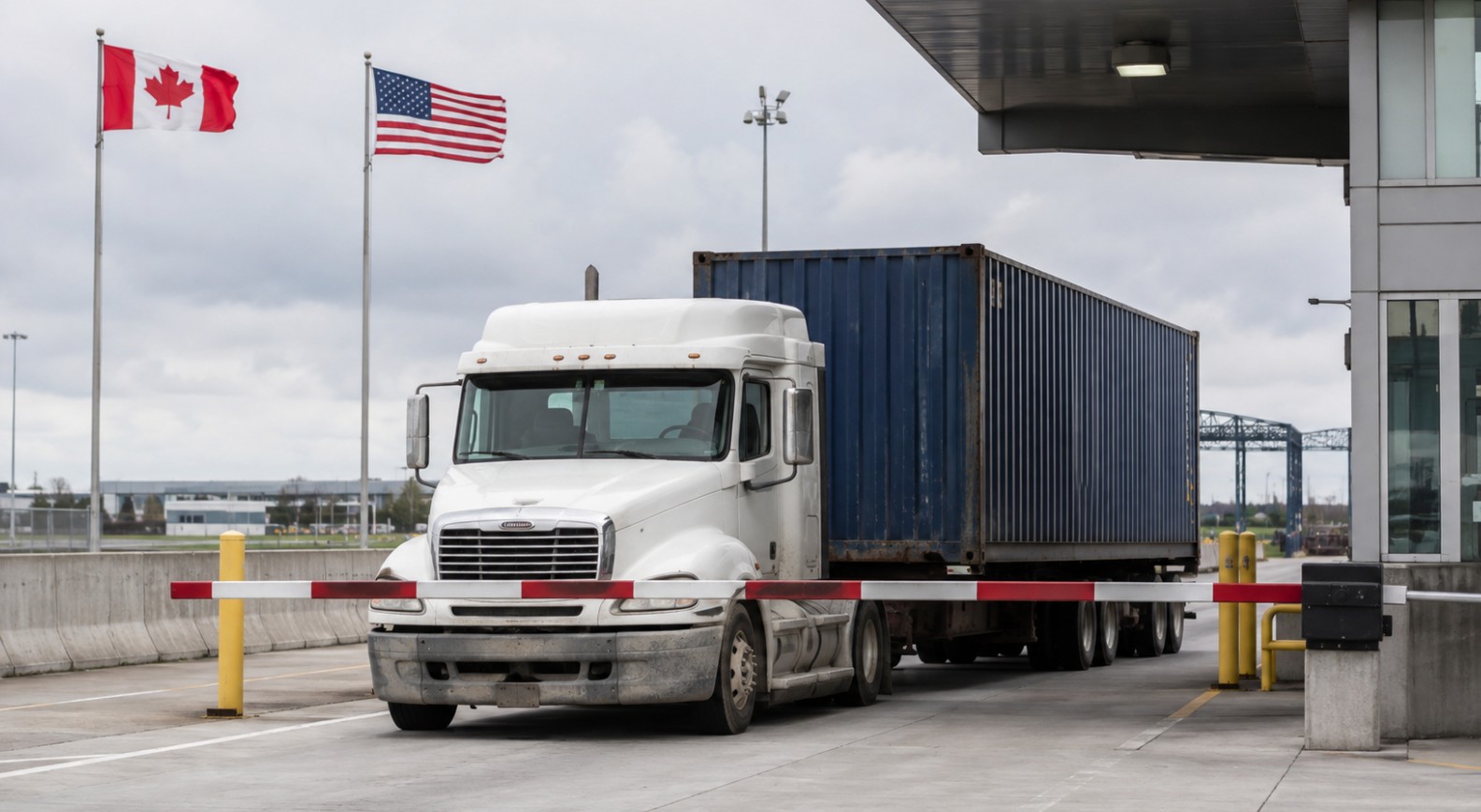
Canada will impose tariffs of 15%, 25% or 50% on C$27.6 billion, about US$20 billion, in American goods beginning September 8.
Ottawa announced the action after the United States placed a 50% tariff on an equal value of Canadian products on August 22. Canadian duties will cover U.S. steel, aluminum, dairy products, appliances, farm equipment, seafood, electronics, paper, plastics and hundreds of other products.
The Canadian tariffs will not appear as a new tax on products sold inside the United States. Canadian importers pay them when American goods enter Canada. The damage reaches the United States when Canadian buyers reduce orders, switch suppliers or demand lower prices from American companies. Farms, factories and businesses with Canada as a major customer face the greatest exposure.
Canada Is Buying Around $29 Billion in Goods From US Each Month
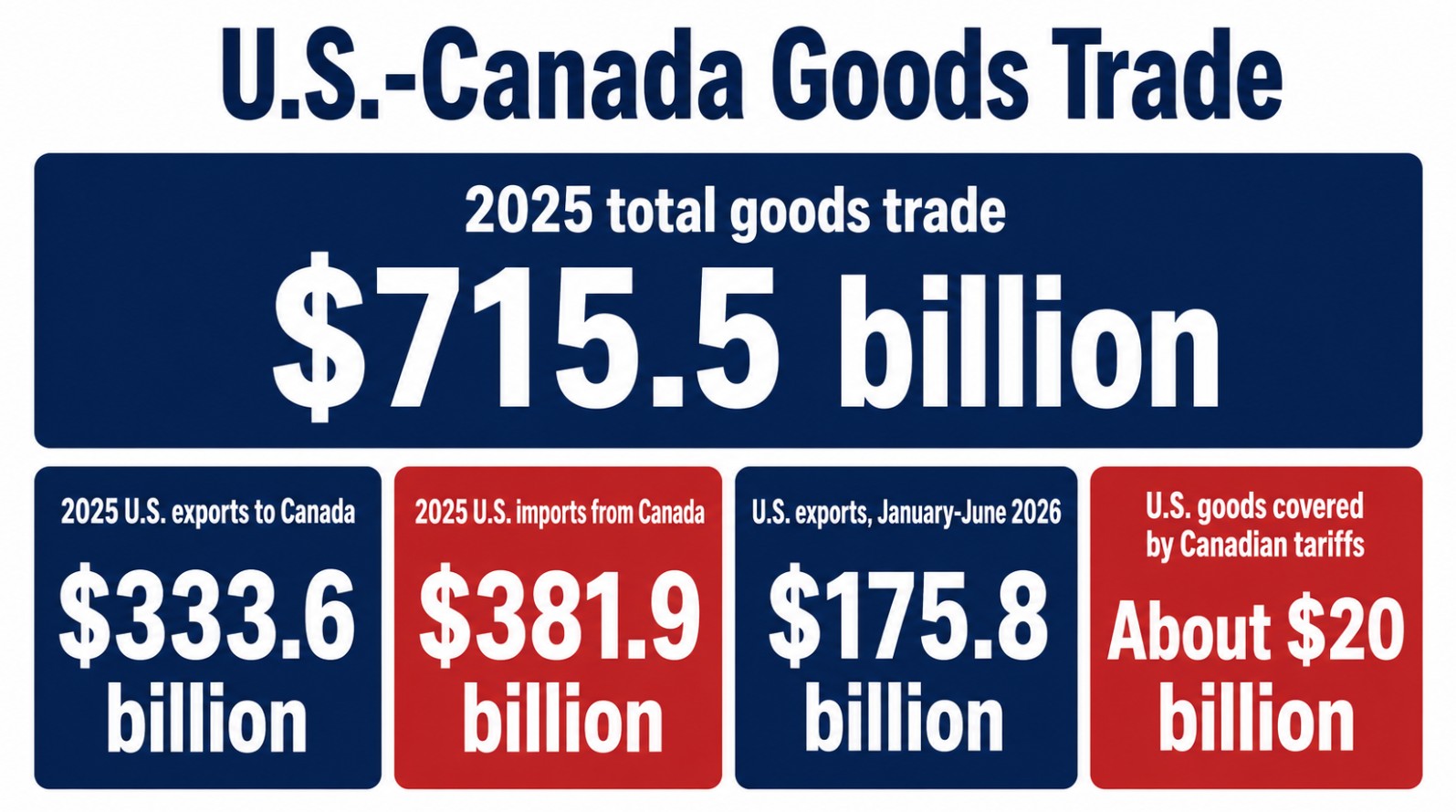
Canada remains one of the largest markets for American products. U.S. Census Bureau trade data show that the United States exported $333.6 billion in goods to Canada in 2025 and imported $381.9 billion.
Trade remained extensive during the first half of 2026. American exports to Canada reached $175.8 billion from January through June, equal to an average of $29.3 billion per month. Imports from Canada totaled $200.2 billion over the same period.
| Trade measure | Value |
|---|---|
| U.S. goods exports to Canada in 2025 | $333.6 billion |
| U.S. goods imports from Canada in 2025 | $381.9 billion |
| Total goods traded in 2025 | $715.5 billion |
| U.S. exports to Canada, January to June 2026 | $175.8 billion |
| Canadian imports covered by the new tariffs | About US$20 billion |
The new Canadian list covers roughly 6% of the value of all American goods exported to Canada in 2025. Such a share is too small to derail the entire U.S. economy by itself. Tariffs of up to 50%, however, are large enough to make many affected American products difficult to sell in Canada.
Steel, Food and Machinery Exporters Face the First Losses
Canada concentrated the new duties in areas where American producers rely on its market. Existing Canadian tariffs on some U.S. steel and aluminum products will rise from 25% to 50%. Other goods will face rates of 15% or 25%, according to the official Canadian tariff list.
A Canadian buyer importing $100,000 in covered American steel would face a tariff bill of up to $50,000. The buyer could accept the added cost, negotiate a lower price with the U.S. supplier or purchase steel elsewhere. Each option puts pressure on the American producer through weaker demand or a smaller profit margin.
Food and agriculture are also exposed. Canada bought $29.5 billion in U.S. agricultural products in 2024, making it the second-largest foreign market for American agriculture. Major categories included vegetables, fruit, baked goods, dairy products, beef, pet food, beverages and processed foods, according to the U.S. International Trade Administration.
Perishable products create an immediate problem because exporters have limited time to find another buyer. A machinery company can hold inventory or delay production. A seafood supplier, dairy producer or vegetable grower has far less room to wait.
American Factories Also Depend on Canadian Materials
Canadian retaliation primarily threatens U.S. export sales. American tariffs on Canadian products create a separate problem by increasing the cost of materials brought into the United States. Many of the goods crossing the border are factory inputs rather than finished products.
Automotive production is especially integrated. Parts and components cross the border during different stages of production, and vehicle manufacturers operate assembly plants in both countries. Tariffs imposed at several points in that process raise production costs and make it harder for companies to reorganize supply chains quickly.
Energy is another major source of U.S. dependence. The United States imported $111 billion in energy from Canada in 2025, compared with $26 billion exported in the opposite direction. Canadian crude oil shipments to the United States averaged 3.9 million barrels per day, according to the U.S. Energy Information Administration.
Many Midwest refineries were built to process the heavy crude produced in Canada. Replacing those supplies with domestic light crude or overseas shipments requires different transportation routes and, in some cases, refinery changes. Any future restriction affecting Canadian energy would carry much greater consequences for U.S. fuel markets than the current Canadian tariff package.
The Immediate Effect Will Be Concentrated in Exporting States
A $20 billion tariff package represents a small fraction of the U.S. economy, so a large nationwide decline in employment or output is unlikely from the Canadian action alone. Losses will be concentrated among companies that sell the targeted goods and lack another large export market.
Manufacturers may reduce production if Canadian orders fall. Farmers and food processors could receive lower prices if goods intended for Canada remain in the domestic market. Transport companies, warehouses and border communities would also lose business if fewer shipments move north.
Some American consumers could see temporary price reductions when exporters redirect goods into the domestic market. Any benefit would be uneven and could disappear if producers cut output after losing Canadian customers.
A Longer Trade Fight Carries the Larger Risk
The September 8 tariffs cover a limited part of bilateral commerce. Greater economic damage would follow another round of retaliation involving energy, vehicles, critical minerals or a much larger share of the $715.5 billion in goods traded during 2025.
American companies can replace some Canadian customers and suppliers, but changing established contracts, transport networks and factory processes takes time and money. Canada also has an incentive to develop suppliers outside the United States if businesses come to view cross-border trade as unreliable.
Current Canadian tariffs will hit selected American exporters first. The cost to the wider U.S. economy depends on how long the duties remain, how quickly Canadian buyers move to other suppliers and whether Washington and Ottawa expand the dispute into industries that connect factories, energy markets and consumers on both sides of the border.
References
- Government of Canada, complete list of U.S. products subject to counter-tariffs
- U.S. Census Bureau, trade in goods with Canada
- U.S. International Trade Administration, Canada market opportunities
- U.S. Energy Information Administration, U.S.-Canada energy trade in 2025