

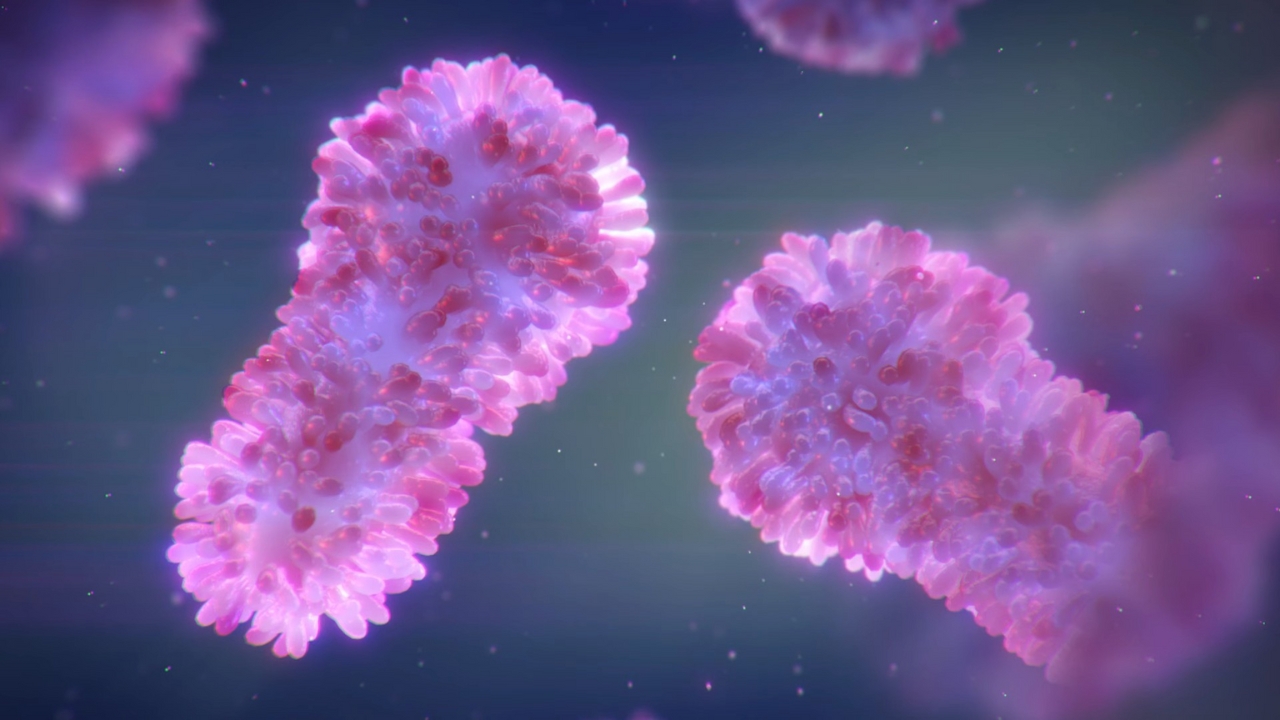
Scientists in Japan have identified a previously unknown giant virus in a freshwater pond near Tokyo, and its features are forcing biologists to revisit one of the most radical ideas in evolutionary science.
The virus, named ushikuvirus, is not just unusually large. It behaves in ways that resemble the inner machinery of complex cells.
Researchers found the virus infecting an amoeba species in Ushiku-numa pond in Ibaraki Prefecture. Using cryogenic electron microscopy, they mapped the virus in extreme detail and uncovered structures rarely seen in the viral world.
What they found goes far beyond a routine discovery.
Why Were Giant Viruses Ignored for Decades
For much of modern science, giant viruses slipped through the cracks. Early virologists often mistook them for bacteria because of their size and complexity.
Only in the past two decades has it become clear that these viruses are widespread, diverse, and deeply entangled with the evolution of life.
Unlike typical viruses, giant viruses carry massive genomes and build elaborate replication centers inside their hosts. Some are larger than small bacteria. Ushikuvirus joins this exclusive and puzzling group.
Viruses Already Helped Shape the Human Genome
Viruses are not just pathogens. They are active evolutionary forces.
Roughly 8 percent of human DNA comes from ancient viral insertions. These remnants are not useless. Some were critical in major evolutionary milestones, including the development of the placenta and nerve insulation in vertebrates.
This alone shows that viruses have influenced life far beyond infection and disease.
But ushikuvirus points to something even more dramatic.
The Mystery of The Nucleus that Still Has No Answer
One of biology’s greatest unanswered questions is how life transitioned from simple prokaryotic cells to complex eukaryotic cells.
Eukaryotes have a membrane-bound nucleus that separates DNA from the rest of the cell. Prokaryotes do not. The jump between the two designs is so extreme that scientists still cannot fully explain how it happened.
This gap has haunted evolutionary biology for decades.
A Controversial Theory Gets New Support
In 2001, molecular biologist Masaharu Takemura proposed a bold idea known as viral eukaryogenesis. He suggested that the nucleus may have originated from a large DNA virus that infected an ancient cell and became a permanent internal structure.
At the time, the theory was controversial.
Then scientists began discovering giant DNA viruses that build membrane-bound “virus factories” inside host cells. These factories control genetic replication and resemble primitive nuclei in both structure and function.
Ushikuvirus adds fresh weight to this idea.
This Virus Does Something Others Do Not
View this post on Instagram
Many related giant viruses preserve the host cell nucleus while replicating. Ushikuvirus does the opposite.
It destroys the host’s nuclear membrane and builds its own viral factory instead. The infected cells grow abnormally large, and the virus displays unique capsid spikes with complex fibrous structures never documented before.
This behavior makes ushikuvirus stand out even among giant viruses.
A Missing Link in Viral Evolution
Genetic analysis places ushikuvirus near the Mamonoviridae family, alongside medusaviruses and clandestinoviruses. But its differences suggest it represents a previously unknown evolutionary branch.
Those differences matter. By comparing how these viruses interact with host cells, scientists can trace how giant viruses diversified and how their internal replication systems evolved.
That evolutionary trail may intersect with the origin of the eukaryotic nucleus itself.
Why This Discovery Changes the Conversation
Ushikuvirus, a newly identified giant DNA virus that infects amoebae, may offer further support for the viral eukaryogenesis hypothesis that eukaryotic nucleus emerged from an ancient viral infection.
— Tokyo University of Science (TUS) (@TUS_PR_en) January 14, 2026
Ushikuvirus does not prove that viruses created complex life. But it strengthens the case that viruses played a central role in shaping it.
Instead of being evolutionary outsiders, giant viruses may have been architects of cellular complexity.
As researchers continue to isolate and study these massive viruses, the boundary between viruses and living cells becomes harder to define, and the origin story of complex life becomes far less certain than once believed.