


Evidence from large systematic reviews and public health agencies shows that all three methods improve quit rates, but the nicotine patch is usually the most effective single starting option because it provides steady nicotine levels and is easiest to use consistently.
However, the strongest results in research studies often occur when a nicotine patch is combined with a fast-acting product such as gum or a lozenge, which helps manage sudden cravings.
Clinical evidence suggests nicotine replacement therapy increases the likelihood of quitting smoking by 50 percent to 70 percent compared with trying to quit without medication.
A large Cochrane review analyzing more than 60,000 participants across dozens of clinical trials concluded that combination nicotine replacement therapy improves long-term quit success by roughly 25 to 30 percent compared with a single product.
These findings explain why many smoking cessation specialists recommend the patch as the baseline treatment and a faster-acting form to handle breakthrough cravings.
Why Nicotine Replacement Therapy Works
View this post on Instagram
Nicotine is the addictive chemical in tobacco, but most smoking-related diseases are caused by toxic compounds produced by burning tobacco, including tar, carbon monoxide, benzene, formaldehyde, and more than 7,000 chemicals present in cigarette smoke, according to Cancer.org.
When a person quits smoking, the body suddenly loses its nicotine supply, which leads to withdrawal symptoms such as irritability, anxiety, restlessness, poor concentration, and strong urges to smoke.
Nicotine replacement therapy works by delivering controlled doses of nicotine without tobacco smoke, allowing the body to gradually adjust while reducing withdrawal symptoms.
Because nicotine is absorbed through the skin or mouth instead of the lungs, the delivery speed is slower and more stable, which lowers the risk of reinforcing addiction patterns associated with smoking.
Major health organizations, including the Centers for Disease Control and Prevention (CDC) and the National Cancer Institute, emphasize that nicotine replacement therapy is significantly safer than continued smoking.
While nicotine can have mild cardiovascular effects, such as increasing heart rate, the major causes of smoking-related illness come from toxic smoke exposure rather than nicotine itself.
Nicotine Replacement Therapy Effectiveness: Key Statistics
Large population studies and clinical trials provide clear data on the impact of nicotine replacement therapy.
Measure
Data
Increase in quit success using NRT vs no medication
50 to 70 percent higher success rate
Participants studied in major Cochrane reviews
Over 60,000 smokers
Improvement using a combination of NRT vs single NRT
About 25 to 30 percent higher quit success
Typical treatment duration
8 to 12 weeks
Smokers who relapse within the first week without treatment
Approximately 60 percent
These numbers highlight an important point: most quit attempts fail without assistance, particularly during the first two weeks when withdrawal symptoms peak. Nicotine replacement therapy helps stabilize nicotine levels and reduce those early relapse triggers.
The Nicotine Patch: Steady Background Nicotine

The nicotine patch is often considered the foundation of nicotine replacement therapy because it provides continuous nicotine delivery over 16 to 24 hours. The patch is applied to the skin once per day and slowly releases nicotine into the bloodstream throughout the day.
This steady delivery addresses the persistent withdrawal symptoms that occur when nicotine levels drop after quitting cigarettes. For smokers who previously smoked throughout the day, the patch helps recreate a stable baseline nicotine level without requiring repeated dosing.
Typical Nicotine Patch Strengths
Patch strength
Recommended use
21 mg
Heavy smokers, usually those smoking more than 10 cigarettes per day
14 mg
Moderate smokers or step-down phase
7 mg
Final taper phase before stopping nicotine
Most treatment programs follow a step-down schedule, gradually reducing nicotine dose over several weeks.
Advantages of The Nicotine Patch
The biggest advantage of the patch is simplicity. Once applied in the morning, it requires no additional effort during the day. This consistency is critical because many quit attempts fail due to inconsistent medication use.
The patch also avoids many of the behavioral triggers associated with smoking because it does not involve repeated oral dosing.
Another advantage is adherence. Because it is used once per day, the patch tends to produce higher compliance rates compared with products that require frequent dosing, such as gum or lozenges.
Limitations of The Nicotine Patch
The main limitation of the patch is that it cannot quickly relieve sudden cravings. Smokers often experience sharp urges triggered by specific situations such as driving, drinking coffee, socializing, or feeling stressed.
The patch provides background nicotine but does not respond rapidly to these moments.
For this reason, many healthcare professionals recommend pairing the patch with a faster-acting nicotine product.
Common Patch Side Effects
Side effect
Frequency
Skin irritation
Up to 20 percent of users
Sleep disturbances or vivid dreams
About 10 percent
Mild headache or dizziness
Less common
Most side effects are mild and temporary.
Nicotine Gum: Flexible Craving Control
Nicotine gum was one of the first nicotine replacement therapies introduced and remains widely used today. Unlike the patch, which delivers nicotine continuously, gum provides short bursts of nicotine when cravings occur.
Nicotine gum works through a technique called “chew and park.” The user chews the gum a few times and then places it between the cheek and gum so nicotine can be absorbed through the oral lining.
This allows nicotine to enter the bloodstream within minutes.
Nicotine Gum Strengths
Gum strength
Recommended for
2 mg
Light smokers or those who smoke less than 20 cigarettes per day
4 mg
Heavy smokers or strong cravings
Advantages of Nicotine Gum
Nicotine gum offers flexibility. It can be used whenever cravings appear, which allows smokers to actively manage high-risk situations.
Many smokers also find that chewing gum replaces the hand-to-mouth habit associated with cigarettes, which is an important behavioral component of addiction.
Because the gum is used repeatedly throughout the day, it can help smokers who experience frequent cravings rather than constant withdrawal.
Limitations of Nicotine Gum
The effectiveness of nicotine gum depends heavily on correct technique. If it is chewed continuously like regular gum, nicotine may be swallowed instead of absorbed through the mouth, reducing its effectiveness and causing stomach irritation.
Another limitation is convenience. Gum typically needs to be used every one to two hours, which requires more effort than the once-daily patch.
Common Gum Side Effects
Side effect
Explanation
Jaw soreness
Caused by repeated chewing
Hiccups
Often from swallowing nicotine
Mouth irritation
Temporary sensitivity
Nicotine Lozenges: Discreet Oral Nicotine Delivery
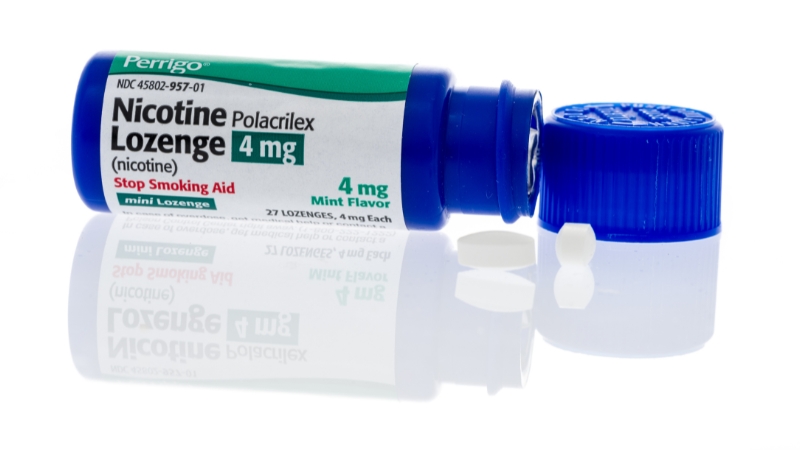
Nicotine lozenges work similarly to gum but dissolve slowly in the mouth instead of requiring chewing. This allows nicotine to absorb gradually through the oral lining.
For people who dislike chewing gum or have dental issues, lozenges can be a more comfortable option. They are also discreet and easy to use in professional settings.
Nicotine Lozenge Strengths
Lozenge strength
Typical use
2 mg
Smokers who wait longer than 30 minutes after waking before their first cigarette
4 mg
Smokers who smoke within 30 minutes of waking
The time between waking and the first cigarette is often used as a measure of nicotine dependence.
Advantages of Nicotine Lozenges
Lozenges are easy to use and do not require a chewing technique. They dissolve over about 20 to 30 minutes, providing gradual nicotine delivery. Many users find them convenient in situations where gum might be socially awkward.
Because lozenges can be taken whenever cravings occur, they provide similar flexibility to nicotine gum.
Limitations of Nicotine Lozenges
The most common complaints include throat irritation, nausea, or a strong taste. Like gum, lozenges require repeated use during the day, which may reduce adherence.
Another category of nicotine alternatives that has grown quickly in recent years is nicotine pouches. These products deliver nicotine through the mouth lining in a similar way to gum or lozenges, but they are placed under the upper lip and dissolve slowly without chewing or dissolving tablets.
For smokers who want a discreet option that does not involve chewing or sucking on a lozenge, nicotine pouches can be appealing because they are smoke-free, spit-free, and easy to use in workplaces or public settings.
A widely recognized example is Zyn, a nicotine pouch brand that delivers measured doses of nicotine through small pouches placed under the lip.
While nicotine pouches are not technically classified as traditional nicotine replacement therapy in many medical guidelines, they function in a similar way by delivering nicotine without combustion, which is why some smokers use them as an alternative while trying to reduce or quit cigarette use.
Comparing Nicotine Patch, Gum, and Lozenge
A direct comparison highlights the strengths of each option.
Feature
Patch
Gum
Lozenge
Nicotine delivery
Continuous
Short bursts
Gradual bursts
Dosing frequency
Once daily
Every 1 to 2 hours
Every 1 to 2 hours
Best for
Constant withdrawal
Sudden cravings
Discreet craving relief
Behavioral replacement
No
Yes
Partial
Ease of use
Very easy
Moderate
Easy
Why Combination Therapy Often Works Best

Many smoking cessation specialists now recommend combination nicotine replacement therapy, especially for heavier smokers. This approach combines the nicotine patch with a fast-acting product such as gum or a lozenge.
The patch provides steady nicotine levels that reduce background withdrawal symptoms, while gum or lozenges handle sudden cravings triggered by daily situations.
Research consistently shows that combination therapy improves quit rates. A large systematic review found that smokers using both patch and fast-acting nicotine products were significantly more likely to remain smoke-free after six months compared with those using only one product.
Combination NRT Benefits
Benefit
Explanation
Better craving control
Baseline plus rapid relief
Higher quit success
Evidence from multiple clinical trials
Reduced relapse risk
Cravings are managed more effectively
This strategy mirrors how addiction works in the real world, where smokers face both steady withdrawal and unpredictable cravings.
Choosing The Best Nicotine Replacement For Your Situation
Different smokers benefit from different nicotine replacement strategies.
Smoking pattern
Best option
Heavy daily smoker
Patch or combination therapy
Stress or trigger smoking
Gum or lozenge
Irregular smoking schedule
Gum or lozenge
Busy schedule, forgets medication
Patch
Previous failed quit attempts
Combination NRT
Personal preference and consistency often matter as much as pharmacology. The most effective nicotine replacement is the one that fits daily routines and is used correctly.
Safety and Long-Term Health Considerations
@medicalchannelasia Thinking of quitting smoking but don’t know where to start? 🚬🚫 Nicotine cravings can be tough, but having a plan makes all the difference! Consulting a pharmacist about Nicotine Replacement Therapy (NRT), keeping a countdown chart, and reminding yourself why you want to quit can help you stay on track. 💪 What’s your reason for quitting? Watch the full video on our YouTube channel. #MedicalChannelAsia #MCA #smoker #quitsmokingtoday #quitsmokingsupport #nicotinefree #learnontiktok #doctorsoftiktok ♬ original sound – Medical Channel Asia
Nicotine replacement therapy has been studied for decades and is considered safe for most adult smokers trying to quit. Public health authorities consistently emphasize that nicotine medications carry far fewer health risks than continued smoking.
Unlike cigarettes, nicotine replacement products do not expose the body to carbon monoxide or thousands of toxic chemicals created by burning tobacco. This dramatically reduces health risks such as lung disease, cancer, and cardiovascular damage.
For smokers who struggle to quit without assistance, nicotine replacement therapy offers a scientifically supported pathway to reducing dependence and eventually becoming nicotine-free.
Nicotine patches, gum, and lozenges all improve the chances of quitting smoking, but they work in different ways. The nicotine patch is often the best starting option because it delivers steady nicotine levels and is simple to use consistently. Gum and lozenges are more effective for managing sudden cravings triggered by daily habits or stressful situations.