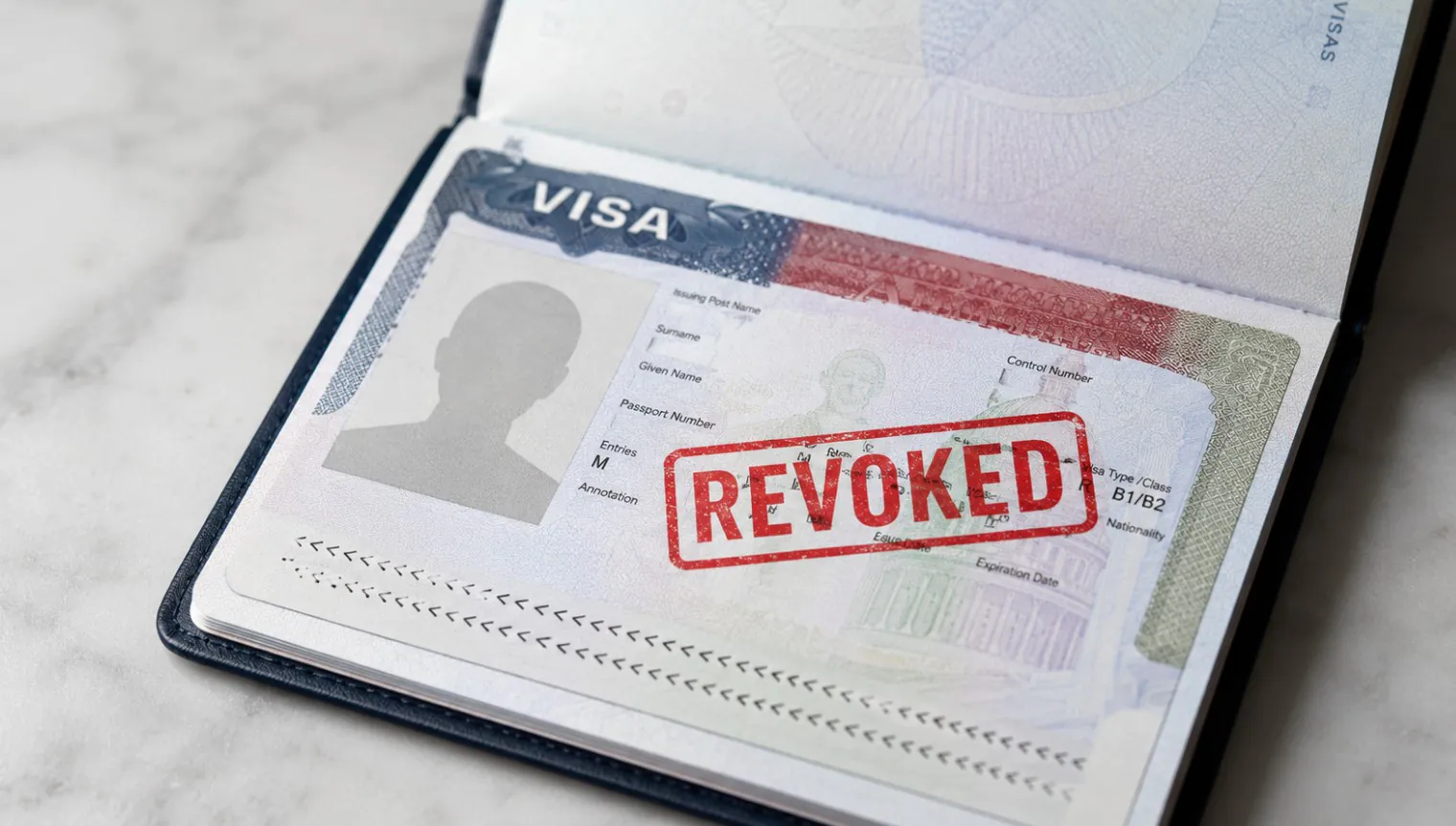
The Trump administration is preparing to revoke the business and tourism visas of as many as 200,000 foreign nationals who have applied for asylum in the United States, according to State Department documents and US officials cited by the Associated Press.
If carried out at that scale, the action would become the largest single mass visa revocation in US history.
The plan targets people who entered or received permission to travel to the United States on B1 or B2 visas and later applied for asylum. The State Department is expected to carry out the revocations with the Department of Homeland Security.
The policy has not been formally completed, and the final number of affected people could change. State Department spokesman Tommy Pigott said the process would be ongoing and handled on a rolling basis.
For people already inside the United States with pending asylum cases, losing a B1 or B2 visa would not automatically mean immediate deportation. Their immigration position would instead depend on the status of their asylum case and any other legal protection they hold.
Up to 200,000 B1 and B2 Visas Could Be Revoked
The planned action covers B1 and B2 visas issued between 2016 and 2026 to people who later sought asylum in the United States, according to Associated Press reporting.
B1 visas are generally issued for temporary business travel. B2 visas cover tourism, visits with family or friends and some medical travel.
The State Department describes B1 visas as temporary permission for activities such as business meetings, contract negotiations, conferences and other limited commercial purposes that do not amount to employment in the United States.
Its B2 visitor visa guidance similarly identifies tourism, family visits and medical treatment as permitted purposes.
Applicants for visitor visas are expected to establish that their trip is temporary and that they intend to leave the United States when the visit ends.
Who Would Be Affected?
The group under review consists of foreign nationals who received B1, B2 or combined B1/B2 visas and later filed asylum claims.
According to AP, the State Department began screening existing visitor visa holders after receiving asylum information from US Citizenship and Immigration Services.
The exact number of people who currently fall into that group has not been publicly released.
The figure of up to 200,000 represents the number of visas that officials believe could ultimately be revoked rather than a confirmed list of 200,000 completed cancellations.
That distinction matters because some cases could change before the process is complete, and legal challenges may affect implementation.
What Happens if a Visa Is Revoked?
A visa and permission to remain in the United States are related but separate parts of immigration law.
A visa generally allows a foreign national to travel to a US port of entry and request admission in a particular category. Revoking that visa removes the travel document, but it does not always immediately erase another immigration process that is already underway.
AP reports that people with pending asylum cases would not automatically be deported solely because their B1 or B2 visa was revoked.
Many would instead lose their status as business or tourism visitors while their asylum proceedings continue.
That means the practical effect will differ from person to person.
Someone outside the United States whose visa is revoked could lose the ability to use that visa for future travel. Someone already inside the country with a pending asylum application could remain involved in the immigration process but lose the visitor visa classification that originally allowed the trip.
People with additional legal status, work authorization or another pending immigration application could face a different situation.
The Administration Says It Is Taking Action
The administration argues that applying for asylum after entering on a temporary visitor visa conflicts with the purpose for which the visa was issued.
Pigott said the State Department and DHS are identifying people who entered as short-term visitors and then applied for asylum in an attempt to remain permanently.
Deputy Secretary of State Christopher Landau made a similar argument in a social media post, saying asylum should not operate as a way around normal immigration rules.
Visitor visa applicants already face a presumption under US immigration law that they could intend to immigrate permanently unless they demonstrate otherwise.
According to State Department visitor visa guidance, applicants generally need to show that they plan to stay for a specific and limited period, have enough money for the trip and maintain ties outside the United States that support their intention to return.
Applying for Asylum Is a Separate Legal Process
An asylum application is not the same thing as applying for a tourist visa.
Asylum is available to people who say they face persecution or have a well-founded fear of persecution because of protected grounds such as race, religion, nationality, political opinion or membership in a particular social group.
A person can arrive in the United States through one immigration category and later become involved in a different legal proceeding.
The latest policy dispute centers on whether the government should allow someone to continue holding a visitor visa after that person has taken a step that indicates an intention to remain in the country.
The administration says the two positions conflict. Immigration advocates and attorneys are likely to challenge how broadly the government can apply that reasoning to people who have legally exercised the right to request asylum.
The Revocations Would Not Mean 200,000 Immediate Deportations
The number in the headline should not be confused with a deportation total.
Up to 200,000 visas could be revoked, but AP reported that the cancellations would not necessarily result in immediate removal from the country.
An asylum seeker can have a pending legal case even after the visa used for the original entry is no longer valid.
Immigration enforcement has nevertheless expanded well beyond people with final deportation orders.
As we reported earlier, ICE started arresting travelers at US airports, including people who originally entered legally and later overstayed visas, as well as people with pending asylum claims, work permits or applications for permanent residence.
That broader enforcement environment means losing a visitor visa could still create significant legal and travel consequences even when removal does not happen immediately.
The US Has Already Revoked About 175,000 Visas in 18 Months
The planned asylum-related action comes after a separate wave of visa cancellations.
According to AP, the State Department revoked about 175,000 visas during the previous 18 months.
Those cases involved people accused or convicted of offenses ranging from drunken driving to violent crime, along with other people targeted under expanded national security and foreign policy screening.
The new plan is different because it would target a broad immigration category rather than primarily focusing on individual criminal or security cases.
If the administration reaches the upper estimate of 200,000 cancellations, the asylum-related action alone would exceed the number of visas revoked in the previous 18-month period.
Visa Rules Have Tightened Throughout 2026
The proposed revocations are part of a much wider change in US visa policy.
The State Department has introduced stricter screening, expanded review of applicants and changed where many people are expected to attend visa interviews.
Under guidance issued in July 2026, most nonimmigrant visa applicants are now instructed to schedule interviews in their country of nationality or residence.
The administration has also suspended or restricted several visa categories for nationals of selected countries.
A State Department policy effective January 1, 2026 partially suspended B1/B2 and several other visa categories for nationals of 19 countries, with limited exceptions.
NCHStats has also followed changes affecting other legal immigration programs. In July, we reported on proposed changes to the J-1 exchange visitor program, including stricter rules for program termination, extensions and restoration of status.
International Students and Workers Are Facing Separate Restrictions
Visitor visas are only one area where legal immigration rules are becoming more restrictive.
The administration has also discussed major changes affecting international graduates who want to work in the United States after completing their studies.
Our team at NCHStats reported in July that the government was considering a possible $100,000 charge for some foreign graduates seeking work authorization through Optional Practical Training.
That proposal has not been finalized.
Green card applicants could face another financial requirement. A separate proposal would allow the government to require some immigrant visa applicants to post bonds reaching $100,000.
Taken together, the policies show that the administration is tightening both temporary and permanent immigration channels rather than focusing only on unauthorized border crossings.
The Policy Could Face Court Challenges
The mass revocation has not yet been fully implemented, and litigation is expected if the government proceeds.
One likely dispute will involve the relationship between visitor visa rules and the legal right to request asylum.
The administration can argue that B1 and B2 visas were issued on the basis of temporary intent. Attorneys representing affected people could argue that applying for asylum after circumstances change does not automatically establish that the original visa application was fraudulent.
Courts may also be asked to consider how the government identifies affected people, whether individual notice is required and what procedures are available to challenge a revocation.
Those questions will become clearer once the State Department releases the final policy and begins sending revocation notices.
People With Pending Asylum Cases Should Watch Their Individual Status
The proposed policy does not place every asylum seeker in the same legal position.
The most important factors include the type of visa originally issued, whether the person remains inside or outside the United States, the status of the asylum application and whether another immigration benefit or legal protection applies.
Temporary Protected Status creates another example of how immigration categories can overlap.
We recently reported that about 350,000 Haitians faced the expiration of Temporary Protected Status, although individuals with another valid immigration status or pending legal case could be affected differently.
Similar distinctions will matter if the mass visitor visa revocations proceed.
The Action Is Separate From Border Enforcement
The planned revocations primarily involve people who received visas through the legal immigration system.
That makes the policy different from enforcement aimed at unauthorized border crossings.
Our long-term analysis of unauthorized immigration and US border crossing data tracks encounters with people attempting to enter without authorization or through ports of entry under different circumstances.
The latest visa action deals instead with people who initially received permission to travel temporarily and later pursued asylum.
The distinction is important because debates over legal visas, asylum applications and unauthorized border entry involve different parts of immigration law even when they appear together in the broader political debate.
What Happens Next?
The State Department has not announced a single date on which 200,000 visas will be canceled.
Officials told AP that the process is expected to happen gradually and that the number will remain fluid.
The next steps are expected to include:
- Identification of B1 and B2 visa holders who filed asylum claims
- Coordination between the State Department and Department of Homeland Security
- Visa revocations carried out on a rolling basis
- Notification of affected visa holders
- Possible legal challenges in federal court
- Further guidance on how pending asylum cases will be handled
The upper estimate of 200,000 therefore should be treated as the potential scale of the policy rather than the number of visas already canceled.
References
- Associated Press, US Set for Largest Mass Visa Revocation in History Targeting Up to 200,000 Foreigners
- U.S. Department of State, U.S. Business Visas B-1 and Allowable Uses
- U.S. Department of State, Tourism and Visitor Visas
- U.S. Department of State, U.S. Visitor Visas for Business and Pleasure B1/B2
- U.S. Department of State, Adjudicating Nonimmigrant Visa Applicants in Their Country of Residence
- U.S. Department of State, Suspension of Visa Issuance to Foreign Nationals to Protect the Security of the United States