
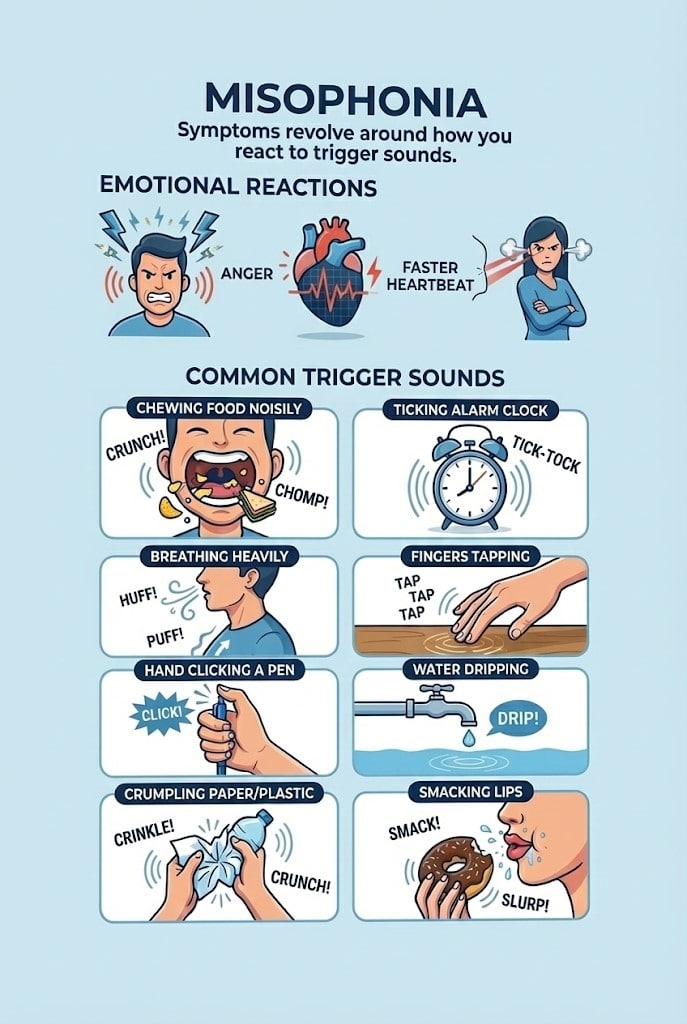
A stranger at the next table begins eating an orange. The sound of each bite feels amplified. A coworker keeps clearing their throat during a meeting. A partner breathes heavily while sleeping. For many people, moments like that fade into the background. For others, the reaction is intense and immediate. Heart rate increases. Muscles tense. A surge of anger, panic, or distress rises before logic has a chance to intervene.
That experience is known as misophonia.
Misophonia causes ordinary, everyday sounds to provoke powerful emotional responses that can interfere with daily life. Triggers often include chewing, breathing, swallowing, tapping, snoring, or repetitive mouth noises. The reaction is not simple annoyance. People frequently report feeling trapped, helpless, enraged, or overwhelmed by the urge to escape the sound.
For years, misophonia occupied an uncomfortable gray area in medicine. Many patients were told they were overly sensitive or simply irritable. Clinicians debated classification. Treatment options remained limited. A new genetic study is now reshaping that conversation.
Large Genetic Analysis Reveals Mental Health Links
In 2023, researchers in the Netherlands published one of the most comprehensive genetic investigations of misophonia to date. Led by psychiatrist Dirk Smit at the University of Amsterdam, the team analyzed genetic data drawn from the Psychiatric Genomics Consortium, the UK Biobank, and 23andMe.
Participants self-reported whether they experienced misophonia. Their genetic profiles were then compared with known genetic markers associated with psychiatric conditions.
The results were striking. Individuals who reported misophonia were significantly more likely to carry genetic variants linked to anxiety, depression, post-traumatic stress disorder, and tinnitus. The overlap suggested shared biological foundations rather than a coincidence of symptoms.
According to Smit, the findings indicate that the same genetic factors that increase vulnerability to trauma-related stress and mood disorders also increase susceptibility to misophonia. The study offers biological validation for a condition long dismissed as purely psychological.
Emotional Patterns Behind the Sound Sensitivity
Earlier research had already suggested that misophonia involves more than sensory processing. People living with the condition tend to internalize emotional distress rather than express it outwardly. The new genetic analysis reinforced that idea.
Strong associations appeared between misophonia and personality traits such as:
- chronic worry
- heightened guilt
- loneliness
- elevated neuroticism
These traits influence how the brain processes threat and emotional stimuli. When a triggering sound occurs, the response escalates rapidly, bypassing conscious control.
Researchers noted that distress often comes from guilt about the anger or irritation the sound evokes rather than from the sound itself. The emotional conflict compounds the suffering, making people feel ashamed, confused, and isolated by their reactions.
How Misophonia Manifests in Daily Life
Responses to triggering sounds vary in intensity. Some people feel immediate irritation. Others experience waves of anger, panic, or despair strong enough to interrupt concentration, disrupt relationships, and make public spaces unbearable.
Daily routines can become exhausting. Restaurants, offices, classrooms, shared living spaces, and even family dinners may provoke constant vigilance. Many individuals begin avoiding social settings, working remotely, or wearing headphones simply to function.
Over time, the condition erodes quality of life.
The Unexpected Autism Finding
One of the most surprising outcomes of the study involved autism spectrum disorder. Individuals with autism often struggle with sensory sensitivity, particularly with sound. Yet the genetic data revealed that people with autism were less likely to report misophonia.
The researchers concluded that misophonia and autism appear to operate through relatively independent genetic pathways. That finding suggests misophonia is not merely a general sound intolerance. It represents a distinct condition shaped by emotional learning, threat perception, and personality traits.
The team proposed that different forms of misophonia may exist. One form appears driven by conditioned emotional responses, where anger or distress becomes strongly associated with specific sounds over time.
How Common Is Misophonia?

For years, the prevalence of misophonia remained unclear. In 2023, a large UK survey helped clarify the scope.
Researchers surveyed 772 adults using an algorithm that balanced participants across age, sex, gender identity, ethnicity, and other demographic variables to reflect national census data. Participants completed an extensive questionnaire assessing trigger sounds and emotional responses across five dimensions: emotional threat, internal appraisals, external appraisals, behavioral outbursts, and overall life impact.
The results indicated that 18.4 percent of adults in the UK experience misophonia symptoms. Fewer than 14 percent of those individuals had previously heard the term misophonia.
Two major differences separated individuals with misophonia from the general population. First, negative reactions were far more likely to involve intense anger and panic. Second, people with misophonia reacted strongly to everyday sounds such as breathing and swallowing, sounds that produced little to no reaction in others.
Clinical psychologist Jane Gregory of the University of Oxford described the survey as capturing the full complexity of the condition. Misophonia, she explained, involves far more than being annoyed by noise.
What the Findings Mean for Treatment
The genetic overlap between misophonia and psychiatric conditions carries major clinical implications. If shared biological systems influence both sound sensitivity and emotional regulation, treatment strategies developed for anxiety and trauma may offer benefit for misophonia as well.
The Netherlands research team emphasized that the findings do not imply identical mechanisms. Rather, they reveal intersecting pathways affecting emotional processing, stress response, and vulnerability to distress.
Such insights open the door for improved diagnosis, earlier intervention, and development of targeted therapies. For millions of people who have struggled in silence, the research brings legitimacy and hope.
A Condition Finally Being Taken Seriously
Misophonia remains largely invisible to the public. Many sufferers still feel misunderstood by family, coworkers, and healthcare providers. The growing body of genetic and psychological research is changing that narrative.
As scientists continue mapping the biological foundations of misophonia, the condition is moving out of the shadows. What once seemed like unexplained irritation is now recognized as a serious neurobiological and emotional disorder with deep roots in mental health.