
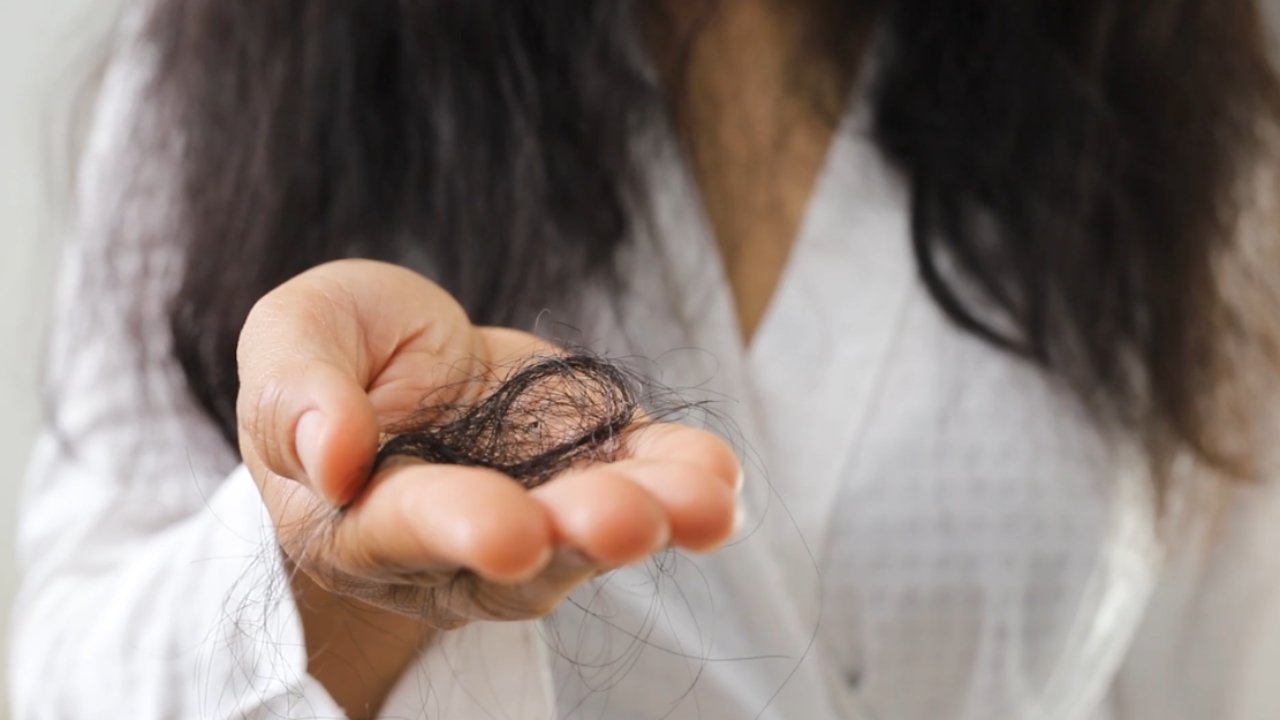
Despite decades of frustration and limited progress in hair-loss treatments, recent clinical research, especially on oral medications, signals the first true breakthroughs in decades.
In the most significant development to date, new JAK-inhibitor pills such as Leqselvi have shown fast and meaningful hair regrowth in clinical trials, with more than 30 % of patients achieving ≥80 % scalp hair coverage at 24 weeks, and up to 25 % nearing full regrowth.
These results represent a substantial improvement over placebo and past treatment outcomes, marking a concrete step toward pharmaceutical solutions that can rapidly reverse the effects of severe alopecia.
The Scientific Context: Alopecia, Immune Attack, and Why a Pill Could Change Everything
Alopecia areata is an autoimmune condition in which the body’s immune system mistakenly targets hair follicles on the scalp and elsewhere, leading to sudden and often extensive hair shedding.
Unlike male-pattern hair loss driven by hormones, alopecia areata’s core cause is immune-mediated inflammation. This makes it particularly stubborn to treat with traditional products like minoxidil and finasteride, which don’t address immune dysregulation at the root of the problem.
Until recently, treatment choices were limited: topical steroids to suppress localized inflammation, corticosteroid injections into the scalp, or off-label use of older oral medications with immunosuppressive side effects.
These approaches often stabilize hair loss but rarely produce dramatic regrowth, and effectiveness varies widely between individuals.
What made the development of oral Janus kinase (JAK) inhibitors so exciting is that they specifically target immune signaling pathways known to fuel follicle attack in alopecia areata, offering a mechanism-based approach rather than symptomatic management.
In July 2024, the U.S. Food and Drug Administration officially approved deuruxolitinib (Leqselvi) as the latest oral JAK inhibitor for adults with severe alopecia areata, joining two earlier approvals: baricitinib (Olumiant) and ritlecitinib (Litfulo).
Each of these drugs works by blocking key enzymes in immune signaling, reducing harmful inflammation around hair follicles, and enabling regrowth over time.
Clinical Evidence: How Effective Is Leqselvi and Comparable Treatments?
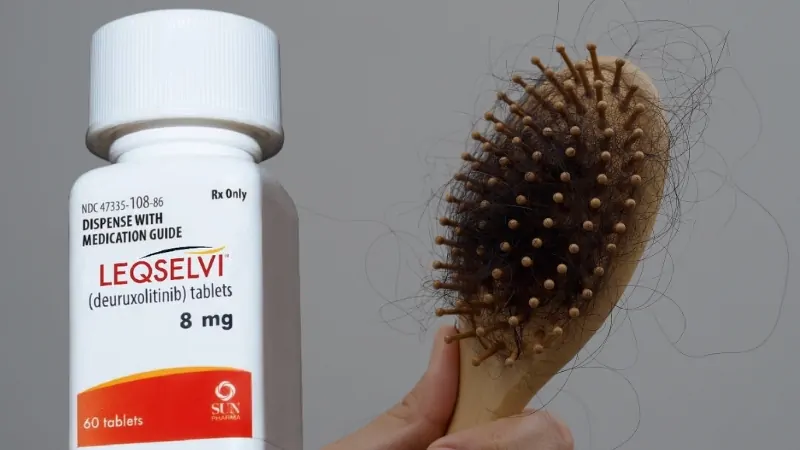
The approval of Leqselvi was backed by two large placebo-controlled Phase 3 trials known as THRIVE-AA1 and THRIVE-AA2.
These studies enrolled more than 1,200 adults with significant scalp hair loss (at least 50 % lost at baseline), and they measured outcomes using the Severity of Alopecia Tool (SALT), a standard clinical scale for quantifying hair coverage.
Across these trials, patients who received 8 mg of Leqselvi orally twice per day for 24 weeks achieved:
Research extending beyond these initial 24-week endpoints suggests that continued therapy may further improve outcomes. In long-term extension studies, nearly 49 % of patients achieved minimal hair loss (SALT ≤ 20) by week 68, and observed data indicated up to 76.6 % achieved this outcome when accounting for all treated individuals.
For context, other FDA-approved JAK inhibitors also show meaningful regrowth. Baricitinib has demonstrated that 32 %–35 % of severe alopecia areata patients can achieve high levels of scalp hair regrowth with chronic treatment, and ritlecitinib has similarly improved hair coverage over placebo in controlled trials.
Comparing Treatment Performance: JAK Inhibitors and Other Approaches
Treatment
Typical Time to Noticeable Results
Effectiveness in Severe Alopecia Areata
Mode of Action
Leqselvi (deuruxolitinib)
~24 weeks
~30 % achieve ≥80 % regrowth; long-term increases
Oral JAK1/2 inhibitor, immune modulation
Olumiant (baricitinib)
~36 weeks
~32–35 % achieve ≥80 % regrowth
Oral JAK inhibitor, immune modulation
Litfulo (ritlecitinib)
~24–36 weeks
Statistically significant regrowth vs placebo
Oral JAK inhibitor
Topical corticosteroids
Weeks to months
Limited regrowth, mainly stabilization
Local immune suppression
Minoxidil/finasteride (traditional)
Months
Modest regrowth in pattern hair loss, limited in alopecia areata
Follicle stimulation/hormonal modulation
Note: Effectiveness percentages refer to clinical trial populations and may vary in real-world settings.
How These Therapies Fit Into Modern Hair Loss Management
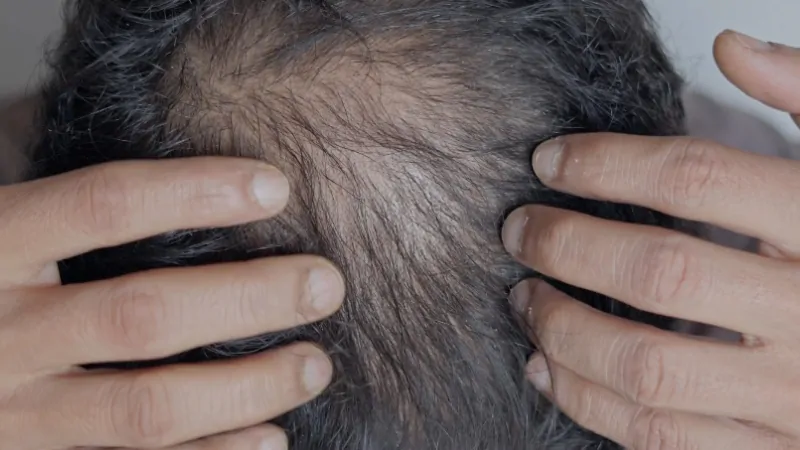
The arrival of drugs like Leqselvi has been accompanied by a broader reevaluation of how hair loss is treated medically. In severe autoimmune-mediated cases, systemic immune modulation via oral medication has now become a standard frontline option when appropriate.
These therapies are especially groundbreaking because they give affected individuals the first realistic chance at significant regrowth from a pill rather than invasive or less targeted treatments.
At the same time, many patients continue to combine drug-based strategies with corrective procedures, such as hair transplantation, platelet-rich plasma (PRP) injections, and laser therapy, to address residual thinning, improve scalp coverage, and hasten visible results while waiting for oral treatments to take effect.
This combined approach recognizes that no single modality is perfect for everyone, and complementary strategies often yield the most satisfying cosmetic and psychological outcomes.
Safety, Side Effects, and Considerations
While the efficacy data are promising, JAK inhibitors are potent immune modulators and carry potential side effects that require careful oversight.
These can include elevated infection risk, cardiovascular and thrombotic events, and other rare but serious outcomes, which is why clinicians closely monitor patients during treatment.
Baseline screening, for example, for latent tuberculosis,is often recommended before initiating therapy, and risk–benefit discussions are essential components of responsible prescribing.
The Future of Alopecia Treatment
View this post on Instagram
Although oral JAK inhibitors have redefined what’s possible in alopecia areata, research continues on even broader fronts.
Next-generation oral and topical agents that target follicle stem cell activation, immune signaling with greater specificity, or entirely new biological pathways are in early clinical stages.
Examples include orally or topically administered compounds under investigation that aim to reverse follicle dormancy or support regeneration more directly, potentially expanding the arsenal beyond immune modulation.
Bottom Line
The FDA approval and clinical success of deuruxolitinib (Leqselvi) represent a major leap forward in treating severe alopecia areata.
With substantial hair regrowth demonstrated in well-controlled trials and a growing understanding of how to integrate these therapies safely, patients and dermatologists now have powerful tools that were unimaginable a few years ago.
While not every individual responds, and side effects must be managed carefully, the progress signals a genuine breakthrough in a field long marked by limited options and unmet expectations.