
The expansion of Bentonville Ignite is not a small program upgrade. It is a structural change in how career-focused high school education will function across Northwest Arkansas over the next decade.
The program is moving from roughly 600 seats today to a stated long-term capacity of up to 1,500 students, drawing participants from eight to nine school districts, and anchoring its future campus on the Bentonville Health Care Campus, with opening projected after 2028.
This expansion directly aligns K–12 education with the region’s fastest-growing economic sector, health care, which has grown 80 percent from 2018 to 2023 and is projected to reach 6.1 billion dollars in regional output by 2030.
The long-term impact is likely to be earlier workforce readiness, higher credential attainment before graduation, reduced pressure on traditional high school buildings, and a more regionalized education system rather than isolated district programs.
What Bentonville Ignite is Today, and Why Demand Already Exceeds Supply

Bentonville Ignite operates as a profession-based learning model for high school juniors and seniors. Students apply to specialized strands such as Health Sciences, Technology, Engineering, and Global Business.
Instruction is built around real industry projects, professional tools, and employer interaction rather than traditional classroom simulations.
Demand has already outpaced capacity. Recent reporting shows approximately 1,000 applicants competing for about 600 available seats, which means roughly 40 percent of interested students are currently turned away.
That ratio alone explains why expansion became unavoidable rather than optional.
The program’s current structure includes:
- multi-semester participation rather than single electives
- project-based work sourced from real employers
- Internships that often run 12 to 15 weeks
- Industry certifications are tied to completion
- college credit opportunities through Northwest Arkansas Community College, commonly 6 to 12 transferable credits by graduation
This combination places Ignite closer to early professional training than traditional career and technical education.
What is Actually Expanding And When
The key shift is physical, geographic, and institutional scale. Ignite is planned to move into a purpose-built facility on the Bentonville Health Care Campus, developed through partnerships that include the Alice L. Walton Foundation and Heartland Whole Health Institute.
Importantly, this campus is not a symbolic location. It places students physically adjacent to clinics, research, operations, and health systems that are actively hiring.
Expansion Overview
| Dimension | Current state | Expansion direction |
| Student capacity | ~600 seats | Target up to ~1,500 seats |
| Applicant pressure | ~1,000 applicants | Access broadened but still selective |
| District participation | Primarily Bentonville | Bentonville, plus Decatur, Fayetteville, Gentry, Gravette, Pea Ridge, Rogers, Siloam Springs, Springdale |
| Physical footprint | Distributed locations | Dedicated Ignite building on the health care campus |
| Opening horizon | Operating now | Post 2028, after the specialty care center |
This is effectively a regional campus rather than a single district facility.
Why is the Expansion Happening Now, Not Later

Regional Population Growth Is Accelerating School Pressure
Benton and Washington counties surpassed 590,000 residents in 2024, and regional projections exceed 1 million residents by 2050. Traditional high school buildings are expensive to expand because they require full athletic, arts, and extracurricular infrastructure.
Career-focused campus absorbs students without duplicating those costs.
For districts facing enrollment growth in the second half of this decade, Ignite functions as a pressure release valve rather than an add-on.
Health Care Has Become a Core Economic Driver
Health care in Northwest Arkansas is no longer a supporting sector. Between 2018 and 2023, the sector:
- Grew 80 percent, compared to 37 percent overall regional growth. Reduced patient outmigration from nearly 1 billion dollars to 695 million dollars,
- attracting over 529 million dollars in investment
By 2030, the sector is projected to reach 6.1 billion dollars in economic output, a 144 percent increase from earlier baselines.
Workforce shortages already exist across clinical, technical, data, and operational roles. Ignite’s relocation to a health care campus directly targets this gap.
How Ignite Changes Education Outcomes, Not Just Curriculum Language
Earlier Exposure to Real Work Reduces Post-Graduation Friction
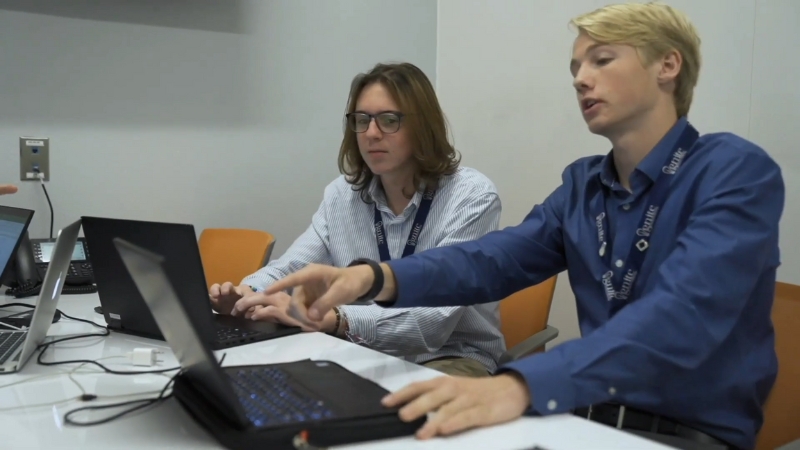
Traditional models push real exposure to internships and professional tools into college or early employment. Ignite shifts that exposure into grades 11 and 12. Students complete internships, manage deadlines with external partners, and use the same software and workflows as professionals.
Long term, this reduces mismatch. Students who exit a pathway early do so before accumulating tuition debt. Students who persist enter postsecondary education or employment with clearer intent and documented skills.
One underappreciated effect of programs like Ignite is how they change the nature of academic writing and research expectations for high school students.
Because projects are tied to real industry problems, students are required to document decisions, justify assumptions, and communicate outcomes in formats closer to professional briefs than standard essays.
In practice, this pushes students to develop stronger analytical writing habits earlier, including source evaluation, structured argumentation, and clarity under real constraints.
As a result, many students begin seeking external reference frameworks to benchmark their work against postsecondary standards, often reviewing examples and research models available through academic writing repositories such as essays.studymoose.com, not for shortcuts, but to understand how evidence-based arguments are constructed in higher education and professional settings.
This shift reinforces Ignite’s broader goal of reducing the gap between secondary education and the expectations students will face in college or the workplace.
Credentials Before Graduation – Change the Signal Students Send
View this post on Instagram
Ignite students graduate with recognized certifications in areas such as data analysis, business software, digital marketing, or health-related technical skills. These credentials are portable and verifiable.
From a perspective that shifts a graduate from “entry level unknown” to “entry level with proof.” From a student perspective, it creates optionality rather than locking them into a single route.
College Acceleration without Removing College Access
Dual credit remains part of the model. Many Ignite participants graduate with 6 to 12 college credits, which can reduce the time to a degree or allow flexibility once enrolled.
This matters in a period when tuition sensitivity is increasing, and families are scrutinizing return on investment more closely.
Regionalization of Education is a Quiet Structural Change
Once multiple districts send students to a shared professional studies campus, Northwest Arkansas effectively operates a regional upper high school layer. This reduces duplication of specialized labs and employer networks and increases depth within each pathway.
| Area | Likely effect |
| District budgets | Lower duplication of high-cost facilities |
| Employer engagement | Deeper partnerships rather than shallow outreach |
| Student mobility | More cross-district collaboration |
| Scheduling | Increased use of half-day or block attendance models |
This model also increases coordination pressure. Transportation, seat allocation, and admissions criteria become regional policy questions rather than district-level details.
Equity and Access Risks That Will Shape Long-term Impact
Expansion does not automatically equal access. Even at 1,500 seats, demand may still exceed supply. Transportation remains unresolved at the regional level, which disproportionately affects students without flexible family schedules.
Admissions processes must balance readiness with opportunity. If selection leans too heavily on prior exposure or academic signaling, the program risks reinforcing existing inequities rather than expanding access.
These factors will determine whether Ignite becomes a regional equalizer or a hhigh-performingbut but gated pathway.
Workforce Alignment Beyond Clinical Roles
Although health care is the anchor, the impact extends beyond nurses and technicians. Modern health systems rely on:
- data analytics
- cybersecurity and IT infrastructure
- supply chain management
- compliance and regulatory operations
- patient experience and communications
Ignite pathways already include technology, engineering, and business strands that align with these roles. Long term, this creates a diversified pipeline rather than a narrow clinical funnel.
How To Measure Long-Term Success Realistically
A serious evaluation over the next 5 to 10 years should focus on outcomes rather than narratives.
| Category | Indicator |
| Access | Applicants per seat, district participation mix |
| Credentials | Number and type of certifications earned annually |
| WWork-basedlearning | Internship completion rates and hours |
| Postsecondary efficiency | Average college credits earned before graduation |
| Workforce alignment | Local placement into health and related sectors |
| Equity | Participation by income proxy and school of origin |
These measures determine whether the expansion delivers structural value or symbolic growth.
Bottom Line

The Bentonville Ignite expansion is a regional infrastructure move, not an educational trend experiment.
Scaling from 600 to a potential 1,500 students, embedding the program within a health care campus, and drawing from multiple districts directly aligns K–12 education with Northwest Arkansas’s demographic growth and economic reality.
If access and quality scale together, the long-term impact will be measurable in higher credential attainment, earlier workforce readiness, and reduced strain on traditional high school systems.
If access lags behind demand, the program will still produce strong outcomes, but for a narrower segment of students.