
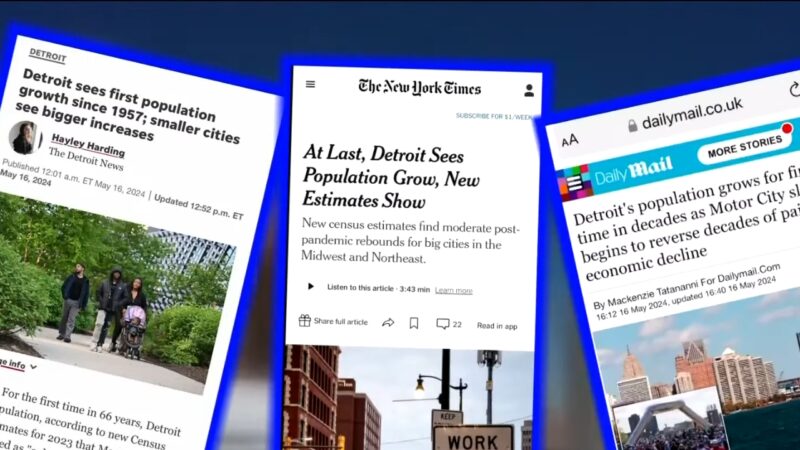
Detroit is gaining residents again, and the latest Census figures show that the growth has continued for several years.
New U.S. Census Bureau estimates released in May 2026 put the Detroit population at 649,095 residents as of July 1, 2025. That was 5,060 more people than the comparable 2024 estimate of 644,035, an increase of about 0.8%.
Detroit has now posted population growth for three years in a row after decades of losses.
The change is notable because city spent much of the second half of the 20th century shrinking. Manufacturing jobs disappeared, more residents moved to the suburbs, and the city later faced severe financial problems. The population peaked at more than 1.8 million in 1950 and fell to 639,111 in the 2020 Census.
Recent gains are still modest compared with that long decline, but the trend has clearly shifted.
Detroit also remains the largest city in Michigan by a wide margin. Our broader look at the Michigan population shows how Detroit compares with the rest of the state and puts the recent growth into a wider demographic context.
Detroit Population in 2026
There is no official Census Bureau population estimate dated 2026 yet.
The newest city-level figures available in 2026 are the Census Bureau’s Vintage 2025 estimates, released on May 14, 2026. Those estimates measure the population as of July 1, 2025.
| Year | Detroit population estimate | Change from previous year |
|---|---|---|
| 2023 | 637,452 | +3,233 |
| 2024 | 644,035 | +6,583 |
| 2025 | 649,095 | +5,060 |
The series shows almost 15,000 additional residents over three years.
That is a much clearer trend than the first population gain reported several years ago.
The Census Bureau’s Vintage 2025 city and town estimates are the most recent completed set of population estimates available for U.S. cities.
Detroit Is Finally Reversing Decades of Population Loss

Detroit had spent more than six decades associated with population loss.
The city went from one of America’s largest industrial centers to a place repeatedly used as an example of urban decline. Manufacturing losses, racial segregation, suburban migration, vacant housing and the 2013 municipal bankruptcy all contributed to that story.
A reversal therefore matters even when the annual increase is measured in thousands rather than tens of thousands.
Population affects the size of a city’s tax base, housing demand, neighborhood stability, business investment and the amount of federal and state funding tied to demographic data.
For Detroit, continued growth also changes expectations about the city’s long-term trajectory.
The current population remains far below the 713,777 residents counted in 2010 and nowhere near the 1950 peak. Recent gains should therefore be viewed as stabilization and early recovery rather than a return to Detroit’s former size.
Detroit Is 26th Largest City in the United States
Detroit’s population gain has also affected its national ranking.
The city is currently the 26th-largest city in the United States based on the latest Census estimates.
Detroit sits behind Boston and ahead of Louisville and Portland.
| Rank | City | Latest population estimate |
|---|---|---|
| 24 | Las Vegas | 679,817 |
| 25 | Boston | 672,973 |
| 26 | Detroit | 649,095 |
| 27 | Louisville/Jefferson County | 641,962 |
| 28 | Portland | 635,109 |
Detroit moved ahead of Portland in the previous round of Census estimates and retained its position in the latest data.
The comparison is interesting because American cities are moving in very different demographic directions. Las Vegas continues to attract new residents, while Louisville has experienced a more mixed population trend.
Detroit Led Michigan in Population Growth
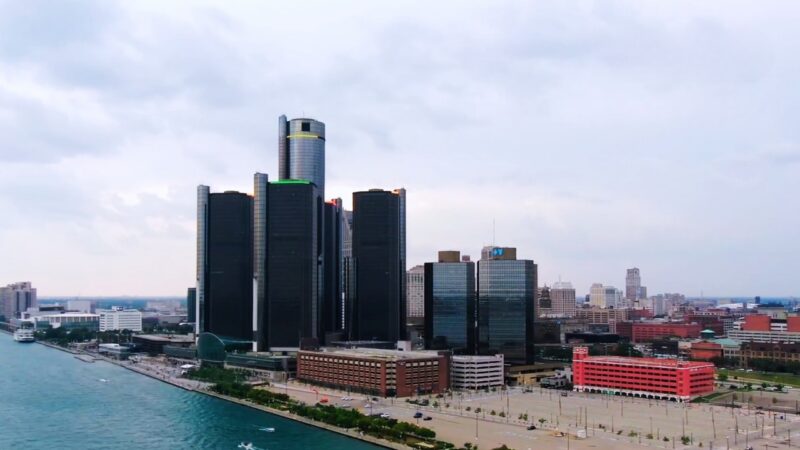
Detroit added more residents than any other Michigan community in the latest Census estimates.
The City of Detroit reported in May 2026 that its gain exceeded every other city, village and township in Michigan.
Grand Rapids ranked second, adding about 1,700 residents.
Detroit’s approximately 0.8% growth rate also exceeded Michigan’s statewide growth rate of roughly 0.28% over the same period.
The city was one of only three communities in Wayne County that had grown compared with the current 2020 estimates base.
That geographic pattern matters. Population growth in southeast Michigan has historically favored suburban communities, while Detroit itself lost residents.
The latest numbers show the central city now participating in regional growth rather than automatically moving in the opposite direction.
The Census Numbers Have Changed Because Detroit Challenged Earlier Estimates
Anyone comparing older articles about Detroit’s population will notice that some figures no longer match.
That is because Census population estimates are revised as better information becomes available.
Detroit challenged earlier Census estimates after city officials argued that thousands of occupied housing units were being missed.
One problem involved vacant buildings that had been renovated and returned to residential use. If a property continued to be classified as vacant or demolished in the underlying data, residents living there could be missed by the population-estimation process.
The Census Bureau later incorporated additional housing information into its estimates.
That is why the current Vintage 2025 series lists:
- 634,219 residents in 2022
- 637,452 in 2023
- 644,035 in 2024
- 649,095 in 2025
Older published estimates should not simply be combined with the new series because Census vintages use revised population bases and methodology.
Housing Is a Major Part of Detroit’s Population Story
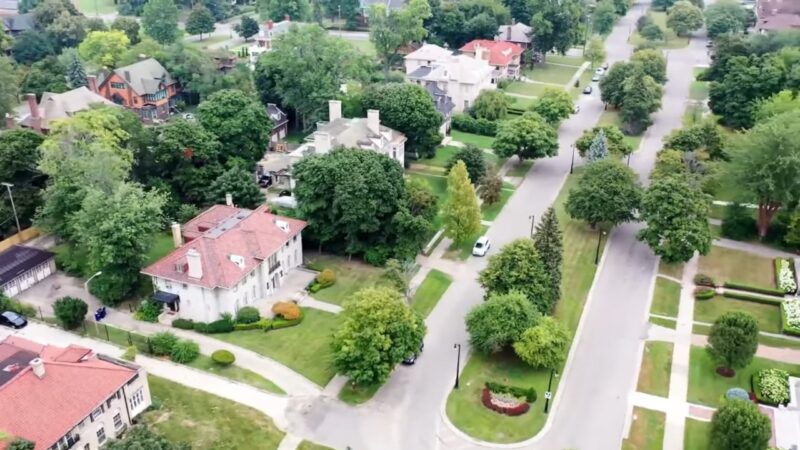
Housing is one of the clearest explanations city officials give for the recent population increase.
Detroit contains thousands of properties that were abandoned during decades of population decline. Returning those buildings to residential use adds capacity without requiring the city to expand geographically.
The city says rehabilitated houses and apartment buildings have played an important role in the new Census estimates.
One example is the former Higginbotham School near Wyoming Avenue and Eight Mile Road. The approximately $35 million redevelopment is converting the former school and adjacent new buildings into 100 affordable housing units.
Detroit’s broader 2025-2030 Affordable Housing Strategy calls for preserving 10,000 affordable units and constructing another 3,000.
Housing development accelerated further after the city’s Payment in Lieu of Taxes program streamlined tax treatment for affordable projects. By October 2025, more than 2,400 new or preserved affordable units had been approved, with applications involving thousands more moving through the process.
More housing does not automatically produce population growth, but Detroit needs usable homes if it wants to retain existing residents and accommodate newcomers.
New Housing Projects Are Continuing in 2026
Construction has continued under Mayor Mary Sheffield’s administration.
In June 2026, Detroit announced three developments in Corktown that will add 188 mixed-income housing units, including more than 150 affordable homes.
The Detroit Housing Commission is also moving ahead with the redevelopment of the Villages of Parkside. Plans call for replacing the existing development and eventually expanding the number of low-income units from 125 to approximately 480.
The challenge is maintaining affordability as more neighborhoods attract investment.
Population growth can support businesses and property values, but rapid increases in rents and housing prices can push existing residents out. Detroit’s long-term success therefore depends on adding residents without simply replacing households that can no longer afford to stay.
Detroit’s Economy Is Growing, but the Labor Market Still Has Problems
Population growth is happening alongside gradual improvement in Detroit’s economy.
The city’s February 2026 economic forecast projects continued employment and wage growth through 2030, although the outlook remains uneven.
Detroit’s unemployment rate was projected to increase slightly from 9.7% in 2025 to around 10% in 2026 before gradually declining later in the decade.
The auto industry remains particularly important.
Changes in electric vehicle demand, production schedules and national trade policy can still affect Detroit manufacturing. Service industries are expected to produce some growth, particularly leisure and hospitality.
The city’s latest economic outlook describes Detroit’s economy as resilient, with moderate employment and wage growth expected after several years of unusually rapid post-pandemic changes.
Population growth therefore does not mean Detroit has solved its economic problems. It does mean that more people are choosing to remain in or move to the city at the same time that its employment base is becoming more stable.
Falling Violent Crime Is Another Significant Change
Public safety has also moved in a favorable direction.
Detroit recorded 165 criminal homicides in 2025, according to preliminary figures released by the city in January 2026.
That was down 19% from 203 in 2024 and 35% from 252 in 2023.
Nonfatal shootings fell 26% during 2025, while reported carjackings declined 46% from the previous year.
The City of Detroit described the 2025 homicide total as another historic low.
Crime remains a serious issue in parts of Detroit, and one year of improvement does not remove longstanding disparities between neighborhoods.
The scale of the decline is still relevant to population growth. Families and businesses consider safety when deciding where to live, open a business or invest in property.
Detroit Is Still Much Smaller Than It Was at Its Peak
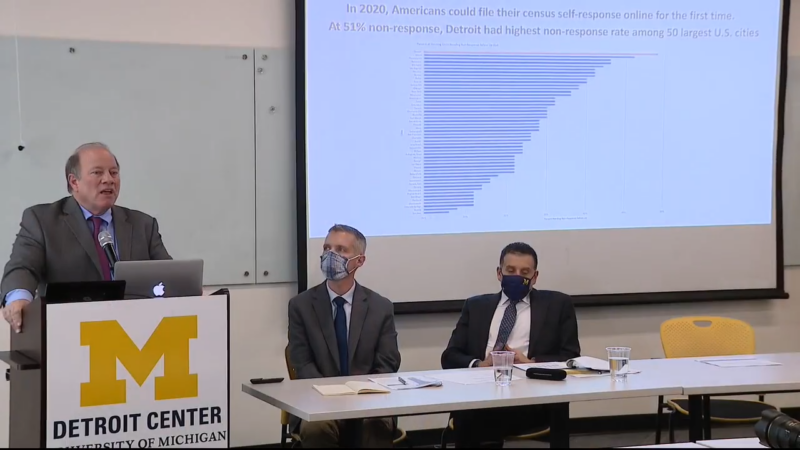
The new growth should be viewed against Detroit’s unusual demographic history.
| Year | Detroit population |
|---|---|
| 1950 | 1.85 million |
| 1960 | 1.67 million |
| 1980 | 1.20 million |
| 2000 | 951,270 |
| 2010 | 713,777 |
| 2020 Census | 639,111 |
| 2025 estimate | 649,095 |
Detroit lost more than 1 million residents between its mid-century peak and the beginning of the 2020s.
That decline transformed entire neighborhoods and left the city with an unusually large inventory of vacant land and abandoned structures.
Three years of growth do not erase that history.
They do show that the city’s population floor may have been reached, at least for now.
Detroit Is Now Growing Under Mayor Mary Sheffield
View this post on Instagram
The city’s political leadership has also changed.
Mike Duggan, who served as mayor from 2014 through 2025, made reversing Detroit’s population decline one of the benchmarks of his administration.
The first official gain arrived during his tenure.
Mayor Mary Sheffield took office in January 2026 and now oversees the next phase of that population trend.
Her administration has said its strategy will focus on retaining current Detroiters, attracting new residents and continuing to expand housing.
That distinction matters because sustained population growth is more difficult than producing one or two positive annual estimates.
The city now has to prove that residents continue to stay even as housing costs, employment conditions and the broader U.S. economy change.
Detroit’s Population Growth Is Different From Sun Belt Growth
Detroit is not experiencing the kind of rapid expansion seen in many Sun Belt cities.
Places such as Las Vegas, Phoenix and parts of Texas have gained large numbers of residents through domestic migration and extensive new suburban development.
Detroit’s recent growth is occurring within a city that already has extensive roads, neighborhoods, utilities and housing infrastructure built for a much larger population.
That gives Detroit a different opportunity.
Instead of building entirely new communities on undeveloped land, growth can come from restoring vacant properties, filling existing neighborhoods and reusing abandoned commercial and institutional buildings.
Detroit has even appeared in discussions about potential U.S. climate migration and so-called receiving cities because of its existing infrastructure, Great Lakes location and available urban land.
Climate migration is not established as a major cause of Detroit’s current population increase, but the city’s available capacity could become more important if domestic migration patterns change over the coming decades.
What Could Stop Detroit’s Population Growth?
Three years of gains are encouraging, but Detroit still faces several obstacles that could interrupt the trend.
- Housing affordability: Rising property values and rents can make desirable neighborhoods less accessible to current residents.
- Unemployment: Detroit’s unemployment rate remains well above the national average.
- Auto industry uncertainty: Manufacturing remains exposed to changes in vehicle demand, tariffs and the transition toward electric vehicles.
- Poverty: Census data continue to show a high share of Detroit residents living below the poverty line.
- Vacant and deteriorated housing: The city still has buildings that cannot accommodate residents without major rehabilitation.
- Schools and public services: Sustained growth requires reliable schools, transportation, sanitation, recreation and other neighborhood services.
Population growth therefore works best as one indicator among many rather than a complete measure of Detroit’s recovery.
Methodology
- Latest population: The 649,095 figure comes from the U.S. Census Bureau Vintage 2025 population estimates released in May 2026 and represents the estimated population on July 1, 2025.
- Annual comparisons: Annual population figures are taken from the same Census vintage wherever possible. Estimates from different vintages should not be directly combined because earlier years are revised when new data become available.
- City ranking: National city rankings use the Census Bureau’s latest incorporated-place population estimates.
- Housing: Housing information comes from City of Detroit housing and redevelopment announcements and the city’s 2025-2030 Affordable Housing Strategy.
- Crime: 2025 crime figures are preliminary year-end numbers released by the City of Detroit in January 2026.
- Economic outlook: Employment and unemployment projections come from Detroit’s February 2026 economic and revenue forecast.
References
- U.S. Census Bureau, QuickFacts: Detroit City, Michigan
- U.S. Census Bureau, City and Town Population Totals: 2020-2025
- City of Detroit, Detroit Gains Thousands of New Residents for Third Straight Year
- City of Detroit, 2025-2030 City of Detroit Affordable Housing Strategy
- City of Detroit, Three Corktown Developments Bring 188 Housing Units
- City of Detroit, Detroit Reports Another Decline in Violent Crime in 2025
- City of Detroit, Detroit Economic and Revenue Outlook for 2026-2030