

In 2025, the average adult spent between 6 and 8 hours a day consuming media, and most of that time wasn’t spent watching TV, according to the Marketing Charts.
Instead, we scrolled endlessly through TikTok and Instagram Reels, hopped between streaming services trying to find something worth watching, listened to podcasts while cooking, and caught up on niche newsletters or AI-curated news.
Traditional television continued to decline. Short-form video dominated. Podcasts quietly grew. And artificial intelligence started to shape not only how we consumed media, but what we consumed in the first place.
The Slow Fade of Traditional TV – Still Alive, But Barely Hanging On

Let’s be blunt: linear TV is no longer the default.
In 2025, fewer than 40% of U.S. households subscribed to traditional cable or satellite TV, down from about 50% just three years prior. The largest remaining TV audiences were primarily 55 and older, with younger viewers almost absent from scheduled programming.
Who’s Still Watching Traditional TV?
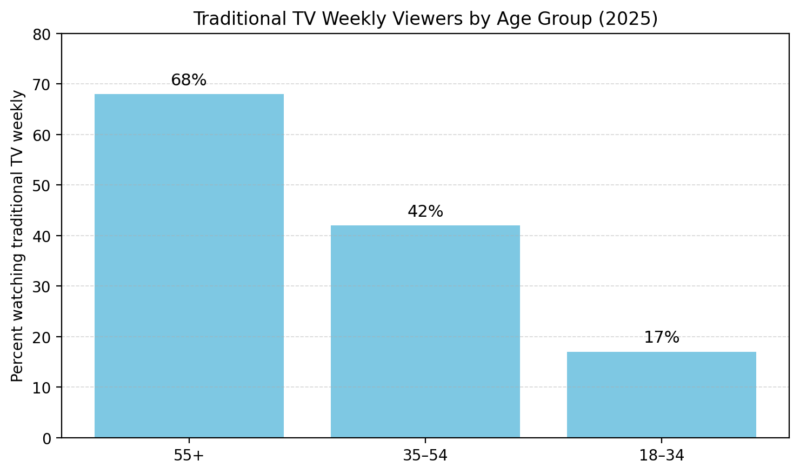
That said, some events still made traditional TV feel essential. Live sports, breaking news, and award shows were among the few remaining drivers of appointment viewing.
“I only turn on cable for NFL games and the Oscars,” one viewer told us. “Everything else is Netflix or YouTube.”
Streaming Platforms: Saturated, Fragmented, and Overwhelming
Remember when Netflix was the only game in town? Those days are long gone.
By 2025, most U.S. households subscribed to 4 to 6 streaming services, but many were struggling to justify the cost. Subscription fatigue was real. Users constantly rotated services based on promotions or specific shows, a behavior known as subscription churn.
Most Subscribed Streaming Platforms (U.S., 2025)
| Platform | Est. Subscribers (U.S.) | Notable Trends |
| Netflix | 220M+ (global) | Lost ground to competition; ad-tier grew |
| Prime Video | 200M+ | Bundled with Amazon; strong engagement |
| Disney+ | ~160M | Family content stronghold |
| Max (HBO) | ~90M | Premium originals, declining growth |
| Hulu | ~50M | Still relevant via bundles |
| Peacock / Paramount+ | ~30M each | Gained ground through live sports, news |
| Apple TV+ | ~25M | High-quality originals, low volume |
In parallel, FAST platforms (Free Ad-Supported TV) like Tubi, Pluto TV, and Roku Channel grew rapidly, especially among cost-conscious viewers who were tired of juggling subscriptions.
“I use Tubi more than Netflix now,” said a 31-year-old in Austin. “It’s free, has classic shows, and I don’t have to think too hard.”
Social Media in 2025: Shorter, Faster, and (Maybe) Too Much
View this post on Instagram
If 2020s social media had a slogan, it might be: “Watch less, scroll more.”
Key Trends
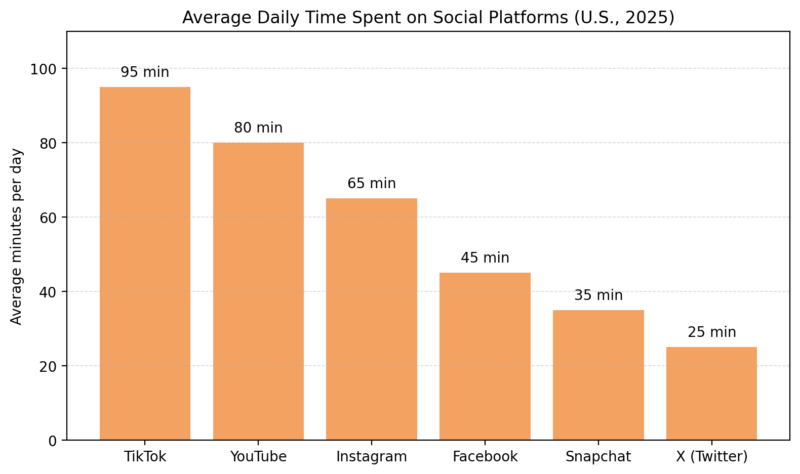
- TikTok dominated attention spans, especially among Gen Z and younger millennials. Average daily usage? Over 95 minutes.
- YouTube Shorts exploded in popularity, pushing creators to repurpose long-form videos into bite-sized clips.
- Instagram Reels fought to stay relevant and mostly succeeded, especially among 25–40-year-olds.
- X (formerly Twitter) became more chaotic, with major advertiser and user losses following controversial platform changes.
What changed in 2025 wasn’t just which apps people used, but how they used them. People scrolled without watching full videos. Engagement dropped, even as usage time increased.
Many users started experiencing what experts now call “algorithm fatigue.”
“I open Instagram and just scroll through Reels without watching anything all the way,” one user noted. “It’s like junk food for my brain.”
Top Social Platforms by Average Daily Use (U.S., 2025)
Websites, News, and the Death of the Homepage
People still read the news in 2025, just not the way they used to.
Traffic to traditional websites (like nytimes.com or cnn.com) continued to decline, replaced by aggregated news feeds, email newsletters, and increasingly, AI-curated digests.
What Replaced Direct Website Visits?
| Format | Popularity (2025) | Notable Examples |
| Email Newsletters | 📈 Rising | Substack, Axios, TheSkimm |
| News Aggregators | 📈 Rising | Apple News, Google News |
| Social Media Clips | 📉 Mixed | TikTok explainers, YouTube news |
| AI Summaries | 📈 Rising | ChatGPT, Gemini, Artifact |
| Direct Website Visits | 📉 Declining | Homepages rarely visited |
Instead of “going to a site,” readers increasingly stumbled across stories, often as screenshots, reposts, or AI recaps.
One tool that saw a quiet boom in 2025? VPNs, especially among iPhone users who wanted more control over their browsing experience, or access to content restricted by region.
Services like Veepn offered simple, effective VPN solutions for iOS users who wanted to stay anonymous while surfing, streaming, or even just checking the news.
Podcasts: Still Intimate, Still Growing
There are 584 million podcast listeners, but this is why podcasting is a huge opportunity.
The number of listeners is growing each year…
However, the growth of new podcasts has been slowing down.
Create one; there isn’t much competition, and it’s not hard to get listens. pic.twitter.com/1OvZJ1utra
— Neil Patel (@neilpatel) May 28, 2025
Unlike most forms of media, podcasts thrived in 2025. Why? Because they offered depth, voice, and the chance to disconnect from screens.
- Over 500 million people globally listened to podcasts regularly.
- Top categories included true crime, personal finance, culture commentary, wellness, and interviews.
- YouTube emerged as a major podcast platform, especially for video podcasts with clips shared as Shorts.
Podcasts were often consumed passively, during commutes, workouts, or while cooking. For many, they offered an antidote to the rapid-fire chaos of visual media.
Gaming and Interactive Media: The Silent Attention Giant

Gaming isn’t usually lumped in with “media consumption,” but in 2025, it absolutely should be.
Among teens and young adults, gaming often replaced passive viewing entirely. It wasn’t just about playing; it was about watching others play, chatting in Discord, customizing avatars, or attending virtual concerts in games like Fortnite or Roblox.
“My daughter watches Minecraft videos the way I watched Saturday morning cartoons,” said one parent. “It’s a whole ecosystem.”
Gaming blurred the line between entertainment, socializing, and identity expression, and in 2025, that made it one of the most immersive media formats on the planet.
The Rise of AI-Curated Media: Invisible But Everywhere
A major shift happened quietly in 2025: AI stopped being a novelty and started shaping how people experienced media.
- Many users relied on ChatGPT, Gemini, or Claude to summarize articles, recommend content, or draft newsletters.
- Platforms used AI to personalize feeds, making each user’s TikTok, Netflix, or Spotify experience compu.
- Even content itself became AI-generated: influencers, TikTok videos, and entire YouTube channels run by bots began gaining traction.
This created a strange duality: people wanted authenticity but increasingly consumed synthetic media.
Final Thoughts

Here’s what 2025 taught us: People aren’t watching less. They’re just watching differently.
They’re watching shorter. Faster. More fragmented.
On more platforms. In more formats. Often with less satisfaction.