

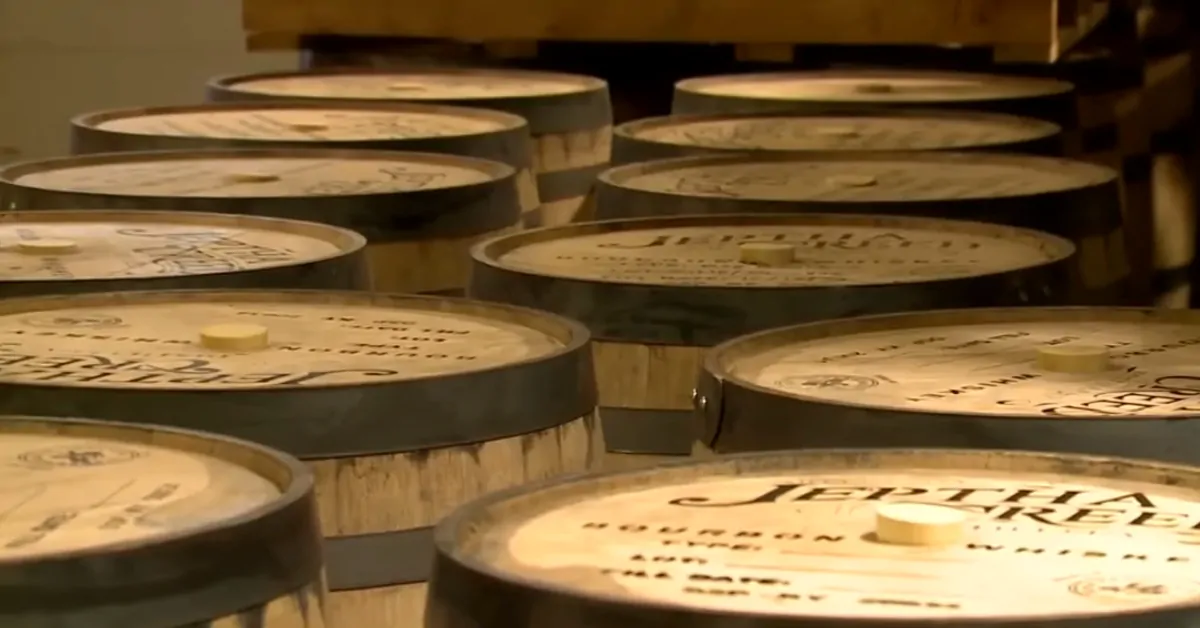
Kentucky has reached a milestone that sounds exaggerated until you see the numbers.
The state is now home to more than 16.1 million barrels of bourbon aging in warehouses, while its population sits at about 4.54 million people. That means there are over 3.5 barrels of bourbon for every single resident, not counting other spirits stored alongside it.
This is not a marketing slogan or a tourism exaggeration. These figures come from official inventory filings compiled by the Kentucky Distillers Association and reported to the Kentucky Department of Revenue.
The barrel count reflects a snapshot of what was physically aging in Kentucky warehouses as of January 1, 2025.
The Numbers Behind The Headline
View this post on Instagram
The scale becomes clearer when broken down plainly.
Kentucky currently holds 16.1 million barrels of bourbon and roughly 17.1 million total barrels when other aging spirits are included.
Even using the conservative bourbon-only figure, the math produces 3.51 barrels per person. Including all spirits pushes that closer to 3.7 barrels per resident.
Just seven years earlier, in 2018, Kentucky had about 7.5 million bourbon barrels aging statewide. In that short window, the inventory has more than doubled, while population growth has remained mostly flat. The barrel count has surged. The people count has not.
Why The Barrels Keep Piling Up
Bourbon production is structurally slow. By law, bourbon must be aged in new charred oak containers.
Those barrels cannot be reused for bourbon, and the whiskey inside them cannot be rushed. Many producers intentionally age bourbon well beyond the two-year minimum to meet consumer expectations and avoid labeling restrictions.
🥃💪 The Kentucky Distillers Association released the 2023 Bourbon Economic Report showing record breaking statistics. With modern alcohol laws in place, the signature industry has been able to remain a cornerstone for a stronger Kentucky.
📈🏭 Eric Gregory, President of KDA,… pic.twitter.com/N7tL4GtOgW
— KY Distillers’ Assoc (@KyDistillers) February 6, 2024
At the same time, distillers have been filling barrels at record levels. In 2023 alone, Kentucky distilleries filled approximately 3.2 million new barrels, one of the highest annual totals ever recorded.
When new barrels are filled faster than old barrels are emptied, inventories expand year after year.
This is how Kentucky arrived at a situation where bourbon production resembles long-term storage more than short-term manufacturing.
A Billion Dollar Whiskey Sitting Still
Each of those millions of barrels represents real money locked away. According to state assessments, the total assessed value of aging barrels in Kentucky now exceeds $10 billion, a figure that has climbed rapidly alongside inventory levels.
For years, Kentucky taxed those aging barrels as property, making bourbon one of the rare products taxed while still unfinished. That tax burden reached tens of millions of dollars annually, reinforcing just how large the stockpile had become.
The state has since moved to phase out the barrel tax, acknowledging that the inventory has reached a scale that affects investment decisions, warehouse expansion, and long-term risk.
What Makes This Moment Different
Kentucky has always made bourbon. What is new is the imbalance. The state is no longer just producing whiskey for current demand. It is producing for expectations about the future that are stacked, literally, across thousands of acres of rickhouses.
If global demand continues rising, these barrels become a competitive advantage. If demand slows, Kentucky is left with aging stock that cannot easily be repurposed or liquidated quickly without affecting prices and brand value.
Either way, the outcome will not be immediate. Bourbon moves on a timeline measured in years, not quarters. The decisions made today will not fully reveal their consequences until the late 2020s and beyond.
A Fact That Sounds Like A Joke But Is Not
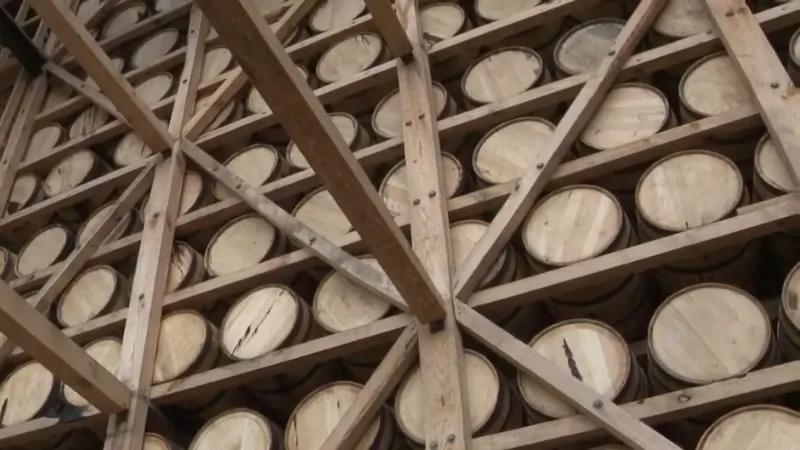
There are now more barrels of bourbon in Kentucky than people by a margin large enough to matter economically, politically, and culturally. The warehouses are real. The barrels are real. The numbers are real.
Kentucky has effectively become a holding ground for the future of American whiskey, betting that tomorrow’s drinkers will match today’s confidence. Whether that confidence proves prescient or excessive is a story that is still aging.