
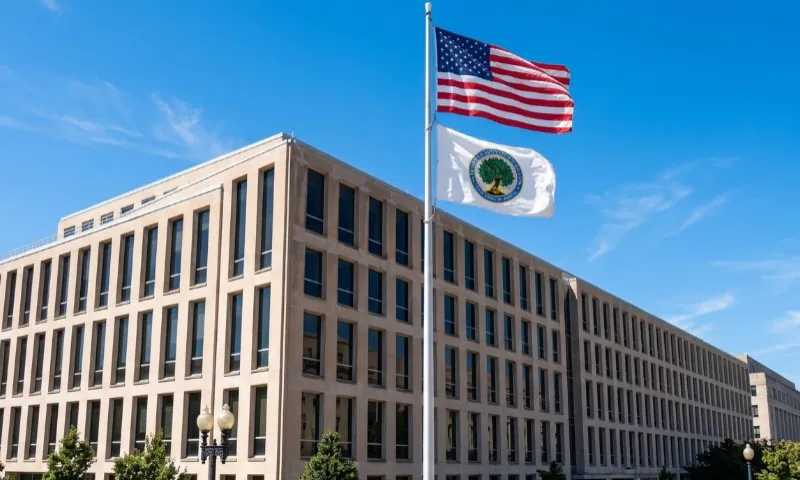
A federal court ruling on June 24, 2026, forced the U.S. Department of Education to temporarily broaden its definition of programs eligible for professional-degree treatment under federal student-loan rules.
An updated interim list released June 29 expanded eligibility, followed by another revision on July 10.
Professional-degree status now covers 29 CIP-coded programs instead of the earlier 11-field framework. As a result, substantially more graduate students can qualify for the higher federal borrowing tier while litigation continues.
Financial consequences are significant for affected students, especially because federal borrowing limits differ sharply by classification:
- Professional students may borrow up to $50,000 each year.
- Professional students may borrow up to $200,000 in total.
- Other graduate students face an annual limit of $20,500.
- Other graduate students face an aggregate limit of $100,000.
A difference of that size can determine how students finance expensive graduate programs, particularly in nursing, rehabilitation, therapy, psychology, and other healthcare disciplines.
Why the Court Intervened

Legal conflict centers on the Department of Education’s Reimagining and Improving Student Education Final Rule, commonly known as the RISE Final Rule.
Published May 1, 2026, that rule implemented new borrowing limits for graduate and professional students.
Professional-degree classification under the rule included several additional requirements. Programs generally needed to satisfy criteria tied to degree level, duration, post-baccalaureate study, and professional licensing.
Key requirements included:
- Programs generally had to operate at the doctoral level.
- At least six academic years of postsecondary study were generally required.
- At least two years of study after a bachelor’s degree had to be included.
- Professional licensure was typically expected.
Nursing did not qualify under that narrower framework. Several other health-related programs also fell outside the professional category, raising concerns among nursing, education, and healthcare organizations.
Challenges eventually reached the U.S. District Court for the District of Columbia through consolidated cases 26-1780 and 26-1941.
A preliminary stay issued by the court blocked the disputed portions of the professional-degree definition.
Federal student-loan caps themselves were not blocked. Instead, judicial intervention affected how programs are classified for purposes of deciding which graduate borrowers can access the higher professional loan limits.
Policy Status Is Temporary
View this post on Instagram
Education Department officials continue to defend the original RISE definition and have stated that they consider it lawful.
Agency officials have not treated the broader 29-program list as a permanent policy change. Instead, current classifications operate under temporary conditions created by the federal court order.
Students considering BSN to MSN programs online are among those who may need to account for changing federal borrowing classifications while the policy dispute continues.
Department Continues to Defend RISE
Agency officials are still supporting the original professional-degree framework established under the RISE Final Rule. Their position is that the narrower definition complies with federal law and can ultimately be enforced if the court allows it.
Current litigation therefore affects implementation rather than ending the broader policy dispute.
Further court proceedings could produce several outcomes.
Judges could allow the original definition to take effect, require additional changes, or continue blocking portions of the policy while litigation proceeds.
Interim List Depends on Court Action
Current treatment of the 29 programs operates as an interim administrative measure tied to the preliminary court stay.
Professional status for affected programs is therefore connected to the legal conditions currently in place. Changes in those conditions could also change how federal loan rules apply to individual programs.
Final classifications could shift after:
- Additional court proceedings
- A later judicial ruling
- Further Education Department action
- A final resolution of the consolidated litigation
No current classification should be treated as guaranteed for future academic years while the legal dispute is unresolved.
Students Face Classification Uncertainty
Students enrolled in affected programs face some uncertainty about future federal borrowing eligibility.
A program treated as professional during one academic period could potentially receive a different classification later if the legal basis supporting the temporary expansion changes.
Timing could be especially important for students entering multi-year programs. Borrowers may begin their studies under one classification and encounter different federal lending rules before graduation if court decisions or agency policies change.
Schools also have to account for that uncertainty when setting institutional loan policies. Some institutions may choose more conservative program-level limits if they expect classification rules to change again.
Some Graduate Programs Are Still Excluded

Broader interim treatment does not extend professional status to every advanced graduate program. Several disciplines still fall outside the professional category.
Current exclusions include:
- Industrial-organizational psychology
- Educational psychology
- Applied behavior analysis
- Pharmaceutical sciences
Students in those fields continue to fall under graduate borrowing rules rather than the higher professional borrowing tier unless a later policy change alters their classification.
Future Eligibility Depends on Litigation
Ongoing litigation will determine how much of the original RISE framework can ultimately take effect and which graduate programs qualify for the higher borrowing tier over the longer term.
Court decisions could narrow the interim list, preserve broader eligibility, or require another revision to the professional-degree definition.
Agency action could also follow future rulings if officials need to adjust classifications or implementation rules.
Students, institutions, and program administrators therefore have to treat current professional status as temporary rather than settled.
Federal borrowing access for affected programs may continue to change until courts and Education Department officials reach a more durable legal and administrative outcome.
What the Department Changed
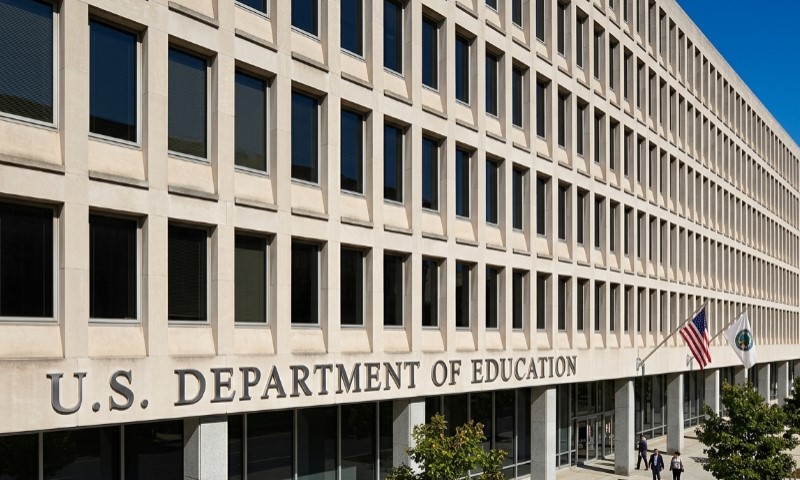
Following the court order, Education Department officials adopted an interim list covering 29 CIP-coded programs for as long as the stay is in effect.
Several healthcare and clinical disciplines received professional treatment under the temporary policy, including programs that had been excluded under the narrower definition:
- Registered Nursing leading to an MSN
- Nursing Practice leading to a DNP
- Nurse Anesthesia leading to a DNAP
- Physical Therapy leading to a DPT
- Occupational Therapy, including OT, MSOT, and OTD credentials
- Physician Assistant or Physician Associate programs
- Athletic Training
- Audiology
- Speech-Language Pathology
- Anesthesiologist Assistant programs
- Several Psy.D. psychology specialties
Another update issued July 10 adjusted treatment of MSN and DNP CIP codes.
Officials broadened how those nursing codes are applied, giving additional programs access to professional-degree classification under the temporary policy.
July 10 revisions also corrected an earlier omission involving Clinical Psychology. Ph.D. programs in Clinical Psychology were added alongside Psy.D. programs, expanding coverage within that discipline.
Interim classifications do not represent a permanent rewrite of federal policy. Current eligibility depends on the court stay and could change as litigation moves forward.
Why the Change Matters
Students placed in the professional tier can access considerably more federal borrowing capacity than students treated as ordinary graduate borrowers.
Financial differences created by the two tiers include:
- $29,500 more in annual borrowing capacity for professional students.
- $100,000 more in aggregate federal borrowing capacity.
Such differences matter most in programs carrying high tuition, clinical training expenses, equipment costs, and other education-related charges.
Nursing, physical therapy, occupational therapy, and similar healthcare programs often require extensive graduate-level training before students can enter professional practice.
Concerns also extend to workforce pipelines.
LeadingAge warned that narrower eligibility could weaken educational pipelines for occupations important to aging services, especially nursing and rehabilitation therapies.
Higher professional loan limits can therefore affect enrollment, completion, and workforce entry in fields dependent on advanced professional education.
Grad PLUS loans, however, were not restored by the court order or the expanded designation. Grad PLUS was eliminated effective July 1, 2026, leaving students subject to the new federal loan structure.
Institutions also have authority to establish program-level federal loan limits.
Education Department guidance has indicated that colleges and universities may choose to keep temporarily reclassified programs at lower graduate borrowing levels.
Summary
Court intervention forced Education Department officials to replace their narrower professional-degree framework with a substantially broader interim list covering 29 CIP-coded programs.
Nursing, rehabilitation, psychology, and other healthcare students now have access to federal borrowing limits of up to $50,000 per year and $200,000 overall when their programs qualify for professional treatment.
Graduate students outside that category are limited to $20,500 annually and $100,000 in total.