


WASHINGTON — On the final day of Affordable Care Act (ACA) open enrollment in most states, the Trump administration unveiled a new health care proposal it says is aimed at lowering costs and improving consumer control.
But while the plan promises bold changes, it offers few specifics, and would require significant congressional action to become law.
Dubbed “The Great Healthcare Plan,” the proposal outlines goals like reducing prescription drug prices, increasing price transparency, and redirecting federal subsidies from insurers directly to patients.
It’s the latest in a series of efforts by President Donald Trump to reshape the U.S. health care system during his second term.
A Familiar Proposal with New Timing
Much of the plan echoes past proposals Trump has put forward over the years, including calls to send federal health care funds directly to individuals.
“The government is going to pay the money directly to you,” Trump said in a video released by the White House. “You take the money and buy your own health care.”
Administration officials say they envision a future where patients receive funds directly, possibly through health savings accounts (HSAs), to help cover out-of-pocket costs like deductibles and copays.
But the rollout comes with little guidance on how such payments would be distributed, who would qualify, or how large the payments would be.
Congressional Approval Required
Key elements of the plan, especially the direct payments, would need to be approved by Congress, which has already struggled to reach an agreement on extending enhanced ACA tax credits that expired on December 31.
Without those credits, premiums have risen for millions of Americans, and no deal appears imminent as the Senate prepares for a recess.
“We want to start to see that money moved directly to people,” an administration official told reporters during a briefing on Thursday. “There are a lot of different ways that could take place. We are open to working with Congress on how to effectuate that.”
Experts Raise Concerns About Implementation
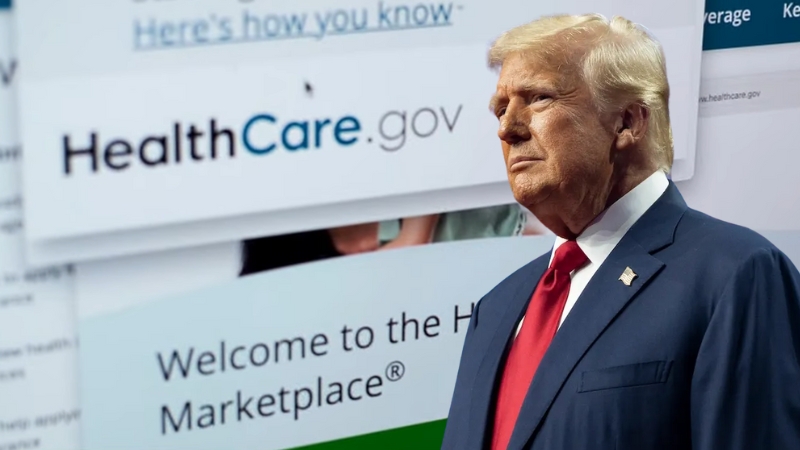
Health policy experts say the plan’s lack of detail makes it difficult to evaluate. “When it comes to health reform, the devil is in the details, and this is very light on details,” said Cynthia Cox, director of the ACA program at KFF, a nonpartisan health policy research group.
Critics argue that sending money directly to patients may sound empowering in theory, but could prove ineffective in practice. Art Caplan, a professor of bioethics at NYU Grossman School of Medicine, warned that health care decisions are often made in moments of crisis, not during calm, cost-conscious comparisons.
“It asks people to be savvy shoppers in moments when they’re most vulnerable,” Caplan said. “The average person doesn’t have time to compare prices during an emergency or serious illness.”
Impact on ACA Marketplaces Unclear
There are also concerns about how the proposal could affect the broader ACA insurance marketplaces. Cox warned that removing existing subsidies and replacing them with individual payments could destabilize the system.
“It has the potential to severely impact the stability of the ACA marketplaces,” she said. “And it could leave people with pre-existing conditions without access to comprehensive coverage.”
Under the current ACA framework, tax credits are applied directly to insurance premiums, lowering monthly costs for consumers. The Trump plan proposes rerouting those subsidies, a shift that would fundamentally change how the system operates.
No Veto Commitment, But No Guarantees
Though the White House says it remains open to ongoing negotiations over the expired ACA credits, Trump has indicated he may veto any extension, preferring instead to prioritize his administration’s new approach.
Earlier this month, the House passed a bill to extend the tax credits for another three years. The Senate is working on its own version, but without a clear path forward, uncertainty remains, both for lawmakers and for millions of insured Americans.
Other Initiatives: Drug Pricing and TrumpRx
The White House unveiled its largest batch of drug pricing agreements, announcing deals with nine new companies.
Only three other drugmakers pressed by Trump have yet to announce pacts with the administration. https://t.co/K5PesR6nBz
— STAT (@statnews) December 22, 2025
Thursday’s announcement also highlighted additional measures the administration says could lower costs, including a push to tie U.S. drug prices to those paid in other wealthy nations, an effort referred to as the “most favored nation” pricing strategy.
Trump officials say they’ve reached pricing agreements with 14 major pharmaceutical companies, and are preparing to launch a new self-pay prescription platform called TrumpRx later this month. The platform aims to offer discounted drugs to consumers without insurance.
However, experts say the real-world impact may be limited. Most insured Americans already pay lower prices through their plans, and Medicaid pays some of the lowest rates in the country. In addition, many of the drugs to be featured on TrumpRx already have generic versions — often available at even lower prices.
Looking Ahead
View this post on Instagram
The administration is urging Congress to pass new health care legislation “without delay,” arguing that the current system, often referred to by Trump as the “Unaffordable Care Act,” places too much financial strain on working families.
But with no bill introduced and negotiations still fluid, it remains to be seen whether the new proposal will gain momentum or stall in the face of legislative gridlock and skepticism from health policy experts.
For now, the plan represents a statement of intent and a potential preview of future debates over how health care in the U.S. will be funded, delivered, and controlled in the years ahead.