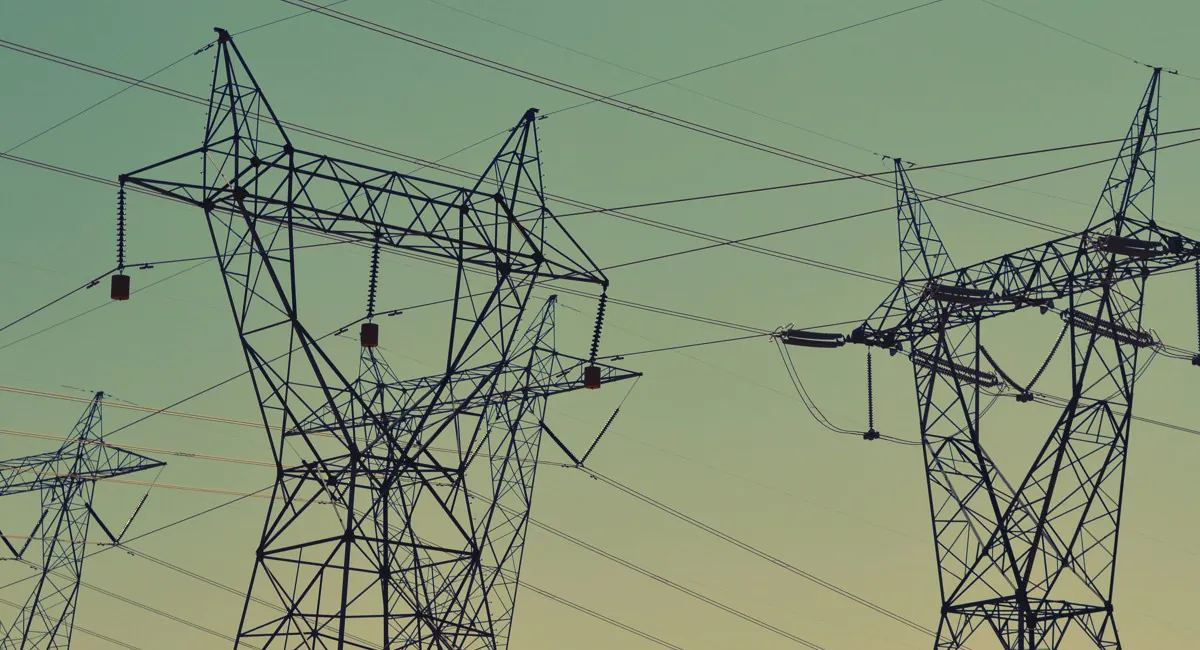
The United States is using more electricity again after years of slow growth, and the power grid may not be upgraded fast enough to handle what is coming before 2030.
Bank of America analysts warned that the country could face a generation shortfall of more than 100 gigawatts between 2026 and 2030.
Their estimate points to at least 230 gigawatts of new power demand during that period, while utilities are expected to add about 93 gigawatts of supply.
The warning does not mean the whole country is about to lose power at once. It means the grid is being asked to serve large new loads faster than utilities can build power plants, substations, transformers and transmission lines.
Data centers are the biggest new pressure point. Artificial intelligence servers need huge amounts of steady electricity. Chip factories, battery plants, electric vehicle charging, industrial projects and hotter summers are adding pressure at the same time.
If the United States does not speed up grid improvements, the effects could show up as higher electric bills, delayed factories, delayed data centers, more emergency grid orders and higher blackout risk during extreme weather.
Table of Contents
ToggleThe Electricity Demand Is Rising Because of Data Centers, or Is It the Only Reason?
U.S. electricity demand was almost flat for about 15 years. That gave utilities a planning model built around slow growth.
The U.S. Energy Information Administration says electricity consumption has risen by an average of 2.1% per year over the last five years. EIA projects demand will keep rising through 2050, with data center server use as a major reason.
That change is important because the grid was not built to absorb this much new demand this quickly.
| New Source Of Demand | Why It Matters For The Grid |
| AI data centers | They need large amounts of steady power every hour of the day. |
| Chip factories | They require reliable electricity for high-value manufacturing lines. |
| Battery and EV factories | They add large industrial loads in specific regions. |
| Electric vehicle charging | Home charging, fleet charging and highway charging add new demand. |
| Hotter summers | Air conditioning demand rises during the same hours when the grid is most stressed. |
| Older grid equipment | Transformers, substations and transmission lines take years to replace or expand. |
Data Centers Are Moving Faster Than Utilities
A large data center can ask for as much power as a small city.
That creates a problem with timing. A tech company can buy land, raise money and announce a data center quickly.
On the other side, a utility still has to study the load, find available generation, upgrade substations, order transformers, build lines and keep the existing system reliable.
The gap between those timelines is one reason the issue has become urgent. Data center developers want power in a few years. Major grid upgrades can take longer.
The Electric Power Research Institute estimated in its Powering Intelligence 2026 report that data centers could use 9% to 17% of U.S. electricity by 2030. That kind of demand would change utility planning across several regions.
The Problem Is Not Only Making More Power
More generation is needed, but generation alone does not solve the problem.
Electricity has to reach the exact place where it is needed. A power plant in one region does not help a data center in another region if the transmission system cannot deliver the electricity.
That is why the country also needs more transmission, faster interconnection, more substations and more grid equipment.
Transformers and large grid components can take years to order. Transmission lines can get delayed by land disputes, permitting, public opposition and fights over who pays. Gas turbines are also in short supply, and Yahoo Finance reported that BofA analysts see natural gas turbines as essentially sold out through 2030.
| Grid Need | Why It Is Hard To Fix Quickly |
| New power plants | Permitting, equipment supply, fuel access and construction take time. |
| Transmission lines | Projects face land, permitting and cost allocation disputes. |
| Substations | Large loads often need new or expanded local infrastructure. |
| Transformers | Long delivery times can delay otherwise ready projects. |
| Interconnection studies | Utilities must study how new loads affect reliability before connecting them. |
| Backup power | Diesel or gas backup can help during emergencies, but it raises cost, fuel and emissions issues. |
Federal Regulators Are Already Treating It As A Grid Problem
The Federal Energy Regulatory Commission acted in June 2026 because data centers, manufacturing facilities and other large power users are changing the grid faster than old rules can handle.
On June 18, FERC ordered all six regional grid operators under its jurisdiction to justify or reform their rules for connecting large users to the grid.
The order covers PJM, MISO, SPP, CAISO, ISO New England and NYISO. FERC told them to address faster study processes, transmission cost transparency, cost shifting, co-location with generation, flexible large loads and generation that serves nearby large customers.
That action shows the federal government sees the issue as more than a private data center problem. Large power users can affect reliability, bills and regional economic growth.
Heat Waves Are Showing What Can Go Wrong
The 2030 concern is already visible during extreme weather.
On June 30, 2026, the Department of Energy issued two emergency orders for PJM, the grid operator that covers 13 states and Washington, D.C.
DOE said the orders were meant to reduce blackout risk during hot weather and forecasted record peak demand. One order allowed PJM to dispatch specified power units. Another allowed PJM to use backup generation resources as a last resort before or during the highest emergency alert level.
Another DOE order authorized backup generation at data centers and other major facilities during a Mid-Atlantic heat wave. That is a direct sign of the new grid reality: large power users may have to leave the grid or run backup systems when demand gets too high.
Households notice the issue through heat alerts, power warnings and utility bills. Businesses notice it when a factory or data center cannot connect to the grid on schedule.
What Could Happen By 2030 Without Faster Improvements?
The United States can avoid the worst outcomes, but only if upgrades move faster than they are moving now.
If generation, transmission and grid equipment fall behind demand, the effects will be visible before 2030.
| Possible Problem | What It Would Mean |
| Higher electric bills | Utilities would seek rate increases to pay for new plants, wires, substations and equipment. |
| More power warnings | Grid operators would issue more conservation alerts during heat waves or high demand periods. |
| Greater blackout risk | The grid would have less room for plant outages, transmission failures or extreme weather. |
| Delayed data centers | Projects could wait years for enough electricity at the site. |
| Delayed factories | Manufacturing projects could move to regions with faster power access. |
| More local fights | Communities could push back against power lines, gas plants, substations and data centers. |
| More private power generation | Large customers could build their own gas engines, turbines, batteries or backup systems. |
| Older plants staying open | Utilities may delay retirements if replacement power is not ready. |
The North American Electric Reliability Corporation said in its 2026 State of Reliability report that the bulk power system operated reliably in 2025, but rising demand and changing resource conditions are reducing the margin for error.
That is the part that matters for homes and businesses. A grid can look stable most of the year and still become strained during the worst hours of summer heat, winter cold or equipment failure.
Who Pays For The Upgrades Is Becoming A Major Fight
New grid infrastructure costs money.
If a large data center requires a new substation or transmission upgrade, regulators must decide how much the company pays and how much is spread across other customers.
This is why FERC focused on cost shifting. Households and small businesses do not want higher bills for upgrades that mainly serve private industrial or technology projects.
At the same time, utilities need clear rules. They cannot build expensive infrastructure for speculative projects that may not be completed. They also cannot wait until every project is fully built before planning new capacity.
| Payment Question | Why It Matters |
| Should large users pay for direct upgrades? | Prevents ordinary customers from covering costs created by one major project. |
| Should costs be shared when upgrades help the wider grid? | Some projects improve reliability for more than one customer. |
| Should speculative requests be filtered more strictly? | Utilities need real demand forecasts, not inflated connection requests. |
| Should flexible large users get lower rates? | A data center that reduces load during emergencies can help the grid. |
What Improvements Are Essential?
The country needs more electricity, but it also needs electricity that can actually be delivered.
That means the fix has to include generation, transmission, storage, equipment supply, faster permitting and better rules for large customers.
- Build new generation where demand is rising.
- Expand transmission lines that move power into high-growth regions.
- Speed up interconnection for ready power projects.
- Order transformers and grid equipment earlier.
- Use batteries to reduce stress during peak hours.
- Keep reliable plants available until replacement power is online.
- Require data centers and factories to provide realistic power schedules.
- Make large customers pay a fair share of direct grid upgrade costs.
- Use demand response so large users can reduce load during emergencies.
- Update local planning before approving huge new power users.
Natural gas, solar, batteries, wind, nuclear and demand response can all play a role. None of them solves the full problem alone.
Natural gas can supply steady power, but equipment and fuel constraints matter. Solar and batteries can add capacity faster in some regions, but storage and transmission still matter. Nuclear can provide steady low-carbon power, but most new projects will not arrive quickly enough to solve the 2030 issue by themselves.
Data Centers May Need To Be More Flexible
Data centers are often described as constant power users, but not every computing job has the same urgency.
Some AI training can be shifted to different hours. Some workloads can move to another region. Some facilities can use batteries during peak demand. Some can run backup generation during emergencies. Some can sign contracts allowing the utility to reduce power during the tightest hours.
That flexibility should become part of grid planning.
A hospital cannot shut off critical care during a power emergency. A home with medical equipment cannot lose power because a data center has a fixed contract. Large technology users should be expected to show how they will help during grid stress, not only how much power they want when conditions are normal.
How This Could Affect Ordinary Households?
This issue can reach households through monthly bills and reliability.
Electric bills can rise when utilities spend more on new generation, substations, transmission lines and emergency resources. Extreme heat can increase air conditioning demand and push the grid closer to emergency conditions. A tighter grid can also make local outages harder to manage.
Families already dealing with food, rent, insurance and debt costs may feel electricity increases quickly.
Our report on U.S. inflation in 2026 explains how higher utility costs, along with all the other things that are getting more expensive, create a serious financial issue for many families in the US.
Power reliability also affects basic safety. Air conditioning during heat waves is not a luxury for older adults, infants, people with chronic illness and workers who cannot leave home during the day.
Bottom Line
The United States could face serious electricity and power grid problems by 2030 if demand keeps rising faster than the system can expand.
The danger is not only a lack of power plants. It is also a lack of transmission, substations, transformers, interconnection speed and clear rules for large users.
Data centers and factories can help the economy, but they cannot be added to the grid as if electricity is unlimited at every site. Utilities need to build faster. Regulators need to protect ordinary customers from unfair costs. Large power users need realistic schedules and emergency flexibility.
If those changes do not happen quickly enough, the country will pay through higher bills, delayed projects and a grid with less room for error during extreme weather.
Related Posts:
- FDA Warns Frozen Blueberries Could Pose Serious Health Risk
- Medical Billing Is Changing Fast — What You’ll Be…
- Shocking Study Finds No Link Between COVID-19…
- Green Card Applicants Could Face $100,000 Bond Under…
- Could Donald Trump Face End Up On A 250 Dollar Bill,…
- Think It’s Safe? 5 Common Medicines That May Be…