
Free home internet in New York City is expanding again in 2026, with a new focus on affordable housing residents in the Bronx and Upper Manhattan.
The core move is a $2 million expansion of Neighborhood Internet, a city and New York Public Library program that brings high-speed broadband into low-income apartment buildings at no cost to tenants.
City officials say the first pilot will reach more than 700 households by summer 2026, while the federal expansion is meant to connect thousands more Bronx homes over the next 2 years.
The timing matters. Broadband has become basic urban infrastructure. Rent applications, school portals, job interviews, telehealth visits, benefit renewals, immigration paperwork, and banking all assume steady internet access.
For families living on tight budgets, a $50 to $80 monthly bill can mean going without home service, relying on a phone, or using public Wi-Fi for private tasks.
What NYC Announced In 2026
The 2026 expansion centers on Neighborhood Internet, a partnership among the city, the New York Public Library, the Department of Housing Preservation and Development, and federal lawmakers.
View this post on Instagram
Rep. Ritchie Torres secured $2 million in Fiscal Year 2026 Community Project Funding for the effort, aimed at low-income Bronx residents and affordable housing buildings.
The money will pay for physical infrastructure, not vouchers. That distinction matters. Rather than asking tenants to choose a discounted commercial plan, the city and NYPL are wiring buildings and managing service delivery.
Planned work includes microtrenching, rooftop network equipment, dedicated internet access, and in-unit connections across about 50 buildings.
Program Piece
What It Means For Residents
Free in-home broadband
No monthly internet bill for eligible households
Building-level installation
Service reaches apartments through the property infrastructure
NYPL role
Library staff and partners help install and manage access
Bronx focus
Funding targets neighborhoods with some of the deepest broadband gaps
2-year expansion window
Thousands of additional homes are expected beyond the first pilot
Why The Bronx Is Central To The Plan
The Bronx has carried one of the city’s most stubborn digital access gaps. The New York City Council’s data team found that 24.5% of city households lacked a broadband subscription in 2021, while 8.1% had no internet access at all, and 12.8% relied only on cellular data.
Several low-access community districts were in the Bronx, including Melrose-Mott Haven-Port Morris at 44%, Tremont-Belmont-West Farms at 41%, and Longwood-Hunts Point at 41%.
A household with only a mobile plan can technically be “online,” yet daily life becomes harder. A parent may fill out school forms on a small screen.
A job seeker may struggle to upload a resume. A senior may postpone a telehealth appointment because a video visit eats through data or freezes in the middle of a consultation.
HPD Commissioner Dina Levy said in the city’s announcement that 40% of Bronx households lack home internet access, framing broadband as part of what affordable housing should now provide.
A Building-By-Building Fix
Neighborhood Internet treats broadband like heat, water, or electrical access inside multi-family housing. Wiring a building once can help many apartments at once, especially in dense areas where conventional retail service has either cost too much or failed to reach enough tenants.
For residents, the benefit is simple: service comes into the home. No long search for a qualifying plan. No extra modem rental fee. No waiting for a subsidy to offset a bill that can rise later.
How The Expansion Fits With Big Apple Connect
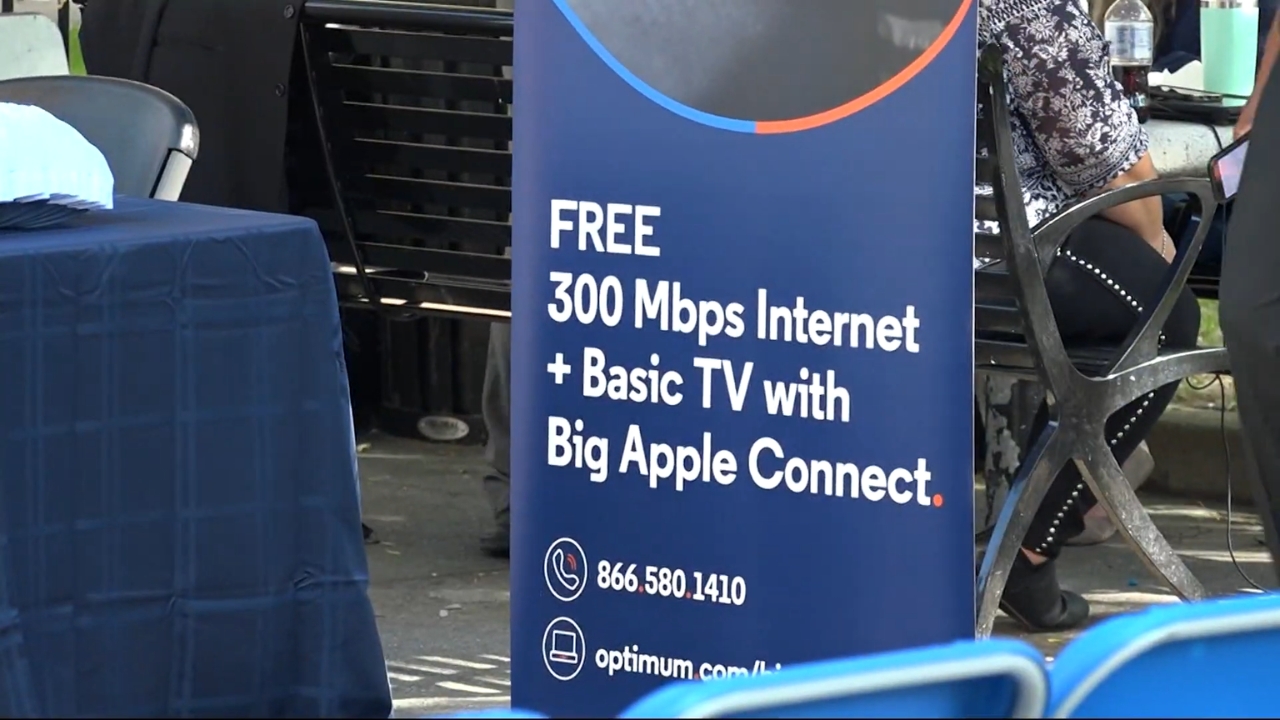
Neighborhood Internet is one part of a broader city strategy. Big Apple Connect, launched in September 2022, already gives eligible NYCHA residents free home internet and basic cable through Optimum or Spectrum.
ACCESS NYC says NYCHA residents at participating developments can enroll for service as low as $0 per month, and existing Optimum or Spectrum customers can have bills reduced to as low as $0.
In 2025, the city extended Big Apple Connect through June 2028. NYCHA Journal reported that the program covers 220 developments, about 150,000 households, and roughly 330,000 residents. Officials also said enrolled households save an average of more than $1,700 per year.
Big Apple Connect Versus Neighborhood Internet
The two programs solve related problems, but they are built differently.
Program
Main Audience
Delivery Model
Key 2026 Relevance
Big Apple Connect
NYCHA residents
City-paid service through Optimum or Spectrum
Extended through June 2028
Neighborhood Internet
Low-income affordable housing residents
Building-level broadband managed with NYPL
Expanded with $2 million in federal funding
Affordable Broadband Act
Eligible New York households
Discounted private plans
$15 or $20 monthly options for qualifying households
That mix shows how digital equity policy has moved beyond one tool. Public housing, affordable housing, and privately served households often need different pathways.
The State Law Working In The Background
Starting TODAY, the Affordable Broadband Act (ABA) requires all major New York ISPs to offer low-income residents plans at $15 for 25Mbps or $20 for 200Mbps per month — setting a model for other states to close the affordability gap. https://t.co/K2QGdBteTb@AmyPaulin
— Common Sense Media (@CommonSense) January 15, 2025
Free city programs are valuable, but many low-income New Yorkers live outside covered buildings. New York’s Affordable Broadband Act fills part of that gap.
For households outside those buildings, comparison tools such as LocalCableDeals can help narrow the search by area before residents check eligibility for low-cost or discounted plans.
ACCESS NYC says the law requires large internet providers to offer eligible households plans of at least 25 Mbps for no more than $15 per month, or plans of at least 200 Mbps for no more than $20 per month. Taxes and equipment fees are included.
ConnectALL, the state broadband office, points eligible New Yorkers toward provider searches and tells city residents to call 311 and ask for “low-cost internet” when they need help finding a plan.
The law followed a long legal fight. A federal appeals court revived New York’s affordable internet law in April 2024, and Reuters reported that the measure was expected to affect millions of New Yorkers across 2.7 million households.
Why Free Broadband Changes Daily Life

A reliable connection does not solve poverty, housing pressure, or school inequality by itself. Still, it removes a quiet barrier from many ordinary tasks.
For a student, home broadband can mean joining a video session without sitting in a hallway near public Wi-Fi. For a home health aide, it can mean finishing certification paperwork after a shift.
For an older resident, it can mean renewing benefits without a long trip to an office. For a parent, it can mean checking childcare options, school messages, and medical portals from one connection that works.
The city’s April 2026 Get Online NYC campaign points to the same wider need. StateScoop reported that the campaign introduced a tool to help New Yorkers find free Wi-Fi, computers, tech classes, and one-on-one help at more than 450 city locations.
What Could Still Limit The Impact
The 2026 expansion is meaningful, yet several barriers remain.
The end of the federal Affordable Connectivity Program also raised pressure on cities and states. The FCC says ACP ended because Congress did not provide additional funding, and households stopped receiving discounts after June 1, 2024. NYC’s free internet expansion reflects a larger shift in how cities define basic services. Broadband used to be treated mainly as a private household purchase. In 2026, city leaders increasingly treat connection as part of housing quality, workforce access, education, and public health. The strongest feature of Neighborhood Internet is its directness. Instead of handing residents a list of providers and hoping the math works, the program brings broadband into buildings where need is concentrated. That approach will not reach every low-income New Yorker, but it can make a visible difference in blocks where offline households have been clustered for years. NYC’s 2026 free internet expansion gives low-income residents in targeted affordable housing buildings a stronger path to reliable broadband. The program works alongside Big Apple Connect, the Affordable Broadband Act, and public digital skills efforts. The next test is execution: wiring buildings, enrolling residents, providing support, and keeping service free enough to matter.
A Bigger Shift In Urban Policy
Summary