


U.S. educators are reviving handwritten tests, closed-device classrooms, oral defenses, and live demonstrations because generative AI can produce polished homework without proving that a student learned the material. That’s the main reason why The American Federation of Teachers now wants to ban AI in elementary schools.
Nowadays, the goal is less about banning technology than restoring a reliable link between a grade and a student’s own knowledge. Pew Research Center found that 54% of U.S. teens had used chatbots for schoolwork, while 10% said AI helped with all or most of their assignments.
Schools and colleges are increasingly separating “learn without AI” tasks from work where students use and evaluate AI openly.
Homework is Losing Authority
A take-home essay once gave teachers evidence of research, reasoning, organization, and writing. Generative AI can now perform much of the visible work in seconds. A fluent final product may reveal little about who selected the evidence, built the argument, checked the facts, or wrote the sentences.
View this post on Instagram
Pew’s 2026 survey of 1,458 U.S. teenagers found that 59% believed AI-assisted cheating happened at their school at least somewhat often.
About one-third said it happened extremely or very often. Perceptions are not confirmed violation counts, but they help explain why teachers no longer treat chatbot misuse as a marginal problem.
Cornell engineering guidance says AI can answer many exam questions and remains difficult to detect reliably. Faculty are advised to test old questions against several AI tools, rewrite tasks that chatbots can solve, or shift high-stakes evaluation to supervised, oral, or hybrid formats.
What Is Replacing Laptop-Based Assessment?
No comprehensive national count measures how many American schools have returned to paper or oral testing. Available reporting describes a growing movement rather than a nationwide conversion.
Evidence is clearest in higher education, where universities are publishing policies and training for faculty. K-12 teachers are also moving more writing, discussion, and problem-solving into class, although local rules vary widely.
Assessment Format
What It Verifies
Main Limitation
Handwritten in-class exam
Unaided recall, argument building, and problem solving
Timed handwriting can disadvantage some students
Oral defense
Real-time reasoning and command of submitted work
Staff time and student anxiety
Live practical task
Applied skill in coding, laboratories, arts, or technical courses
Equipment and supervision
AI-permitted assignment
Prompting, fact-checking, revision, and judgment
Weak foundations may remain hidden
Hybrid assessment
Independent knowledge plus responsible AI use
More planning and clearer rules
Paper blocks easy copy-and-paste assistance during supervised tests. Oral exams add follow-up questions, making outsourced work harder to defend. Live practical tasks ask students to perform a skill while explaining each decision, a shift documented in recent reporting on blue books.
A blank page can feel louder than any deadline ticking in the background. Outside supervised assessments, services such as EduBirdie can provide personalised academic writing support as students prepare papers, organise ideas, and review subject-specific requirements.
How Oral Exams Work in Real Classes
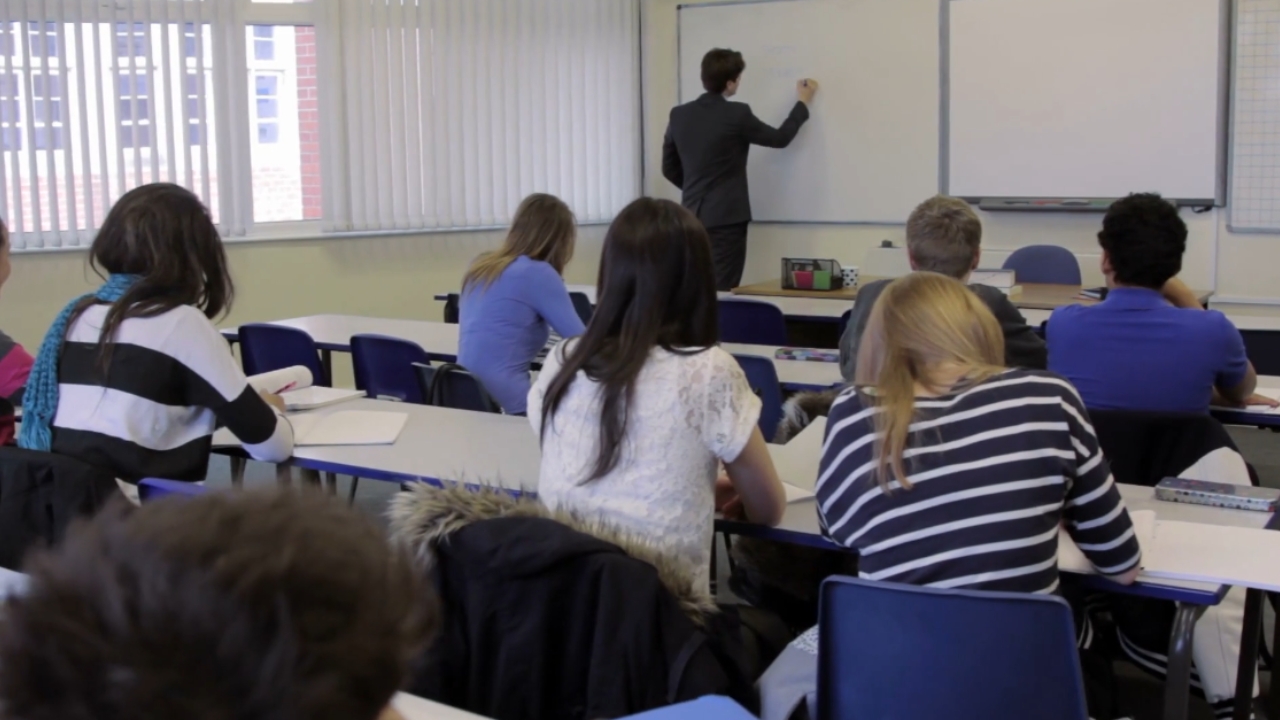
At Cornell University, biomedical engineering professor Chris Schaffer introduced 20-minute oral defenses after written problem sets.
His class had about 70 students, so teaching assistants shared the interviews and graded the defenses instead of the written submissions. Cornell now features oral assessment in faculty training.
Associated Press reporting also described a Cornell engineering course using four-minute mock interviews for 180 students. At the University of Pennsylvania, Emily Hammer pairs written papers with oral examinations so students must defend their arguments face-to-face.
A 2026 study by Lorena Barba and Laura Stegner tested conversational coding exams with 58 students in small groups across two days.
Students worked live, used permitted documentation and supervised AI, and explained their reasoning as they coded. The coding exam study was published in the June 2026 edition of Computer.
Blue Books and Device-Free Rooms Are Returning
Handwritten exam booklets, often called blue books, offer a low-cost controlled environment. Their comeback reflects a need to verify baseline skills, rather than nostalgia for older classrooms.
A prominent 2026 example comes from the University of Chicago Law School. During the 2026-2027 academic year, required first-year courses will prohibit laptops, tablets, and phones, apart from limited exceptions and disability accommodations. Core exams will take place in class without internet access, apps, or electronic files.
Legal research and writing will follow a mixed model. Students will first build writing skills without AI, then use AI for research, revision, and professional tasks. The policy treats unaided reasoning as a foundation, followed by instruction in reviewing and improving machine output.
Paper and Oral Exams Have Limits
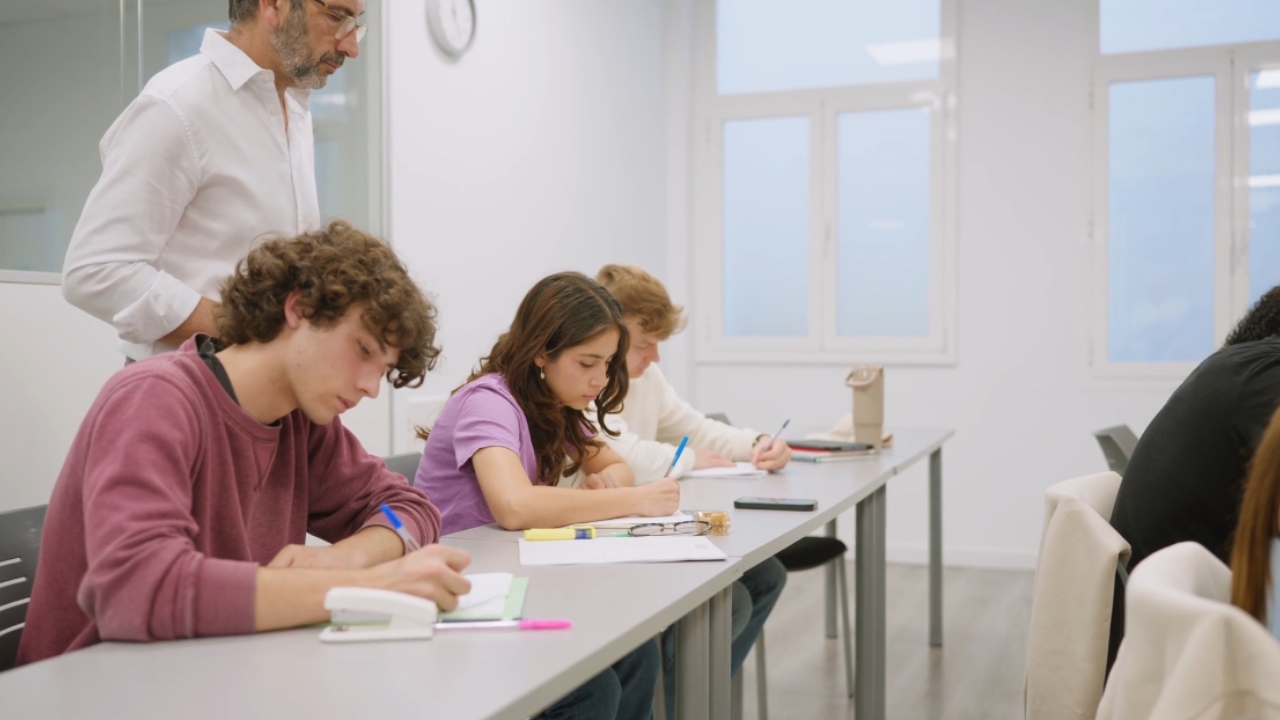
Authorship is easier to verify on paper or in conversation, but neither format is automatically fair. Timed handwriting may create barriers for students with disabilities, slower handwriting, language-processing needs, or little recent practice.
Oral testing may add pressure for students with speech disabilities, anxiety, or limited experience with rapid questioning.
Schools can offer approved keyboard access, extra time, quiet rooms, advanced question categories, transparent rubrics, breaks, or equivalent assessment formats. Chicago’s plan explicitly preserves disability accommodations.
Scale also matters. NYU Stern researchers Panos Ipeirotis and Konstantinos Rizakos tested an AI voice system for personalized oral checks.
Their 2026 oral exam study reported costs below one dollar per exam, but the tool asked several questions at once, mishandled randomization, and initially used a voice that students found harsh. Automated oral testing remains experimental and needs human oversight.
Still, Schools Are Unlikely to Abandon AI Completely
A full retreat from AI would poorly prepare students for workplaces that use automated research, writing, coding, and analysis.
Offline exams can verify foundational knowledge, but they cannot measure every skill needed after graduation. As Reuters reported, Chicago Law will retain upper-level AI courses and an AI laboratory while restricting devices during foundational first-year instruction.
Cornell’s faculty workshop schedule reflects both sides. Sessions cover oral assessment and learning without AI, alongside responsible AI use in teaching. American education appears to be moving toward controlled use, rather than a simple return to pre-digital schooling. Teachers may request notes, drafts, source logs, or chatbot transcripts. Preparation will shift as well. Memorizing a finished chatbot response is less useful than practicing explanations, checking assumptions, and defending choices. Strong performance increasingly depends on knowing the material well enough to answer follow-up questions. Pen, paper, and oral exams are returning because schools need credible evidence of learning amid instant machine-generated answers. Their role will probably remain targeted: offline testing for foundational skills, oral questioning for comprehension, and supervised AI use for professional judgment. Assessment is moving away from grading a finished product alone. In 2026, the ability to explain, defend, revise, and apply an answer is becoming as important as the answer itself.
How Will This Change Affect Students?
Students should expect fewer grades based solely on polished work completed at home. A paper may be followed by an interview. A coding assignment may require a live explanation.The Future Is Hybrid, Not Analog