The U.S. Bureau of Labor Statistics has just released its latest Consumer Price Index report for June 2026, showing that prices fell 0.4% from May as gasoline and other energy costs dropped sharply.
It was the largest monthly decline in consumer prices since April 2020. The annual inflation rate fell to 3.5%, down from 4.2% in May.
The report was considerably softer than economists had expected. Forecasts published before the release generally pointed to a monthly decline of about 0.2% and an annual inflation rate near 3.8%. Core prices were expected to rise during the month, but the core index was unchanged.
The June figures bring clear relief after several months of rapidly rising energy costs. They do not mean that the cost of living has returned to where it was before the latest inflation surge. Gasoline, food, rent, and several household services still cost more than they did one year ago.
- Consumer prices fell 0.4% from May to June.
- Annual inflation slowed from 4.2% to 3.5%.
- Core CPI was unchanged for the month and rose 2.6% over the year.
- Energy prices fell 5.7% in June.
- Gasoline prices dropped 9.7% during the month.
- Food prices rose 0.2%.
- Shelter costs increased 0.1%, their smallest monthly rise since January 2021.
- Egg prices rose 4.3% during June.
- Motor vehicle insurance fell 2.0%.
Energy Reversed Much of the Recent Inflation Spike
Zero surprise here. Oil cratered, gas -9.7%, energy -5.7%. This print was known the moment crude collapsed. CPI is an oil derivative right now. Core flat, 2.6% YoY too. https://t.co/q4uF9Ddoyl
— Steve Grasso (@grassosteve) July 14, 2026
Energy was responsible for most of the June decline.
The energy index fell 5.7% after increasing 3.9% in May, 3.8% in April, and 10.9% in March. Gasoline prices fell 9.7% in June after rising 7.0% one month earlier.
Fuel oil dropped 9.2%, and electricity prices declined 1.0%. Natural gas service moved in the other direction, rising 0.5%.
The sharp monthly decline needs to be placed beside the longer-term figures. Energy prices were still 15.7% higher than they were in June 2025. Gasoline was 26.7% more expensive, and fuel oil was up 42.9%.
Drivers, therefore, received some relief during June, but they were still paying much more than they were one year earlier.
We previously wrote about how energy, rent and food pushed U.S. inflation higher in 2026. The new report shows how quickly headline inflation can change when fuel prices reverse direction.
Core Inflation Stopped Rising in June
Core CPI, which excludes food and energy, was unchanged from May. It was the weakest monthly reading for the core index during 2026.
Core inflation slowed to 2.6% over the previous 12 months, down from 2.9% in May.
The core figure helps show whether price pressure has spread across the economy. Energy can rise or fall rapidly, so economists often examine the core measure to see what is happening with rent, insurance, medical care, clothing, and other less volatile expenses.
Several categories declined during June. Motor vehicle insurance fell 2.0% after dropping 1.7% in May. Communication services fell 1.5%, apparel declined 0.6%, and used vehicle prices decreased 0.2%.
Medical care prices fell 0.1%. Physicians’ services decreased 0.2%, and prescription drug prices declined 0.1%. Hospital services increased 0.1%.
New vehicle prices were unchanged.
Other costs continued to rise. Recreation increased 0.5%, while household furnishings and personal care each rose 0.2%.
Shelter Inflation Recorded Its Smallest Increase in Years
Shelter costs rose 0.1% in June. It was the smallest monthly increase since January 2021.
Rent increased 0.1%, while owners’ equivalent rent rose 0.2%. Owners’ equivalent rent is the amount homeowners would theoretically pay to rent a similar property.
Lodging away from home, which includes hotels and motels, fell 2.3%.
Shelter was still 3.3% more expensive than it was one year earlier. Housing carries a large weight in CPI, so even a modest monthly increase can prevent core inflation from falling faster.
A slower shelter reading will not feel the same in every city. Renters renewing leases may still face increases, and housing costs remain elevated after years of rising rents and home prices. We have also examined why falling advertised rents have not brought equal relief to all tenants.
Grocery Prices Continued to Rise
Food prices increased 0.2% for the second consecutive month. Grocery prices and restaurant prices each rose 0.2%.
Four of the six major grocery categories became more expensive.
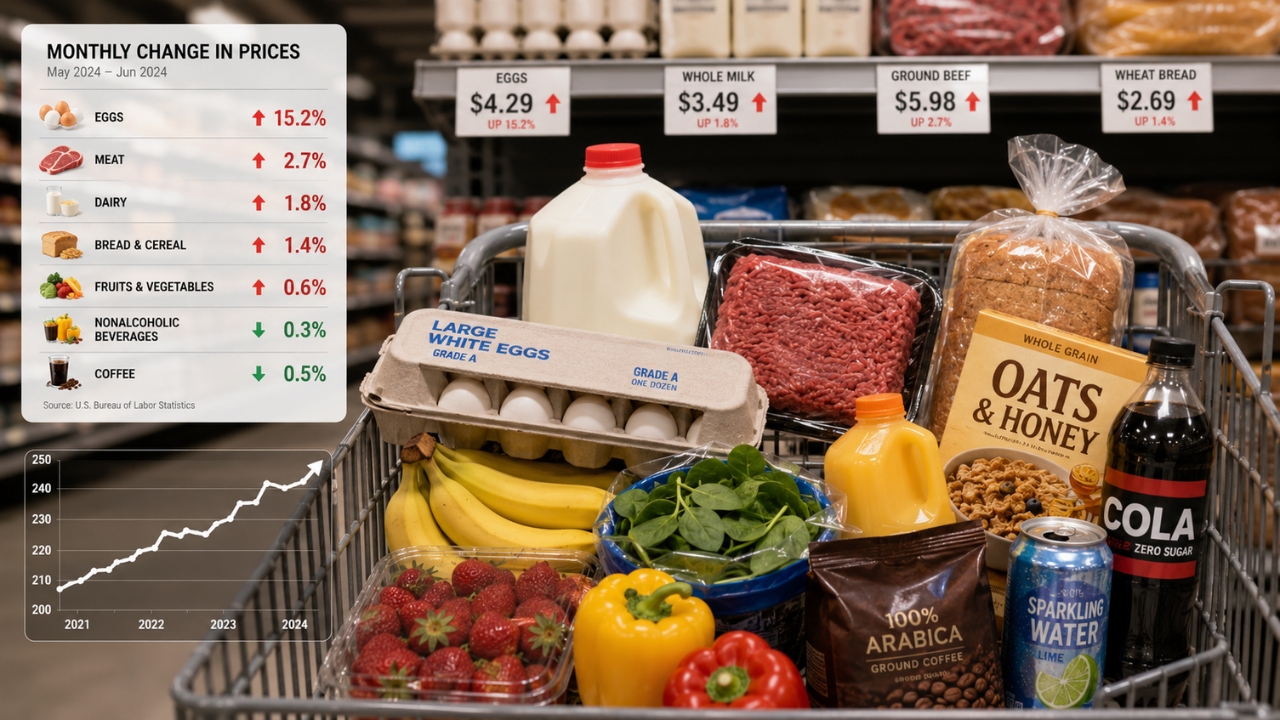
Egg prices produced the most noticeable increase, rising 4.3% in one month. Dairy prices rose 1.2%, while meat, poultry, fish, and eggs as a group increased 0.6%.
Coffee prices fell 2.0%, helping push the wider nonalcoholic beverage category down 1.5%. Fruits and vegetables declined 0.2%.
Restaurant inflation remained stronger than grocery inflation over the year. Food away from home increased 3.4%, compared with 2.7% for food at home.
Full-service restaurant meals rose 3.7% over the year. Limited-service meals, including many fast-food purchases, increased 3.1%.
Prices Fell in June, but They Are Not Back to Earlier Levels
View this post on Instagram
A negative monthly CPI reading does not reverse the price increases households have absorbed during the past several years.
The index measures changes from one period to another. A 0.4% decline means that the measured basket became slightly cheaper than it was in May. It does not mean prices returned to their levels from 2024, 2023, or before the pandemic.
Annual inflation of 3.5% means the same broad basket still cost 3.5% more than it did in June 2025.
Some household costs remain far above the headline rate. Airline fares were 26.5% higher than one year earlier. Fuel oil was up 42.9%, gasoline was up 26.7%, and fruits and vegetables were up 5.3%.
Other categories moved more slowly. Dairy prices rose only 0.4% over the year. New vehicles increased 0.5%, while used cars and trucks were 1.8% cheaper.
That uneven pattern explains why households can have very different experiences with the same inflation report. A renter who drives to work and buys airline tickets may see a very different budget than a homeowner who works remotely and spends little on travel.
The Report Was Softer Than Economists Expected
Economists surveyed before the release expected headline inflation to fall as energy prices retreated. The decline was larger than the roughly 0.2% monthly drop discussed in several forecasts.
Annual inflation was also lower than the expected rate of about 3.8%. Core inflation came in below forecasts that pointed to a 0.2% monthly increase and a 2.8% annual rate.
The weaker reading reduces concern that inflation was continuing to accelerate at the pace seen during the spring. It does not close the inflation debate.
Core CPI remains above a level consistent with stable 2% inflation, and the Federal Reserve relies more heavily on the Personal Consumption Expenditures price index when assessing progress toward its target.
We recently reported that core PCE inflation reached 3.4% in May. The next PCE report will show how the June decline in gasoline and other prices appears under the Fed’s preferred measure.
What the June CPI Means for Households

The report offers immediate relief in areas where prices actually declined. Drivers benefited from cheaper gasoline. Travelers paid less for lodging. Vehicle owners saw another monthly drop in insurance costs.
The result was less favorable at grocery stores. Food continued to become more expensive, and eggs recorded another sharp increase.
Housing costs also continued to rise, although at their slowest monthly pace in more than five years.
Households are still dealing with the accumulated effects of earlier inflation.
We previously shared data showing that many Americans feel financially boxed in by prices, housing costs and weak savings. One month of falling CPI will not repair those household balance sheets.
A continued run of softer readings would matter more. It could allow wage growth to catch up, reduce pressure on interest rates, and give families more room to rebuild savings.
What Comes Next?
The Bureau of Labor Statistics will release the June Producer Price Index on July 15. That report measures prices received by domestic producers and can reveal cost pressure moving through supply chains.
The July CPI report is scheduled for August 12.
June provided the clearest monthly inflation relief in years. Most of that relief came from energy, especially gasoline. Food and shelter did not fall, but both recorded relatively modest increases.
The next test is whether lower inflation continues after the energy reversal passes through the data. A single negative month can interrupt an inflation surge. Several months of restrained core, food and shelter readings would provide stronger evidence that price pressure is genuinely easing.