
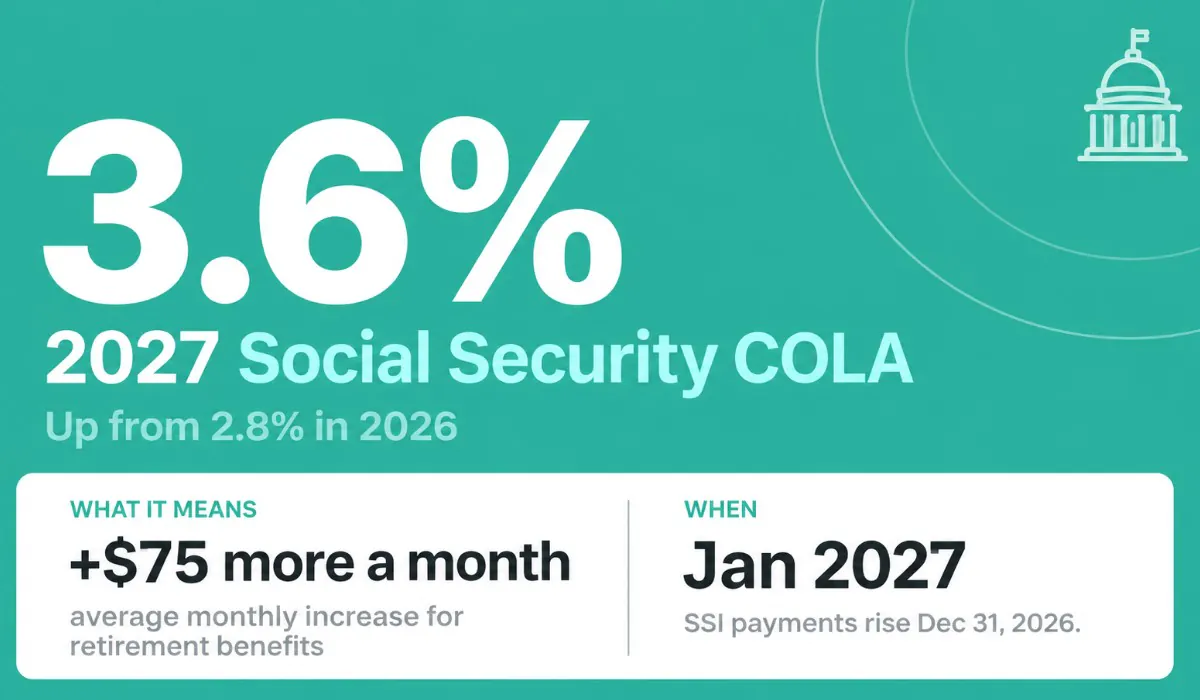
Social Security recipients will get their largest adjustment in four years when benefits rise by 3.6% in January 2027. The increase will add $75 to the average monthly retirement check, bringing it to $2,170.
The Social Security Administration announced the increase on Wednesday, October 14, confirming a larger adjustment than the 2.8% retirees received in 2026.
Nearly 72 million Social Security beneficiaries will receive the increase automatically. Another 7.3 million people receiving Supplemental Security Income (SSI) will see higher payments beginning December 31, 2026. Some people receive benefits from both programs.
But there is a problem with celebrating a bigger check. Prices have continued rising, particularly for essentials that older Americans buy every month. September inflation reached 3.7%, slightly above the newly announced COLA, leaving many retirees unconvinced that another $75 will cover their expenses.
How Much Will Social Security Benefits Increase in 2027?
The adjustment applies to retirement, disability and survivor benefits. Since Social Security calculates the increase as a percentage of existing benefits, people receiving larger checks will generally receive larger dollar increases.
The official 2027 COLA fact sheet provides the following estimates.
| Benefit Category | Before COLA | January 2027 | Monthly Increase |
|---|---|---|---|
| Average retired worker | $2,095 | $2,170 | +$75 |
| Retired couple, both receiving benefits | $3,238 | $3,355 | +$117 |
| Average disabled worker | $1,642 | $1,701 | +$59 |
| Aged widow or widower living alone | $1,936 | $2,005 | +$69 |
| Disabled worker with spouse and children | $2,970 | $3,077 | +$107 |
Source: Social Security Administration, 2027 COLA Fact Sheet. Figures are estimated averages and may not equal the increase for an individual beneficiary.
For someone currently receiving $1,500 per month, a 3.6% increase would add $54 before deductions. A $2,500 benefit would increase by $90.
Our earlier 2027 Social Security COLA projection covered forecasts reaching 3.8%. The official adjustment is now confirmed at 3.6%, ending months of speculation about the final percentage.
Some Retirees Say the $75 Increase Is Not Enough
September consumer prices rose 3.7% from a year earlier, according to inflation figures released alongside the COLA announcement. Social Security uses a separate inflation measure, the Consumer Price Index for Urban Wage Earners and Clerical Workers (CPI-W), to calculate the annual adjustment.
The formula compares average CPI-W readings from July through September against the same three months of the previous year. Consequently, the annual adjustment does not track every expense faced by an individual retiree.
The Associated Press spoke with retirees concerned about rising medical expenses, property taxes and grocery prices following the announcement.
One Minnesota retiree described prescription expenses that could rise substantially next year as changes to Medicare drug coverage take effect. Another retiree in Buffalo, New York, had returned to work partly because property taxes had become difficult to afford.
AARP also reported that around three-quarters of surveyed adults age 50 and older did not believe a proposed 3.5% adjustment would cover rising prices.
The $75 average monthly increase amounts to $900 over a full year. A household facing an additional $100 in monthly living expenses would still be $25 behind, even after receiving the higher benefit.
Medicare Costs Could Reduce the Increase Retirees Receive
Millions of retirees have Medicare Part B premiums deducted directly from their Social Security benefits. An increase in those premiums would reduce the additional money deposited into their bank accounts.
Prescription coverage is another concern. Some Medicare Part D plans are facing changes as a temporary federal premium subsidy program ends after 2026, although the impact depends on the plan and the medications a person uses.
Our team at NCH Stats recently examined three major Social Security changes for 2027, including the COLA, earnings limits and taxable wage ceiling.
The 3.6% increase applies to the Social Security benefit before applicable deductions. Recipients will need their personal benefit notice and Medicare premium information to determine the actual change in their monthly deposit.
SSI Payments Will Also Increase in December
Recipients of Supplemental Security Income will receive their higher January 2027 benefit on December 31, 2026, because January 1 is a federal holiday.
The maximum federal SSI payment will rise from $994 to $1,029 per month for an eligible individual. For an eligible couple, the maximum will increase from $1,491 to $1,544.
Actual SSI payments depend on countable income and living arrangements. The published maximum is not the amount every recipient receives.
Social Security Earnings Limits Will Also Rise
The agency also announced changes affecting people who work while collecting retirement benefits before reaching full retirement age.
| Social Security Rule | 2026 | 2027 |
|---|---|---|
| Earnings limit below full retirement age | $24,480 | $25,560 |
| Earnings limit during the year full retirement age is reached | $65,160 | $67,920 |
| Maximum earnings subject to Social Security tax | $184,500 | $192,300 |
| Earnings needed for one Social Security work credit | $1,890 | $1,970 |
People remaining below full retirement age throughout 2027 can earn $25,560 before the retirement earnings test begins withholding benefits. Above that threshold, Social Security generally withholds $1 for every $2 earned.
The higher $67,920 threshold applies only to earnings received before the month a person reaches full retirement age during 2027. Once full retirement age is reached, the earnings test no longer applies.
When Will Recipients Learn Their Exact 2027 Benefit?
Social Security will begin making personal COLA notices available online in late November or early December, depending on account settings. Paper notices will arrive during December.
Beneficiaries do not need to apply for the 3.6% adjustment. The agency will calculate and add it automatically.
The SSA guidance on 2027 payment notices explains how recipients can review their new amounts through a personal my Social Security account.
January 2027 will be the first month with increased regular Social Security benefits. SSI recipients will receive their adjusted January payment early, on December 31.
For retirees watching every dollar, the exact deposit will be more useful than the national average. A $75 increase is meaningful income, but higher Medicare deductions and continuing inflation could absorb part of it before the money reaches household budgets.
Related Posts:
- 2027 Social Security COLA Projection - Why The Next…
- Social Security 2100 Act Would Use the Higher of Two…
- New Social Security Plan Would Give Every…
- Medicare Advantage Premiums Are Set to Fall 16.5% to…
- Social Security Benefits Could Be Cut After 2032 As…
- Social Security Raising Retirement Age to 70? The…