
At 46, Angie Loving felt what seemed like indigestion and blamed pizza and wine from the night before. As the day went on, the nausea intensified and her skin turned clammy. She eventually began to wonder if her heart was involved.
Before heading for the hospital, Loving still hoped the whole thing would prove harmless. “Maybe they can tell me I’m crazy and I’ll get to go to the beach,” she thought, according to American Heart Association News.[1] Doctors later confirmed a severe heart attack.
Early heart attack symptoms can be easy to dismiss. Burning may feel like reflux, fatigue may seem like a long week, and shortness of breath may look like poor fitness.
The warning is when several symptoms appear together. Chest discomfort with sweating, nausea, weakness or pain in the jaw or arm deserves urgent attention, even if the pain is not severe.
The Symptoms That Usually Raise the Alarm First
1. Chest Pressure, Tightness or Pain

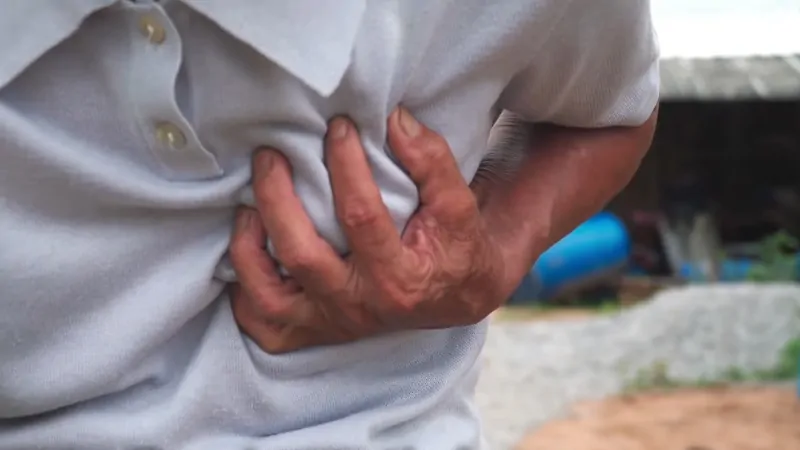
A heart attack does not have to feel sharp. Pressure, heaviness, squeezing, fullness, burning or an ache in the middle of the chest all appear in official warning-sign guidance.
The American Heart Association is direct about timing. Chest discomfort that lasts more than a few minutes, or disappears and returns, is already a warning sign.[2] Waiting for it to become unbearable only gives a possible blockage more time.
You may still be talking, walking around the house or finishing what you were doing, which is part of the problem. Being functional says very little about blood flow through a coronary artery.
2. Pain in the Arm, Back, Neck or Jaw
Cardiac pain can spread far outside the chest. One or both arms may hurt, as can the shoulders, upper back, neck, jaw or upper abdomen.
A sore jaw after dental work already has an explanation. Jaw pain that appears from nowhere while your skin turns clammy or breathing becomes difficult does not fit so neatly.
NHLBI lists discomfort in the arms, back, shoulders, neck and jaw among recognized heart attack symptoms.[3] Left-arm pain gets most of the attention, but the warning is not limited to the left side.
3. Shortness of Breath
Some people notice their breathing before they notice their chest. Walking across a room suddenly takes more effort, or a staircase used every morning now requires a stop for air.
Shortness of breath can appear with chest discomfort, before it or without obvious chest pain. Once sweating, nausea or sudden weakness joins it, waiting for another episode does not add useful information.
CDC estimates about 805,000 heart attacks occur in the United States each year. Around 605,000 are first attacks and 200,000 occur in people who have already had one. Someone has a heart attack about every 40 seconds.[4]
Those figures sit inside the larger burden covered in our U.S. heart disease statistics, including deaths, coronary disease and national risk patterns.
The Symptoms People Commonly Explain Away
4. Cold Sweating
Sweating in a hot room or during a fever is easy to explain. Sweat that suddenly appears while your chest feels squeezed and your stomach turns is a different event.
The 2025 ACC/AHA acute coronary syndrome guideline includes sweating among the symptoms associated with ACS.[5] The useful clue is not how soaked your shirt becomes. It is what was happening to the rest of your body when the sweating started.
5. Indigestion, Burning or Upper Stomach Pain
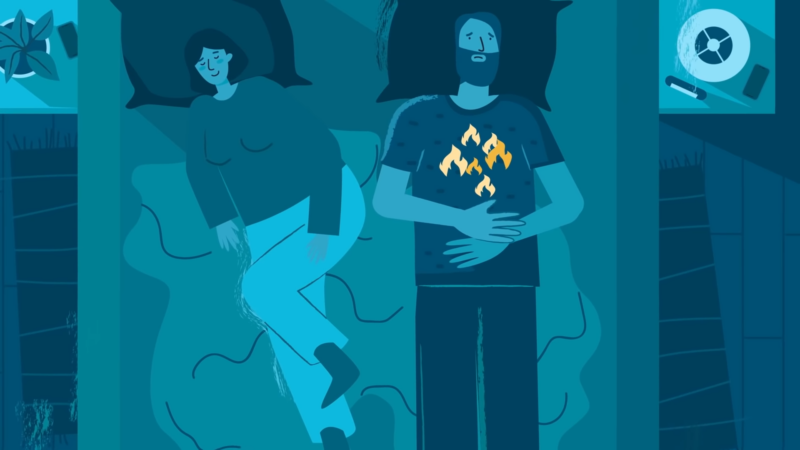
Reflux and heart pain overlap enough to fool people who have dealt with heartburn for years. Both can cause burning behind the breastbone, and cardiac discomfort can sit high in the abdomen instead of directly over the heart.
Burning that follows the same meals and behaves exactly like previous reflux gives a clinician useful history. Clammy skin, unexplained weakness or shortness of breath appearing during the same episode changes that history.
An antacid may settle reflux. It cannot establish that the heart is safe.
6. Nausea or Vomiting
Nausea has plenty of ordinary explanations, which is precisely why it gets dismissed. Vomiting can occur during a heart attack as well.
An American Heart Association scientific statement found that women report nausea and vomiting, unusual fatigue, back and jaw pain, breathlessness, palpitations and weakness more frequently than men.[6]
Chest pain or discomfort still remains the most common heart attack symptom in women. A woman with nausea, sudden weakness and trouble breathing does not need to wait for crushing chest pain before the episode deserves emergency attention.
7. Unusual Fatigue or Weakness

The clue is not simply being tired. It is finding that the staircase you climb every morning suddenly requires a pause halfway, or that an ordinary walk leaves you unexpectedly weak and winded.
Poor sleep, infection, anemia and dozens of other problems can drain energy. Fatigue starts telling a different story when it arrives suddenly with nausea, chest discomfort or breathing trouble.
8. Dizziness or Lightheadedness
Dehydration, blood pressure medication and inner-ear disorders can all leave you dizzy. Add chest pressure, cold sweating or sudden shortness of breath and the same sensation becomes far harder to dismiss.
Passing out is an emergency regardless of the suspected cause. Near-fainting during a cluster of cardiac symptoms also needs prompt assessment.
9. A Rapid or Irregular Heartbeat
A pounding or racing heart does not automatically mean heart attack. Stress, exercise, excessive caffeine, some medications, electrolyte problems and rhythm disorders can all trigger palpitations.
Cardiac electrophysiologist Dr. Larry R. Jackson II told AHA News that palpitations describe a symptom rather than one diagnosis. He points to chest discomfort, shortness of breath, dizziness and near-fainting as symptoms that change how urgently a racing heartbeat needs to be assessed.[7]
A brief flutter after too much coffee is one thing. A racing heartbeat that leaves you reaching for the wall because your chest hurts and you feel faint is another.
10. Some Heart Attacks Are Mild Enough to Miss
Some heart attacks never produce one dramatic moment. Mild pressure, indigestion, fatigue or breathlessness can disappear before the person realizes that heart muscle has been injured.
CDC estimates that about one in five heart attacks are silent.[4] The figure is best read as an estimate, since studies can identify previously unrecognized heart attacks through different methods, including ECG findings and imaging.
Diabetes deserves particular attention because nerve damage can blunt pain signals. Older adults may also present with weakness, breathlessness or confusion instead of the severe chest pain many people expect.
Heart Attack, Reflux, Arrhythmia and Panic Attack Can Look Similar
| Condition | Common Presentation | Clues That Fit | What Helps Settle the Diagnosis |
|---|---|---|---|
| Heart attack | Pressure, squeezing, heaviness, burning or upper-body discomfort | Sweating, breathlessness, nausea, arm or jaw pain, symptoms that return | ECG, serial cardiac troponin tests and clinical assessment |
| Acid reflux | Burning behind the breastbone or high in the abdomen | May follow food or lying down | History helps, but cardiac testing may still be needed when symptoms overlap |
| Arrhythmia | Racing, fluttering or skipped beats | Palpitations may dominate the episode | ECG or longer rhythm monitoring |
| Panic attack | Rapid heartbeat, chest discomfort and trouble breathing | Fear, trembling and tingling may occur | A first unexplained episode with chest symptoms still needs medical assessment |
Troponin is a protein released into the blood when heart muscle is injured. The 2025 ACS guideline recommends measuring cardiac troponin as soon as possible, preferably with a high-sensitivity test.[5]
One blood sample does not always settle the diagnosis. If the first high-sensitivity troponin result is nondiagnostic, the guideline recommends another measurement after one to two hours. Conventional troponin assays generally require another sample after three to six hours.
A normal first result therefore does not automatically mean the patient goes home. Doctors read the troponin trend together with the ECG, symptoms and clinical examination.
Some Chest Pain Features Make a Heart Attack Less Likely
Doctors do not give every type of chest pain the same weight. Pain lasting only a few seconds, discomfort strongly affected by breathing or body position, and pain confined to one small spot are less typical of reduced blood flow to heart muscle.
The 2021 AHA/ACC chest pain guideline places those details inside a larger assessment rather than treating any one feature as proof.[8] Exertional pressure, unexplained breathlessness and pain spreading through the upper body push suspicion toward a cardiac cause.
No symptom description safely excludes a heart problem in every patient. When the history leaves genuine doubt, testing settles it.
Leg and Ankle Swelling Points More Toward Heart Failure

Older versions of this page included swollen feet and ankles among early heart attack symptoms. That framing could send attention toward the wrong clue during an emergency.
Fluid collecting in the legs is more closely associated with heart failure. Kidney disease, vein problems and some medications can cause it too. A heart attack can later contribute to heart failure, but swelling is not something to wait for when chest pressure or sudden breathlessness is already happening.
Several of those conditions share long-term risks covered in our analysis of the causes of cardiovascular disease.
Women Often Have Chest Pain With Other Symptoms
Women do not have a separate species of heart attack. Chest pain or discomfort remains the most common symptom in both women and men.
The difference is in the rest of the symptom mix. AHA research reports higher frequencies of upper-back, arm, neck and jaw pain, unusual fatigue, shortness of breath, indigestion, nausea, vomiting, palpitations and weakness among women.[6]
A 2026 AHA statement on acute coronary syndromes in premenopausal women also describes gastrointestinal symptoms, sweating, fatigue and dizziness among presentations clinicians should recognize.[9] The point is practical. A younger woman with nausea and jaw pain can still belong in a cardiac workup.
The Current U.S. Numbers
| U.S. Heart Statistic | Latest Figure Used Here |
|---|---|
| Heart disease deaths | 683,491 in 2024 |
| Heart disease rank | 1st among U.S. causes of death |
| Adults ever diagnosed with coronary heart disease | 4.9% in 2025 |
| Heart attacks each year | About 805,000 |
| First heart attacks | About 605,000 |
| Recurrent heart attacks | About 200,000 |
| Silent heart attacks | About 1 in 5 |
| Average heart attack frequency | About one every 40 seconds |
NCHS records 683,491 heart disease deaths in 2024, keeping heart disease first among U.S. causes of death. Its latest National Health Interview Survey figure reports that 4.9% of adults had ever been diagnosed with coronary heart disease in 2025.[10]
The much longer shift in U.S. mortality is visible in our historical causes of death data, where heart disease moved to the top as infectious-disease mortality declined during the twentieth century.
Most heart attacks are related to coronary artery disease. Plaque can build inside an artery for years, then rupture and give a blood clot somewhere to form. Once the clot sharply reduces or stops blood flow, the heart muscle supplied by that artery begins losing oxygen.
From First Symptoms to Treatment
| Point in the Timeline | What Happens | Why the Clock Counts |
|---|---|---|
| Symptoms begin | Chest discomfort lasts more than a few minutes or disappears and returns | Emergency help should not wait for severe pain |
| First medical contact | EMS begins assessment and can transmit an ECG before hospital arrival | Calling 911 starts medical evaluation before the emergency department door |
| Within 10 minutes | For suspected ACS, an ECG should be obtained and interpreted rapidly | STEMI may require immediate catheterization-lab activation |
| Within 90 minutes | For STEMI treated directly at a PCI-capable hospital, the system goal is first medical contact to device activation within 90 minutes | The blocked artery is opened as quickly as the care system allows |
| Within 120 minutes when transfer is needed | The guideline allows up to 120 minutes from first medical contact to device activation when transfer to a PCI center is required | Transfer time is part of the reperfusion clock |
Ninety minutes is a medical-system target after first contact. Sitting at home for half an hour deciding if the pain is serious does not fit inside that window. It happens before the treatment clock has even started.
Call 911 When the Symptoms Fit
If you are having a heart attack, you can lose consciousness. That alone is enough reason not to drive yourself.
EMS also gets the medical process moving before you reach the hospital. The 2025 ACS care pathway explicitly lists calling 911 as the preferred route for symptoms suggestive of ACS.[5]
Telling a heart attack from reflux, an arrhythmia or a panic attack is a job for an ECG, serial troponin tests and clinical assessment, not for someone on a couch deciding how much longer to wait.
Methodology
The page was updated on October 8, 2026. Final 2024 mortality data remain the newest completed national mortality series used here, while 2025 and 2026 clinical documents provide newer guidance on symptoms, diagnosis and acute treatment.
Numbers were kept only when the cited source states them directly. Symptom language was checked against NHLBI and American Heart Association patient guidance, and diagnostic and treatment details follow the 2021 chest pain guideline and 2025 acute coronary syndrome guideline.
Where a statistic is an estimate rather than a direct count, the text says so. The CDC one-in-five silent-heart-attack figure is treated as an estimate because the measured share of previously unrecognized infarctions can change with study design and detection method.
References
- Leslie Barker, American Heart Association News, “Could her heartburn, she wondered, be a symptom of a heart attack?”, February 14, 2025. Read the AHA News report.
- American Heart Association, Heart Attack Warning Signs. Heart attack warning signs.
- National Heart, Lung, and Blood Institute, Heart Attack Symptoms. NHLBI symptom guidance.
- Centers for Disease Control and Prevention, Heart Disease Facts. CDC Heart Disease Facts.
- Rao SV et al., 2025 ACC/AHA/ACEP/NAEMSP/SCAI Guideline for the Management of Patients With Acute Coronary Syndromes, Circulation 2025. 2025 ACS guideline.
- Mehta LS et al., Acute Myocardial Infarction in Women, American Heart Association scientific statement. AHA statement on women and AMI.
- American Heart Association News, “How serious are heart palpitations? Causes, symptoms and when to worry,” February 9, 2026. AHA report on palpitations.
- 2021 AHA/ACC/ASE/CHEST/SAEM/SCCT/SCMR Guideline for the Evaluation and Diagnosis of Chest Pain. 2021 chest pain guideline.
- American Heart Association, Acute Coronary Syndromes in Premenopausal Women, updated February 3, 2026. AHA guidance on premenopausal women.
- National Center for Health Statistics, Heart Disease FastStats. NCHS Heart Disease FastStats.