

Blue eyes are not blue in a biological sense, and green eyes are rare because they sit at a precise intersection of genetics, pigment concentration, and light physics that occurs infrequently in human populations.
Only brown eyes contain a true color pigment. All other eye colors emerge from how light interacts with the structure of the iris and the amount and distribution of melanin within it.
According to the researchers, globally, more than 70 percent of people have brown eyes, particularly across Africa, East Asia, and South Asia. Blue eyes are concentrated primarily in northern and eastern Europe, while green eyes occur in approximately 2 percent of the world population. Hazel eyes fall between green and brown and are often misclassified due to their variable appearance under different lighting conditions.
These differences are not cosmetic variations alone. They reflect deeper biological mechanisms and population history.
How the Iris Produces Eye Color
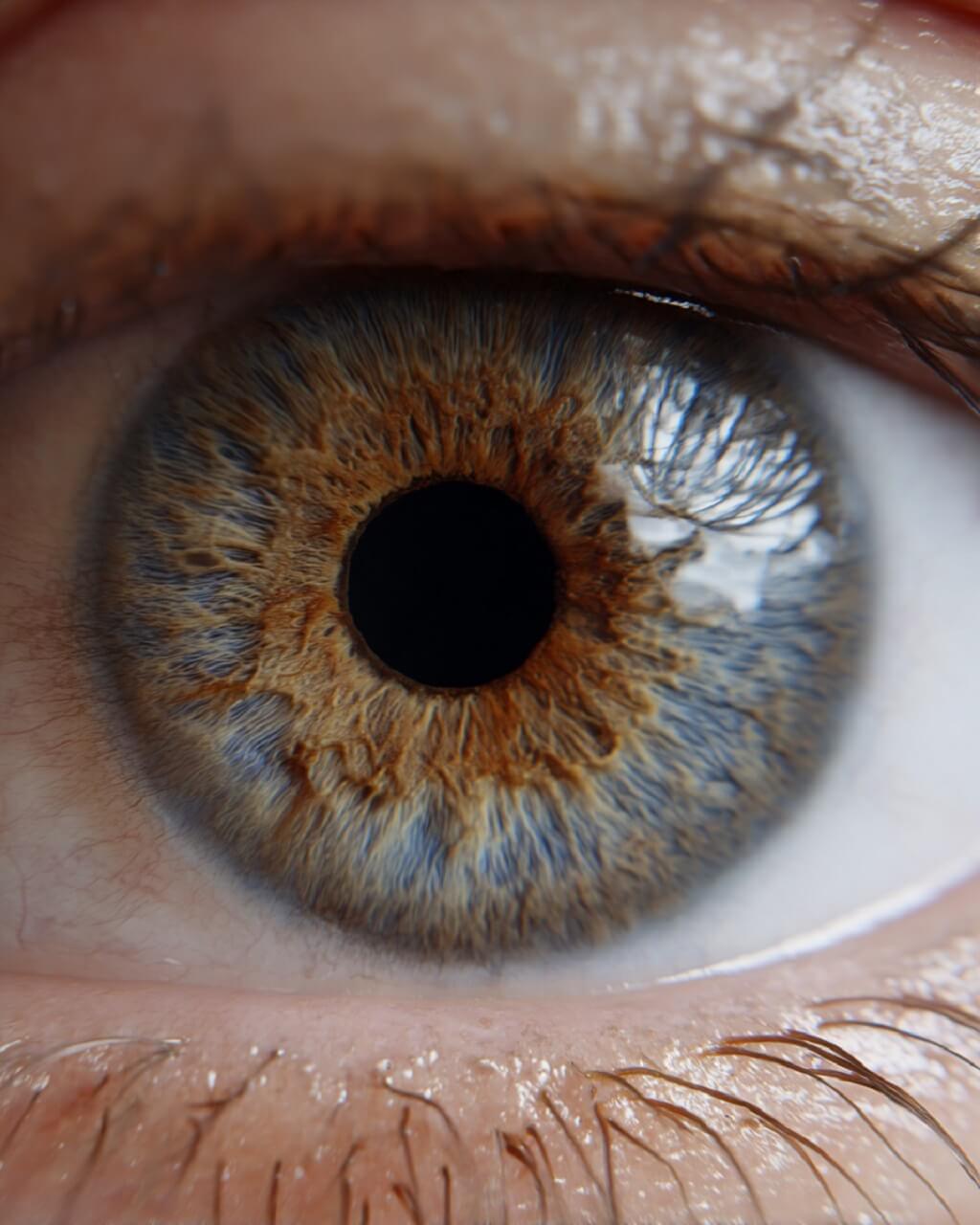
The iris is composed of multiple layers of connective tissue and cells containing melanin. Unlike skin or hair, the iris does not contain blue or green pigments. Instead, eye color depends on how much melanin is present and how light scatters as it passes through the iris tissue.
Brown eyes contain high melanin concentrations in the anterior layers of the iris. This melanin absorbs most incoming light, resulting in a dark appearance regardless of lighting conditions. Because absorption dominates over scattering, brown eyes appear consistently brown.
Blue eyes, by contrast, contain very little melanin in the iris. With minimal pigment to absorb light, shorter wavelengths of light are scattered more strongly than longer wavelengths. This physical phenomenon, known as the Tyndall effect, is the same mechanism that makes the sky appear blue. The blue color is not present as a pigment. It is an optical effect created by structural light scattering.
Green eyes result from a moderate amount of melanin combined with light scattering. The presence of some pigment absorbs part of the scattered blue light, allowing yellow and green wavelengths to contribute to the perceived color. Because this balance is precise and genetically uncommon, green eyes are rare.
Hazel Eyes and Why They Appear to Change Color
Hazel eyes are often misunderstood because they do not represent a single biological category. They typically involve uneven melanin distribution across the iris, producing a mixture of brown, green, and sometimes gold tones.
This structural variation explains why hazel eyes may appear green in one environment and brown in another. Changes in lighting, pupil dilation, and surrounding colors can shift how much light is absorbed versus scattered in different regions of the iris.
From a biological standpoint, hazel eyes demonstrate that eye color is not binary. It exists on a spectrum shaped by pigment density and tissue structure rather than fixed categories.
The Genetics of Eye Color Is Polygenic, Not Simple
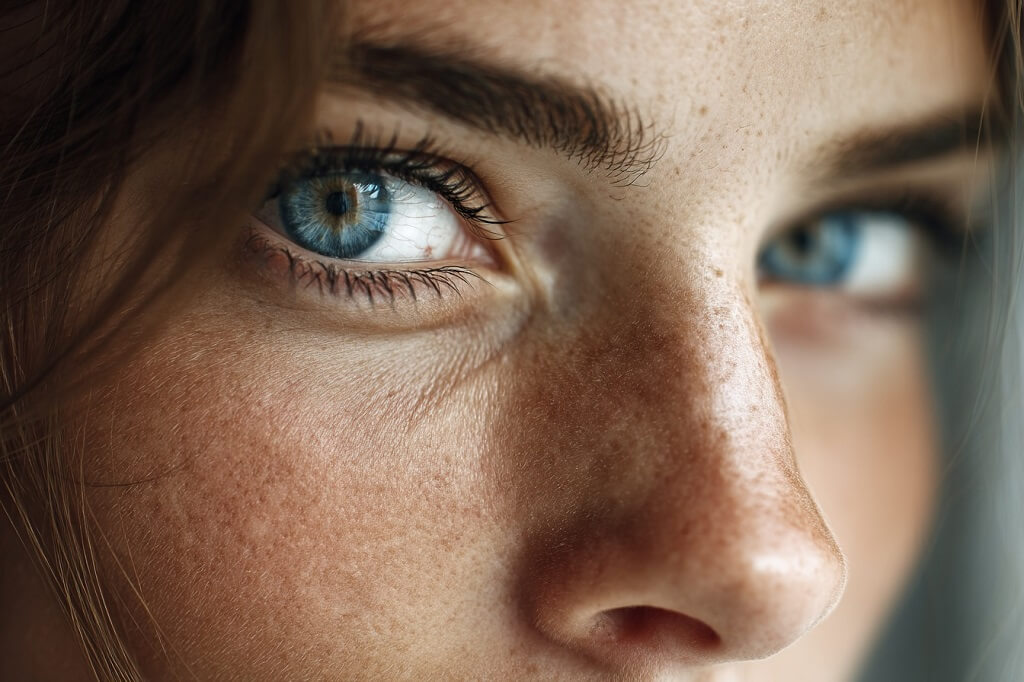
For decades, eye color inheritance was taught using a simplified model where brown was dominant and blue was recessive. Modern genetic research has shown this model to be incomplete.
Eye color is influenced by multiple genes, particularly those regulating melanin production, transport, and storage. Variations in genes near OCA2 and HERC2 play a significant role, but they do not act alone. This polygenic system explains why siblings can have different eye colors and why two blue-eyed parents can occasionally have a child with green or light brown eyes.
Genetic complexity also accounts for regional patterns. Blue eyes are thought to trace back to a single genetic mutation that occurred between 6,000 and 10,000 years ago in Europe. That mutation reduced melanin production in the iris, allowing light scattering to dominate.
Green eyes likely require a narrower combination of genetic variants, which limits their prevalence even in populations where light eye colors are common.
Eye Color Changes Across the Lifespan
Many infants, particularly those of European ancestry, are born with blue or gray eyes because melanin production in the iris is low at birth. As melanin accumulates during the first few years of life, eye color may shift permanently toward green, hazel, or brown.
In adulthood, eye color is generally stable, but perceived changes are common. Lighting conditions, clothing colors, and pupil size can all affect how eye color is interpreted visually. Aging can also cause subtle changes as melanin distribution shifts or as iris tissue thins.
Significant permanent changes in eye color are rare and may be associated with injury, disease, or certain medical treatments that affect pigment cells.
Rare Variations and Biological Outliers
Heterochromia occurs when one eye differs in color from the other or when multiple colors appear within a single iris. This condition can be genetic, developmental, or acquired through injury or disease. While visually striking, it does not typically affect vision.
Other rare variations include sectoral pigmentation patterns and unusually light or dark irises that fall outside common categories. These cases further illustrate that eye color is not governed by strict boundaries but by layered biological processes.
Evolutionary and Social Perspectives
From an evolutionary standpoint, brown eyes dominate because higher melanin levels offer protection against intense sunlight. This aligns with the global distribution of eye color relative to latitude.
Light eye colors likely spread through sexual selection rather than survival advantage. Their concentration in specific regions supports this interpretation.
Socially, eye color has been assigned symbolic meaning across cultures, but biologically it carries no inherent link to personality, intelligence, or behavior. These associations are cultural constructs rather than scientific facts.
Bottom Line
Brown eyes are the only eye color produced by true pigment. Blue and green eyes are created by light scattering combined with melanin concentration and distribution. Green eyes are rare because they require a narrow biological balance that occurs infrequently in human populations.
Hazel eyes demonstrate that eye color exists on a spectrum rather than in fixed categories.
What we perceive as color is less about pigment and more about physics, genetics, and human evolutionary history.