
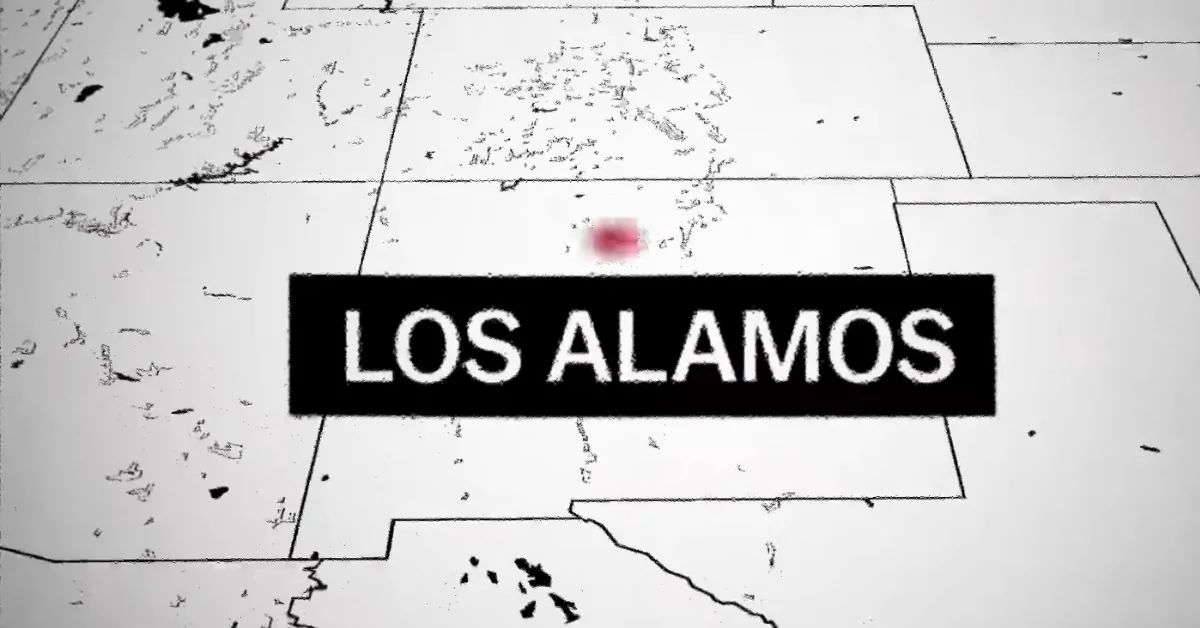
High on a mesa in northern New Mexico sits a place that looks calm, orderly, and quietly affluent. Manicured parks. Low crime. Elite schools.
Fine wine in the local grocery store.
It is also one of the most unequal and environmentally burdened communities in the United States.
Welcome to Los Alamos, a town born in secrecy, enriched by nuclear science, and still shadowed by radioactive waste.
A Town Created Overnight, And Erased From The Map
Los Alamos did not grow naturally. It was engineered.
During World War II, the U.S. government built a fully functioning city here as part of the Manhattan Project, the top-secret effort to develop the atomic bomb. Scientists, engineers, and their families were brought in.
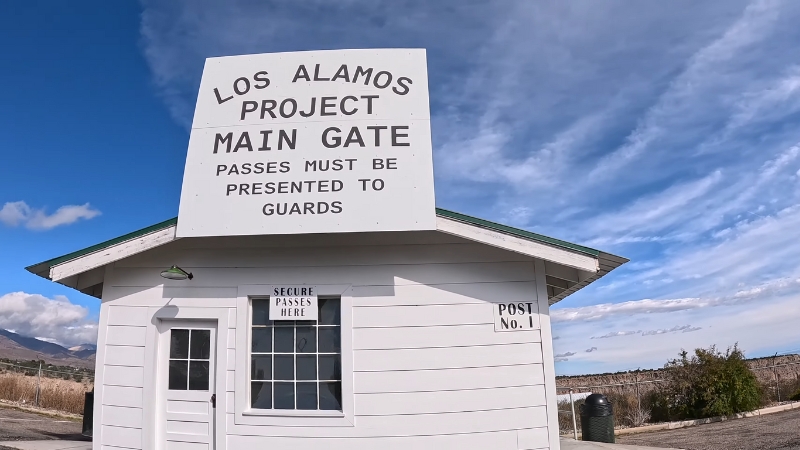
Fences went up. Guards stood watch. The town officially did not exist.
Residents were forbidden to list Los Alamos on mail, birth certificates, or driver’s licenses. They could not own property. They could not talk about their work.
Housing was assigned by rank. The entire city functioned like a military-controlled university devoted to one task: building the most destructive weapon ever created.
When the bombs fell on Hiroshima and Nagasaki in 1945, newspapers across the country reported the news. In New Mexico, one local headline quietly revealed the truth: Los Alamos had been the heart of it all.
From Secret City to Millionaire Enclave
View this post on Instagram
The war ended. The secrecy faded. The money did not.
Today, Los Alamos has roughly 18,000 residents and one of the highest concentrations of wealth in the country. About 12% of households hold assets exceeding $1 million, an astonishing figure for a town of its size.
Per capita, it rivals, and in some years surpasses, America’s most famous wealthy enclaves.
This is not inherited wealth. It is federal money.
The Los Alamos National Laboratory still dominates the local economy, employing thousands of scientists, engineers, technicians, and contractors, according to sources. The town has one of the highest densities of PhDs in the United States.
Dual six-figure households are common. Government pensions, long careers, and rising property values have quietly turned many residents into millionaires.
The wealth is real, but so is how contained it is.
Twenty Miles Away, a Different America
Drive about 25 minutes from Los Alamos, and you reach Española.
Median household income here hovers around $33,000. Nearly 30% of residents live below the poverty line. For years, Española has carried the stigma of one of the nation’s worst opioid overdose rates.
The contrast is so extreme that the U.S. Census Bureau once flagged the gap between Los Alamos County and neighboring Rio Arriba County as among the largest wealth disparities between adjacent counties in America.
Los Alamos sits on a hill, literally and economically. Española lies below it, both geographically and statistically.
Thousands commute uphill every day to work at the lab. Jobs exist. But the wealth largely stays where it is created.
Toxic Legacy Beneath the Wealth
Los Alamos’s prosperity rests on unstable ground, in some cases, chemically so.
Breaking: CA sets the nation’s first water standard for hexavalent chromium, a cancer-causing contaminant made infamous by the movie “Erin Brockovich.” The costs will be massive, and could raise rates for many Californians. https://t.co/kz1ipgKuB5
? @RA_Becks
? @newspartakid pic.twitter.com/cT9nDRiNng— CalMatters (@CalMatters) April 17, 2024
Decades of nuclear research left behind radioactive and hazardous waste still buried near the laboratory. One of the most alarming discoveries was an underground plume of hexavalent chromium, a known carcinogen made infamous by Erin Brockovich.
The contamination is slowly migrating toward regional aquifers and Native lands. A federal report estimated cleanup could take more than 20 years and cost nearly $4 billion, a figure critics say may be optimistic.
Environmental advocates argue the lab’s location was chosen for secrecy, not safety. The surrounding Indigenous communities say ancestral lands were taken with promises of temporary use, promises never fully honored.
A Company Town That Never Stopped Being One
Despite the wealth, Los Alamos does not look flashy. There are no skyscrapers or gated mansions. The privilege is quieter, better schools, safer streets, stronger institutions, and federal insulation from the economic instability facing much of rural America.
Nearly every family has a direct tie to the lab. Many households have two employees. The town functions, economically and socially, as a modern company town, one tied not to coal or timber, but to nuclear science.
Tourism has replaced secrecy. Visitors now arrive from Germany, Japan, and Russia to see where the atomic age began. Souvenir shops sell mushroom-cloud baby onesies. Streets bear names like Oppenheimer Drive and Trinity Street.
The contradictions are everywhere.
The American Paradox On a Mesa
@rand0mt0wns Known as the birthplace of the atomic bomb, Los Alamos was a secret city during WWII where scientists worked on the Manhattan Project. You needed special clearance just to get in—mail was screened, and the town didn’t even appear on maps. ?⚛️ What towns or cities do you want to see next?? #randomtowns #randomcities #geography #newmexico #losalamos ♬ original sound – Jules
Los Alamos complicates the national story of progress.
It is proof that federal investment can create extraordinary concentrations of education, stability, and wealth. It is also proof that prosperity does not automatically spread, even when it sits just miles away from poverty.
The town that helped end World War II now symbolizes a different American tension: elite knowledge and money protected inside a small perimeter, while neighboring communities live with the consequences, environmental, economic, and historical.