


A growing number of young Americans with full-time jobs still cannot afford to live on their own. A new LendingTree report found that only 26.9% of Gen Z adults ages 18 to 27 who work full-time can comfortably afford a one-bedroom apartment.
In this report, “living comfortably” means spending less than 30% of income on rent, which is the standard affordability benchmark used by housing experts and federal agencies. When rent consumes more than 30% of income, households are considered “rent burdened.”
The finding highlights a widening affordability gap between generations. While roughly one in four full-time Gen Z workers can live independently without being rent-burdened, the majority cannot.
How Gen Z Compares to Older Generations
The gap between Gen Z and older workers is significant.
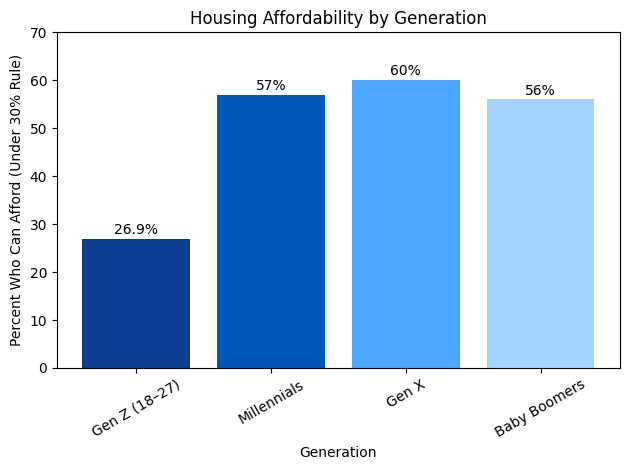
More than half of millennials, Gen Xers, and baby boomers working full-time can afford to live alone under the 30% rule. That is more than double the share of Gen Z workers who can do the same.
Part of the explanation is earnings. Younger workers generally earn less because they are earlier in their careers. However, income is only part of the story.
Rent levels in many cities have risen much faster than wages over the past decade, particularly after the pandemic housing surge between 2020 and 2023. In high-cost metro areas, entry-level salaries have not kept pace with housing inflation.
Where You Live Makes a Major Difference
High rent and low wages mean most Gen Z workers can’t afford to live alone, with big gaps in affordability depending on the city. https://t.co/T1JTiN2Xt1
— Scripps News (@scrippsnews) February 20, 2026
Affordability varies dramatically depending on location.
In some mid-sized or lower-cost cities, Gen Z workers are in a far better position:
- Scranton, Pennsylvania: More than 70% of full-time Gen Z workers can afford a one-bedroom apartment.
- Toledo, Ohio: Nearly two-thirds of young workers can afford basic housing independently.
In contrast, high-cost coastal markets present a much tougher picture:
- Oxnard, California: Fewer than 10% of Gen Z workers can afford a one-bedroom apartment.
- Similar affordability struggles exist in Miami, San Diego, and Honolulu.
These disparities reflect a combination of housing shortages, high demand, local wage levels, and regional economic conditions.
Why Rent Is the Central Issue

Even though younger workers typically earn less, the scale of rent growth remains a key driver of the problem.
Housing economists often use the 30% threshold because exceeding it reduces financial flexibility. When rent takes 40% or 50% of income, it becomes much harder to cover:
Gen Z also faces additional financial pressures compared to previous generations at the same age, including higher student loan balances and rising insurance and healthcare costs.
At the same time, the report notes that Gen Z now outnumbers baby boomers in the full-time workforce. That shift reflects demographic change but does not translate into equal purchasing power.
The Broader Housing Pattern
@fmsmith319Millennials and Gen Z have a cost of living crisis♬ original sound – Freddie Smith
The report aligns with broader census data showing increased financial strain among renters, seniors, and rural residents.
Older renters, especially Gen X and baby boomers, are staying in rental properties longer. That reduces available inventory, which can push rents higher and limit affordable options for younger tenants entering the market.
Limited housing supply in high-growth metro areas has intensified competition, further raising rents.
Can Renters Negotiate?
View this post on Instagram
LendingTree suggests renters may have some leverage, especially if they are reliable tenants.
Landlords face costs when replacing tenants, including:
In competitive rental markets, negotiation may not always work. However, in slower markets or where vacancy rates are rising, tenants with strong payment histories may be able to secure modest rent reductions.
What This Means for Gen Z
For many Gen Z workers, living alone may require one of the following:
The affordability gap is primarily a housing cost issue rather than simply a generational work ethic issue. When less than 30% of full-time young workers in major metros can afford a modest one-bedroom apartment, the challenge becomes structural.
The data suggests that location, rent inflation, and early-career wages are combining to delay independent living for much of Gen Z.