
Bloating is one of the most common digestive complaints and often appears as part of irritable bowel syndrome, or IBS.
Abdominal pain, constipation, and diarrhea also commonly occur in IBS, making it a condition that affects day-to-day comfort in several ways.
Available background material notes that IBS is common and occurs more often in women, while also pointing to gut bacteria and serotonin as important parts of the intestinal environment.
Recent research shifts attention away from a simple gas-or-food explanation. Focus now includes chemical signals made inside the gut and how those signals may shape bowel activity.
A major 2025 study brought attention to a new idea: certain gut microbes may make signaling molecules that directly affect intestinal function.
That shift matters because it links bloating and bowel symptoms to microbial activity at a much more direct level.
Gut Microbiome and Serotonin Connection
Interest in the gut microbiome has grown because gut bacteria do much more than help break down food.
Microbes in the digestive tract also take part in chemical signaling that can shape bowel activity, nerve communication, and overall digestive comfort.
Serotonin sits at the center of that discussion because much of the body’s serotonin is linked to the gut, where it helps regulate movement and signaling in the intestinal tract.
Earlier research suggested that gut bacteria could affect serotonin indirectly by changing the intestinal environment or influencing how host cells produce it. Newer findings add a more direct mechanism.
Some bacteria do not simply push the host to make more serotonin. Instead, they appear able to produce biologically active serotonin themselves, adding it directly to the gut environment.
Researchers identified two bacterial species that work together in that process: Limosilactobacillus mucosae and Ligilactobacillus ruminis.
Cooperation is a central part of the finding. Research does not describe a broad pattern involving the microbiome in general.
Data point to a specific microbial partnership with a biologically meaningful outcome.
- Limosilactobacillus mucosae was linked to the machinery needed for serotonin production.
- Ligilactobacillus ruminis worked alongside it rather than acting as a separate, unrelated finding.
- Cooperative action suggests that microbial effects in the gut may depend on combinations of species, not just the presence of one bacterium alone.
Another reason this section matters is that it gives bloating research a stronger biological framework.
Older conversations about bloating often centered on gas, food sensitivities, or slow digestion in broad terms. Newer work adds a signaling pathway that connects microbes, serotonin, and bowel control.
That makes the microbiome-serotonin connection more than a side note in digestive health. It becomes a possible explanation for how gut bacteria may influence symptoms linked to IBS and impaired intestinal movement.
How It Relates to Bloating Relief

Connection to bloating needs careful wording. Research does not show a finished human treatment that reliably reduces bloating.
What it does show is a biological pathway that may help explain one part of the symptom pattern seen in IBS and related bowel problems.
That pathway runs through serotonin, intestinal nerves, and transit time.
Serotonin in the gut helps regulate bowel movement through the enteric nervous system. When that system is functioning poorly, intestinal contents may move too slowly or irregularly.
Sluggish transit can keep gas and stool in the gut longer, adding to sensations of heaviness, tightness, swelling, and pressure; when bloating is accompanied by severe abdominal pain, nausea, or vomiting, patients may need urgent evaluation at Lumberton Hospital.
In that context, a microbial source of serotonin becomes very relevant.
Research showed that serotonin-producing bacteria improved intestinal transit in serotonin-deficient mice. Better transit does not solve every cause of bloating, but it can reduce one major contributor.
A bowel that moves contents more effectively is less likely to hold onto material that stretches the intestine and increases discomfort.
- Improved transit time suggests less prolonged retention of gas and intestinal contents.
- Greater nerve-cell density in the colon suggests stronger support for gut signaling and movement control.
- Combined changes point to bowel function as the main route through which bloating relief might occur.
@thestomachdoc 90-95% of the body’s serotonin is made in the gut. The gut-brain axis is real. Our gut health could also be affecting our mental health. #guthealing #guthealth #serotonin #depression #anxiety #mentalhealth ♬ Roxanne – Instrumental – Califa Azul
Increase in colonic nerve-cell density adds another layer to the explanation.
Gut microbes in this case may influence not only movement speed but also the neural system that helps organize intestinal activity.
That matters because bowel function depends on more than muscle contractions alone. Nerve signaling helps coordinate timing, pressure, and propulsion throughout the colon.
Careful phrasing is still essential. Findings do not prove a direct anti-bloating therapy in humans yet.
Results do suggest a biologically plausible pathway in which certain bacteria may improve bowel activity problems that often contribute to bloating in IBS.
For that reason, strongest way to frame the research is not as a cure claim, but as evidence that microbial serotonin production could support healthier intestinal movement and possibly reduce symptoms linked to delayed transit.
Key Findings From New Research
New research adds several important pieces to the story.
Instead of stopping at a broad association between gut microbes and digestive symptoms, investigators described a specific mechanism, tested it in an animal model, and then linked part of that finding to people with IBS.
Taken together, those layers make the work more persuasive than a simple correlation study.
Direct serotonin production by gut bacteria
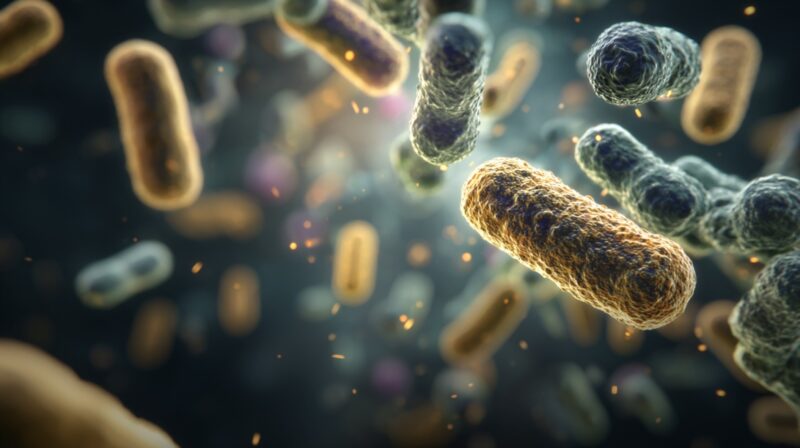
Main mechanistic finding is straightforward and important. Investigators identified human gut bacteria capable of producing bioactive serotonin.
Earlier models often focused on indirect effects, such as bacteria changing host cells or altering gut conditions that then changed serotonin levels.
Current findings support a more direct microbiome connection, with bacteria themselves acting as a source of serotonin.
That difference may sound small at first, but it changes the whole structure of the argument. If bacteria only alter conditions that affect host serotonin, then microbial influence stays one step removed.
If bacteria can generate bioactive serotonin themselves, then a direct signaling route becomes possible.
Gut microbes in that model are not only shaping the setting around intestinal function. They may be supplying one of the signals that help control it.
- Bioactive serotonin was the key target, not just a chemically related byproduct.
- Human gut bacteria were identified as the source, which keeps the mechanism relevant to human intestinal biology.
- Direct production creates a clearer link between microbiome activity and bowel function than older indirect models allowed.
Clinical interest follows naturally. Serotonin plays a major role in gut motility and signaling through the enteric nervous system.
A microbial source of serotonin could help explain why changes in gut bacteria may affect bowel habits, abdominal symptoms, and digestive comfort in some people.
Experimental evidence in serotonin-deficient mice

Animal work gave the mechanistic finding stronger support.
Researchers used germ-free mice with serotonin deficiency, which made it easier to test how the bacteria influenced the gut in a tightly controlled setting.
After introducing the two bacterial species, serotonin levels in the gut increased. Colon nerve-cell density also increased, adding structural evidence to the chemical findings.
Results did not stop at laboratory measurements. Intestinal transit time improved as well, which is one of the most relevant findings for any discussion of bloating relief.
Slower transit can leave digestive contents and gas in the intestine longer, which may contribute to pressure, fullness, and visible distension. Faster or more normalized transit can help reduce that burden.
- Germ-free serotonin-deficient mice showed increased gut serotonin after the two bacteria were introduced.
- Colon nerve-cell density increased after microbial treatment.
- Intestinal transit time returned to a more normal pattern.
Combined effect gives the study more weight. Chemical output increased, nerve-cell patterns changed, and bowel movement timing improved.
That combination suggests that microbial serotonin may affect more than one layer of intestinal function. Gut signaling, gut structure, and gut motility all appeared to respond in the same direction.
A practical takeaway follows. Relief of bloating was not measured as a direct symptom outcome in humans, so no treatment claim can be made at this stage.
Still, transit time is closely tied to how long contents remain in the bowel. Improvement in transit offers a plausible explanation for how microbial serotonin production could eventually matter for symptoms tied to delayed movement.
Human relevance for IBS
Human findings make the story more meaningful because IBS is one of the most common functional digestive disorders and bloating is a frequent complaint in that group.
Research reported that people with IBS had lower stool levels of L. mucosae than healthy individuals. Additional detail strengthens that observation because L. mucosae carries the enzyme required for serotonin production.
That connection matters for two reasons. First, it ties the mouse findings to a human population already known for bowel dysfunction and bloating.
Second, it points to a possible microbial deficit rather than a vague imbalance. Lower levels of a bacterium linked to serotonin production could help explain part of the altered bowel activity seen in IBS.
- People with IBS had lower stool levels of L. mucosae than healthy individuals.
- L. mucosae carries the enzyme needed for serotonin production.
- Human data connect a serotonin-related microbial finding to a condition in which bloating is common.
Caution still matters. Human data do not prove that low L. mucosae directly causes IBS symptoms in every person. IBS is a broad condition with many possible contributors, including altered motility, gut-brain signaling, sensitivity to distension, diet, and stress.
Even so, lower levels of a serotonin-producing bacterium in people with IBS create a stronger bridge between microbial chemistry and human bowel dysfunction than animal results alone could provide.
FAQs
Summary
Current evidence suggests that certain gut bacteria can produce bioactive serotonin, increase colonic nerve-cell density, and normalize intestinal transit time in serotonin-deficient mice.
Human data add another important piece, with people who have IBS showing lower levels of L. mucosae, a bacterium tied to serotonin production.
Most accurate takeaway is careful but promising. New research suggests that gut microbes may help regulate bowel function through serotonin production.
Diet and lifestyle factors that shape the microbiome may also play a meaningful role in digestive comfort, especially in people dealing with bloating and IBS symptoms.