

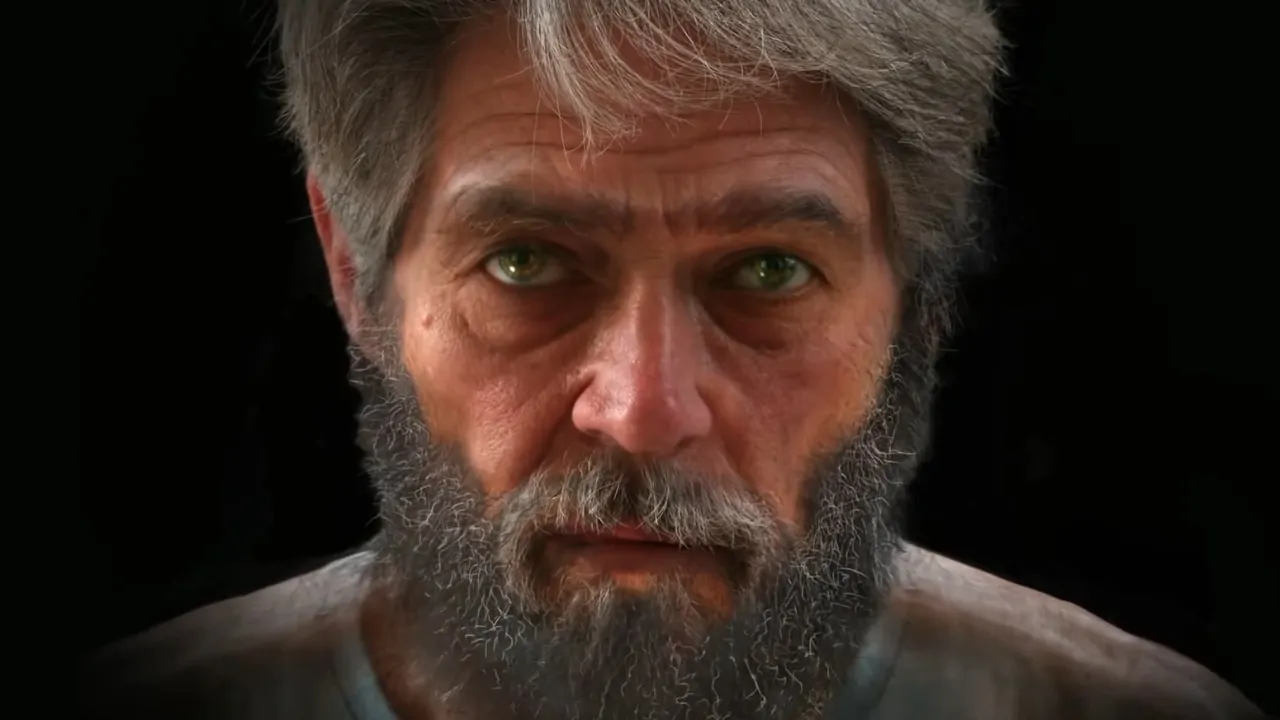
Looking at our primate ancestors can give the impression that humans have already reached the final stage of evolution. However, many scientists believe that the current human form is only the beginning of a long evolutionary journey.
Technology, space travel, and climate change are accelerating changes in the world, and experts say humans will likely evolve alongside these developments.
Using artificial intelligence, researchers have created images of future humans to predict how people might look centuries from now, or even exactly 1,000 years into the future.
One optimistic prediction is that humans in the year 3025 could be more physically attractive than today. Another expectation is that people may look increasingly similar to one another.
Scientists suggest the average person may have darker skin and resemble populations seen today in places such as Mauritius or Brazil.
This growing uniformity would result from increasing interaction and mixing between different ethnic groups, according to reports that also featured AI-generated images of future humans.
AI Images Suggest a More Uniform Global Appearance
Revealed: What humans will look like in 1,000 years(3025) from now, according to scientists. pic.twitter.com/2JclkruD7P
— Elijah 🇺🇬🇺🇲 (@RealDigitalVybz) February 9, 2025
One of the most consistent predictions involves increasing similarity among people worldwide. Experts believe that growing globalization, migration, and intermarriage between different populations will gradually reduce visible ethnic differences.
Future humans may commonly have medium-to-dark skin tones, similar to populations currently seen in diverse regions such as Brazil or Mauritius. This trend reflects demographic mixing rather than a single evolutionary direction, suggesting a blending of traits rather than replacement.
Researchers emphasize that this shift would not eliminate diversity but could reduce stark physical contrasts seen today.
Skin tone, facial structure, and other traits are shaped by complex genetic patterns, so gradual blending across populations is considered a likely long-term trend.
Possible Changes in Height and Body Structure
Interestingly, some scientists propose that humans could become slightly shorter over time. Historically, evolutionary pressures favored survival traits such as strength and resilience.
Today, advances in medicine allow more people to survive and reproduce, meaning evolutionary pressures may increasingly relate to fertility and social factors rather than basic survival.
While predictions vary widely, some evolutionary models suggest that average height could stabilize or even decrease slightly if shorter individuals have comparable reproductive success.
Environmental conditions could also play a role. Climate shifts, nutrition patterns, and urban lifestyles may influence body proportions, although these factors are complex and difficult to predict precisely over millennia.
Sexual Selection Could Influence Attractiveness

Another factor shaping future human appearance may be sexual selection. As societies become more socially flexible and individuals have greater autonomy in choosing partners, traits considered attractive could become more widespread.
Some evolutionary geneticists argue that this process could gradually enhance features commonly perceived as aesthetically pleasing, though cultural standards of attractiveness can change over time.
This perspective highlights that evolution is not driven only by environmental survival pressures. Social preferences, cultural norms, and mating patterns can also influence which traits become more common across generations.
Technology May Direct Human Evolution
Unlike previous eras, future human evolution may be influenced heavily by technology. Advances in genetic engineering, particularly gene-editing tools such as CRISPR-based technologies, could allow targeted changes to inherited traits.
These developments could potentially reduce genetic diseases, influence physical characteristics, or even modify resistance to environmental stressors.
Many scientists caution that cultural and technological changes are likely to have a stronger impact than natural genetic evolution alone.
Wearable technology, body augmentation, and new forms of digital interaction could reshape how humans present themselves physically without requiring biological evolution at all.
Smaller Brain
View this post on Instagram
Some researchers have suggested that increasing reliance on technology could affect cognitive demands on humans.
If advanced computers and artificial intelligence take over more analytical and memory-intensive tasks, evolutionary pressure favoring larger brains might weaken.
This does not necessarily mean intelligence would decline, but biological brain size could theoretically adjust over extremely long timescales.
However, this idea remains speculative and widely debated among neuroscientists and anthropologists.
Space Travel Could Create Diverging Human Populations

Long-term space exploration introduces another possible evolutionary path. If humans establish settlements on other planets or in low-gravity environments, physical adaptations might follow.
Scientists speculate that lower gravity could lead to taller, slimmer bodies, longer limbs, and potentially larger eyes adapted to dimmer light conditions.
Over very long periods, isolated space populations could develop traits distinct from those of Earth-based humans.
Such changes would depend on sustained isolation, environmental pressures, and reproductive patterns. While still hypothetical, this scenario reflects how dramatically the environment can influence evolutionary outcomes.
The Big Surprise: Culture May Matter More Than Genetics
Perhaps the most unexpected takeaway from many scientific discussions is that cultural and technological influences may outweigh purely biological evolution.
Changes in medicine, social structure, global mobility, and technology could shape human appearance and behavior faster than natural genetic evolution alone.
This means future humans may look different not only because of biology but also because of how technology integrates with everyday life.
A Future Still Full of Uncertainty
Predicting human evolution over a thousand years remains highly speculative. Scientific models provide possibilities rather than certainties, shaped by current demographic trends, technology development, and environmental projections.
What is clear is that human change is ongoing, influenced by a combination of biology, culture, technology, and environment, factors that continue to interact in increasingly complex ways.