

A new clinical study suggests that popular time-restricted eating schedules may not improve metabolic or cardiovascular health unless they also reduce calorie intake.
A controlled trial led by researchers at the German Institute of Human Nutrition Potsdam-Rehbrücke challenges a core assumption behind intermittent fasting. The study found that when calorie intake remains unchanged, restricting eating to specific time windows does not significantly improve blood sugar, cholesterol, or blood pressure, even though modest weight loss may occur.
The findings add to a growing body of evidence suggesting that calorie reduction, rather than meal timing alone, is the primary driver of metabolic health improvements.
How The Study Was Designed

The researchers enrolled 31 women who were classified as overweight or obese and placed them on two different time-restricted eating schedules, each lasting two weeks.
One group ate between 8 a.m. and 4 p.m., while the other ate between 1 p.m. and 9 p.m. Both schedules are common forms of time-restricted eating, a widely promoted subtype of intermittent fasting.
Crucially, this was an isocaloric study. Participants were instructed to eat as they normally would, without reducing total calorie intake. This design allowed the researchers to isolate the effect of eating time alone, without the confounding factor of calorie restriction.
What The Researchers Found
Although participants experienced slight weight loss, the expected improvements in cardiometabolic markers did not materialize.
Blood glucose levels, blood pressure, cholesterol, and other metabolic indicators remained largely unchanged across both eating schedules.
The researchers concluded that previously reported benefits of time-restricted eating may stem primarily from unintentional calorie reduction rather than from narrowing the eating window itself.
“In this nearly isocaloric trial, no improvements in metabolic parameters were observed after two weeks of time-restricted eating,” the authors wrote.
This finding directly challenges claims that meal timing alone can significantly boost metabolism or cardiovascular health.
Metabolic Health Results At A Glance
The absence of metabolic improvements was consistent across both early and late eating schedules.
Circadian Rhythm Effects Still Observed
While metabolic markers did not improve, the study did reveal changes in participants’ circadian rhythms. Eating earlier or later shifted biological clocks associated with sleep timing and hormone release.
This supports existing research showing that meal timing can influence circadian biology, even if it does not automatically translate into better metabolic health. These shifts may still be relevant for sleep quality, alertness, and long-term health, particularly for people who eat late at night.
Why Calorie Balance Still Matters Most
The researchers emphasize that energy balance remains central to metabolic health. Without reducing calorie intake, simply compressing eating into a shorter window appears insufficient to trigger measurable cardiometabolic benefits.
According to study co-author Olga Ramich, individuals aiming to improve metabolic health should focus on total energy intake in addition to meal timing.
This is especially relevant for conditions such as insulin resistance and type 2 diabetes, where calorie excess plays a dominant role.
Limitations And What Comes Next
The study was relatively small and short-term, lasting only four weeks in total. The researchers note that longer trials and hypocaloric versions of time-restricted eating may yield different results.
Future research will explore whether eating timing provides additional benefits when calories are reduced, and whether optimal eating windows vary between individuals based on age, metabolic health, or circadian preferences.
Why This Matters Now
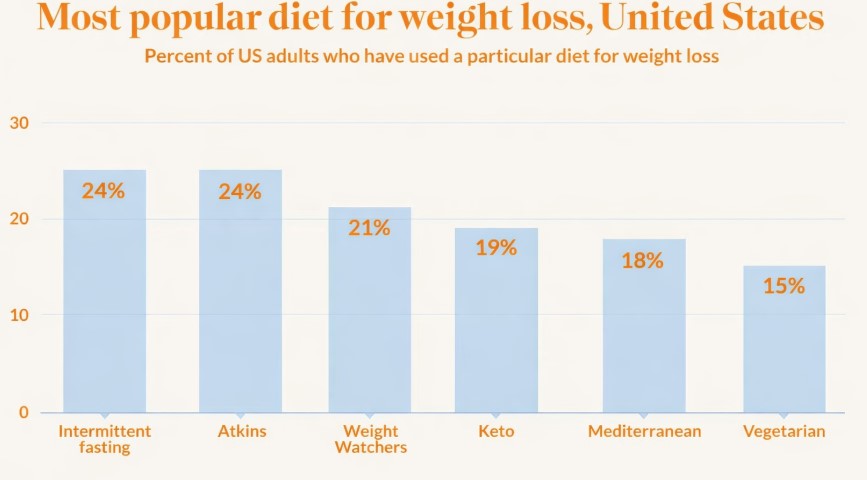
Intermittent fasting continues to gain popularity, often promoted as a metabolic shortcut that works independently of calorie intake.
This study adds nuance to that narrative and suggests that many benefits attributed to fasting may actually result from eating less, not eating later or earlier.
As dietary advice evolves, these findings may influence how clinicians and nutrition professionals recommend fasting-style diets, particularly for people managing diabetes or metabolic syndrome.