


For years, there has been an unspoken rule in newsrooms: avoid pandemic stories unless something is already on fire. COVID exhausted public attention, political patience, and institutional credibility.
When the emergency phase ended, many systems quietly shifted back to autopilot. Budgets were cut. Surveillance programs shrank. Early-warning units dissolved. The assumption was simple: lightning does not strike twice so soon.
That assumption is dangerous.
A different virus has been spreading steadily, largely out of public view. Highly pathogenic avian influenza, commonly called bird flu, is no longer just a problem for poultry farms and migratory birds. It is moving across species, geography, and food systems in ways that should make public health officials deeply uncomfortable.
This is not a prediction of imminent catastrophe. It is a warning grounded in numbers, patterns, and past failures.
Bird Flu by the Numbers

Studies show that bird flu viruses, particularly those in the H5 family, are among the most destructive animal pathogens ever recorded.
Since the current global wave intensified:
- Over 9 million birds have died directly from infection
- Hundreds of millions more have been culled to slow the spread in commercial poultry
- At least 74 mammal species have experienced infections or mass die-offs, including seals, foxes, mink, bears, and big cats.
These are not isolated anomalies. They are signs of a virus repeatedly testing new biological doors.
In birds, the consequences are almost absolute. Highly pathogenic avian influenza kills close to 100 percent of infected poultry, which is why containment relies on mass culling rather than treatment. Once the virus enters a commercial operation, eradication becomes the only viable control strategy.
In Europe alone, between early September and mid-November 2025, authorities recorded 1,444 infected wild birds across 26 countries. That figure represents a fourfold increase compared with the same period a year earlier.
In the United States, the virus has crossed into agriculture in a way that fundamentally changes the risk equation.
The spread is no longer evenly distributed or hypothetical. In late 2025, Kansas emerged as the single most intense avian influenza hotspot in the United States.
According to the U.S. Department of Agriculture, nearly 414,000 birds were affected across commercial and backyard flocks, with roughly 380,000 concentrated in a single commercial operation in Pottawatomie County. On national outbreak maps, Kansas stood alone in the highest severity category over a 30-day period, outpacing every other state.
The Dairy Herd Shift That Changed Everything
Over the past two years, more than 1,000 U.S. dairy herds have tested positive for avian influenza. This matters for three reasons.
First, cows are mammals. Every sustained infection in a mammal gives the virus more opportunities to adapt to mammalian biology.
Second, researchers have detected viral fragments in milk, confirming that the virus is entering food production environments at scale. Pasteurization appears to neutralize infectious viruses, but the presence alone signals extensive exposure.
Third, dairy farms involve constant human contact. Workers handle animals daily, often without the same protective barriers used in high-containment poultry outbreaks.
Each spillover is not just an infection. It is an experiment run by the virus.
Human Cases Remain Rare – But the Fatality Rate Is Not

Globally, since 2003, there have been 992 confirmed human cases of H5N1 bird flu. That number sounds small until paired with its most alarming statistic: a case fatality rate close to 50 percent.
That does not mean half of all infections are fatal. Many mild or asymptomatic cases likely go undetected. But it does mean that when severe disease occurs, outcomes are often devastating.
The trend line is also shifting.
- 75 human cases have been recorded in the Americas since 2022
- In November 2025, the United States confirmed its first human death from the H5N5 strain in a patient with underlying health conditions
- Europe has reported no confirmed human cases so far, but public health authorities warn that widespread animal circulation increases spillover risk
Some human infections are easy to miss. One recent U.S. case of a dairy worker presented as conjunctivitis, not respiratory illness. That kind of symptom profile does not trigger alarm bells or testing cascades.
Low detection does not equal low risk.
Public health agencies continue to describe avian influenza as a low risk to the general public. The CDC emphasizes that H5 bird flu is widespread in wild birds, with sporadic human cases primarily among poultry and dairy workers, and no evidence of sustained human-to-human transmission. That framing is technically accurate. It is also incomplete.
Why Warnings Fail Before Disasters
Research into past catastrophes reveals a consistent pattern. Early warnings are rarely absent. They are diluted, delayed, or ignored.
Frontline observers see problems first. Veterinarians log unusual deaths. Virologists flag genetic changes. Field workers report anomalies. As those signals move upward through institutions, they encounter friction: bureaucracy, political caution, funding constraints, and competing narratives.
By the time warnings reach decision-makers, they often sound uncertain, technical, or inconvenient.
Bird flu is now sitting inside that exact failure zone.
Surveillance Systems Are Weaker Than They Appear
On paper, pandemic preparedness has improved since COVID. In reality, many of the systems that matter most day-to-day are eroding.
In Europe, a multi-country review found that COVID exposed a critical gap in preparedness, especially around standardized indicators, real-time data sharing, and transparent reporting. The EU’s new pre-pandemic framework is a step forward, but it does not compensate for uneven national surveillance capacity.
In the United States, funding cuts have left agencies stretched thin. Researchers have publicly warned that:
- Genetic data from infected animals was released late
- Data formats were not usable for independent analysis
- Cross-agency reporting has slowed significantly
Without timely sequencing and open data, scientists cannot track how the virus is mutating or moving between species.
In the UK, veterinary shortages and reduced access to European disease intelligence have further weakened early detection pipelines.
When surveillance falters inside institutions, public awareness collapses entirely.
The Public Does Not See the Threat
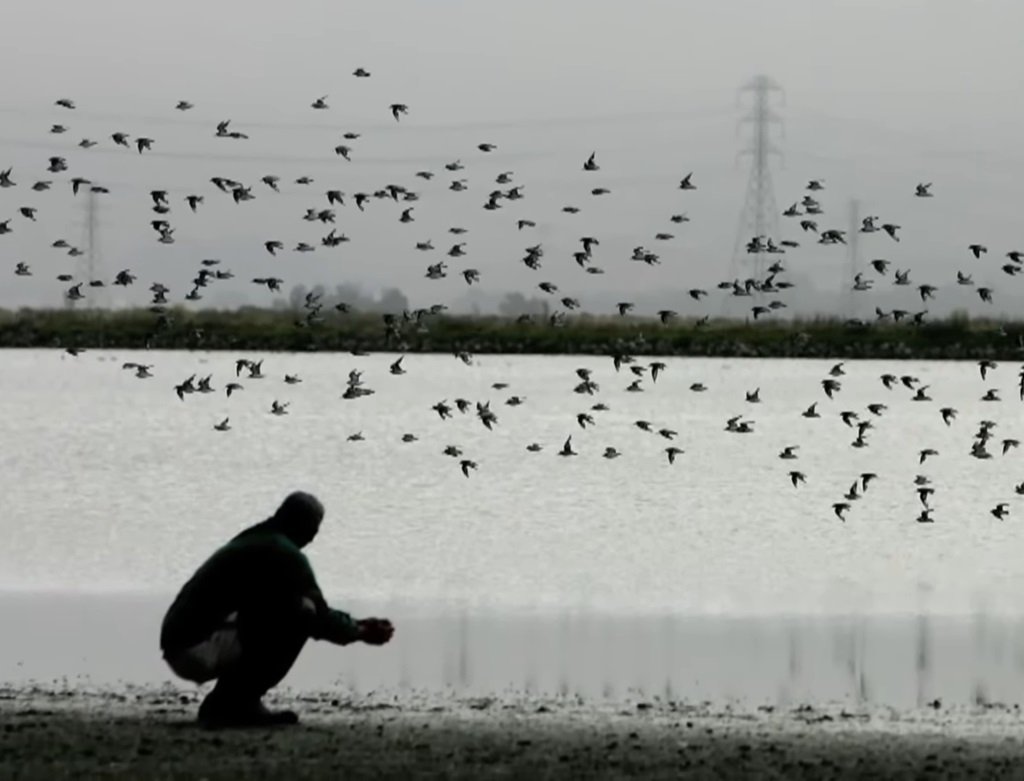
Polling reflects this gap clearly. Most Americans do not consider bird flu a credible personal risk. That perception is reinforced by the absence of visible human outbreaks and by pandemic fatigue.
But risk perception is not a reliable guide to biological reality.
Influenza viruses have a long history of surprising humanity. Past flu pandemics killed large numbers of young, otherwise healthy adults, not just the elderly or immunocompromised. Unlike seasonal flu strains, the general population likely has little to no baseline immunity to H5 viruses.
Health authorities continue to stress that the probability of sustained human-to-human transmission remains low. That assessment is reasonable. These viruses rarely make that evolutionary leap.
But rare does not mean impossible.
Preparedness Is Not the Same as Attention
Yes, the world is better prepared than it was before COVID. Vaccine candidates exist. Antiviral stockpiles are larger. Response frameworks are clearer.
What is missing is urgency.
Preparedness without attention decays quickly. Expertise under political pressure weakens. Surveillance without funding becomes symbolic. Warnings without amplification fade.
Bird flu does not need panic. It needs sustained focus, transparent data, and systems that treat early signals as assets rather than inconveniences.