

In a dim lab at Boston’s Brigham and Women’s Hospital in late 2016, Dr. Luigi Taranto Montemurro wasn’t expecting a breakthrough.
He was monitoring a patient with severe sleep apnea, a condition that causes people to stop breathing repeatedly through the night. The man, middle-aged and hooked up to wires that tracked his oxygen and sleep patterns, had been through this before.
So had the researchers. Sleep apnea is one of the most common sleep disorders in the world, and one of the hardest to treat.
That night, something unusual happened.
The patient, who usually had dozens of breathing interruptions an hour, was sleeping soundly. No gasps. No pauses. His breathing was steady.
Taranto Montemurro, a Harvard researcher at the time, assumed the equipment had malfunctioned.
“I thought maybe the wires had come loose,” he recalls. But everything was working. The difference? A combination of two drugs that the team had been quietly testing.
“It was like… wait, this can’t be real,” he says now. “But it was.”
A Holy Grail for an Overlooked Disease

That accidental success would go on to spark Apnimed, a biotech startup based in Cambridge, Massachusetts, now preparing to file for FDA approval for what could become the first-ever oral medication for obstructive sleep apnea.
It’s a milestone that scientists in the sleep world have been chasing for decades. “A pill for sleep apnea has always been the holy grail,” says Dr. Andrew Wellman, a Harvard sleep researcher who mentored Taranto Montemurro and runs the Sleep Disordered Breathing Lab where the discovery was made.
Sleep apnea affects up to 80 million people in the U.S. alone, according to Forbes. The vast majority either aren’t diagnosed or won’t use existing treatments. That’s where Apnimed hopes to make a difference.
Their nightly pill, a combination of two already-known drugs, works by keeping the throat muscles active during sleep, not enough to wake you, but just enough to keep your airway open. That prevents the dangerous breathing pauses that define obstructive sleep apnea, while letting the brain get the rest it needs.
If all goes well, the drug could reach the market by early 2027.
Why This Matters: CPAP Works, But Almost No One Wants It
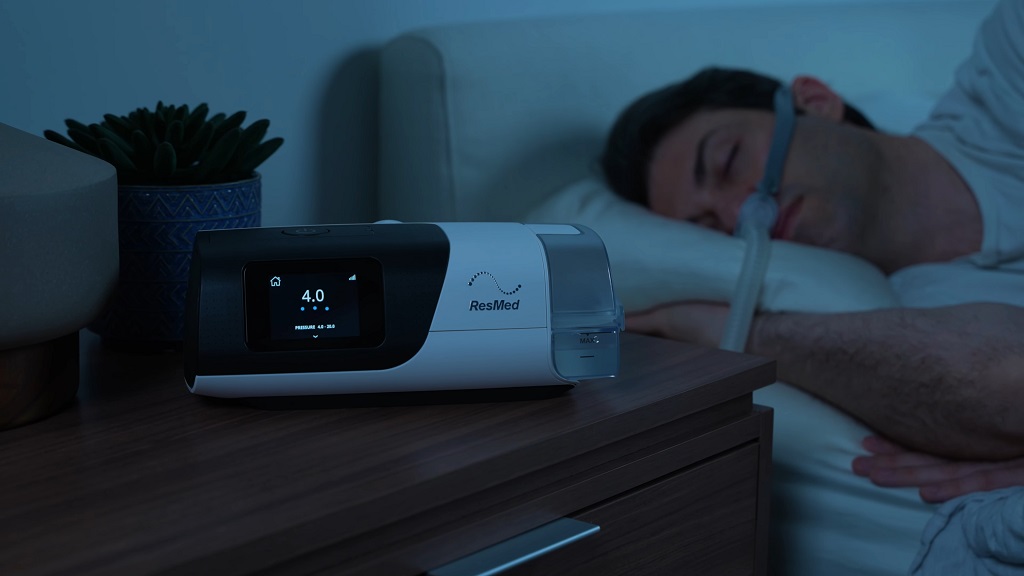
Right now, the gold standard treatment for sleep apnea is CPAP, the continuous positive airway pressure machine. It’s highly effective. But it’s also uncomfortable, noisy, and awkward to sleep with. Many people try it once and never go back. Others never get diagnosed at all because they know CPAP will likely be the recommendation.
That’s not just a quality-of-life issue. Untreated sleep apnea has been linked to heart disease, stroke, diabetes, and possibly even neurodegenerative conditions like Alzheimer’s and Parkinson’s.
“We don’t talk about sleep apnea like we talk about cancer or heart disease, but the health risks are very real,” says Dr. Nate Watson, past president of the American Academy of Sleep Medicine.
A Tiny Company, A Huge Market
Apnimed is still early-stage – no revenue yet, and it’s not profitable. But the promise of a pill has brought in $260 million in funding from major investors like Morningside, Alpha Wave Global, and Sectoral Asset Management, pushing the company’s valuation to around $400 million.
With approval and the right insurance coverage, the drug could be used by millions of patients, making it a potential blockbuster. Even if a small slice of sleep apnea sufferers take it, that’s still tens of millions of potential prescriptions per year.
“The numbers are staggering,” says Dr. Larry Miller, Apnimed’s CEO and cofounder – a 72-year-old pulmonologist who jokes that his kids now call him “the world’s oldest startup CEO.” He had actually been planning retirement before joining Apnimed, but says the science was too promising to ignore.
“It’s an addiction, startups,” Miller laughs. “But when I saw the data, I thought, ‘I have to do this.’”
From Skepticism to Surprise
Even Wellman, who’d spent decades chasing the idea of a pharmaceutical solution, was skeptical when his team first saw the results.
“I honestly didn’t believe it at first,” he says. “We’d been disappointed so many times before. But this time, it kept working.”
More than 40 drug candidates have failed in clinical trials for obstructive sleep apnea over the past few decades. The field was considered so challenging that many investors avoided it altogether.
But Apnimed has moved steadily forward. After licensing the drug from Harvard, the team launched full-scale trials. In Phase 3 studies completed last year, patients taking the pill saw their sleep apnea severity drop by 47%, compared to just 7% for the placebo group. Side effects were mild – mostly dry mouth or trouble falling asleep – and there were no serious adverse events.
Why So Many Still Go Untreated
Part of what makes sleep apnea such a tricky public health issue is how underdiagnosed and undertreated it is.
In a recent claims study, Apnimed ran across five years of U.S. insurance data, and they found that only about 23 million people had a sleep apnea diagnosis, despite estimates that three to four times that number actually have the disease. And of those diagnosed, only 6.5 million filed for any kind of treatment.
“That’s the absurdity of this category,” says Graham Goodrich, Apnimed’s chief commercial officer. “Most people who do get diagnosed don’t even get treated.”
Some avoid CPAP. Others don’t realize how dangerous the condition can be. And many more simply fall through the cracks.
From Lab to Market, and What’s Next
If Apnimed’s drug is approved, it could transform how sleep apnea is treated – putting it on par with other chronic conditions like asthma or hypertension, where doctors have a range of medications to choose from, depending on the patient.
“That’s never been possible with sleep apnea,” Miller says. “Until now.”
The company is already talking to insurers to ensure the drug will be covered – a key step toward mass adoption. It’s also working with Japanese pharmaceutical company Shionogi on two additional compounds that could help treat variations of the condition.
For investors like Chris Dimitropoulos at Alpha Wave, the potential isn’t just financial – it’s personal. After seeing several family members struggle with CPAP, he realized how wide and deeply felt the need for a better solution was.
“It’s one of those things a lot of people don’t talk about, but once it comes up, everyone knows someone dealing with it,” he says.
Sleep: Still the Final Frontier
Despite spending a third of our lives doing it, sleep is still one of the least understood aspects of human health. It doesn’t grab headlines the way cancer or heart disease does. But for the tens of millions who wake up exhausted every single morning, because their brain and body never got the rest they needed, a solution can’t come soon enough.
“Sleep is for the brain,” says Taranto Montemurro. “And if you don’t sleep well, your brain just doesn’t function well.”
After eight years of testing, tinkering, and trial data, Apnimed’s founders believe they’re finally close to delivering the thing they once thought impossible:
A pill. For sleep apnea. That actually works.