


Thailand entered a new phase of high-precision medicine in 2026 with a breakthrough in robot-assisted heart surgery.
News of that achievement signaled more than a technical success inside one operating room.
Progress in cardiac robotics pointed to a medical system that has built the expertise, infrastructure, and safety standards required for highly advanced care.
Thailand ranks as a leader in robotic surgery in 2026 because clinical innovation is moving alongside public-health expansion, specialist training, and wide use across multiple medical fields.
Progress is visible not only in first-time procedures but also in the way hospitals and surgical teams are applying robotic systems to complex cases.
National momentum suggests that robotic surgery is becoming an important part of modern care in Thailand.
Thailand’s Milestone in 2026 – Robotic Heart Surgery
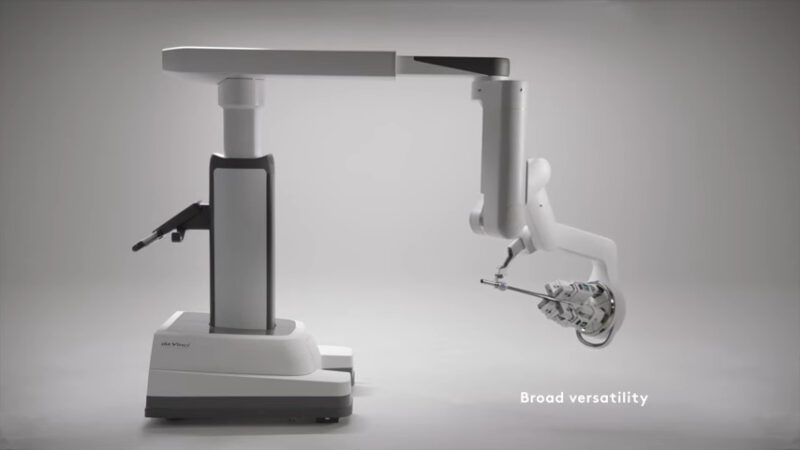
Thammasat University Hospital was reported as carrying out Thailand’s first Da Vinci Xi robotic heart surgery, creating a major national milestone in cardiac robotics.
News of that procedure matters because robot-assisted cardiac surgery sits among the most technically demanding forms of minimally invasive care.
Success in such a case signals much more than access to a high-end platform.
Readiness at that level requires a surgical team able to work with precision in a confined field, an operating system built around coordination, and patient-safety protocols that can support a procedure where even small errors carry major consequences.
Thammasat University Hospital said the breakthrough showed readiness in modern medical technology, a highly skilled medical team, and safety standards in patient care.
Hospital officials also noted practical clinical gains linked to the robotic platform, including smaller incisions, reduced blood loss, and faster recovery compared with conventional open-heart surgery.
Heart surgery remains one of the most demanding areas in robotic-assisted care because every stage of treatment depends on exact movement, visual clarity, and stable control in a sensitive anatomical space.
Robotic support becomes especially valuable in that setting because the platform can translate a surgeon’s hand movements into smaller and more controlled motions inside the body.
Bangkok Hospital’s published description of the da Vinci Xi explains why that matters in complex surgery.
- Robotic arms can move with nearly 360-degree freedom on seven axes, helping surgeons work in hard-to-reach anatomy.
- A high-definition 3D camera provides magnified views of vessels, nerves, and surrounding tissue.
- Built-in tremor filtration reduces involuntary hand movement and supports more stable surgical actions.
- Small incisions are associated with less pain, shorter hospital stays, and faster return to daily life.
View this post on Instagram
Why Robotic Surgery Gives Thailand a Competitive Edge
Robotic surgery gives Thailand an important competitive advantage because its clinical benefits align closely with the country’s larger goal of raising care standards and expanding advanced treatment.
That advantage may also increase Thailand’s visibility among international patients using platforms such as Bookimed to compare hospitals and arrange treatment abroad.
Bangkok Hospital states that robotic-assisted surgery improves access to difficult anatomy, lowers complication risk, reduces blood loss, and supports smaller incisions with less pain and shorter recovery time.
In cardiac care, Thammasat University Hospital also pointed to reduced blood loss and faster recovery in comparison with open-heart surgery.
Clinical value in robotic surgery, therefore, rests on direct patient outcomes as much as on technology branding.
A clearer picture of that advantage emerges when those benefits are grouped by function. Robotic systems can improve surgery in at least three major ways:
Precision and control improve through wristed instruments, small-scale motion translation, and tremor filtration.
Visualization improves through magnified, high-definition 3D imaging that helps surgeons identify vessels, nerves, muscles, and other critical structures more clearly.
Recovery can improve through smaller incisions, lower blood loss, less pain, and shorter length of stay.
International market data also adds useful context. Intuitive reported that full-year 2025 worldwide da Vinci procedures grew about 18%, while total company procedures across da Vinci and Ion grew about 19%.
That global growth suggests that Thailand’s 2026 gains are happening inside a fast-expanding field where hospitals and health systems are placing greater value on minimally invasive robotic care.
Public Healthcare Adoption Strengthens Thailand’s Leadership Case

Public-sector adoption adds another layer to Thailand’s robotics story.
Rajavithi Hospital completed the Public Health Ministry’s first two robot-assisted heart surgeries, showing that advanced cardiac robotics is moving into the national healthcare system rather than staying limited to premium private institutions.
Department of Medical Services officials linked that effort to a broader push for higher treatment standards, improved precision, fewer complications, and wider access to specialized care.
Expansion at that level matters because national leadership in robotic surgery depends not only on first cases, but also on the ability to make advanced treatment available through public hospitals.
Reported details around those first public system cases make the achievement more convincing.
The cases involved a congenital atrial septal defect and severe mitral valve stenosis. Both operations were completed successfully, and both patients recovered quickly with no complications. Recovery time was especially notable.
- One patient was discharged within 2 days.
- One patient was discharged within 4 days.
Short hospital stays and smooth postoperative recovery strengthen the case for robotic methods in public care.
Smaller wounds, lower surgical trauma, and faster recovery can improve patient experience while also easing pressure on hospital resources. Value in that setting is practical as well as symbolic.
A public hospital that can perform complex robotic heart procedures safely gains a tool that may improve outcomes, reduce complications, and widen treatment options for patients who might otherwise have limited access to advanced specialist care.
Thailand’s Strength Is a Broad Robotic Ecosystem
Thailand’s robotic surgery strength is supported by a broader ecosystem rather than one headline procedure.
Bangkok Hospital’s robotic surgery program shows that national capacity extends across many specialties, which makes the country’s position more convincing.
Multi-specialty use matters because it shows robotic systems are not sitting at the edge of clinical practice.
Regular use across departments points to integrated planning, trained staff, reliable case management, and strong institutional support.
- abdominal surgery
- gastrointestinal surgery
- thoracic surgery
- urological surgery
- gynecological surgery
- head-and-neck surgery
Range across so many disciplines suggests depth in planning, equipment use, and clinical coordination.
A hospital that can support robotic procedures across that many fields is showing more than technical interest.
Consistent use across specialties indicates repeatable systems, experienced teams, and a framework that can support continued growth.
National strength becomes easier to recognize when robotic surgery is visible in several departments rather than tied to a single celebrated operation.
Human Capital and Training Are Central to Thailand’s Rise

Human capital sits at the center of Thailand’s progress in robotic surgery.
Advanced machines can expand a surgeon’s capabilities, but safe results still depend on the skill of the people operating the system, preparing the patient, coordinating the operating room, and managing postoperative care.
Reports on Thailand’s robotic heart surgery achievements repeatedly point to preparation, specialist expertise, and team readiness as core reasons the procedures succeeded.
Thammasat University Hospital linked its first robotic heart surgery to readiness in modern technology, a highly skilled medical team, and strong patient-safety standards.
Rajavithi Hospital said its public-system heart cases were possible in part because earlier robotic thoracic experience had already built personnel readiness, care systems, and practical expertise.
Bangkok Hospital adds another important piece to that picture through its description of surgeon training and multidisciplinary practice. Published material says its robotic surgeons are highly specialized, well trained, and working to international standards.
Its Robotic Surgery Center also describes coordinated care that involves experienced robotic surgeons, anesthesiologists, and geriatric specialists for older patients who may need more detailed preoperative preparation.
Details like those matter because robotic surgery depends on an entire clinical structure, not just a console surgeon.
Long-term leadership in robotic surgery cannot be built through equipment purchases alone. Sustainable progress requires surgeon training, institutional learning, case accumulation, governance, and a culture of careful preparation.
FAQs
Summary
Thailand’s robotic-surgery story in 2026 is defined by several major achievements.
First-in-country cardiac robotics placed the nation at the front of an advanced medical field.
First public-system robot-assisted heart surgeries expanded that progress into broader healthcare access.
Multi-specialty hospital capability showed depth across abdominal, gastrointestinal, thoracic, urological, gynecological, and head-and-neck surgery.
Continued plans to expand access and raise medical standards added further weight to the national picture.