
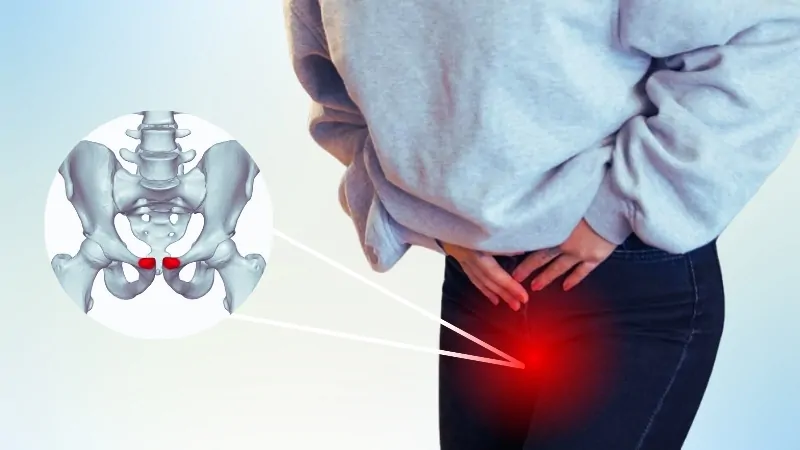
Groin pain in women can begin in the muscles, hip joint, abdominal wall, pelvic floor, urinary tract or reproductive organs. The pain may be mild and temporary, or severe enough to make walking, sleeping and ordinary movement difficult.
A muscle strain after running requires a different treatment from a hernia, ovarian cyst, hip condition or urinary infection. Finding the source of the pain is therefore more important than treating the groin area without a diagnosis.
The timing of the pain provides useful clues. Pain after exercise often points toward a muscle or tendon injury. Pain that follows the menstrual cycle may have a gynecological cause. Sudden one-sided pain with bleeding, vomiting or dizziness requires urgent medical assessment.
Key Takeaways
- Groin pain can come from the muscles, hip, pubic joint, pelvic floor, nerves, hernia, urinary tract or reproductive organs.
- Sudden severe pain, fainting, fever, heavy bleeding, vomiting or an inability to walk requires urgent medical care.
- Possible pregnancy should always be considered when groin or pelvic pain occurs with a missed period or vaginal bleeding.
- Muscle and tendon injuries are usually treated with temporary activity changes and progressive rehabilitation.
- Pelvic floor therapy may help when pain is linked to muscle tension, painful intercourse, childbirth or chronic pelvic pain.
- Ultrasound, X-rays or MRI may be needed when the diagnosis remains unclear.
- PRP and prolotherapy are not standard first-line treatments for unexplained groin pain.
- Treatment should be selected according to the confirmed or most likely cause.
When Groin Pain Requires Urgent Medical Care?
Most cases of groin pain are not emergencies. Certain combinations of symptoms can point to internal bleeding, infection, ovarian torsion, a trapped hernia or a serious hip injury.
Seek immediate medical care when groin or pelvic pain occurs with:
- sudden or rapidly worsening pain
- a missed period or positive pregnancy test
- vaginal bleeding during a possible pregnancy
- dizziness, weakness, fainting or shoulder pain
- fever or chills
- persistent nausea or vomiting
- heavy vaginal bleeding
- a firm, painful or discolored groin lump
- an inability to stand or bear weight
- a visible deformity after a fall or accident
- new leg weakness
- numbness around the genitals or inner thighs
- loss of bladder or bowel control
An ectopic pregnancy occurs when a pregnancy develops outside the uterus. Pelvic pain, abnormal bleeding, dizziness and fainting can appear if internal bleeding develops.
Sudden one-sided pain with nausea or vomiting may also occur when an ovary twists. Ovarian torsion can interrupt the blood supply to the ovary and requires urgent treatment.
Where Is the Groin and What Can the Pain Feel Like?
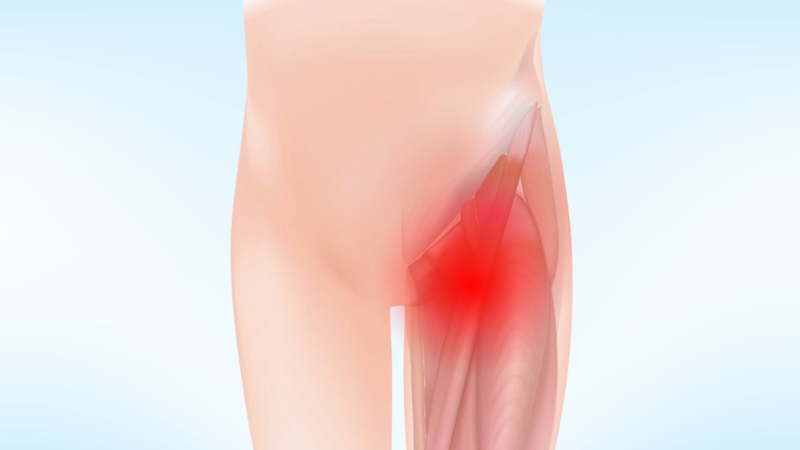
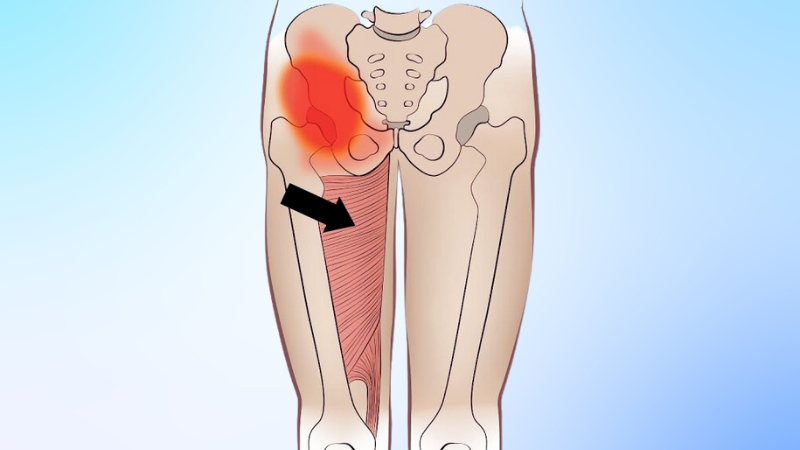
The groin is the area where the lower abdomen meets the upper inner thigh. Pain may remain in one small area or spread toward the hip, pubic bone, lower abdomen, labia, buttock or front of the thigh.
Some women describe a dull ache. Others report pulling, burning, pressure, stiffness, clicking or a sudden sharp pain.
| Pain Pattern | Possible Explanation |
|---|---|
| Pain after sprinting, kicking or changing direction | Adductor or hip-flexor injury |
| Deep pain with clicking, catching or pain during squatting | Hip impingement or labral injury |
| Stiffness and pain during walking | Hip osteoarthritis |
| Pain when coughing, lifting or straining | Inguinal or femoral hernia |
| Pain linked to periods or sexual intercourse | Endometriosis or another pelvic condition |
| Sudden one-sided pelvic pain with vomiting | Ovarian torsion or a complicated ovarian cyst |
| Pain moving from the side or back toward the groin | Kidney or ureter stone |
| Burning, tingling or numbness | Nerve irritation or compression |
| Pain during pregnancy when walking or turning in bed | Pregnancy-related pelvic girdle pain |
Symptoms often overlap. A hip condition can feel like an inner-thigh injury, and pelvic pain can be mistaken for pain from the hip or lower back.
Common Causes of Groin Pain in Women
The American Academy of Family Physicians divides musculoskeletal groin pain into several major groups, including adductor-related, iliopsoas-related, inguinal-related, pubic-related and hip-related pain.
Hernias, urinary conditions and gynecological disorders must also be considered, especially when the symptoms are not clearly connected with movement or exercise.
Adductor Muscle Strain
The adductor muscles run along the inner thigh and pull the leg toward the center of the body. A strain develops when a muscle or tendon is overstretched or torn.
These injuries commonly occur during running, soccer, gymnastics, skating and activities involving sudden direction changes.
Possible signs include:
- pain along the upper inner thigh
- tenderness when the area is pressed
- pain when squeezing the knees together
- pain during running or kicking
- swelling or bruising after a more serious tear
A minor strain may improve within several weeks. Larger tears and long-standing tendon problems need more time and a gradual rehabilitation program.
Hip Flexor and Iliopsoas Pain
The iliopsoas is a major muscle and tendon group at the front of the hip. Irritation can cause pain deep in the groin or at the front of the hip.
Pain may increase when lifting the knee, climbing stairs, running uphill or standing after prolonged sitting. Some people feel a snapping sensation as the tendon moves across the front of the hip.
A painless snapping hip does not always need treatment. Painful snapping, weakness or repeated catching should be assessed because another hip condition may be present.
Femoroacetabular Impingement
Femoroacetabular impingement occurs when the bones of the hip make abnormal contact during movement. Repeated contact can irritate the joint and damage the labrum surrounding the hip socket.
Symptoms may include:
- deep pain at the front of the groin
- pain during squatting or twisting
- pain after prolonged sitting
- clicking or catching
- reduced hip movement
Impingement is diagnosed through a physical examination and imaging. An unusual hip shape on an X-ray does not automatically mean it is the source of pain because some people have similar findings without symptoms.
Hip Labral Tear
The labrum is a ring of cartilage around the hip socket. It helps stabilize the joint and maintain a smooth joint surface.
A tear may occur after an injury or develop gradually from repetitive movement, impingement or structural changes in the hip.
Deep groin pain, clicking, catching and pain during rotation can occur. Similar symptoms may come from muscles or tendons, so imaging and examination findings must be interpreted together.
Hip Osteoarthritis
Hip osteoarthritis becomes more common with age. Cartilage inside the joint gradually wears down, causing pain, stiffness and reduced movement.
Groin pain is common because the hip joint sits deep behind the groin. Pain may also spread toward the thigh, buttock or knee.
Common signs include:
- stiffness after sitting or sleeping
- pain after walking
- difficulty putting on shoes
- reduced hip rotation
- grinding or reduced movement
The AAOS guideline for hip osteoarthritis supports physical therapy for suitable patients and short-term use of anti-inflammatory medication when it is medically safe.
Stress Fracture
A stress fracture is a small crack in a bone caused by repeated loading. Female runners, military recruits and people with reduced bone density may face a higher risk.
Pain usually begins gradually and becomes worse during walking, running or standing. Continuing to exercise through the pain can turn a small stress injury into a more serious fracture.
An early X-ray may appear normal. MRI may be needed when symptoms and examination findings continue to suggest a stress fracture.
Hip Fracture
A hip fracture can cause severe groin pain, shortening or rotation of the leg and an inability to bear weight. Postmenopausal women and people with osteoporosis have a higher risk after falls.
Emergency assessment is necessary after a fall when the patient cannot stand, walk or move the hip normally.
Osteitis Pubis
Osteitis pubis is irritation around the pubic symphysis, the joint at the front of the pelvis. It may develop after repeated athletic activity, pregnancy, childbirth or pelvic surgery.
Pain is normally centered over the pubic bone and can spread into the groin or inner thighs. Running, changing direction, standing on one leg and getting out of a car may make it worse.
Initial treatment usually includes activity changes and progressive rehabilitation. Recovery can take several months when the condition has been present for a long time.
Pregnancy-Related Pelvic Girdle Pain
Pregnancy changes how weight and force pass through the pelvis. Hormonal changes, weight gain and altered posture can contribute to pain around the pubic bone, hips, lower back and groin.
Symptoms may become worse during:
- walking
- climbing stairs
- standing on one leg
- getting into a car
- turning in bed
- moving the knees apart
Pelvic support belts, movement changes and physical therapy may help. Severe pain should still be assessed because pregnancy does not rule out other causes.
Ligament Laxity After Pregnancy
Ligaments help stabilize the pelvis and hip joints. Hormonal and mechanical changes during pregnancy can temporarily increase joint movement.
Reduced stability may contribute to pain in some women after childbirth. Ligament laxity should not be used as a general explanation for every case of postpartum groin pain.
Pelvic floor tension, pubic symphysis irritation, hip problems, muscle weakness and nerve sensitivity can produce similar symptoms. A physical examination is needed before treatment is selected.
Pelvic Floor Dysfunction
The pelvic floor is a group of muscles that supports the pelvic organs and contributes to bladder, bowel and sexual function.
Groin or pelvic pain can develop when the muscles are weak, overactive, poorly coordinated or sensitive after pregnancy, surgery, injury or prolonged pain.
Possible symptoms include:
- pain during sexual intercourse
- pain when sitting
- urinary urgency
- difficulty emptying the bladder or bowel
- pelvic pressure
- pain near the vagina, rectum or pubic bone
Strengthening exercises are not suitable for every pelvic floor problem. Muscles that are already tight may need relaxation and coordination work rather than repeated contractions.
Inguinal and Femoral Hernias
A hernia develops when tissue pushes through a weak point in the abdominal wall. Pain may increase during coughing, lifting, straining or prolonged standing.
A lump can appear in the groin, but some hernias cause pain without an obvious bulge. Ultrasound is often useful when a hernia is suspected in a woman but cannot be confirmed during examination.
Femoral hernias occur less often than inguinal hernias but are proportionally more common in women. They also carry a higher risk of becoming trapped.
A painful lump that becomes firm, discolored or impossible to push back requires urgent medical care.
Ovarian Cysts
Ovarian cysts are fluid-filled sacs that can develop on or inside an ovary. Many are small and disappear without treatment.
Larger cysts may cause one-sided pelvic or groin pain, pressure, bloating or discomfort during sex. A cyst that ruptures can cause sudden pain.
Treatment depends on the size, appearance, symptoms, age of the patient and whether the cyst changes over time.
Ovarian Torsion
Ovarian torsion occurs when an ovary twists around the tissues supporting it. Blood flow can become reduced or blocked.
The condition commonly causes sudden one-sided pelvic pain with nausea or vomiting. The pain may occasionally come and go if the ovary twists and partially untwists.
Ovarian torsion is an emergency. Prompt surgery may be needed to preserve the ovary.
Endometriosis
Endometriosis occurs when tissue similar to the lining of the uterus grows outside the uterus. Pain often follows the menstrual cycle but can become persistent.
Possible symptoms include:
- painful periods
- pelvic or groin pain
- pain during or after sex
- painful bowel movements during menstruation
- fertility problems
The severity of pain does not always match the amount of visible endometriosis. Some women have extensive disease with modest symptoms, while others experience severe pain from smaller lesions.
Pelvic Inflammatory Disease
Pelvic inflammatory disease is an infection involving the uterus, fallopian tubes or ovaries. It often begins when bacteria move upward from the vagina and cervix.
Symptoms may include pelvic pain, fever, abnormal discharge, bleeding between periods, painful sex or pain during urination. Some cases cause only mild symptoms.
Prompt antibiotic treatment is important because untreated infection can increase the risk of infertility, abscess formation, chronic pelvic pain and ectopic pregnancy. The ACOG guide to pelvic inflammatory disease explains the symptoms and complications in more detail.
Urinary Tract Infection
A urinary tract infection may cause pressure or discomfort in the lower abdomen, pelvis or groin.
Other symptoms can include:
- burning during urination
- frequent urination
- a strong urge to urinate
- cloudy or bloody urine
- lower abdominal discomfort
Fever, back pain or vomiting may indicate that the infection has spread toward the kidneys.
Kidney or Ureter Stone
A stone can block the flow of urine between the kidney and bladder. Pain often begins in the side or back and moves toward the lower abdomen, groin or labia.
The pain may arrive in waves and become severe. Blood in the urine, nausea and vomiting can also occur.
Small stones may pass without a procedure. Larger stones, infection or persistent blockage may require urgent urological treatment.
Nerve Irritation
The ilioinguinal, genitofemoral, obturator and pudendal nerves can contribute to pain in the groin, inner thigh or genital area.
Nerve pain is often described as burning, electric, tingling or unusually sensitive. Numbness may occur in the same area.
Previous pelvic surgery, hernia repair, childbirth, prolonged pressure or injury can irritate a nerve. A nerve diagnosis should be based on the distribution of symptoms, examination findings and response to targeted testing.
Pain Referred From the Lower Back or Sacroiliac Joint
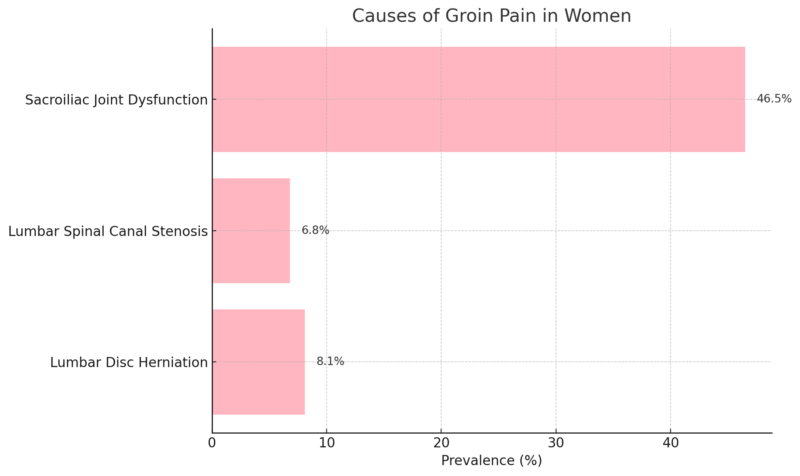
Some problems in the lumbar spine or sacroiliac joint can produce pain felt in the groin. Back pain, leg symptoms, reduced spinal movement or pain after prolonged sitting may appear at the same time.
Research has found that groin pain can occur with sacroiliac joint dysfunction and some lumbar conditions. Groin pain alone does not prove that the source is the spine.
More information about the wider burden of spinal symptoms is available in our report on back pain in the United States.
How Doctors Diagnose Groin Pain?
The first step is a detailed history. A clinician may ask when the pain began, where it is located and which movements make it worse.
Important questions can include:
- Did the pain begin after exercise, a fall or lifting?
- Is the pain connected with menstruation?
- Could the patient be pregnant?
- Is there vaginal bleeding or discharge?
- Does urination cause pain?
- Is there a groin lump?
- Does the hip click, catch or lock?
- Is there numbness or weakness?
- Has the patient had pelvic, abdominal or hernia surgery?
The examination may include the abdomen, groin, hip, inner-thigh muscles, lower back and pelvic floor. A gynecological examination may be recommended when symptoms point toward a pelvic or reproductive cause.
Pregnancy Test
A pregnancy test is an important early test for a woman of reproductive age with unexplained pelvic or groin pain.
Pregnancy status changes the list of possible causes, the urgency of the evaluation and which imaging tests can be used.
Blood and Urine Tests
Urinalysis may identify infection, blood or other signs of a urinary condition. Blood tests can help assess infection, inflammation, blood loss and organ function.
Testing for sexually transmitted infections may be needed when pelvic inflammatory disease is possible.
Ultrasound
Pelvic ultrasound is commonly used when an ovarian, uterine or pregnancy-related cause is suspected.
Transvaginal ultrasound can provide a closer view of the uterus and ovaries. Groin ultrasound may be used to assess a suspected hernia.
X-Ray
Hip and pelvic X-rays can show arthritis, fractures and structural differences associated with impingement.
An X-ray does not show every tendon, labral or stress injury. A normal result does not always end the investigation.
MRI
MRI provides detailed images of muscles, tendons, bones, the hip labrum and other soft tissues.
It may be ordered when a stress fracture, labral tear, significant muscle injury or another deep structural problem is suspected.
CT Scan
CT may be used when doctors suspect kidney stones, abdominal disease, complications of a hernia or another condition that requires detailed cross-sectional imaging.
Imaging should be selected according to the suspected diagnosis rather than ordered automatically for every patient.
Treatment for Groin Pain in Women
Treatment depends on the source of the pain. No single exercise, injection or medication can treat every condition that produces groin symptoms.
1. Temporary Activity Changes
A mild muscle or tendon injury often improves when the movement that caused the pain is temporarily reduced.
Complete bed rest is rarely necessary. Normal light activity can usually continue as long as it does not sharply increase the pain.
Running, kicking, heavy lifting and deep squatting may need to be paused until walking and basic movement become comfortable.
2. Ice or Heat
Ice may help during the first days after an acute muscle injury, especially when swelling is present. It should be wrapped in a cloth and used for short periods.
Heat may feel better for stiffness, muscle guarding or chronic discomfort. Neither method corrects the underlying cause, but both can provide temporary symptom relief.
3. Physical Therapy
Physical therapy is a central treatment for many muscle, tendon, hip and pelvic conditions.
A rehabilitation program may include:
- adductor strengthening
- hip-flexor rehabilitation
- core strengthening
- hip and lower-limb control exercises
- movement and walking assessment
- gradual return to running or sport
Stretching alone is often insufficient for persistent groin pain. Aggressive stretching can make some tendon, joint and nerve problems worse.
The exercises in the video above are general examples. Anyone with severe pain, a recent injury, pregnancy, a suspected fracture or unexplained pelvic symptoms should obtain an assessment before beginning them.
4. Pelvic Floor Physical Therapy
Pelvic floor therapy may help when pain is associated with childbirth, painful sex, pelvic muscle tenderness, bladder symptoms or chronic pelvic pain.
Treatment can involve relaxation training, breathing, manual therapy, coordination exercises and gradual strengthening.
Modern guidance for chronic pelvic pain in women recommends an individual plan because several pain sources can exist at the same time.
5. Pain Medication
?Non-steroidal anti-inflammatory drugs #NSAIDs are among the most commonly used drugs. NSAIDs include nonselective cyclooxygenase (COX) inhibitors (ibuprofen, aspirin, diclofenac, naproxen) & selective COX2 inhibitors (celecoxib, rofecoxib, etoricoxib, lumiracoxib, valecoxib).? pic.twitter.com/8WfkUab4t3
— Dr Melvin Sanicas (@Vaccinologist) April 20, 2020
Anti-inflammatory medicines such as ibuprofen or naproxen may provide short-term relief for selected muscle, tendon and joint conditions.
NSAIDs are not suitable for everyone. They can increase the risk of stomach bleeding, kidney problems, fluid retention and cardiovascular complications.
People who are pregnant, taking blood thinners or living with kidney disease, stomach ulcers or certain heart conditions should obtain medical advice before using them.
Acetaminophen may be an alternative for some patients, although it does not reduce inflammation. Medication should not be used to hide worsening pain while the activity causing an injury continues.
6. Treatment of Gynecological and Urinary Causes
Gynecological and urinary conditions require treatment directed at the diagnosis.
Examples include:
- antibiotics for pelvic inflammatory disease or a urinary infection
- monitoring or surgery for selected ovarian cysts
- urgent surgery for ovarian torsion
- medication or surgery for endometriosis
- pregnancy-specific treatment for an ectopic pregnancy
- pain control, fluids or a procedure for kidney stones
Exercise therapy cannot replace treatment for an infection, ovarian emergency or ectopic pregnancy.
7. Hernia Treatment
A symptomatic groin hernia is assessed by a surgeon. Repair is commonly recommended for femoral hernias and for inguinal hernias causing persistent pain or functional problems.
Emergency surgery may be needed when tissue becomes trapped and its blood supply is threatened.
8. Corticosteroid Injections
A corticosteroid injection may reduce inflammation and pain in selected joints or soft-tissue structures. It can also help confirm which structure is generating the pain.
Relief may be temporary. Repeated injections can have disadvantages, including possible effects on tendons, cartilage, blood sugar and surrounding tissues.
An injection should be placed only after the likely source has been identified. Injecting the groin area without a diagnosis can delay treatment of another condition.
9. PRP and Prolotherapy
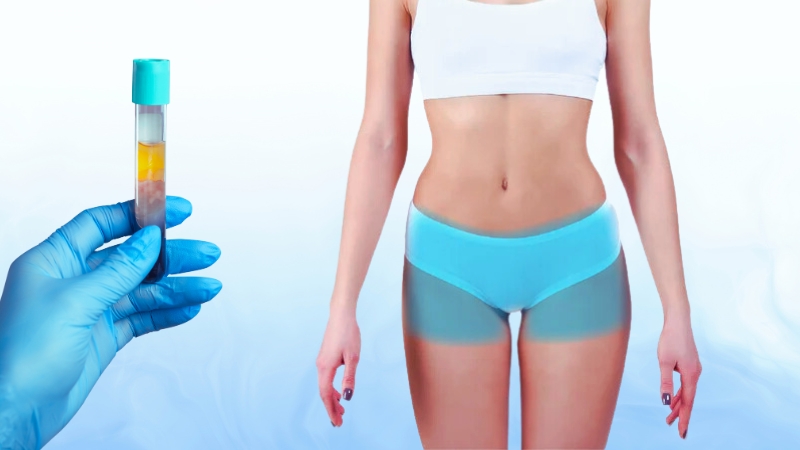
Platelet-rich plasma is prepared from a sample of the patient’s blood. The platelet concentration is injected into a selected tissue with the aim of supporting a healing response.
Prolotherapy usually involves injecting a dextrose solution into a painful tendon, ligament or joint area.
Evidence for these treatments varies by condition. Research does not establish PRP or prolotherapy as a general treatment for unexplained groin pain in women.
Published evidence for adductor injuries, osteitis pubis and pelvic ligament pain remains limited and often consists of small studies or individual case reports. A positive case report cannot show that the treatment will work for most patients.
Before paying for an injection, patients should ask:
- What diagnosis is being treated?
- Which structure will be injected?
- Will ultrasound or another imaging method guide the procedure?
- What evidence supports the treatment for that diagnosis?
- What are the risks and total costs?
- What happens if the injection does not help?
Rehabilitation is usually still needed after an injection. PRP and prolotherapy should not replace urgent treatment, infection care, fracture management or evaluation of a pelvic condition.
10. Surgery
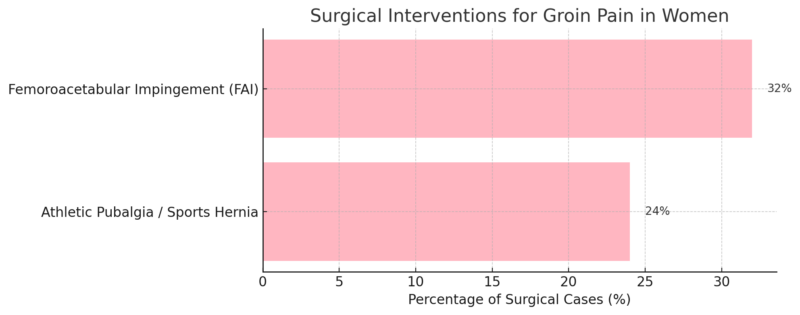
Surgery is not a general treatment for chronic groin pain. It is used when a defined condition is unlikely to improve without a procedure.
Possible reasons for surgery include:
- a trapped or painful hernia
- ovarian torsion
- an ectopic pregnancy
- selected ovarian cysts
- advanced hip arthritis
- hip impingement with continuing symptoms
- certain labral tears
- displaced fractures
- rare nerve entrapment cases
Hip arthroscopy may be considered for selected patients with impingement or a labral injury. Joint replacement may be recommended for advanced hip arthritis when pain and disability remain severe despite nonsurgical treatment.
Surgical findings should match the symptoms and examination. An abnormality seen on MRI does not automatically mean surgery is necessary.
What Can Be Done at Home for a Mild Groin Strain?
Home treatment may be reasonable when pain began after activity, remains mild and is not accompanied by pelvic, urinary or emergency symptoms.
- Reduce the activity that caused the pain.
- Use ice for short periods during the first days if swelling is present.
- Continue comfortable walking and light daily activity.
- Avoid sprinting, kicking and heavy lifting until basic movement is comfortable.
- Begin gentle strengthening when pain starts to settle.
- Increase activity gradually rather than returning to full intensity immediately.
Seek medical assessment when pain is severe, continues to worsen or shows no clear improvement after one to two weeks.
How Long Does Groin Pain Take to Heal?
Recovery time depends on the cause and severity.
| Condition | General Recovery Pattern |
|---|---|
| Mild muscle strain | Often improves over several weeks |
| Larger muscle tear | May require several months |
| Persistent tendon pain | Usually requires gradual rehabilitation over several months |
| Pelvic girdle pain | Can improve during pregnancy or after delivery, but some cases continue longer |
| Osteitis pubis | Often improves slowly over several months |
| Hip osteoarthritis | Long-term condition managed rather than quickly cured |
| Hernia | Usually remains until repaired, although symptoms may vary |
Pain intensity alone does not reveal how much tissue damage is present. Severe pain can occur without a major tear, and a stress fracture can begin with relatively modest discomfort.
When to Schedule a Nonemergency Appointment?
Arrange a medical assessment when:
- pain lasts longer than one or two weeks
- the pain repeatedly returns
- walking or sleeping is affected
- the hip clicks, catches or locks
- there is a groin lump
- pain is linked to periods or sexual intercourse
- urinary symptoms are present
- pain continues after childbirth
- home exercises make the pain worse
- pain medication is needed regularly
A primary care doctor can perform the first evaluation and refer the patient to gynecology, sports medicine, orthopedics, general surgery, urology or pelvic floor therapy when needed.
Frequently Asked Questions
What is the most common cause of groin pain in women?
There is no single most common cause for every age group. Muscle and tendon injuries are common in active women. Hip arthritis becomes more common later in life. Gynecological, urinary and pregnancy-related causes must also be considered.
Can groin pain come from the hip?
Yes. Groin pain is a common symptom of hip arthritis, impingement, a labral tear and stress fractures. Hip pain may also spread toward the thigh, buttock or knee.
Can an ovarian cyst cause groin pain?
Yes. An ovarian cyst may cause one-sided pelvic or groin pain, pressure and bloating. Sudden severe pain with nausea or vomiting needs urgent assessment.
Can a urinary tract infection cause groin pain?
A urinary infection can cause pressure or discomfort in the lower abdomen, pelvis or groin. Burning, urgency and frequent urination are common accompanying symptoms.
Can lower back problems cause groin pain?
Some spinal and sacroiliac conditions can refer pain toward the groin. Back symptoms, leg pain, numbness or movement-related findings may help identify the source.
Why does my groin hurt during my period?
Menstrual cramps can spread into the groin and thighs. Repeated severe pain may also be associated with endometriosis, adenomyosis, fibroids or another pelvic condition.
Why does my groin hurt after childbirth?
Possible causes include pelvic girdle pain, pubic symphysis irritation, pelvic floor dysfunction, muscle weakness, nerve sensitivity and hip problems. Persistent pain should not automatically be blamed on hormones or ligament laxity.
Should I stretch groin pain?
Gentle movement may help a mild muscle strain, but stretching is not suitable for every cause. Aggressive stretching can aggravate tendon pain, joint impingement, nerve irritation and some pelvic floor problems.
Is walking good for groin pain?
Comfortable walking is often suitable for a mild muscle injury. Walking should be reduced when it causes limping, sharp pain or worsening symptoms. An inability to bear weight requires medical assessment.
Can groin pain be caused by a hernia without a lump?
Yes. Some hernias cause pain before a clear bulge appears. Women may need an ultrasound or other imaging when examination does not provide a definite answer.
Does PRP cure chronic groin pain?
No injection can be expected to cure all causes of chronic groin pain. Evidence for PRP is limited for several groin conditions, and treatment should not be offered without identifying the structure causing the symptoms.
Which doctor treats groin pain in women?
A primary care doctor can begin the evaluation. The appropriate specialist may be a gynecologist, sports medicine doctor, orthopedic specialist, general surgeon, urologist or pelvic floor therapist.
Final Thoughts
Groin pain in women should not be treated as one condition with one solution. The same symptom can come from a strained inner-thigh muscle, an irritated hip joint, a hernia, a urinary stone or a gynecological problem.
The safest approach begins with the pattern of symptoms. Sudden pain, possible pregnancy, bleeding, fever, vomiting, a painful lump or an inability to walk requires prompt care. Pain that continues or repeatedly returns also deserves a proper examination.
Physical therapy is valuable for many muscle, tendon, hip and pelvic floor conditions. Medication can reduce symptoms in selected patients. Injections and surgery have narrower roles and should be used only when the diagnosis and expected benefit are clear.
Progress is more likely when treatment targets the actual source of pain rather than the groin area alone.
References
- American Academy of Family Physicians, Groin Pain and Injuries, Evaluation and Management
- American Academy of Family Physicians, Chronic Pelvic Pain in Women
- American Academy of Family Physicians, Evaluation of Acute Pelvic Pain in Women
- American College of Obstetricians and Gynecologists, Ectopic Pregnancy
- American College of Obstetricians and Gynecologists, Pelvic Inflammatory Disease
- American College of Obstetricians and Gynecologists, Chronic Pelvic Pain
- American Academy of Orthopaedic Surgeons, Management of Osteoarthritis of the Hip
- American Academy of Family Physicians, Inguinal Hernias, Diagnosis and Management