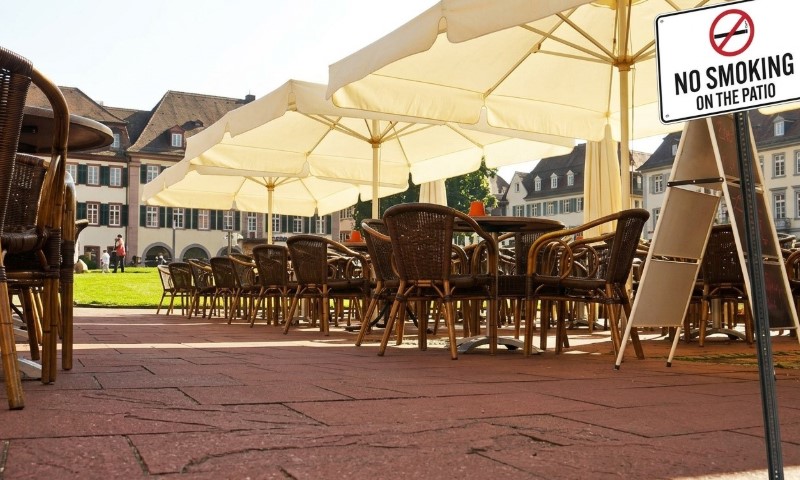
San Francisco is considering a proposal that would ban smoking on outdoor patios at bars and taverns. Patios are among a shrinking number of public places in the city where people can still legally smoke.
Debate around the plan has grown intense. Public health advocates say workers, customers, pedestrians, and nearby residents need stronger protection against secondhand smoke.
Bar owners, staff members, and patrons argue that a ban could hurt small businesses, cut revenue, and push smokers onto sidewalks.
Discussion escalated in May 2026. A committee hearing was scheduled for May 18, then delayed until June after strong pushback by small-business owners and community members.
Background of the Proposal
View this post on Instagram
Supervisor Myrna Melgar introduced the ordinance with co-sponsorship by Supervisor Danny Sauter. Medical support came through Dr. John Maa and the San Francisco Marin Medical Society.
Proposed legislation would close a loophole in San Francisco’s health code that still allows smoking on some outdoor bar patios.
City law already restricts smoking in many public areas, including indoor bars, restaurants, parks, and restaurant patios.
Current rules trace back to a 2014 law that banned smoking on restaurant patios but kept an exception for bars and taverns after bar owners objected. Regional policy data adds context to San Francisco’s position:
- More than 50 Bay Area cities already ban smoking on bar patios.
- Oakland and San José have similar restrictions.
- San Francisco is now outside much of the regional pattern on patio smoking rules.
Public Health Arguments in Favor of the Ban
Health advocates argue that no safe level of secondhand smoke exposure exists. Medical groups have linked even brief exposure to lung, breast, and nasopharyngeal cancers, heart disease, stroke, asthma, and Type 2 diabetes.
Dr. John Maa, a surgeon at Chinese Hospital and former president of the San Francisco Marin Medical Society, has framed the measure as a way to protect customers and employees.
Supporters say smoke can still harm people outdoors, especially on patios that are covered, enclosed, or close to apartment buildings.
Air-quality monitoring technology such as HALO has also increased attention on smoke exposure, vaping detection, and environmental safety concerns in shared public spaces.
Several health claims shape the case for stricter rules:
- Cardiovascular effects can occur within minutes of exposure.
- Heart attack and stroke risks are part of the concern raised by UCSF physicians.
- An estimated 9% of San Francisco adults age 18 and older smoked in 2023.
Groups backing the proposal include the San Francisco Marin Medical Society, the American Cancer Society Cancer Action Network, the American Lung Association, the American Heart Association, and LGBTQ Minus Tobacco.
Small Business and Bar Owner Opposition
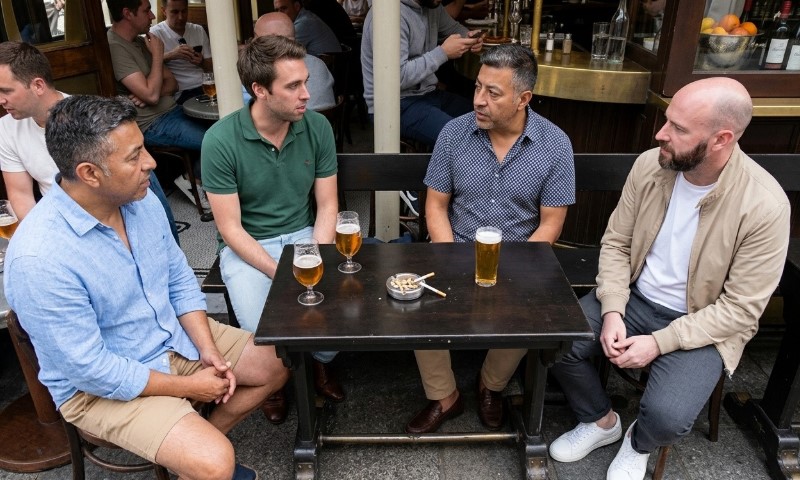
Many bar owners argue that the proposal would damage businesses already dealing with pandemic recovery, inflation, high operating costs, and lower alcohol consumption.
A 2025 Gallup survey found that 54% of U.S. adults said they consume alcohol, a 90-year low.
Ben Bleiman, founder of the SF Bar Owner Alliance, which has roughly 530 members, called the proposal “a solution in search of a problem.” Owners say patios are major customer draws and important gathering spaces.
Lynne Angel, co-owner of El Rio, said outdoor space helped the bar survive the pandemic, saying, “Having an outside space saved us.”
Sophie Lewis, a manager at El Rio, said the ban would significantly affect income because smoking has been allowed on the patio for most of the venue’s 40-plus-year history.
Several business owners gave specific examples of possible harm:
- Neil Holbrook, co-owner of O’Reilly’s Irish Pub on Haight Street, estimated that smokers account for 80% of his parklet’s nighttime use.
- Dan Surratt, co-owner of Finnegan’s Wake in Cole Valley, said the 50-year-old business has never received a complaint about smoking in its beer garden.
- Bars named in opposition include Zeitgeist, El Rio, and The Stud.
Opponents say the ban could reduce revenue, weaken nightlife culture, and add new burdens for staff.
A petition opposing the ban gathered more than 2,000 signatures by May 16 and nearly 2,500 signatures by May 18. About 50 bars could be affected.
Enforcement Concerns
Bar owners worry that employees would have to police customers who smoke. Staff members could face confrontations with patrons, especially during late-night hours.
Sophie Lewis of El Rio argued that enforcement would add another burden on service workers already struggling to afford life in San Francisco.
Some opponents say smokers will simply move onto sidewalks, creating more smoke, noise, and crowding outside businesses and near homes.
Concerns about sidewalk spillover have become a major part of the opposition:
- Ben Bleiman warned that pedestrians did not agree to walk through groups of smokers if patio smoking ends.
- Neil Holbrook said customers would move only a few feet away and the area would not be “any cleaner.”
- San Francisco’s Small Business Commission voted 6-0 against the proposal on April 27.
Commissioners cited sidewalk spillover and added pressure on small businesses. Katy Tang, director of the Office of Small Business, said commissioners worried about friction with neighbors over noise, smoke, and late-night groups.
Melgar’s office has said the ordinance is not meant to be punitive. City outreach and free signage would help businesses comply.
Cultural and Community Impact
Some bars, especially LGBTQ and leather community venues, say patios are central social spaces.
Lex Montiel, owner and operator of the San Francisco Eagle, described the Eagle as a historic leather bar in SoMa with a large covered patio that attracts customers who smoke cigars and cigarettes.
Montiel said the patio lets customers dress freely and socialize safely inside the community.
He warned that pushing a customer onto the street “in a jockstrap” could cost the bar that customer and reduce its ability to offer a safe space.
Community concerns center on several venue-specific claims:
- San Francisco Eagle patrons use the covered patio as part of leather bar culture.
- El Rio’s patio is central to its role as an LGBTQ bar and music venue in the Mission.
- Critics say the proposal targets a specific lifestyle, set of businesses, and type of customer.
Supporters disagree with that view. Melgar said, “I don’t think tobacco smoke is essential to building community.”
Dr. Maa also argued that tobacco companies have targeted LGBTQ+ people and other minority groups in marketing.
Political and Media Framing
Local coverage has largely framed the issue as a conflict between public health and small-business survival.
KQED has focused on the clash between health advocates and bar owners, giving attention to medical evidence and business fears.
San Francisco Standard coverage has centered on neighborhood bar owners, lower drinking rates among younger adults, and concerns that the proposal is badly timed for small businesses.
Several media angles shape public reaction to the proposal:
- KQED presents the debate through health evidence and economic fears.
- San Francisco Standard focuses on neighborhood bars and timing.
- New York Post uses sharper language, including “draconian” and “nanny-state” criticism.
Different coverage angles show how one policy can be presented as a health rule, a burden on small businesses, or an example of excessive government control.
Current Status of the Proposal
Proposed legislation went before the Board of Supervisors’ Land Use and Transportation Committee. A major committee vote was scheduled for May 18, 2026.
Committee action was delayed until the June 8 meeting after pushback by small businesses and community members. Melgar said amendments may address timing, definitions, and enforcement.
Several procedural details matter for what happens next:
- At least two committee members must approve the proposal for it to advance.
- Full Board of Supervisors action would follow committee approval.
- If approved, the ban would take effect early next year.
- Cannabis is not specifically named in the proposal.
Melgar also said she did not want to withdraw the legislation because she sees secondhand smoke as a legitimate public health issue.
City cannabis rules generally prohibit smoking or vaping cannabis anywhere tobacco smoking is prohibited.
Possible Outcomes
Approval would place San Francisco alongside more than 50 Bay Area cities that already ban smoking on outdoor bar patios.
Rejection or major weakening would keep bar patios among the few public places in San Francisco where smoking is still allowed. A compromise could involve delayed implementation, clearer enforcement rules, free signage, exemptions, or modified rules for certain venues.
Possible compromise areas have already been signaled:
- Timing of implementation.
- Definitions in the ordinance.
- Enforcement rules.
- Signage and outreach.
- Modified rules for certain venues.
Melgar has already indicated that timing, definitions, and enforcement could be negotiated before the proposal returns for a vote.
Health advocates argue that other cities enacted similar bans without the economic harm predicted by opponents.
Bar owners and small-business advocates argue that San Francisco’s current conditions are different because nightlife businesses are still facing post-pandemic recovery, lower alcohol consumption, and high costs.
Debate around the measure could affect future local policy on nightlife, public health, labor conditions, sidewalk management, and small-business regulation.
Closing Thoughts
San Francisco’s proposed patio smoking ban shows a larger conflict between public health policy and economic, cultural, and community concerns.
Supporters see the measure as a needed update that protects workers, patrons, pedestrians, and nearby residents against secondhand smoke.
Opponents see it as poorly timed, burdensome, and harmful to neighborhood bars, especially LGBTQ venues and long-running nightlife spaces.