The State Department has proposed the largest rewrite in decades of the rules governing how J-1 exchange programs are ended, extended and restored after a status problem.
The proposal, published on July 30, 2026, would give the government clearer authority to terminate a participant’s program, require sponsors to act more quickly when SEVIS records contain errors and impose an earlier deadline for certain extension requests.
Nothing changes immediately. The proposal is not yet a final rule, and the State Department is accepting public comments for 60 days. Current J-1 regulations remain in place during that process.
Still, the latest United States J-1 program updates matter to universities, research institutions, hospitals, cultural organizations, au pair agencies and other sponsors responsible for maintaining accurate exchange visitor records.
What The New J-1 Proposal Would Change?
View this post on Instagram
The proposal focuses on three areas that can determine whether an exchange visitor remains in valid program status:
- Termination of J-1 program participation
- Extensions beyond the normal maximum program duration
- Correction and reinstatement of SEVIS records
The State Department says many existing regulations were written for a paper-based system and have not received a substantial revision since 1999. SEVIS, the electronic system now used to monitor F, M and J nonimmigrants, did not begin operating until 2003.
The new proposal would place current SEVIS procedures directly into the regulations and establish firmer deadlines for sponsors.
| Proposed Change | What It Would Mean |
|---|---|
| New termination grounds | Programs could be ended for false or incomplete information, unauthorized employment or immediate visa cancellation |
| Right to challenge some terminations | Participants could submit a written response within 10 business days in certain cases |
| Earlier extension deadline | Requests beyond a category’s maximum duration would generally need supporting documents at least three months early |
| Shorter SEVIS correction period | Sponsors would have 30 days to correct many status errors directly |
| Formal reinstatement process | Cases not corrected within the deadline could require a paid reinstatement request |
| New regulatory definitions | The rules would define valid program status and unauthorized employment |
False Information Could Lead To Program Termination
J-1 sponsors already have responsibilities for monitoring participants and ending programs when serious violations occur.
The proposed rule would add an explicit requirement to terminate a participant who provides false information, withholds a complete response or submits misleading documents during the application process or the exchange program.
The rule could apply when a participant gives inaccurate information about an address, academic qualifications, attendance or the location where program activities are taking place.
The State Department would also gain clearer authority to terminate a program when the participant’s visa has been revoked or canceled with immediate effect.
Another possible basis for termination would be unauthorized employment. A J-1 participant may work only when the employment is permitted under the rules of the exchange category and approved as required by the sponsor.
Employment that exceeds the authorized period, takes place for an unapproved employer or falls outside the approved program could create a serious status problem.
Some Participants Would Have 10 Days To Respond
The proposal includes a new procedure for exchange visitors who face termination by the State Department over alleged unauthorized employment or false information.
The participant would receive written notice and could submit a statement opposing the decision within 10 business days.
That response could address factual errors, provide missing documentation or explain why the alleged violation did not occur.
The challenge would not operate as a general appeal based on personal hardship. The State Department says participants could not avoid termination simply by arguing that the result would be difficult for them or their families.
If the government upholds the termination, the participant would lose valid J-1 program status. J-2 spouses and dependents generally follow the status of the principal J-1 participant.
Extension Requests Could Require Much Earlier Planning
A designated sponsor can normally extend a participant’s program within the maximum period allowed for that J-1 category.
A separate State Department approval is required when the sponsor seeks an extension beyond that maximum duration.
Under the proposal, the sponsor would begin the request in SEVIS and send the required supporting documents to the State Department at least three months before the requested extension period begins.
The proposal states that late submissions would not receive exceptions.
That deadline could affect participants whose research, medical training or other approved activity cannot be completed on schedule. Sponsors would need to recognize the need for additional time well before the current program end date.
The State Department processed an average of about 14,563 requests for extensions beyond a category’s maximum duration each year from 2022 through 2024. The current government fee is $367 per request.
Au Pair Extensions Would Follow The General Rule
The proposal would remove a separate extension provision currently used by the au pair category.
Current regulations generally require an au pair extension application to reach the State Department at least 30 days before the initial authorized period ends.
Under the proposed system, au pair extensions would move under the general extension rule. The relevant request would need to be submitted 90 days before the program end date.
The change would not automatically eliminate the ability to extend an au pair program. It would require agencies and host families to begin the process much earlier.
Sponsors Could Have Only 30 Days To Fix SEVIS Errors
SEVIS errors can occur when a sponsor selects the wrong status, misses an update or fails to process a transfer or extension on time.
Current rules separate violations into minor or technical infractions, substantive violations and violations that cannot be reinstated. Some minor problems can currently be corrected within a 120-day period.
The new proposal would remove much of that distinction.
Sponsors would generally have 30 days from the date a record entered the wrong status to use the Correct SEVIS Status function. The correction could be completed without a separate State Department application or fee.
Examples could include a participant mistakenly marked as terminated, inactive, transferred, invalid or a no-show because of administrative error or circumstances outside the participant’s control.
A student exchange visitor who temporarily failed to maintain a full course of study without obtaining advance approval could also fall within the proposed correction process, depending on the facts.
The shorter deadline would make regular SEVIS review much more important. A problem left unnoticed for several weeks could become a formal reinstatement case.
Reinstatement Would Be Required After The Correction Window
When a sponsor cannot correct the record within the 30-day period, it would generally need to request reinstatement.
The application would begin in SEVIS. Supporting documents would then have to reach the State Department within 10 days, along with the required nonrefundable fee.
The sponsor would need to confirm that the participant is still pursuing the original program objective, did not engage in unauthorized employment and lost status because of an oversight or circumstances outside the sponsor’s control.
The submission would also need to explain why denying reinstatement would create unusual hardship and identify the correct program end date.
The State Department would generally consider reinstatement to active status when the participant had been out of status for no more than the period recognized by Department of Homeland Security policy, currently five months.
Older cases could still be considered when exceptional circumstances caused the delay and the request was filed as soon as possible afterward.
Some Violations Would Block Reinstatement
The proposal identifies situations in which a sponsor could not use a routine SEVIS correction or seek reinstatement to active status.
Those situations would include a participant who:
- Abandoned the original objective of the exchange program
- Failed to maintain the required medical insurance
- Was involuntarily suspended or terminated by a sponsor or host organization
- Received a favorable recommendation for a waiver of the two-year home-residence requirement
- Received approval to change to another immigration status
- Failed to pay a legally required program fee
A participant who accepts unauthorized employment could also lose access to reinstatement, depending on the circumstances.
The rules make sponsor communication especially important. Exchange visitors should speak with their responsible officer before changing a worksite, accepting outside work, reducing academic participation or making another change that may affect the information on Form DS-2019.
More Than 1,700 Records Were Terminated In 2024
@bradbernsteinlaw A major change could be coming for international students. According to recent reports, DHS is preparing a rule that could replace “duration of status” with fixed admission periods for many F-1 students, J-1 exchange visitors, and foreign journalists. Nothing has changed yet. The final rule has not been published, but if it takes effect, it could shorten grace periods and require many students to file extensions with USCIS to remain in status. Have questions about your student visa or immigration status? Call Spar & Bernstein at 212-227-8933 Brad Bernstein Law Offices of Spar & Bernstein, PC 45 Broadway, 15th Floor New York, New York 10006 1-212-227-9933 1-800-529-5465 www.lawsb.com #F1Visa #J1Visa #StudentVisa #InternationalStudents #USCIS #ImmigrationNews #OPT #ImmigrationLawyer #ImmigrationAttorney #fyp ♬ original sound – bradbernsteinlaw
The State Department reported that more than 1,700 individual exchange visitor records were terminated in 2024.
The largest group involved violations of sponsor rules or regulations, accounting for 975 terminations. Another 300 resulted from failure to continue program activities.
| Termination Reason | 2024 Records |
|---|---|
| Sponsor rule or regulation violation | 975 |
| Failure to continue program activities | 300 |
| Disciplinary reason or criminal conviction | 90 |
| Unauthorized employment | 30 |
| Other listed reasons | 450 |
The listed figures overlap the department’s rounded total, but they show that termination is not limited to criminal conduct. Failure to follow sponsor rules or continue the approved activity accounts for a large share of cases.
The Proposal Is Separate From Visa Admission Changes
The July 30 State Department proposal deals with the administration of exchange programs and SEVIS records.
It is separate from recent Department of Homeland Security action affecting how long F-1 students, J-1 exchange visitors and foreign media representatives may be admitted to the United States.
Those broader changes replace the former duration-of-status model with fixed admission periods and create a separate extension-of-stay process.
Together, the measures point toward closer federal monitoring of international students and exchange visitors, with more responsibility placed on participants and sponsors to meet formal deadlines.
The changing visa environment also affects graduates and employers. Our team at NCHStats recently reported on the possibility that the United States could impose a $100,000 charge on some international graduates.
International researchers and employers also face a separate transition through the FY 2027 H-1B process, which remains one of the main routes from temporary academic or research roles into longer-term employment.
What J-1 Sponsors Should Do Now?
The proposal has not taken effect, so sponsors should continue following current regulations and existing State Department guidance.
Still, the direction of the proposed changes is clear. Sponsors may need systems that detect SEVIS errors faster and identify extension needs several months before a program ends.
Universities, hospitals and exchange organizations should review who is responsible for:
- Checking active SEVIS records
- Updating addresses and program locations
- Approving employment connected to the exchange
- Recording transfers and early program completion
- Identifying participants approaching maximum program duration
- Maintaining documents supporting status decisions
A participant should not assume that a sponsor can repair every error months later. Under the proposed rules, the easiest correction process could close after 30 days.
What J-1 Participants Should Know?
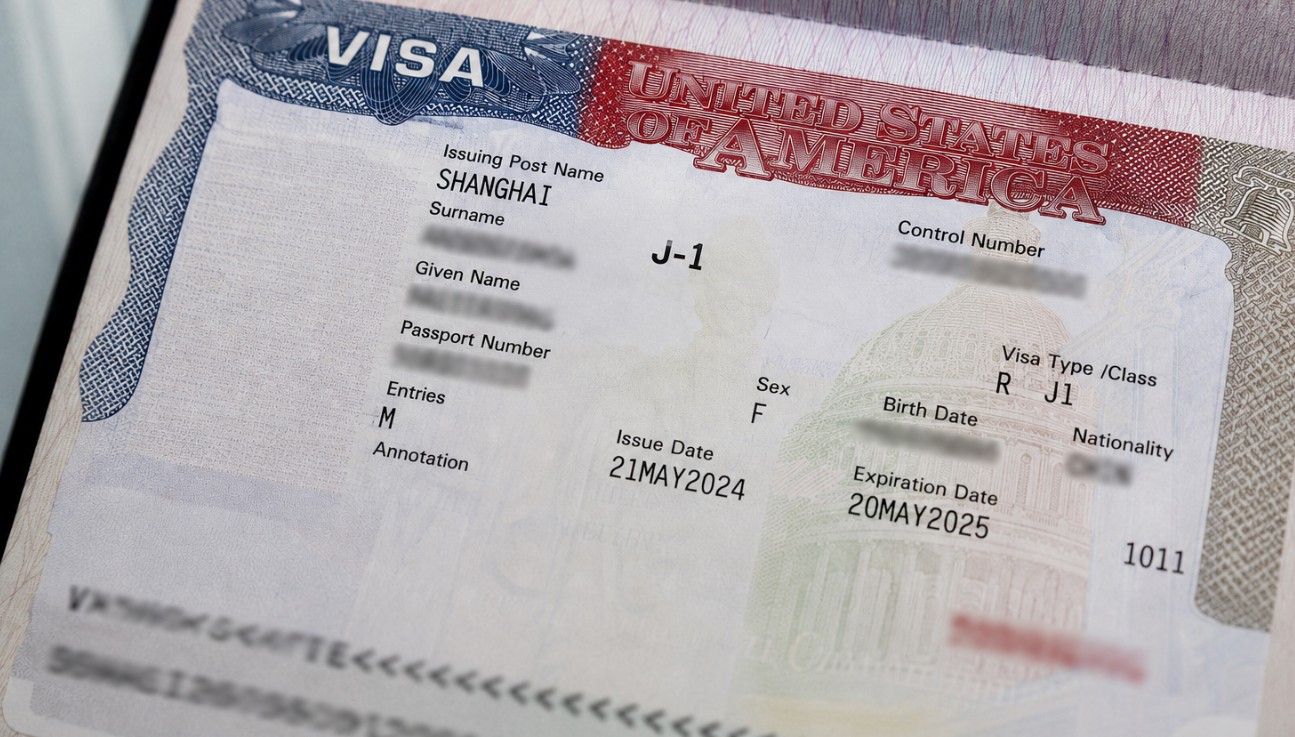
J-1 participants should keep their sponsor informed about changes in address, employment, academic activity and program location.
They should also review the program end date on Form DS-2019 and raise extension questions well before that date approaches.
A visa stamp and valid J-1 program status are related but different. A visa allows a person to request entry at a U.S. port, while the SEVIS record and immigration documents help establish authorized participation after admission.
Participants should not accept outside work simply because an employer says the arrangement is temporary or informal. Paid services can count as employment even when they last only a few hours.
The official J-1 exchange visitor guidance explains the application process, visa fee, SEVIS registration and two-year home-country physical presence requirement.
When Could The New Rules Take Effect?
The State Department is accepting comments for 60 days from July 30, 2026.
Members of the public can submit feedback through Regulations.gov under docket DOS-2026-0859 or send comments to the email address identified in the proposal.
After the comment period closes, the department may revise the text, finalize only part of the proposal or decide not to proceed.
No effective date has been announced because no final rule has been issued.
The Bottom Line
The latest United States J-1 program updates would not end the Exchange Visitor Program or remove its existing categories.
They would create stricter procedures around the points where status problems are most likely to occur.
Participants could face termination for false information, unauthorized work or an immediately canceled visa. Sponsors could have only 30 days to correct many SEVIS errors, and requests for additional time beyond a category’s maximum duration would need to begin months earlier.
The proposal remains open for public comment. Until a final rule appears, J-1 participants and sponsors must continue using the current system, but both groups now have a clear indication that faster reporting and closer record review may soon become essential.