

USCIS announced on March 31, 2026, that it had received enough electronic registrations for beneficiaries during the initial registration period to reach the FY 2027 H-1B numerical allocations, including the advanced degree exemption, often called the master’s cap.
Agency officials said they selected enough beneficiaries with properly submitted registrations to meet the annual cap and notified prospective petitioners that they are eligible to file cap-subject petitions for selected beneficiaries.
For FY 2027, the annual quota remains 85,000 cap numbers, including 65,000 regular cap numbers and 20,000 advanced-degree numbers, although USCIS has not yet disclosed the exact number of registrations submitted.
Without further ado, let us begin.
USCIS Announcement
View this post on Instagram
USCIS completed the FY 2027 initial H-1B cap selection process on March 31, 2026, after the registration window opened at noon Eastern on March 4, 2026, and closed at noon Eastern on March 19, 2026.
Completion of the initial selection process means the agency determined it had enough registrations to meet the annual numerical limits for the regular cap and the advanced degree exemption.
Employers that submitted registrations during that period were then directed to review their online accounts for case-specific updates and next-step instructions.
Online account review is now a critical first step for petitioning employers and their counsel.
Registration results are displayed through the myUSCIS system, and account status is the main way to confirm if a beneficiary was chosen in the initial selection round.
Careful review matters because each status carries a different consequence for the employer’s filing options and case strategy.
Common status messages include:
USCIS also relied on its electronic preregistration system to administer the FY 2027 process.
Ogletree notes that the agency used that platform to apply the newly adopted weighted selection methodology and issued notifications through online accounts rather than through a separate paper-based notice process at the registration stage.
As a result, employers need to monitor account activity closely and confirm each beneficiary’s status before making filing plans.
What Selected Employers Need to Do Next
Employers should begin by reviewing account results and identifying every registration marked Selected.
Only selected registrations allow filing of an FY 2027 cap-subject H-1B petition.
Once a registration is confirmed as selected, petition preparation should move forward quickly so that all required documents and supporting evidence are ready within the filing window.
USCIS states that each petition must include a copy of the applicable selection notice. USCIS and Ogletree also state that the filing must include evidence of the passport or travel document used during registration.
Employers may also need certified translators in Michigan if any supporting civil documents, identity records, or travel documents require certified English translations for petition preparation or related immigration processing.
Consistency across the registration and the petition is essential. Petition materials must match the identifying information and position details listed in the selected registration.
Important petition components include:
Ogletree specifies that the petition must align with the OEWS wage level, SOC code, and area or areas of intended employment listed in the registration.
USCIS and Fragomen also note that the employer must include evidence supporting the wage level selected at the time the registration was submitted.
Fragomen describes that evidence as the source material used to determine the OEWS wage level.
The requirement adds a new layer of documentation because the wage-level choice now directly affects the number of entries assigned during selection.
USCIS also announced a new edition of Form I-129 dated 02/27/26. Starting April 1, 2026, USCIS will accept only that edition for FY 2027 cap filings.
Fragomen adds that the revised form requests more detailed information about the H-1B position, especially its minimum requirements.
Employers should review the form carefully and make sure internal stakeholders, managers, and immigration teams provide complete and accurate job information before filing.
Selection does not guarantee approval. Filing employers still must submit all required evidence and establish that the offered position and beneficiary meet H-1B eligibility standards.
Full petition review remains part of the adjudication process, so a selected registration is only the beginning of the next phase.
Filing Window Now Open
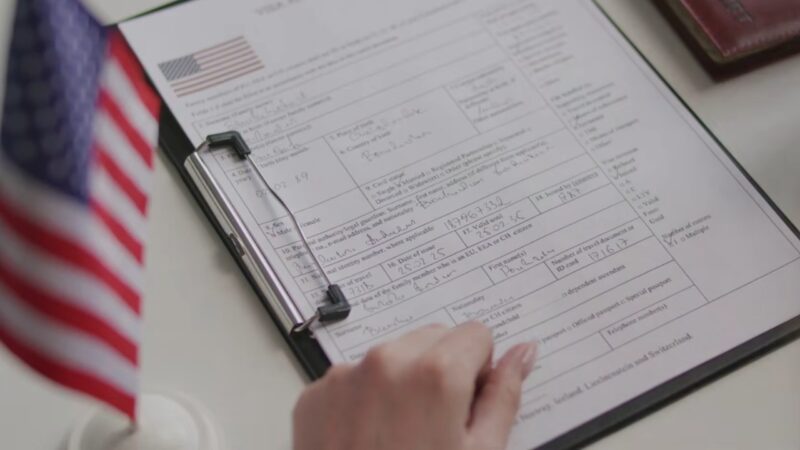
USCIS stated that FY 2027 H-1B cap-subject petitions may be filed starting April 1, 2026, but only for a beneficiary tied to a selected registration and only when the petition is based on a valid registration.
Selection alone does not grant H-1B status or approval. It simply gives the employer the opportunity to file a cap-subject petition during the authorized filing period.
Selection notices show a filing window that runs from April 1 through June 30, 2026. That timeline gives selected petitioners at least 90 days to prepare and submit the petition package.
Even with that filing period, early preparation remains important because H-1B petitions often require multiple supporting documents, internal review, wage-level support, and coordination with the foreign national.
USCIS also made clear that filing requirements must be followed carefully.
Petitions must be properly completed, submitted to the correct filing location or filed online at my.uscis.gov, and received during the validity period listed on the selection notice.
Missing the filing window or submitting a petition that does not match the selected registration can create serious problems, including rejection or denial.
Approved FY 2027 H-1B employment can begin no earlier than October 1, 2026. That date remains the standard start date for cap-subject H-1B employment tied to the fiscal year cap.
Employers should account for that timing when planning onboarding, work authorization transitions, and staffing needs.
This Year’s Big Change – Wage-Weighted Selection
H-1B visa FY2027 cap reached: Petitioners can start filing from April 1@surbhiglori #H1BVisa #USVisa https://t.co/Qy4uWuYJpl
— Business Standard (@bsindia) April 1, 2026
FY 2027 is the first H-1B cap season conducted under the new wage-weighted selection process, which took effect on February 27, 2026. Prior H-1B cap seasons relied on a random lottery system.
Current rules replace that structure with a weighted process tied to the Occupational Employment and Wage Statistics, or OEWS, wage level associated with the offered position and salary.
Under the new model, a registration receives one to four entries in the selection pool based on the relevant wage level. Higher wage levels receive more entries, which increases the likelihood of selection during the initial process.
General weighting works as follows:
A registration aligned with Wage Level IV receives four entries, while a lower-level wage classification receives fewer entries.
USCIS has described the rationale for this model as giving preference to higher-skilled and higher-paid foreign nationals while also protecting the wages, working conditions, and job opportunities of U.S. workers.
Beneficiary-centric registration rules adopted earlier still remain in place.
That means the system continues to focus on the beneficiary rather than allowing multiple unrelated selections tied to the same person, while the wage-based weighting now affects how entries are counted in the selection process.
Combined structure makes FY 2027 materially different than prior cap seasons and may affect filing strategy, wage planning, and job classification decisions for employers preparing future H-1B registrations.
What If a Registration Was Not Selected?

Ogletree and Fragomen both state that registrations not selected in the initial process, as long as they are not denied or invalidated, will remain in Submitted status.
Submitted status means the registration is still in the pool for possible later action if USCIS determines that more selections are needed to reach the annual cap.
USCIS may conduct one or more additional selection rounds if it does not receive enough properly filed petitions during the filing window to meet the numerical limits. Additional rounds are not automatic.
The decision depends on actual petition filing volume and the number of beneficiaries already selected during the initial process.
Fragomen notes that any later selection activity will depend on two main factors:
Past cap seasons show that follow-up selections are possible. Fragomen notes that USCIS conducted one additional lottery in the prior cap season.
FY 2025 and FY 2024 each included two lottery selections and two separate 90-day filing periods.
Employers with registrations still marked Submitted should continue monitoring account status because another round could create a later filing opportunity.
For employers and beneficiaries not selected in the initial round, patience and account monitoring remain important.
Submitted status is not the same as a final rejection, but it also does not provide permission to file unless USCIS later changes the registration to Selected. Careful tracking of account updates remains essential during and after the initial filing window.
FAQs
Summary
@sdimmigrationlawyer Registration Window: The initial electronic registration period opens at noon Eastern on March 4, 2026, and closes at noon Eastern on March 19, 2026. Employers must register beneficiaries online via a USCIS account and pay the $215 fee per registration. 2. Selection Notifications: USCIS will run the selection process (lottery) after the window closes and intends to notify selected registrants via their online accounts by March 31, 2026. 3. Key Change for FY 2027: A new weighted selection process (effective February 27, 2026) applies, prioritizing higher-wage and higher-skilled beneficiaries to increase their selection odds while still allowing entries across wage levels. 4. Next Steps: Selected registrations allow filing of H-1B cap-subject petitions starting around early April 2026 (exact window noted in notices), with employment potentially beginning October 1, 2026. #h1b #immigrationlawyer #immigration #uscis #lawtok ♬ original sound – Jacob Sapochnick |619-483-4549
FY 2027 H-1B lottery selection is complete, and employers with selected beneficiaries have now moved into the petition preparation phase for a filing period running from April 1 to June 30, 2026.
The most significant substantive change this year is the debut of the wage-weighted selection model, which gives registrations one to four entries based on the relevant OEWS wage level instead of placing every registration into a purely random draw.