


A new experimental immunotherapy has nearly doubled median survival among patients with advanced lung cancer who had already received treatment.
Patients receiving a drug called gotistobart lived a median of 18.5 months, compared with 10 months for those treated with docetaxel, a commonly used chemotherapy drug. Updated findings also showed a 43% reduction in the relative hazard of death during the study.
Results came out of the Phase 3 PRESERVE-003 clinical trial and were presented at the 2026 World Conference on Lung Cancer in Seoul, South Korea.
For patients whose cancer has continued growing despite previous immunotherapy, such an improvement could be significant. However, gotistobart is still experimental, and additional research is needed before it can become a routine treatment option.
What the Lung Cancer Trial Found
Updated results focused on Stage 1 of the Phase 3 PRESERVE-003 trial, which compared gotistobart with docetaxel in patients with metastatic squamous non-small cell lung cancer. Participants had previously received treatments targeting PD-1 or PD-L1, proteins involved in controlling immune responses.
Their disease had continued progressing despite earlier therapy. Researchers reported a substantial difference in overall survival between the two treatment groups.
| Trial outcome | Gotistobart | Docetaxel |
| Median overall survival | 18.5 months | 10.0 months |
| Treatment approach | Immunotherapy | Chemotherapy |
| Difference in median survival | +8.5 months | Reference |
| Hazard ratio for death | 0.572 | Reference |
Why Advanced Squamous Lung Cancer Is Difficult to Treat
Non-small cell lung cancer, or NSCLC, accounts for approximately 85% of lung cancer cases. Squamous cell carcinoma is one of its major subtypes, developing in the thin, flat cells lining the airways.
Lung cancer remains a significant contributor to overall cancer incidence in the United States.
Advanced cases can be particularly difficult to manage, especially after cancer spreads to distant organs. Metastatic lung cancer cannot usually be eliminated through surgery alone. Treatment instead focuses on controlling tumor growth, extending survival, and maintaining quality of life.
Other cancers affecting the chest can present similar treatment challenges. Mesothelioma, an aggressive cancer commonly associated with asbestos exposure, develops in the lining of the lungs or other organs rather than the lung tissue itself.
Available mesothelioma treatment options include surgery, chemotherapy, immunotherapy, and radiation, with treatment decisions depending on the cancer’s location, stage, and the patient’s overall health.
Modern immunotherapies have improved outcomes for many patients by helping immune cells recognize and attack cancer.
However, tumors can eventually develop resistance, allowing the disease to progress despite treatment. Docetaxel is an established chemotherapy option for patients whose lung cancer has continued growing after earlier treatment.
Unfortunately, survival outcomes in such situations are often limited. Finding effective alternatives has therefore become an important priority in lung cancer research.
How Gotistobart Works Differently Than Other Immunotherapies
Gotistobart is an experimental monoclonal antibody designed to target CTLA-4, a protein that helps regulate immune system activity. Unlike traditional chemotherapy, which attacks rapidly dividing cells, immunotherapy attempts to strengthen the body’s ability to fight cancer.
Cancer cells can interfere with that process by creating conditions that weaken immune responses. One important mechanism involves regulatory T cells, often called Tregs. Under normal circumstances, these cells prevent excessive immune activity and help protect healthy tissues.
However, inside tumors regulatory T cells can suppress immune cells that might otherwise attack cancer.
Gotistobart is designed to selectively reduce certain regulatory T cells within the tumor environment, potentially allowing other immune cells to respond more effectively. Its approach differs in an important way compared with PD-1 and PD-L1 inhibitors.
Those treatments primarily work by blocking signals that prevent immune cells attacking cancer. Gotistobart targets CTLA-4 and is designed to affect immune suppression within tumors.
This mechanism could help explain why the drug showed activity in patients whose disease had already progressed after previous checkpoint inhibitor treatment. However, its biological design does not guarantee that every patient will respond.

What Researchers Learned About the Drug’s Safety
Survival improvements are only part of evaluating a new cancer treatment. Researchers must also determine how well patients tolerate the medication and how frequently serious complications occur.
Updated PRESERVE-003 findings showed that gotistobart’s safety profile was consistent with earlier observations, with no new safety signals identified.
Earlier Stage 1 results also documented significant treatment-related side effects in both treatment groups. Grade 3 or higher treatment-related adverse events occurred in approximately 44% of gotistobart patients and 49% of docetaxel patients in the updated analysis.
These events are considered severe and may require medical intervention. Importantly, similar overall rates do not mean the two treatments produce identical complications.
CTLA-4-targeting immunotherapies can trigger immune-related reactions affecting otherwise healthy organs. Potential complications include intestinal inflammation, liver problems, and inflammation affecting the lungs.
Meanwhile, chemotherapy can cause complications such as reduced blood cell counts, infections, and anemia.
Researchers will need continued safety monitoring to assess serious reactions, treatment discontinuations, and patients’ quality of life. No new safety signals is encouraging news, but it does not mean gotistobart is free of potentially serious side effects.
Why the Amount of Gotistobart in the Body May Matter
Researchers also examined how gotistobart behaves inside the body and how drug exposure relates to treatment outcomes. Drug exposure describes the amount of medication circulating through the body over a particular period.
Higher gotistobart exposure was associated with improved overall survival in the updated analysis. Investigators also found substantially higher steady-state exposure compared with ipilimumab, another immunotherapy targeting CTLA-4.
Steady-state exposure refers to drug levels achieved after repeated doses, when medication entering and leaving the body reaches a relatively stable pattern. These findings may help explain why researchers selected the current dosing schedule for the larger trial.
However, a relationship between higher exposure and improved survival does not necessarily mean increasing the dose would help every patient.
Individual differences in drug metabolism, tumor characteristics, and treatment tolerance can influence results. Further research will be needed to determine how dosing can maximize effectiveness without increasing potentially serious complications.
Advances in personalized medicine could help researchers tailor future cancer treatments to individual patient characteristics.
What Happens Next in the PRESERVE-003 Trial
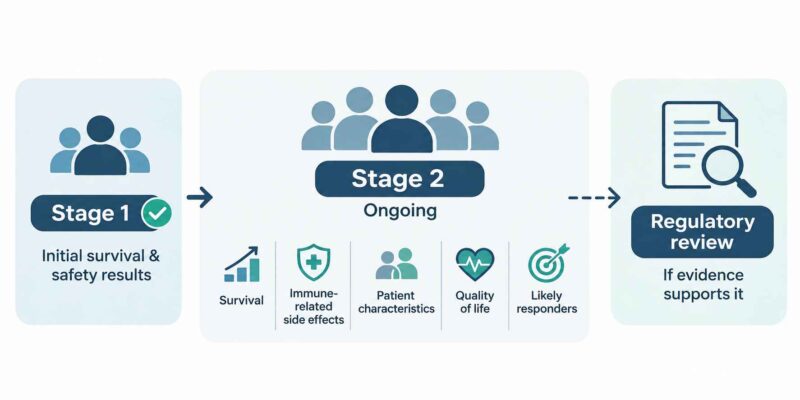
Despite the encouraging survival results, gotistobart has not yet completed the research needed to establish its effectiveness in routine clinical care. Reported findings came out of Stage 1 of PRESERVE-003, a randomized Phase 3 trial evaluating the experimental treatment against docetaxel.
Stage 1 provided important information about survival, safety, and dosing. However, it involved a relatively small patient population. Its updated survival results showed a substantial improvement, but researchers still need to confirm that benefit in a larger group. Stage 2, the pivotal portion of the trial, is continuing.
- Can gotistobart produce a similar survival advantage in a larger population?
- How frequently do serious immune-related complications occur?
- Which patient characteristics are associated with better treatment responses?
- How does treatment affect quality of life over longer periods?
- Can researchers identify patients who are most likely to benefit?
Similar challenges arise in the development of new medicines for difficult-to-treat cancers, where promising initial results require further clinical validation.
Regulatory approval will depend on a broader assessment of effectiveness and safety. Even a substantial survival improvement in an early portion of a Phase 3 trial does not automatically establish a new standard of care.
What These Findings Mean for Lung Cancer Patients
For someone living with advanced lung cancer, an additional treatment option after previous therapies stop working can make a meaningful difference. An 8.5-month difference in median overall survival is especially notable in a patient population facing limited treatment choices.
As research into stomach cancer survival rates also illustrates, survival outcomes can vary considerably depending on disease stage and available treatments.
Still, individual outcomes can vary considerably. Gotistobart was studied specifically in patients with metastatic squamous non-small cell lung cancer whose disease had progressed after earlier immunotherapy and chemotherapy.
Results cannot automatically be applied to patients with other lung cancer subtypes or those receiving their first treatment. Factors such as tumor characteristics, previous medications, overall health, and other medical conditions can influence treatment decisions.
Patients currently receiving care for advanced lung cancer should discuss available therapies and clinical trial opportunities with their oncology team. Gotistobart is not yet an established replacement for approved treatments, but its trial results provide a reason for further investigation.
Summary
Gotistobart has produced encouraging survival results in patients with advanced squamous non-small cell lung cancer who had already undergone treatment. Updated PRESERVE-003 findings showed median overall survival of 18.5 months with gotistobart compared with 10 months with docetaxel, alongside a 43% reduction in the relative hazard of death.
Results suggest that targeting immune suppression through CTLA-4 could provide another treatment option for some patients with difficult-to-treat lung cancer. However, gotistobart is still investigational, and the ongoing Phase 3 trial will help determine its long-term effectiveness, safety, and potential role in cancer care.