

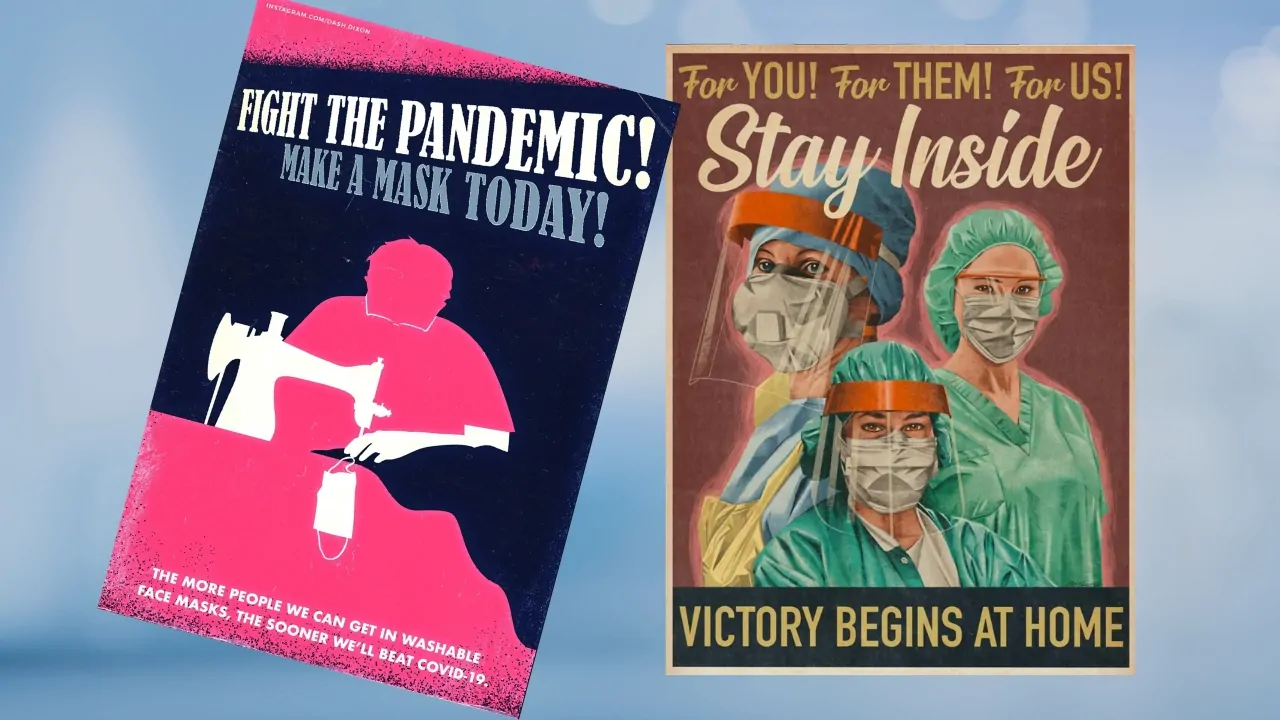
Organized health messaging has long served as a bridge between medical knowledge and everyday decision-making, translating complex risks into messages meant for mass audiences.
Early public health efforts relied heavily on printed posters and static visuals placed in public spaces. Streets, factories, schools, and clinics became sites of health instruction through images and short slogans.
Modern health campaigns often show stronger measurable results due to expansive reach and advanced analytical tools.
Examining both periods together reveals continuity as well as change in how health messages gain:
Let us do exactly that.
Modern Public Health Campaigns
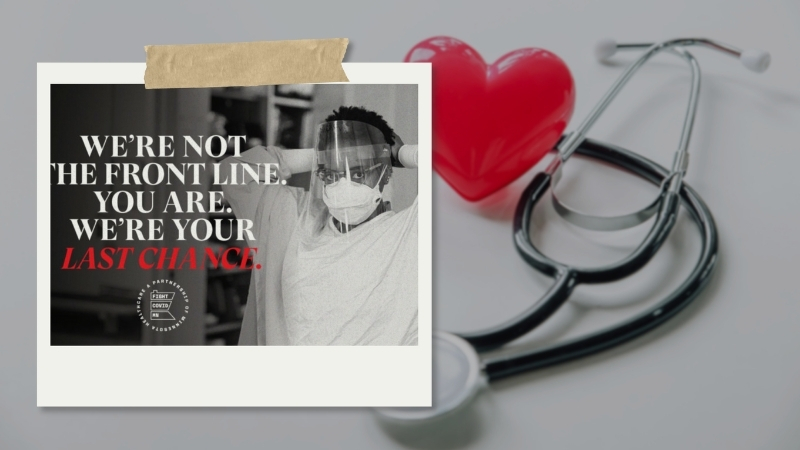
There are many reasons why modern public health campaigns are superior to those from decades ago, particularly because of precise targeting supported by data and digital communication channels.
Furthermore, digital systems that include:
Communication no longer depends on a single visual placed in a shared space but instead circulates across personalized feeds and interactive formats.
Targeted advertising enables messages to reach specific demographic groups, while engagement data offers immediate feedback about reception and interaction.
Social media initiatives demonstrate promising reach along with potential shifts in knowledge and attitudes tied to prevention and treatment.
Evidence drawn during recent global crises shows how scale and speed reshape communication.
Great digital efforts during the COVID-19 pandemic reached billions of users across platforms, allowing health authorities to observe changes almost as they occurred.
Widespread exposure to vaccine messaging across social media:
Rapid circulation altered how health information moved during emergency conditions, reducing reliance on slower institutional channels.
Role of Images and Messaging Today
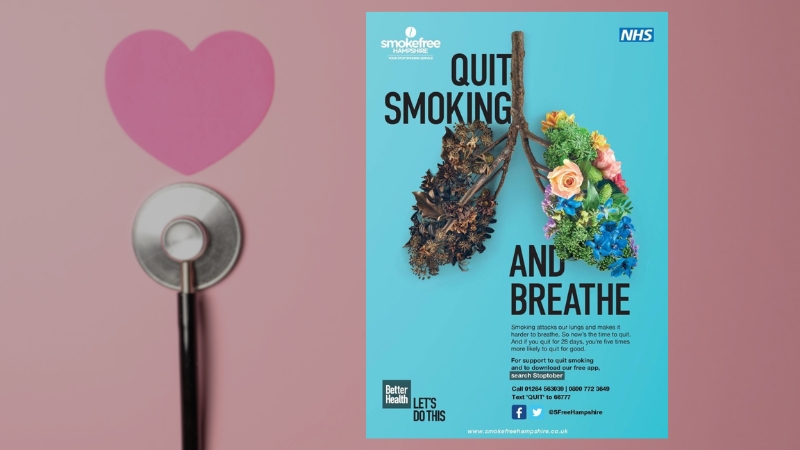
Images continue to anchor health communication, though visual approaches have changed.
Contemporary campaigns prioritize clarity, inclusivity, and health literacy rather than shock-based fear.
Visuals often portray everyday scenarios and recognizable situations that frame healthy behavior as achievable and socially supported.
Printed materials still play a role, particularly inside hospitals, clinics, and public health offices. You will see posters with people, photographed in front of canvas backdrops, alongside charts and statistical graphics explaining:
Such materials connect abstract numbers to human experience, reinforcing credibility and seriousness within institutional spaces.
Ethical discussion strongly shapes current design decisions. Concern about stigmatizing imagery has grown in areas such as weight, substance use, and mental health.
Visual choices increasingly avoid framing individuals as moral failures, aiming instead to support behavior change without reinforcing harmful norms.
The use of simplified visuals to explain complex health threats has persisted across time. Early tuberculosis posters relied on symbolic imagery and dramatic contrast to convey urgency, while modern campaigns favor clean diagrams and familiar scenarios.
View this post on Instagram
A parallel can be seen in the COVID-19 “Flatten the Curve” graphic, which translated complex epidemiological concepts into an easily understood visual comparison, allowing audiences to grasp how collective behavior could protect health systems.
Evaluation and Evidence
Evaluation now occupies a central role in campaign planning. Designers and public health officials rely on analytics, surveys, and controlled testing to assess impact.
Outcomes commonly measured include awareness, intention to act, and belief change.
Evidence-based frameworks allow continuous refinement rather than waiting until a campaign ends.
Data collection methods show us how feedback loops function during active campaigns:
Strengths of Modern Campaigns
Targeting capabilities allow messages tailored by age, location, interests, or prior behavior.
Such precision supports efficient use of resources and quicker response to emerging trends. Adjustments can occur within days rather than months.
Measurable outcomes represent another strength. Digital metrics provide tangible indicators of influence:
Comparable data across initiatives enables clearer evaluation of effectiveness and scalability.
Challenges
Information overload poses a serious challenge. Digital platforms amplify misinformation alongside credible health messages, creating confusion and mistrust.
Competition for attention reduces message visibility.
Ethical tensions also persist. Emotionally provocative imagery raises concerns about autonomy and stigma.
Ongoing debate questions how far persuasion should go in promoting public health goals.
Historical Public Health Campaigns
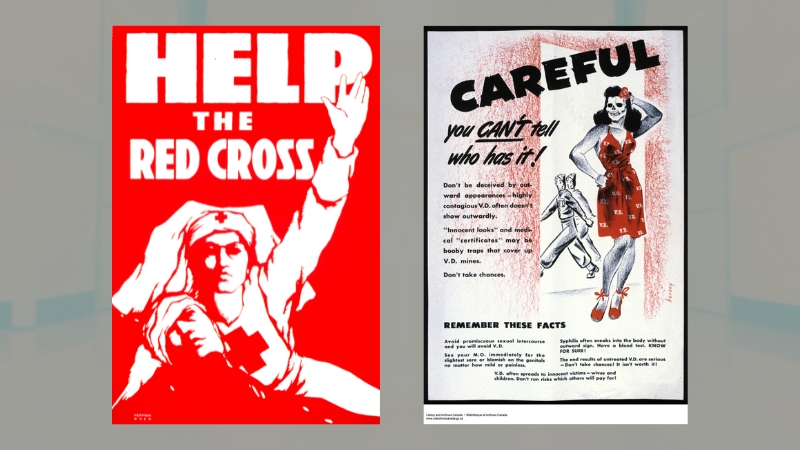
Public health posters appeared sporadically during the nineteenth century, usually tied to narrow objectives such as fund-raising or promotion of specific medical services.
Early materials signaled growing interest in coordinated public health action rather than isolated charity.
Concrete examples show how limited yet intentional these early efforts were:
Such visuals linked public concern to institutional responses at a time when medical authority was still gaining public trust.
Use of posters expanded rapidly during and after World War I as governments and health organizations confronted tuberculosis, alcoholism, and venereal disease on a mass scale.
Art and advocacy are made one as designers adopted attention-grabbing methods commonly seen in commercial promotion, allowing short messages to interrupt daily routines and communicate urgency quickly.
Public health campaigns against tuberculosis during and after World War I illustrate how posters functioned in practice.
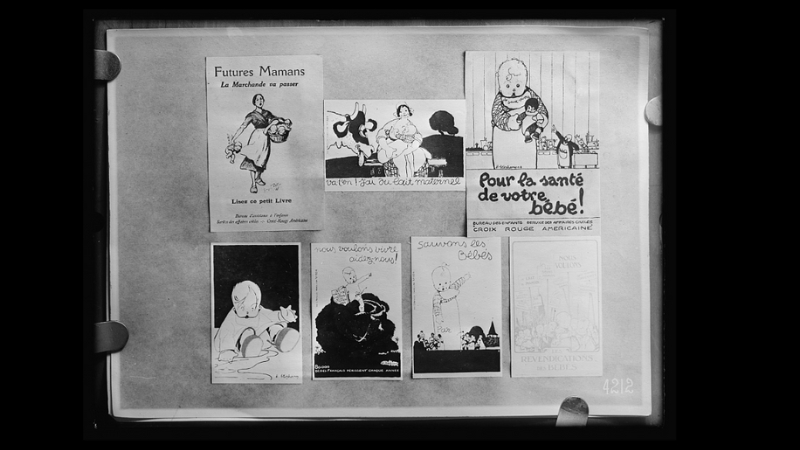
Organizations supported by the Rockefeller Foundation and the American Red Cross used large, visually striking posters in exhibitions, dispensaries, and public lectures, particularly in France.
These images paired minimal text with urgent symbolism, sometimes linking disease prevention to national survival during wartime.
Such materials helped communicate risk and encourage preventive behavior at a time when effective medical treatments were limited.
Design and Communication Strategies
Early designers developed recognizable visual vocabularies that shaped public ideas of healthy and unhealthy behavior.
Clean bodies, strong workers, and orderly homes often symbolized good health, while dark imagery and threatening figures suggested danger or illness.
Visual contrast allowed complex medical ideas to be simplified for general audiences.
Persuasive techniques varied widely. Rhyming slogans increased memorability, emotional messaging encouraged fear or hope, and humor softened sensitive topics.
Public figures occasionally appeared to lend credibility. Metaphors also played an important role.
Animals or symbolic figures such as snakes represented disease and moral danger, helping audiences visualize invisible threats.
Strengths of Historical Campaigns
Cultural resonance and iconic imagery gave historical campaigns lasting visibility.
Posters reflected artistic styles and social values of their time, allowing health messages to feel familiar rather than abstract.
Daily exposure in public spaces embedded these messages into routine life.
Accessibility for low-literacy populations marked another strength.
Visual communication reduced reliance on long text, making posters effective across educational levels.
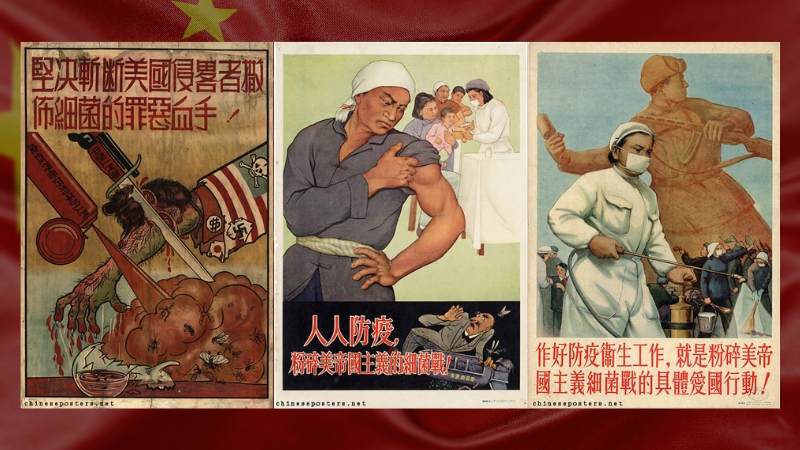
Campaigns such as China’s Patriotic Health Campaign relied heavily on imagery to reach broad populations and encourage sanitation and hygiene practices.
Limitations
Assessment of impact remained limited. Quantitative evaluation methods were rare, leaving little concrete evidence of behavior change.
Success often depended on anecdotal reports or indirect health trends.
Audience targeting also remained minimal. Messages addressed entire populations with little customization, limiting relevance for specific groups.
Such generalization reduced flexibility and responsiveness to varied social contexts.
The Bottom Line
@temacomm_25_lionsclub CAMPAIGN AGAINST DRUG ABUSE (SAY NO TO DRUG ABUSE) #lionsclubinternational #district418 #saynotodrugabuse #fyp #goviral #goodhealth #healthylifestyle ♬ Big News – DM Production
Modern health campaigns surpass historical ones in measurable effectiveness due to targeted reach and analytic capacity by far.
However, historical efforts laid essential groundwork in visual communication and public engagement.
Judging effectiveness requires more than metrics alone. Ethical practice, cultural resonance, and meaningful behavior change matter equally.
Future health communication benefits when memorable imagery and concise messaging combine with modern data tools.
Lessons drawn across time support campaigns that inform, persuade, and respect public audiences.