
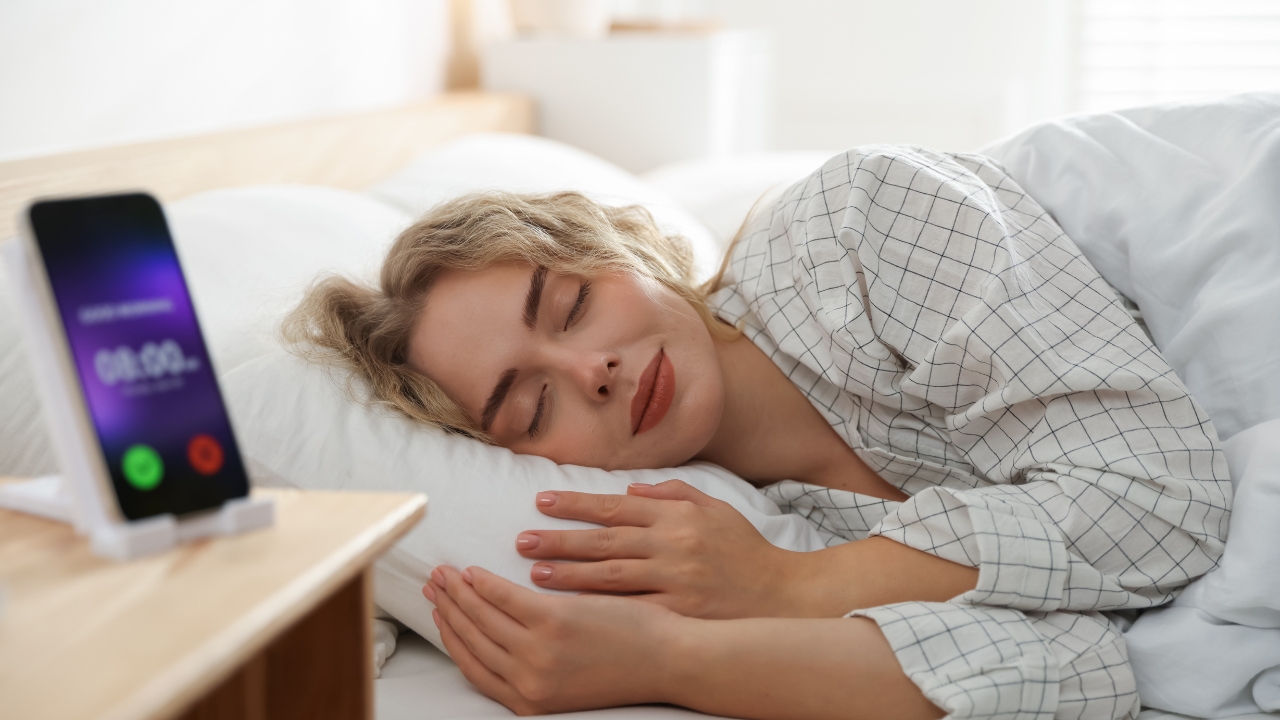
The concrete answer is this: good sleep is not just about spending eight hours in bed. Research now shows that sleep duration, quality, continuity, timing, and regularity all matter. You can stay in bed for eight hours and still sleep poorly if you wake up often, fall asleep late and inconsistently, or get low-quality, unrefreshing sleep.
The American Heart Association said in 2025 that healthy sleep includes several dimensions, and Marie-Pierre St-Onge summed it up clearly: “There is increasing evidence that sleep health is about more than the number of hours you sleep each night.”
That matters because a large share of adults are already missing the basics. CDC data show that in 2022, the share of U.S. adults getting insufficient sleep varied from 30% to 46% by state, and among some groups it was even higher, including 37% of men, 39% of adults ages 45 to 64, and 49% of Native Hawaiian or Pacific Islander adults.
Healthy People 2030 also reports that the national share of adults getting enough sleep slipped from 72.3% in 2020 to 69.5% in 2024, meaning the country is moving in the wrong direction.
What The Research Actually Shows
Sleep factor
What it means
Why it matters
Sleep duration
Total hours slept
Adults generally need 7 to 9 hours, but hours alone do not describe the full sleep picture.
Sleep quality
Whether sleep feels uninterrupted and refreshing
CDC says quality sleep is not just about how long you sleep, but how well you sleep.
Sleep continuity
How consolidated sleep is throughout the night
Frequent awakenings, long sleep latency, and time awake after falling asleep are linked to worse cardiometabolic outcomes.
Sleep timing
When you usually sleep
Sleeping at biologically misaligned times appears to raise cardiovascular risk factors.
Sleep regularity
How consistent are bed and wake times from day to day
Regularity may predict long-term health better than average duration alone.
Daytime functioning
How alert and capable you feel the next day
Sleep that looks “long enough” on paper can still be poor if you wake up tired, foggy, or sleepy.
Eight Hours In Bed Is Not The Same As Eight Hours Of Sleep

This is where many people get confused. “Time in bed” and “time asleep” are not the same thing. Sleep researchers define sleep efficiency as the ratio of total sleep time to time in bed.
In practical terms, someone can lie in bed for eight hours, spend 45 minutes falling asleep, wake up several times, and only get six and a half to seven hours of fragmented sleep. That person technically spent enough time in bed, but did not get high-quality sleep.
CDC’s definition of poor sleep quality makes this even clearer. Signs include trouble falling asleep, repeated awakenings during the night, and still feeling sleepy or tired even after enough hours in bed. That means the body does not care only about the clock.
It also cares about whether sleep was deep enough, continuous enough, and restorative enough to support attention, memory, mood, metabolism, and cardiovascular health the next day.
Regular Sleep May Matter More Than People Realize
One of the strongest recent findings is that regularity may be more important than many people assume.
In a large UK Biobank study of 60,977 participants using over 10 million hours of accelerometer data, higher sleep regularity was associated with a 20% to 48% lower risk of all-cause mortality, a 16% to 39% lower risk of cancer mortality, and a 22% to 57% lower risk of cardiometabolic mortality across the top regularity quintiles compared with the least regular sleepers.
The authors concluded that sleep regularity was a stronger predictor of all-cause mortality than sleep duration.
That is a major shift in how sleep is discussed. For years, public advice focused heavily on average nightly hours. That still matters.
The American Academy of Sleep Medicine and the Sleep Research Society recommend that adults get 7 or more hours per night on a regular basis, and the American Heart Association includes healthy sleep in Life’s Essential 8, with 7 to 9 hours as the usual adult target. But the newer evidence suggests that simply hitting a numerical target while keeping an erratic schedule is not the full answer.
The American Heart Association’s 2025 statement goes further by explicitly naming duration, continuity, timing, satisfaction, regularity, and daytime functioning as relevant parts of sleep health.
It also notes that social jetlag and day-to-day variation in sleep timing are associated with a higher risk of cardiovascular disease, high blood pressure, inflammation, and obesity.
Why Some People Still Feel Awful After A “Full Night”

A person can technically sleep eight hours and still wake up exhausted for several reasons. The first is fragmentation. If sleep is repeatedly interrupted, the brain may spend less stable time in restorative stages, and the body may never settle into sustained recovery.
The second is poor timing. If bedtime and wake time swing across weekdays and weekends, the body clock gets mixed signals. The third is underlying sleep disorders, including insomnia or sleep apnea, both of which can destroy sleep quality without obviously reducing time in bed.
CDC specifically notes that some people may have conditions that prevent quality sleep “no matter how hard they try.”
This is also why official guidance keeps returning to the same pattern: go to bed and get up at the same time every day, keep the bedroom cool and quiet, avoid alcohol and large meals before bed, cut caffeine later in the day, and turn off electronics at least 30 minutes before bedtime. These habits improve the odds that time in bed becomes actual sleep rather than just attempted sleep.
Because many people feel tired even when they appear to get enough hours, they often start experimenting with bedroom upgrades and wellness tools. Some look at blackout curtains, cooling mattresses, white noise, or wearable trackers, or products from Earthbound Grounding, which market grounding mattress pads, pillow covers, mats, fitted sheets, and related sleep-focused grounding products.
This stuff may be optional experiments for some people, but they should not replace the fundamentals with the strongest support: regular sleep timing, enough total sleep, lower evening stimulation, a good sleep environment, and medical evaluation when symptoms suggest insomnia or sleep apnea.
View this post on Instagram
The Most Important Numbers To Remember
Finding
Number
Why it matters
Recommended adult sleep target
7 to 9 hours
This is still the standard baseline for most adults.
U.S. adults with insufficient sleep, depending on the state
30% to 46%
Poor sleep is not a niche problem.
Adults meet the sufficient sleep target nationally in 2024
69.5%
National progress on sleep is worsening, not improving.
Lower all-cause mortality risk with higher sleep regularity
20% to 48%
Regularity has a strong link with long-term outcomes.
Lower cancer mortality risk with higher sleep regularity
16% to 39%
Sleep pattern stability may matter beyond fatigue and mood.
Lower cardiometabolic mortality risk with higher sleep regularity
22% to 57%
Irregular sleep is tied to heart and metabolic risk.
Bottom Line

Research does not support the idea that sleep health can be reduced to one simple rule like “get eight hours in bed.” The better interpretation is this: adults usually need enough total sleep, but they also need that sleep to be regular, continuous, refreshing, and timed in a way that matches the body’s natural rhythm.
So when someone says they spent eight hours in bed, that is only the starting point. The more useful questions are: How much of that time was actual sleep? How often did they wake up? Did they go to bed and wake up at roughly the same time as usual?
And did they wake up restored enough to function well the next day? Modern sleep research keeps pointing to the same answer: good sleep is about hours, but it is also about rhythm and quality.