
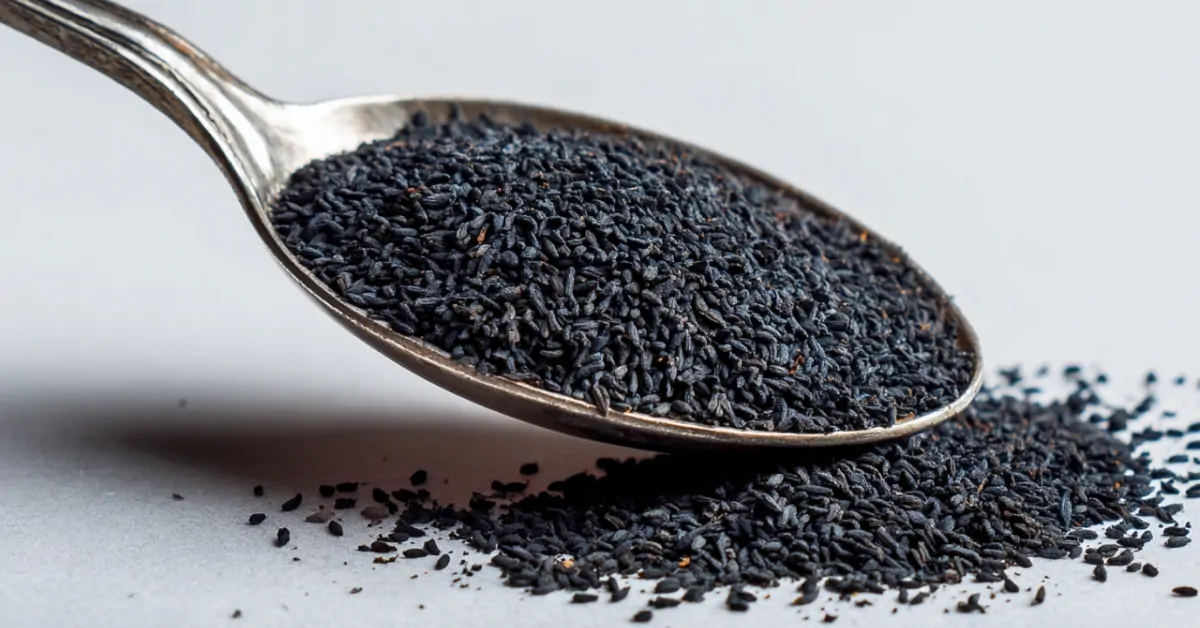
For years, black cumin seeds have been a staple in kitchens and traditional medicine cabinets across Asia and the Middle East. Now, modern research is starting to examine whether this everyday spice could meaningfully influence human health.
A new Japanese study adds to that conversation, suggesting that a daily spoonful of black cumin powder may help lower “bad” cholesterol while boosting “good” cholesterol.
As someone who regularly reads nutrition science and watches promising “miracle spice” claims come and go, I tend to approach each new study with some skepticism.
But this particular trial, while small, does provide measurable results worth paying attention to — and it comes from a team exploring both the metabolic and genetic mechanisms behind the effects.
What the New Study Actually Found
View this post on Instagram
Researchers at Osaka Metropolitan University conducted an eight-week clinical trial involving 42 adults.
- 22 participants consumed 5 grams of black cumin seed powder daily.
- 20 individuals formed the control group.
After two months, those taking black cumin showed:
- Reduced LDL cholesterol (“bad” cholesterol)
- Increased HDL cholesterol (“good” cholesterol)
Meanwhile, the control group showed no significant change.
What caught my eye is that 5 grams is roughly the amount you could comfortably scatter over vegetables or blend into yogurt – a realistic dose for everyday life rather than an unrealistic supplement megadose.
The research team, led by food scientist Akiko Kojima-Yuasa, believes the seeds may influence how fat cells mature by acting on genes that regulate lipid metabolism. Earlier laboratory research on adipocytes (fat cells) supports this possibility, but translating lab findings to real humans is always the real hurdle.
“We were pleased to see that black cumin demonstrated clear, measurable improvements in blood lipids,” Kojima-Yuasa said.
From a research perspective, that’s a careful statement – an acknowledgement of both the promise and the limits.
Why This Matters — and Where the Evidence Still Falls Short
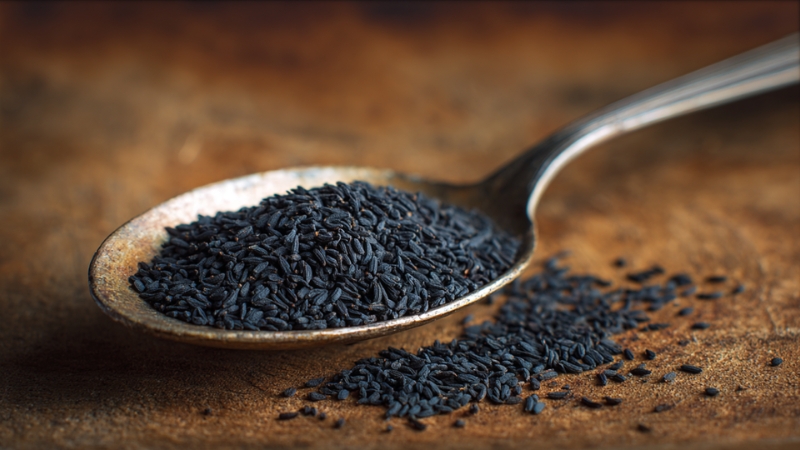
Black cumin (Nigella sativa) has been used for thousands of years, but scientific study of its health effects is relatively new.
A handful of trials over the last decade have hinted that the seeds may support cholesterol management or weight control. But results are mixed:
- Some trials show moderate improvement in lipid profiles.
- Others show weak or no effect.
- One 2015 trial that reported dramatic results was later flagged with an “expression of concern,” a reminder that nutrition research is vulnerable to exaggerated claims and, sometimes, flawed methodology.
This inconsistency is exactly why the new findings matter; they reinforce the idea that black cumin might be beneficial, but also highlight the need for larger, longer-term trials. A sample of 22 active participants is not enough to declare black cumin a proven cholesterol-lowering intervention.
From my own point of view as someone who follows clinical nutrition trends closely, this study feels like a solid step forward, but not a turning point.
If black cumin is going to find a place in the long-term conversation about cardiovascular health, researchers will need to test it in bigger populations, in diverse age groups, and against standard treatments.
Could Black Cumin Influence Obesity and Diabetes?
Beyond the cholesterol findings, the Osaka team is also exploring whether black cumin can influence:
- fat formation and storage
- insulin resistance
- inflammatory markers
Lab experiments in this study suggest that black cumin compounds may interfere with the formation of mature fat cells, essentially “slowing down” fat accumulation at a genetic signaling level.
This is exciting scientifically, but again, lab results often overshoot what happens in the human body. The team plans to study insulin resistance next, which will be crucial to understanding whether these effects have genuine metabolic significance.
A Look at the Evidence So Far
Below is a concise table summarizing how this new trial stacks up against prior research.
| Study Type | Findings | Notes / Reliability |
| 2025 Osaka Metropolitan University clinical trial | ↓ LDL, ↑ HDL after 8 weeks, 5 g/day | Sample size small but well controlled; promising changes |
| 2015 cumin capsule trial | Similar improvements to orlistat | Later flagged with “expression of concern”; reliability uncertain |
| Other small human trials (2016–2023) | Mild to moderate cholesterol improvement | Effects vary; doses differ widely |
| Cell and animal studies | Anti-inflammatory, antioxidant, anti-obesity mechanisms | Mechanisms promising but not always reproduced in humans |
The Bottom Line
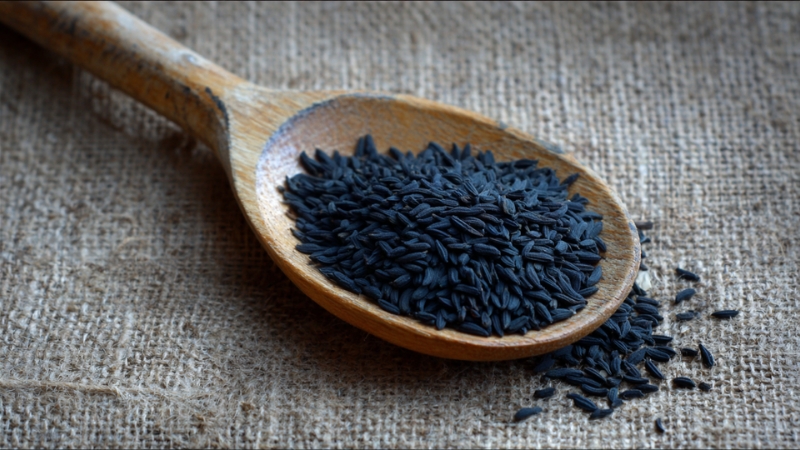
Black cumin is not a cholesterol-lowering drug, and no spice should be treated as one. But there is emerging evidence that this traditional ingredient may support healthier lipid levels when eaten consistently in realistic culinary doses.
My impression? This study does not answer every question, but it adds credibility to something cultures have believed for centuries: that black cumin might genuinely do more than flavor flatbread or curry.
Bigger trials are coming, and they will tell us whether this humble seed deserves a place alongside established nutrition interventions, or whether its benefits remain subtle but meaningful for those who use it.