

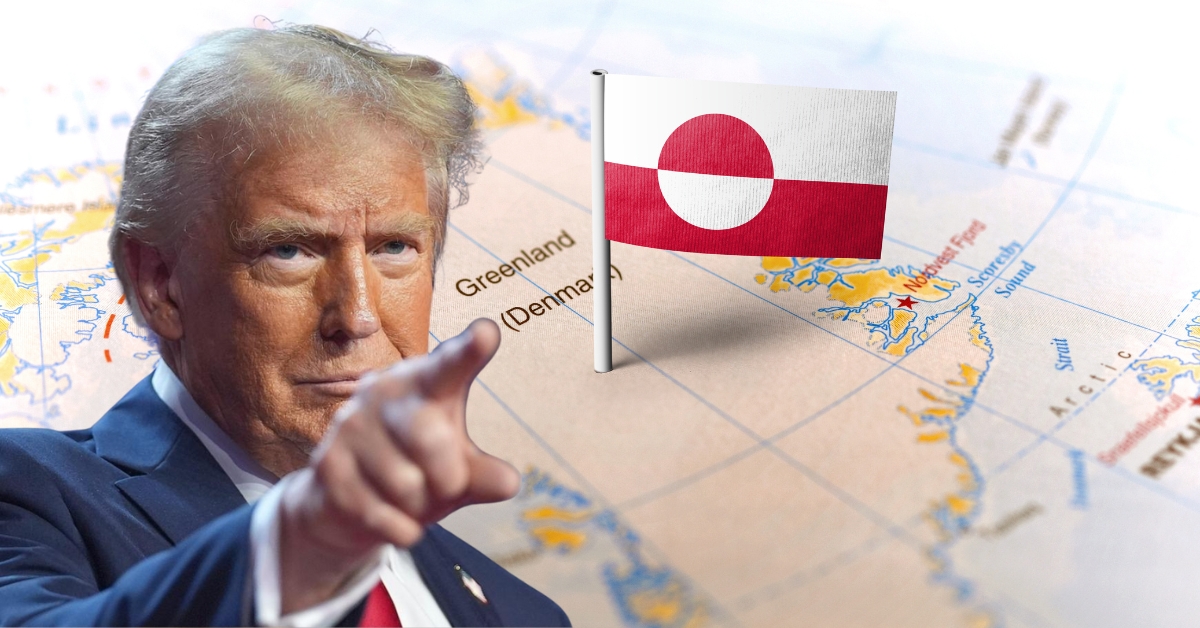
Markets may be soaring and investors celebrating, but behind the scenes, the global order is under growing strain, and at the center of the latest geopolitical controversy sits an icy island in the North Atlantic: Greenland.
President Donald Trump has reignited his ambitions to acquire the semi-autonomous Danish territory, and this time, it’s not being laughed off.
With estimates placing the potential purchase at up to $700 billion, what was once a fringe idea has rapidly become a serious, and seriously destabilizing, foreign policy issue.
A Price Tag Bigger Than Politics
Trump’s team, led by Secretary of State Marco Rubio, is now preparing a formal proposal for Greenland’s acquisition. Sources familiar with internal discussions say the estimated cost ranges between $500 billion and $700 billion, depending on how the deal is structured and what obligations the U.S. would assume.
But the dollar figure only tells part of the story. The political cost, both at home and abroad, may be far greater, and it’s already starting to show.
Unsettled Markets, Unsettled Allies
Back in April, Trump’s sweeping tariffs rattled global trade and pushed financial systems to the brink. Now, his comments about Greenland, including vague threats of military action, are setting off alarm bells in European capitals and in Washington itself.
Trump:
If we don’t take Greenland, Russia or China will. And I’m not letting that happen.
I’d love to make a deal with them. It’s easier. But one way or the other, we’re going to have Greenland. pic.twitter.com/fNShcJvGw6
— Clash Report (@clashreport) January 12, 2026
“I’d love to make a deal with them,” Trump said on Sunday, “but one way or the other, we’re going to have Greenland.”
That rhetoric has drawn a sharp rebuke from Denmark and other NATO allies, with Danish Prime Minister Mette Frederiksen warning that any attempt to seize Greenland by force would risk unraveling the transatlantic alliance.
A joint statement from European leaders last week was even more direct: “Greenland belongs to its people.”
Greenland’s Answer: Not for Sale
Greenland’s response has been swift and firm.
“We do not want to be owned, governed, or become part of the United States,” said Greenlandic Foreign Minister Vivian Motzfeldt as she arrived in Washington on Tuesday.
Inside Greenland, anxiety is rising.
“People are having trouble sleeping,” said Business and Mineral Resources Minister Naaja Nathanielsen during a press conference in London. “This issue is dominating household conversations. The pressure is enormous.”
The public stands behind them. A recent independent poll found that 85% of Greenlanders oppose becoming part of the U.S.
The Real Stakes Beneath the Ice
For Trump, Greenland is more than just real estate. With rising tensions in the Arctic and the growing presence of China and Russia in the region, the island is seen as a strategic linchpin for U.S. military and economic power.
The U.S. already operates Pituffik Space Base in northwest Greenland, home to early-warning radar systems and a small contingent of Space Force personnel. Intelligence-sharing with Denmark is robust. But Trump believes formal ownership, not just partnership, is the only way to guarantee long-term strategic access.
In his view, owning Greenland is like owning the property instead of leasing it, and that’s how he’s selling it to the American public.
In Search of a “Digital Goldmine”
If 2025 proved anything to investors, it’s that digital assets like Bitcoin don’t always offer a safe harbor. Trump, meanwhile, seems to be looking for a different kind of hard asset, and Greenland, with its rare earth minerals, energy potential, and 27,000 miles of Arctic coastline, fits the bill.
In a world of rising inflation, falling confidence in fiat currencies, and deglobalization, physical territory may now be Trump’s version of a long-term hedge.
Alternative Strategy: A Looser Union
Despite the heated rhetoric, insiders say the White House is also exploring a Compact of Free Association, a softer approach that would allow Greenland to remain self-governing while deepening its strategic and financial ties to the U.S.
Such agreements already exist with the Marshall Islands, Micronesia, and Palau. It would be cheaper than buying the island outright and may face less political resistance. But whether Trump would settle for a compromise remains unclear.
Capitol Hill Pushes Back
The backlash at home is growing. On Tuesday, a bipartisan group of senators introduced legislation that would bar the Defense Department from using federal funds to assert control over the territory of a NATO member without its consent, a clear rebuke of Trump’s Greenland ambitions.
Lawmakers are worried that pushing too far could damage alliances, strain diplomacy, and distract from more pressing national security concerns.
Even some of Trump’s allies, who praised his military intervention in Venezuela earlier this year, are privately warning that the Greenland idea may be a bridge too far.
Greenland Says Yes to Partnership, Not Annexation
View this post on Instagram
While Greenland has shown openness to more U.S. military cooperation, its leaders are drawing a clear line: cooperation is welcome, but ownership is not on the table.
“We can find ways to strengthen the U.S. footprint in Greenland,” said Danish Prime Minister Frederiksen. “They’re already there, and they can have more possibilities. But not at the expense of our sovereignty.”
Trump’s push to buy Greenland is no longer a sideshow; it’s a flashpoint in the evolving struggle over sovereignty, global power, and America’s role in the Arctic.
While markets reach new highs, political and strategic risks are piling up in the background. Trump may view Greenland as a prize worth chasing, but for its people, and much of the world, the message is simple:
“We are not for sale.”