
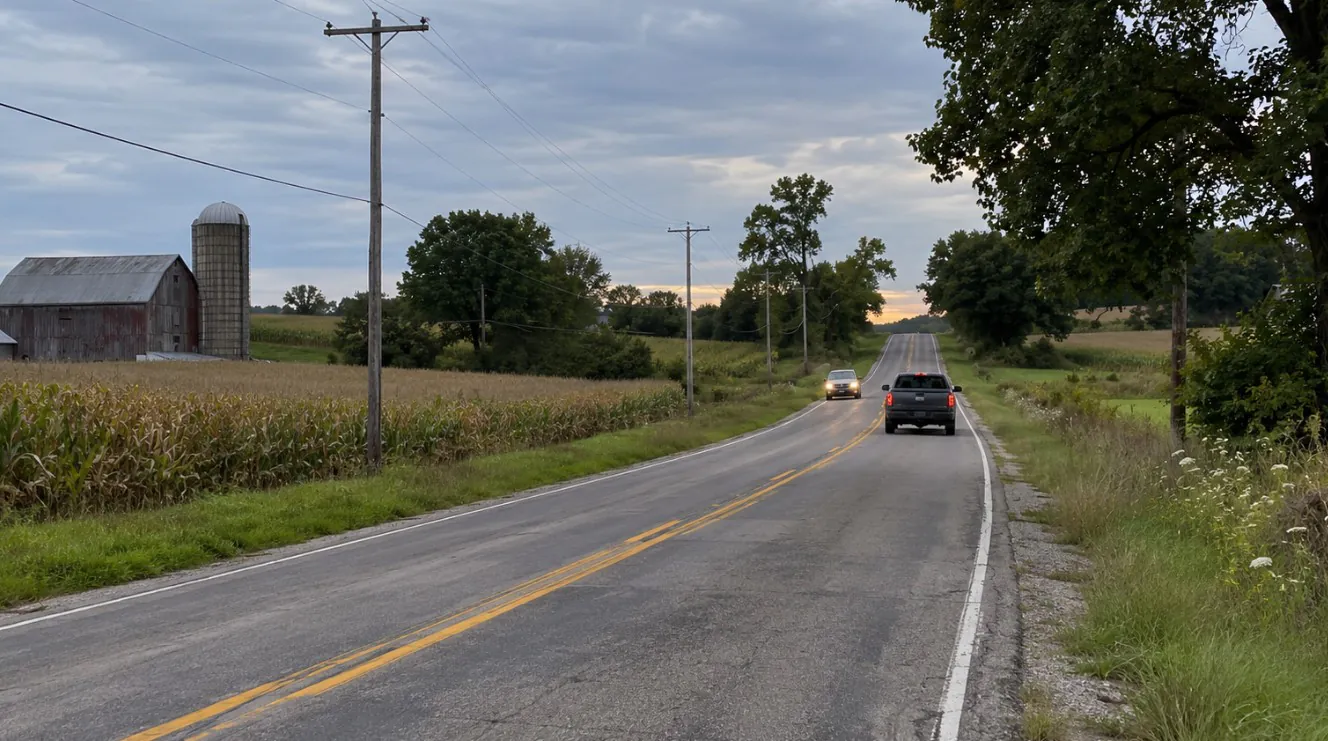
More than 16,000 people died on rural roads in the United States in 2024. To better understand the scale, that means 44 people every day.
While more people indeed have died on roads like highways or inside of cities and urban areas, 22,905 in total to be precise, the issue that caught our eyes is the fact that more than 40% of all fatal car accidents happened outside of urban areas.
There were more deaths on urban roads, 22,905 in total. But people also drive much more in cities and suburbs. Rural roads carry just 31% of all miles driven in the country, yet 41% of traffic deaths happen there.
To be more precise, we have to highlight that the death rate on rural roads is 54% higher compared to urban areas.
More Fatal Car Accidents in Rural Areas Despite the Less Traffic
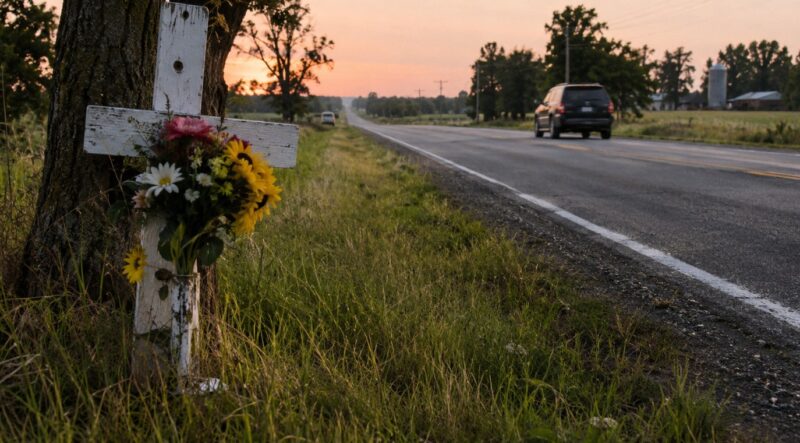
The latest report on rural roads, provided by the NHTSA, shared the following figures for 2024.
| Fatal Accidents on Road | Rural Roads | Urban Roads |
|---|---|---|
| Traffic deaths | 16,006 | 22,905 |
| Share of miles driven | 31% | 69% |
| Share of traffic deaths | 41% | 58% |
| Deaths per 100 million miles | 1.56 | 1.01 |
For every 100 million miles driven, 1.56 people died on rural roads. The figure was 1.01 on urban roads.
When you think about it, it is not so surprising. For instance, in crowded cities, while there are constant traffic jams and frustrated drivers, we have traffic lights and cameras. Besides that, constant crowds won’t allow us to drive faster.
On the other hand, rural areas are known for roads with much less traffic, which may appear safe for some to relax and step on the pedal.
However, at higher speeds, even a small mistake can lead to a serious crash.
More Than 10,000 People Died After Vehicles Left the Road
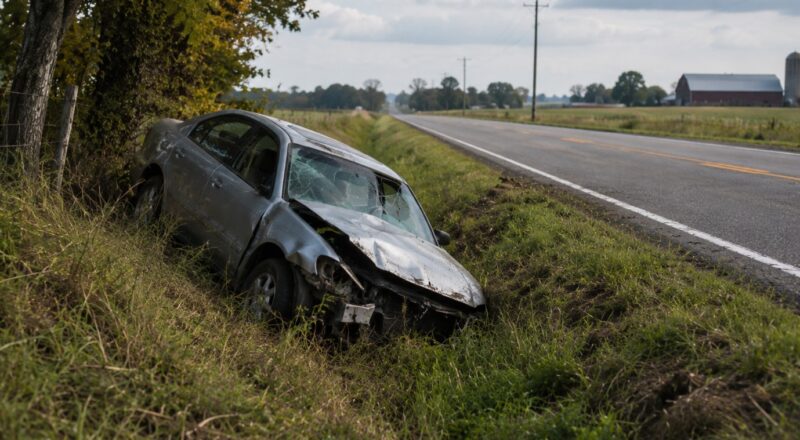
Another statistic that caught our attention is that 10,034 people died in situations where a car left the lane or ran off the road.
These cases represent 63% of all tragic accidents in rural areas. In urban parts of the US, the figure was 36%, almost twice less.
Many rural highways have trees, steep banks and other obstacles close to traffic. On some stretches, there is little room to recover once the car leaves the lane.
What we don’t know for sure is the statistic on who is usually responsible. For example, if it is related to lack of experience, DUI, or just reckless driving.
Another driver, poor road conditions or a problem with the vehicle may have played a part.
Insurance claims also depend on state law. Minnesota, for example, uses no-fault car insurance rules that affect payment for certain injuries and medical bills after an accident.
Most of Fatal Accidents Happened Between Intersections
In 2024, only 17% of rural traffic deaths happened at intersections. The remaining 83% happened on other parts of the road. In urban areas, 34% of deaths occurred at intersections.
According to NHTSA, 72% of rural traffic deaths happened on roads where the speed limit was 55 mph or higher. In urban areas, the figure was 28%.
However, speeding was involved in almost the same percentage of deaths in both areas, 28% on rural roads and 29% on urban roads. So drivers were not necessarily breaking the speed limit when the crashes happened.
Many rural highways allow speeds of 55 or 65 mph. At those speeds, losing control on a bend or crossing into the opposite lane can cause serious injuries, even when a driver is following the speed limit.
More of Traggic Accidents Happened During the Day
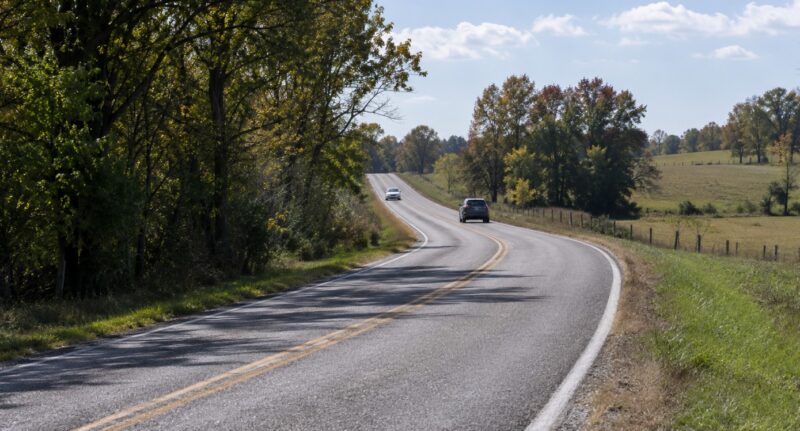
Driving on a country road at night can be difficult. Streetlights may be missing, and it can be hard to see an animal, a sharp bend or a stopped vehicle until the headlights reach it.
NHTSA found that 88% of rural traffic deaths occurring in darkness happened on roads without streetlights. The figure was only 36% in urban areas.
But nighttime was not when most rural deaths happened. In 2024, 54% occurred during daylight hours.
Cities showed a different pattern, with 59% of traffic deaths occurring at night.
We cannot say that daytime driving is more dangerous without knowing how much driving took place during the day and at night. Still, the rural numbers are a reminder that being able to see the road clearly does not prevent every deadly crash.
Drivers Died at the Scene on Most Cases
Another difference concerns what happened after the crash.
Among drivers killed on rural roads, 67% died at the scene. For urban roads, that figure was 50%.
Some rural crashes happen at high speeds, which can cause severe injuries. There is also the problem of distance. If a crash happens miles outside the nearest town, emergency workers may have farther to travel.
Getting medical treatment soon after a serious injury can be especially important for someone with heavy bleeding or other life-threatening injuries.
However, the federal report does not say how many deaths were caused by delays in emergency response. It only shows that a greater share of drivers killed in rural crashes died before leaving the scene.
Traffic Deaths in Cities Have Been Rising
Rural roads had the higher death rate per mile, but cities have their own growing problem.
Between 2015 and 2024, urban traffic deaths increased by 30%. Rural deaths went down by 9.6% over the same period.
The types of people being killed also differ. According to the Insurance Institute for Highway Safety, pedestrians and other people outside vehicles made up 31% of urban traffic deaths in 2024. On rural roads, they made up just 9%.
Most rural deaths involved people traveling inside vehicles. Cities had a much larger share of people killed as pedestrians and other road users outside cars and trucks.
The national figures also hide differences between states. Looking at traffic death rates by state can help show where the problem is worse, although those figures use population rather than miles driven.
The Bottom Line
With more than 10,000 deaths involving vehicles leaving the road, preventing those crashes is an obvious place to focus.
Some changes are fairly simple.
- Rumble strips make noise when tires cross the centerline or edge of the road.
- Better signs can warn drivers about sharp curves.
- Extra pavement grip can help on bends where cars have repeatedly lost control.
- Road barriers and removing dangerous objects close to the pavement can also help when a vehicle runs off the road.
The Federal Highway Administration provides information on these improvements for local and rural roads. The right solution depends on the crashes happening at each location.
Drivers also have a part to play. Slowing down before bends, watching the road ahead and leaving enough space to react can reduce the chance of losing control.
Rural highways may have fewer cars, but the 2024 death toll shows that less traffic does not always mean safer driving. More than 16,000 people died on those roads in one year, and most of those deaths happened after a vehicle left its lane or the pavement.