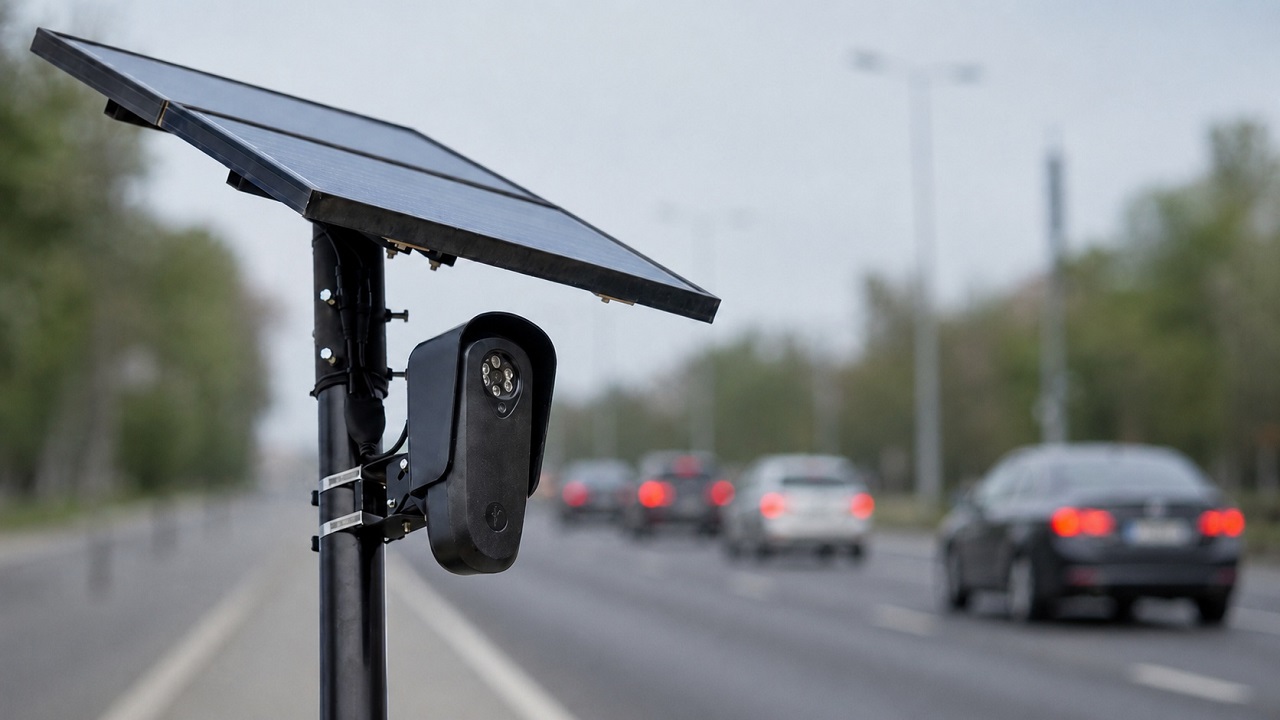
Automated license plate cameras are spreading quickly across the United States, giving police a faster way to find stolen cars, missing people and vehicles linked to crimes.
Flock Safety says its network now includes about 120,000 cameras across 49 states. The cameras are used by police departments, local governments, businesses and homeowners associations, creating a large searchable record of where vehicles have been seen.
The technology has helped solve cases. It has also contributed to wrongful stops when cameras misread plates, police databases contain bad information or officers fail to verify an alert before acting.
For drivers, that is the central issue. A Flock alert can point police toward a vehicle, but it is not proof that the vehicle is stolen or that the person behind the wheel committed a crime.
What Flock Cameras Record?
A Flock camera photographs passing vehicles and uses software to read the license plate. It also records the time, location and visible vehicle details such as color, make, model and body type.
Police can search for a complete plate number or use a broader vehicle description when investigators have only partial information. A department looking for a white pickup seen near a robbery, for example, can search recent camera records without knowing the full plate.
Recent report on the national camera network places Flock systems in thousands of communities and nearly every state.
Flock says its license plate system does not use facial recognition and does not collect a driver’s name. The data can still be connected to a person after police compare a plate with vehicle-registration records.
Why Police Departments Use the Cameras?
The main advantage is speed.
When a plate connected to a stolen vehicle or active police alert passes a camera, officers can receive the image and location within seconds. The same system is used in investigations involving missing people, Amber Alerts and vehicles seen near serious crimes.
Dallas police say the cameras have helped investigators locate suspects and recover stolen vehicles. The city has also faced growing questions about who can search the information and which outside agencies can receive it.
The dispute over the Dallas camera network reflects a wider national concern. A tool designed to find one wanted vehicle also records every unrelated vehicle passing the same camera.
That debate resembles earlier case related to camera footage and passenger privacy inside Waymo vehicles. In both cases, technology introduced for safety creates a second question about who can review the information and how far it can travel.
False Alerts Can Lead to Dangerous Stops
License plate recognition is not always accurate. Glare, darkness, dirt, camera angle and similar-looking characters can cause the software to misread a plate.
A 7 can be read as a 2. The letter O can be confused with zero. A camera can also return a correct plate tied to an outdated stolen-vehicle report or an incomplete police database entry.
One widely reported case involved a driver surrounded by officers after a Flock alert connected his vehicle to a stolen-car entry. The original problem was an incomplete plate entered into a federal police database. Officers then failed to compare the full plate before making the stop.
Flock CEO Garrett Langley later discussed the wrongful stop and said the company wants to reduce such incidents to zero.
The case showed how separate failures can combine. The camera detects the plate. A police database supplies the alert. Officers decide whether to stop the vehicle. An error at any stage can reach the driver within minutes.
Police Still Need to Verify Every Alert
Officers can check several details before starting a traffic stop:
- The complete plate number
- The state that issued the plate
- The vehicle’s make, model and color
- The camera image
- The date and reason for the alert
A mismatch in any of those details should lead to further checking, not an immediate high-risk stop.
Local policies differ. Some departments require officers to confirm alerts before taking action. Others rely more heavily on the automated notification, particularly during fast-moving investigations.
The same problem appears in other government databases. Our report on federal and state citizenship data checks examined how mismatched records can flag people incorrectly when separate systems are combined.
Flock Data Is Usually Kept for 30 Days
Flock says its standard retention period is 30 days. After that period, records are permanently deleted unless local law or a customer agreement sets a different limit.
The company’s evidence and retention policy says customers own their data and decide who can access it, how long it is kept and whether it is shared with other agencies.
Flock also says every search is tied to a specific user and recorded in an audit log. Its privacy explanation states that license plate readers collect vehicle images, plate information, timestamps and camera locations, but not facial recognition data.
The default 30-day period does not apply everywhere. Some customers use shorter periods, and others can keep data longer when local rules or contracts permit it.
One Camera Can Feed a Much Larger Network
The privacy concern is not limited to the camera beside one road.
Departments can share records with neighboring agencies and other law-enforcement partners. A plate captured in one city can therefore appear in a search conducted many miles away.
The American Civil Liberties Union has called for stronger local limits on data sharing, retention and the types of investigations that can use automated plate records.
The Electronic Frontier Foundation has documented searches involving immigration enforcement and reproductive-health investigations, arguing that local camera networks can become part of a much broader surveillance system.
Flock says sharing is controlled by the customer and is not automatically enabled. That places much of the responsibility on police chiefs, sheriffs, city councils and other local officials.
Questions about sharing also matter as immigration agencies expand their use of travel and location information.
Our team at NCHStats has separately reported on the growth of immigration arrests and local police partnerships, which shows how information collected by one agency can become useful to another.
What Residents Should Ask Their City?
Most people will never know that a camera recorded their vehicle unless the information becomes part of a police investigation.
Residents can still ask local officials for basic facts:
- How many Flock cameras are operating?
- Where are they located?
- How long is the information stored?
- Which agencies can search local records?
- How many searches are performed each year?
- How many alerts lead to arrests?
- How many alerts are later found to be wrong?
- Are audit logs reviewed for misuse?
Police departments should publish those figures instead of asking residents to accept general claims about crime reduction or privacy protection.
The Cameras Work Fast, and So Do Their Mistakes
Flock cameras give police a useful way to locate vehicles across a large area. Their value is clearest when the plate, vehicle description and police record all match.
The same speed becomes a risk when the underlying information is wrong. A false alert can move from a camera to a patrol car before anyone checks the complete plate.
The answer is not to treat every camera as useless. It is to require verification, narrow data sharing, firm retention limits and public reporting whenever a city builds a system capable of recording ordinary travel on such a large scale.