
A U.S. patient portal can work normally at home yet fail in China when hospital security controls and local internet filtering affect the same connection.
Why a US Health System May Block You Before China Does

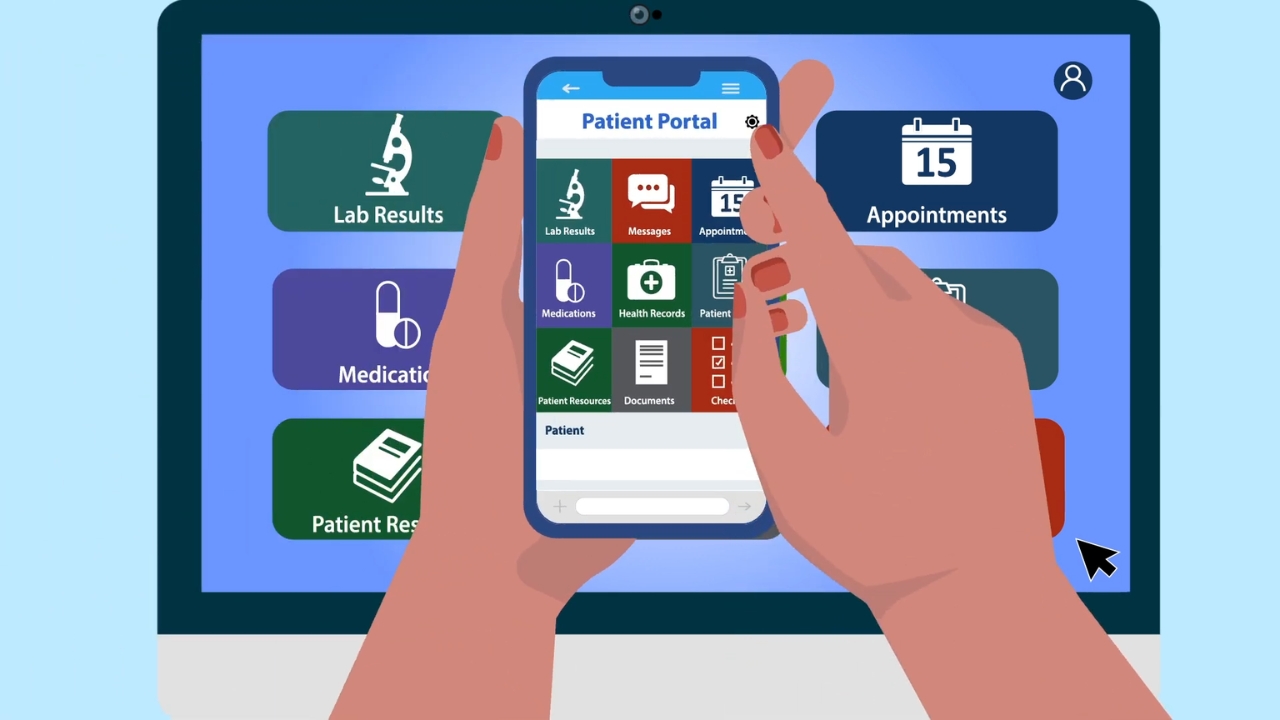
Patient portals are now a routine part of U.S. healthcare.
In 2024, 65% of people nationwide who were offered online access used their medical record or patient portal, more than double the 25% recorded in 2014.
However, some U.S. health systems intentionally restrict patient portal access when a login appears to originate in certain foreign countries.
Such restrictions are usually security measures, not proof that an account or portal is broken.
Yale Health, for example, restricts MyChart access in many international locations because of growing reports of cyberattacks. China is included among the locations where Yale MyChart access is unavailable.
Several failure types can look similar on a phone or laptop, even though each one needs a different fix.
Patient portals contain highly sensitive medical and personal information, including diagnoses, insurance details, prescription records, identity data, test results, and private messages with clinicians. During 2024, 663 reported breaches involving at least 500 people affected approximately 242.9 million individuals, with hacking recorded as the most frequently reported breach category. Blocking traffic tied to higher-risk or unsupported regions can reduce exposure to automated attacks and unauthorized access attempts. Modern patient portals rarely depend on a single webpage. Login systems may rely on separate identity providers, scripts, APIs, security checks, messaging tools, and other network services. Encrypted-traffic filtering can differ by region, carrier, and time of year. On-the-ground VPN reliability from inside mainland China can therefore be more useful than a feature list, and Gizmodo maintains an ongoing technical review of how NordVPN performs against local filtering. Travelers should also assume that mobile and other networks in China do not provide normal expectations of privacy, and public Wi-Fi adds another security concern. One longitudinal measurement project tested 534 million distinct domains and detected more than 300,000 censored domains, including about 41,000 domains that appeared to be caught through broader filtering patterns. VPN advice creates a difficult contradiction. Yale tells affected users to connect through its designated VPN to restore MyChart access. Current U.S. travel guidance for China says VPN use is illegal in most cases and may carry legal consequences. Generic advice to “just use a VPN” can therefore create legal or technical problems. Travelers should follow their provider’s official access procedure and check current local rules before using any workaround. Geography should not be the first assumption every time a portal fails. Basic account and browser checks can identify simpler causes before a traveler concludes that network controls are responsible. Overseas troubleshooting gets harder because provider instructions can conflict. One organization may tell users to disable a VPN, while another may require a specific institutional VPN. Correct action depends on portal architecture and each provider’s security policy. A few checks can narrow down the failure faster: Loss of portal access becomes more serious when a traveler depends on digital records for ongoing care. 76.4% of U.S. adults—about 194 million people—reported at least one chronic condition in 2023. https://t.co/coQVaXH5Oi The majority of Americans have “pre-existing conditions”. Public health is needed everywhere. — Kimiko Shibata 🦋 (@ESL_fairy) August 14, 2026 Such dependency affects a large potential population. In 2023, 76.4% of U.S. adults, representing more than 194 million people, reported at least one chronic condition. Just over half, 51.4%, reported two or more chronic conditions. Higher-risk situations include travelers with chronic conditions, people taking daily prescription medications, patients awaiting lab or imaging results, people undergoing active treatment, travelers who regularly message specialists through a portal, and anyone who may need insurance documents or visit summaries while abroad. Preparation matters even more in China because travelers are advised to carry enough prescription medication for the full trip and keep medicine in original packaging with the prescription. Some medications commonly used in the United States face restrictions in China. Losing access to a medication list or prescription history can therefore complicate both routine care and urgent treatment. Any travel-volume or chronic-disease statistics should be sourced independently rather than inferred through access-policy or travel-safety material. Losing portal access can disrupt several parts of a traveler’s medical care at once, but some failures create more immediate problems than others. Medication information usually comes first because it may be needed quickly during an urgent visit, a refill request, or a discussion with a local clinician. Medication records are often the fastest authoritative source for drug names, dosages, prescribing clinicians, and allergy information. Losing access can matter quickly if a traveler needs emergency care, replaces lost medication, or has to explain a treatment plan to a local physician. Carrying prescriptions and enough permitted medication reduces that risk. Recent bloodwork, imaging reports, specialist notes, and visit summaries may become inaccessible at the exact moment a local doctor asks to review them. A study involving 290,349 patients and 968,774 test results found that patients repeatedly checked their portal while waiting for 25.9% of results. That rate reached 39.3% for results classified as highly sensitive. Travelers who expect to pull records up on a phone can discover that their only convenient copy sits behind a login they cannot reach. Portal messaging often acts as the normal communication channel between a patient and a U.S. care team. Use of that channel has grown sharply. Physicians have been receiving 57% more patient portal messages than they did before the pandemic, showing how firmly asynchronous messaging has become embedded in routine healthcare communication. Loss of access can slow questions about symptoms, medication changes, test results, or follow-up care. Saving office phone numbers and alternate contact procedures before departure gives travelers another path to their clinicians. Many refill requests are submitted through patient portals. Solving a refill problem abroad can be harder because some medications commonly prescribed in the United States are restricted in China. Access problems can delay contact with a prescribing office just when timing matters most. Insurance information can still be useful for reimbursement and documentation, but U.S. coverage may offer limited practical help during treatment abroad. Medical evacuation can create an even larger financial exposure. An air-ambulance evacuation back to the United States can cost roughly $20,000 to $200,000, depending on the traveler’s location and medical condition. Offline copies of policy details, reimbursement instructions, travel-insurance documents, and claim contacts can make a stressful situation easier to manage. Access to a portal does not automatically make a remote appointment with a U.S. clinician legally or technically available. Telehealth can involve separate licensing rules, platform restrictions, location controls, and provider policies. A working login is only one part of remote-care access. Good preparation reduces dependence on a live portal connection. Useful steps include: A small offline medical file can prevent a portal outage from turning into a care problem. Necessary treatment should not be delayed just because U.S. records cannot be reached. Healthcare facilities are available across China, although standards and accessibility can vary, especially outside major cities. Language differences, cultural expectations, and local regulations can make even sophisticated hospitals harder for foreign patients to navigate. U.S. consular resources provide information about doctors and hospitals, though they do not endorse individual providers. A supplied embassy medical-assistance page may sometimes return a technical-difficulties message, making current travel-advisory information the more dependable directly accessible source in that situation. Offline records, medication details, physician contacts, and insurance information can give local clinicians enough context to begin care while access problems are being resolved. Portal access is convenient at home. In China, treating it as the only copy of essential medical information creates an avoidable point of failure.
How Mainland China Adds a Second Layer of Failure
Even when a U.S. hospital permits international logins, a connection still has to pass through China’s internet environment.
A Failed Login is Not Always Evidence of Censorship

Is it Your Account, Your Browser, Your Hospital, or China?
Portal Failure Matters Most When Care Cannot Wait
What Actually Breaks for the Patient, in Order
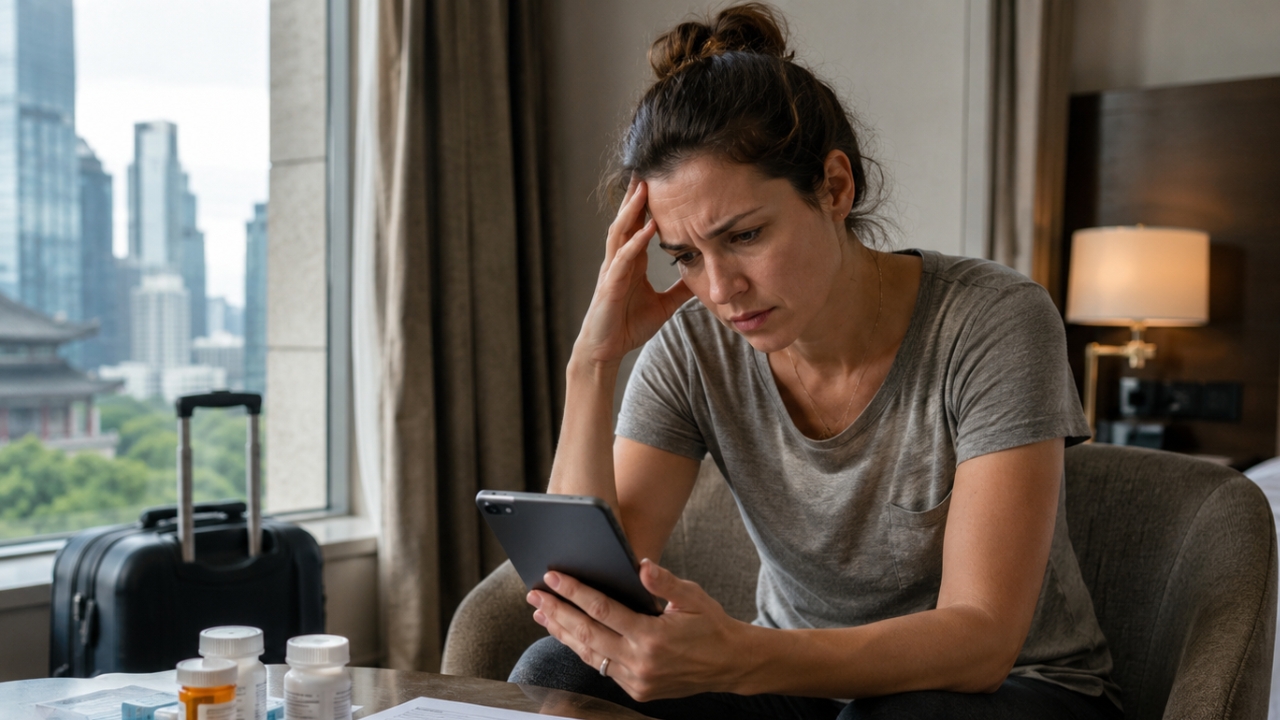
1. Medication List and Prescription History
2. Lab Results and Clinical Records
3. Secure Messaging
4. Prescription Refills
5. Insurance Documents and Claims

6. Remote Consultation
What Experienced Travelers do Before Boarding the Flight

When the Portal is Gone, and You Actually Need Medical Care in China