

Washington, May 15, 2026 – The Trump administration has frozen new Medicare enrollment for hospice and home health agencies nationwide for six months, widening a federal fraud crackdown that began with a focus on suspicious billing in California and has now moved into one of the most sensitive parts of American health care.
The Centers for Medicare & Medicaid Services said the moratorium began on May 13 and applies to new Medicare enrollment applications from hospice and home health agencies. CMS said the pause also covers certain changes in majority ownership, a provision meant to stop operators from shifting control of companies while federal investigators review fraud risks.
Current Medicare-enrolled hospice and home health providers can continue serving patients. The Associated Press reported that the freeze applies to new provider enrollment, while existing providers may keep operating under Medicare during the six-month review period.
Vice President JD Vance says the Trump Admin is deferring $1.3 billion in Medicaid payments to California. #Fraud pic.twitter.com/JlJ9KxQGMx
— Edward Lawrence (@EdwardLawrence) May 13, 2026
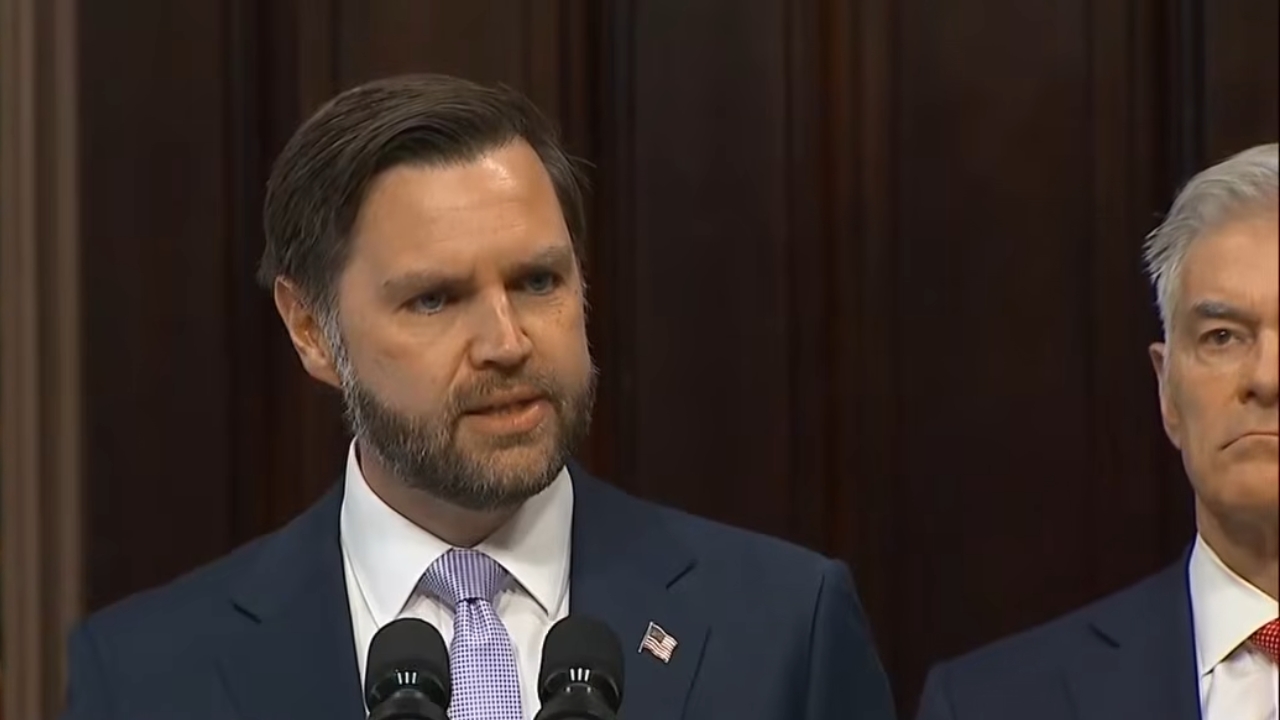
The announcement came on the same day Vice President JD Vance said Washington would defer $1.3 billion in Medicaid payments to California over suspected fraud.
AP reported that Vance framed the move as part of a broader federal effort to protect taxpayers and patients, while California officials disputed the administration’s account and said higher home-care spending followed state efforts to keep patients out of more expensive nursing homes.
CMS Administrator Dr. Mehmet Oz said the agency had seen serious fraud in hospice and home health care, including in Los Angeles. CMS said the pause would give federal officials time to intensify investigations, use data analysis to identify suspect billing and remove fraudulent providers already inside Medicare.
The agency said it had already suspended payments involving about 800 hospice and home health agencies in the Los Angeles area. CMS also stated that those providers accounted for about $1.4 billion in Medicare spending last year, with $70 million in payments suspended so far.
The moratorium was formalized through two Federal Register notices, one for home health agencies and one for hospices. The Federal Register notice on home health agencies and the Federal Register notice on hospices both say CMS has authority to impose enrollment moratoria in areas where fraud, waste or abuse risks threaten federal programs.
For patients, the immediate effect should be limited to provider availability rather than existing coverage. People already receiving services through a Medicare-enrolled provider should be able to continue care, according to the federal account. The larger question is whether the pause slows access in areas where legitimate providers were preparing to enter the market.
Provider groups have backed stronger enforcement while warning against broad disruption. Healthcare Dive reported that home health and hospice organizations warned the national freeze could reduce competition, slow service expansion and increase pressure on rural or underserved communities.
Hospice fraud has drawn scrutiny because the patients involved are usually older, seriously ill or near the end of life. Fraud schemes can involve enrolling people who are not terminally ill, paying recruiters for patient referrals, billing Medicare for services that were never delivered or using stolen identities to create false claims.
California has already pursued its own enforcement. The office of Governor Gavin Newsom said in March that California had revoked more than 280 hospice licenses over two years, placed about 300 additional providers under investigation and kept a state moratorium on new hospice licenses in place.
State prosecutors have also announced criminal cases. The Guardian reported in April that California authorities filed felony charges against 21 people accused of running an alleged $267 million hospice fraud scheme involving Medi-Cal, stolen identities and billing for hospice services that prosecutors said were never provided.
The political fight has grown beyond California. The Guardian reported that Vance warned states they could lose federal anti-fraud funding if they fail to pursue Medicaid fraud aggressively. The administration is reviewing state Medicaid Fraud Control Units, which investigate Medicaid fraud and patient abuse.
The Wall Street Journal reported that the administration has sent an ultimatum to all 50 states, warning that failure to comply with anti-fraud rules could place federal funding at risk. Officials said the first target would be money tied to state anti-fraud units, although broader Medicaid funding consequences remain part of the warning.
Health policy experts have urged caution. AP quoted Tricia Neumann of KFF as saying a brief moratorium can give federal officials time to crack down on true fraud and stop new fraudulent entities from entering Medicare. The same report noted that provider groups fear legitimate care could also be disrupted.
The administration still faces a test of evidence. Reuters reported that Oz did not provide specific public evidence at the announcement to show why a nationwide pause was needed instead of a narrower regional freeze. CMS argues that suspect operators can move from one state to another when enforcement narrows around one market.
The next six months will show whether the federal government can remove fraudulent operators without weakening access to end-of-life and home-based care. CMS has promised deeper investigations and faster removals.
Patients and families will be watching for a simpler measure: whether care remains available when they need it most.
Related Posts:
- Feds Strike Minnesota with Massive $90M Medicaid…
- 7 Leading Health Concerns for Teenagers in the United States
- Do Illegal Immigrants Get Medicaid? 2026 Rules For…
- Aimee Bock Sentencing Prosecutors Seek 50 Years In…
- How Washington DC’s Population Has Evolved Over the…
- Smart Home Safety Market Reached Over 34 Billion…