
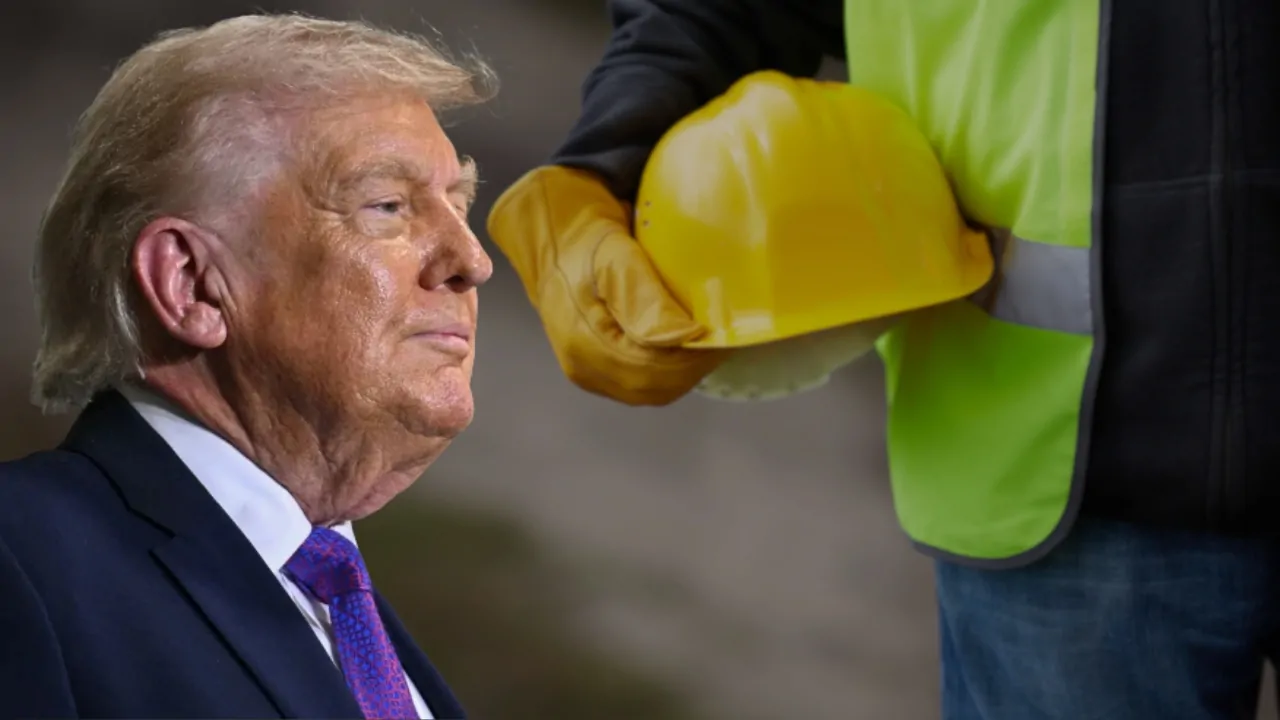
President Donald Trump has repeatedly argued that mass deportations will open jobs for American-born workers. New research now points in the opposite direction, raising serious questions about the economic cost of the administration’s policy and its effect on industries already dealing with labor shortages.
A new study from the National Bureau of Economic Research, covered by The New York Times, The Daily Beast, and Arizona’s Family, found that heightened immigration enforcement is linked to job losses not only among likely undocumented workers, but also among U.S.-born men without college degrees.
The research, titled Labor Market Impacts of ICE Activity in Trump 2.0, was authored by economists Elizabeth Cox and Chloe East. It utilizes federal employment data and regional ICE arrest patterns to compare areas hit by larger enforcement increases with regions where enforcement rose less sharply.
Table of Contents
ToggleThe Chilling Effect on Local Workforces
The study found that areas with sharp increases in ICE activity saw employment among likely undocumented immigrants fall by roughly 4 percent. Researchers described that drop as a chilling effect, meaning many immigrants who remain in the country appear to work less or leave jobs entirely out of fear surrounding enforcement activity.
The economic fallout extended beyond the targeted population. According to CU Boulder, where East teaches economics, regions with enforcement surges also experienced a 1.3 percent drop in employment among U.S.-born men with a high school degree or less. In construction, the effect was more pronounced, with employment for that group falling by about 3 percent.
Researchers found no evidence that employers responded by raising wages enough to draw more U.S.-born workers into jobs left open by immigrants. Instead, the study suggests many companies cut back production, accept fewer projects, or slow hiring altogether.
“We show that heightened ICE activity is harming the labor market overall, and we find no evidence that it is benefiting U.S.-born workers,” East said in the CU Boulder report.
The Ripple Effect Across Construction Crews
The construction sector saw twice the average impact: a 3% employment drop for U.S.-born men with a high school degree or less. In construction, 13% of workers are undocumented. When labor disappears, employers take on less work, not more U.S. workers.
— Austin Kocher, PhD (@ackocher) May 11, 2026
The construction industry sits at the center of the debate because it relies heavily on immigrant labor and because the housing market is already under pressure from high costs, uneven demand, and limited supply.
The Daily Beast reported that the NBER study found employment fell by 7.5 percent for undocumented workers in construction and by 3 percent for American-born men without college degrees in the same sector.
According to the report, the study suggests that for every undocumented worker arrested, roughly six American-born workers also lost jobs in construction due to widespread operational slowdowns.
Arizona’s Family reported from Phoenix that builders are already dealing with a critical shortage of skilled labor. One Arizona homebuilder told the outlet that entry-level construction wages compete poorly with lower-risk service jobs, making it difficult to replace workers removed or discouraged by enforcement.
That point is central to the economic critique of mass deportations. Construction crews operate through interdependent teams.
When laborers disappear, work for electricians, plumbers, supervisors, suppliers, and truck drivers can also shrink. A job removed from one part of the crew can reduce the need for several other workers tied to the same project.
Collateral Damage to Housing Supply
The timing adds another layer of concern for the broader economy. U.S. housing remains expensive in many markets, and builders need robust labor to increase supply. At the same time, federal data show signs of weaker residential construction activity.
The U.S. Census Bureau and Department of Housing and Urban Development reported that privately owned housing units authorized by building permits in March 2026 were 7.4 percent below the March 2025 rate. Building permits are an important economic signal because they point to future construction activity.
When construction firms lose workers and decide to take on fewer projects, the effect moves beyond job sites. Fewer homes built keep pressure on buyers and renters alike. Higher labor costs, project delays, and cancellations can also flow into final housing prices.
That makes the immigration enforcement debate more than a political argument over border policy. It is a cost-of-living issue for households already struggling with housing affordability.
The White House Argument for Border Enforcement
The Trump administration has defended mass deportations as a way to protect American workers, raise wages, and reduce pressure on public services. In a January statement, the White House argued that mass deportations were improving the quality of life, claiming that U.S.-born workers had gained employment while foreign-born workers left the labor force.
That message has become a major political argument for the policy. The administration says tighter enforcement restores fairness in the market and rewards citizens who were previously competing with unauthorized workers.
The new research challenges that claim directly. It suggests that immigrant and U.S.-born workers are often complements, not simple substitutes. In sectors such as construction, agriculture, manufacturing, and wholesale trade, the loss of immigrant labor can make whole operations smaller, leaving fewer openings for American-born workers as well.
Why Businesses Scale Down Instead of Hiring
The NBER-linked findings point to broader risks in sectors where immigrant labor plays a foundational role. CU Boulder noted that the study found especially visible effects in agriculture, manufacturing, and construction, all industries where production depends on coordinated labor and where staffing shortages quickly affect total output.
The Washington Post also reported that the study found increased immigration arrests were associated with lower employment for both undocumented immigrants and U.S.-born workers without college degrees. The paper noted the findings undercut the administration’s claim that immigration raids and checkpoints improve the labor market for American workers.
The economic issue is direct: removing workers does not automatically create a replacement workforce. Some jobs require experience, specific locations, physical demands, or wage levels that do not attract enough new applicants quickly. When employers cannot replace workers, they scale down instead of hiring more.
The Missing Link in Substitution Theory
@nytimesTwo of President Trump’s top priorities, the economy and immigration, are colliding in South Texas as ICE raids upend the construction industry and frustrate workers. #immigration #Trump #Texas #economy♬ original sound – The New York Times
The public case for mass deportations is built around a clear promise: remove undocumented workers, and more jobs will go to Americans. The study argues that labor markets do not work in such a simple way.
In many industries, one group of workers supports the demand for another. A construction laborer makes it possible for a crew leader, subcontractor, delivery driver, and office scheduler to stay busy. When enforcement removes workers or scares them away from job sites, the project pipeline shrinks for everyone involved.
That is why the policy can harm the same workers it claims to help. U.S.-born workers without college degrees face fewer opportunities when employers reduce activity, delay projects, or close worksites because crews are incomplete.
The findings are likely to intensify debate over the economic side of immigration enforcement. Supporters of Trump’s policy will continue to argue that border control and workplace enforcement are necessary for wage growth and legal order.
Critics will point to the new labor-market evidence as proof that mass deportations can damage local economies, raise consumer costs, and reduce overall employment.
For builders, farmers, manufacturers, and consumers, the question is no longer only who gets removed from the labor market. The larger question is what happens to the jobs, projects, and prices connected to that labor.
The latest evidence suggests that the cost of Trump’s deportations is not limited to immigrants. It can reach American-born workers, construction firms, homebuyers, and communities that depend on industries where labor shortages already shape daily business decisions.
Related Posts:
- WHO Warns On Congo Ebola Outbreak - Why The…
- AI Will Take Our Jobs, Bill Gates Warns as He Calls…
- June 2026 Jobs Report Shows Hiring Slowed To 57,000…
- July 2026 Jobs Report Shows US Lost 23,000 Jobs as…
- May 2026 Jobs Report Shows 172,000 Jobs Added As…
- FDA Warns Frozen Blueberries Could Pose Serious Health Risk