

The Ebola outbreak in the Democratic Republic of the Congo and Uganda has pushed scientists, health agencies and vaccine developers into an urgent race against a rare strain of the virus that has no approved vaccine and no specific approved treatment.
The outbreak is caused by Bundibugyo virus, a less common Ebola species that has appeared in only a few known outbreaks since it was first identified in western Uganda in 2007. That detail changes the whole response.
The vaccines and antibody treatments that helped transform Ebola care during past outbreaks were mainly built for Zaire ebolavirus, the strain behind the devastating 2014 to 2016 West African epidemic and several major outbreaks in Congo.
The New York Times reported on the urgent vaccine and treatment race as the outbreak continued to grow, and the latest public data show why health officials are alarmed.
The World Health Organization said on May 29 that 134 confirmed cases had been reported in DRC and Uganda, including 18 confirmed deaths. DRC had also reported 906 suspected cases and 223 suspected deaths as of May 27.
Newer reporting from The Associated Press on June 1, citing Congo health authorities, put the Congo total at at least 282 confirmed cases, mostly in eastern Ituri province, with 42 deaths in Congo and one in Uganda. AP also reported more than 1,000 suspected cases and spread into 22 health zones in three eastern provinces.
Those numbers are moving fast, and they do not all update at the same time. For readers, the safest way to understand the situation is simple: official WHO reporting confirms rapid expansion, while the most recent Congo-linked figures suggest the confirmed case count has climbed sharply since the last WHO Disease Outbreak News update.
Latest update: over 1000 Cases and 254 deaths reported.
Why This Ebola Outbreak Is Different
The Bundibugyo virus causes a severe form of Ebola disease. WHO says it spreads through direct contact with blood, secretions, organs, or other bodily fluids of infected people, as well as contaminated surfaces or items.
Transmission can increase in health facilities when infection control is weak, and during unsafe burials when families or responders come into direct contact with the body of a person who died from the virus.
Early symptoms can look like other illnesses already found in the region, including malaria and typhoid. Fever, fatigue, muscle pain, headache, and sore throat can appear before vomiting, diarrhea, organ problems, and, in some cases, bleeding. That overlap makes early detection harder, especially in areas with limited lab capacity.
As we already covered in our earlier report on the Congo Ebola outbreak and the Bundibugyo strain, the strain itself creates a major problem for responders. The world has Ebola tools, but the best-known tools were built for a different member of the Ebola family.
WHO says past Bundibugyo outbreaks in Uganda and DRC had case fatality rates of roughly 30% to 50%. CEPI, the Coalition for Epidemic Preparedness Innovations, also notes that Bundibugyo is related to Zaire ebolavirus, Sudan ebolavirus, and Marburg virus, all part of the filovirus family.
The Vaccine Problem
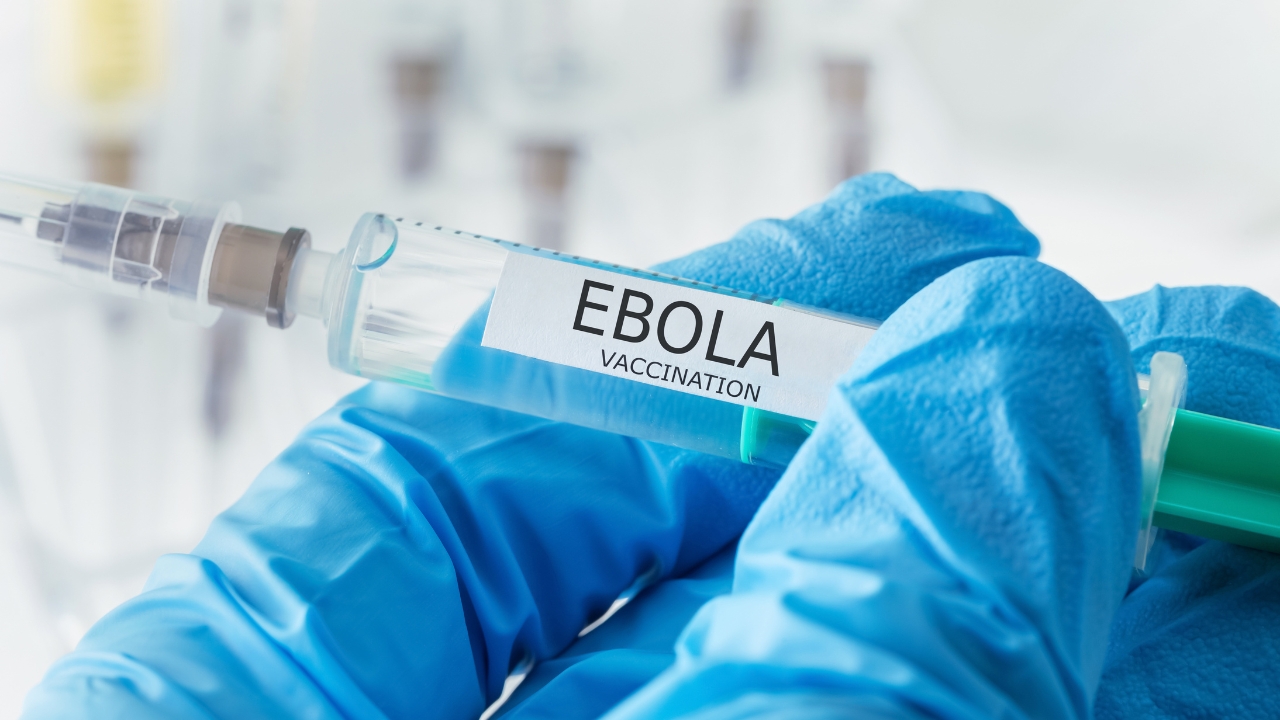
Two Ebola vaccines have been licensed and prequalified by WHO for the disease caused by Zaire ebolavirus, not Bundibugyo. That distinction is important. A vaccine that works against one Ebola species cannot automatically be assumed to work against another.
WHO issued emergency guidance on May 28 after reviewing whether Ervebo, the licensed Zaire Ebola vaccine, could be used against Bundibugyo. The agency concluded that evidence of cross-protection is very limited and not enough to reliably estimate effectiveness.
WHO recommended that Ervebo should not be used programmatically for Bundibugyo outbreaks outside controlled research settings.
That does not mean vaccines are irrelevant. It means health officials need strain-specific evidence, and they need it quickly.
On June 1, CEPI announced it would fast-track three investigational Bundibugyo vaccine candidates. The portfolio includes candidates from IAVI, Moderna, and the University of Oxford, with Oxford work tied to manufacturing at the Serum Institute of India.
CEPI said the package includes up to $3.2 million for IAVI work tied to an rVSV platform, up to $50 million for Moderna preclinical testing and Phase 1 clinical trials, and up to $8.6 million for Oxford and Serum Institute work on a ChAdOx1-based candidate. The total commitment can reach roughly $62 million.
Each platform has a different scientific profile. IAVI uses a viral-vector approach related to the technology behind the approved Zaire Ebola vaccine. Moderna uses mRNA technology.
Oxford is working with a ChAdOx platform that underpinned the Oxford/AstraZeneca COVID-19 vaccine. CEPI says the goal is to move candidates toward clinical trials as quickly as possible, then support later-stage studies if early data justify moving forward.
Oxford And Serum Institute Are Moving On A Candidate Vaccine
View this post on Instagram
The University of Oxford said its vaccine group is working with the Clinical BioManufacturing Facility and the Serum Institute of India to produce and scale doses of a ChAdOx-based monovalent Bundibugyo candidate called ChAdOx1 BDBV.
In a May 22 statement, Oxford said the team is also accelerating supportive preclinical data for clinical development and testing in outbreak settings while following scientific, ethical, and regulatory standards.
That timeline still leaves a gap between the outbreak happening now and a vaccine that can be used with confidence. WHO expert groups said the most promising candidate vaccine, a single-dose rVSV Bundibugyo vaccine being developed by IAVI, would likely need 7 to 9 months before it could be assessed in a clinical trial for prevention of Bundibugyo virus disease.
That is why responders cannot wait for a vaccine alone. Surveillance, isolation, contact tracing, safe burials, community trust and care inside treatment centers remain the immediate defense.
Treatments Are Also Behind The Outbreak

The treatment gap is just as serious. WHO convened expert groups in May to review possible treatments and prevention options for people exposed to the Bundibugyo virus. In a May 28 update, WHO said there are no licensed therapeutics or vaccines specifically approved for the prevention or treatment of Bundibugyo virus disease.
WHO experts recommended that several candidates be evaluated only within clinical trials. For treatment, the priority candidates include the monoclonal antibodies MBP134 and Maftivimab, as well as the antiviral remdesivir. WHO also said combination therapy using a monoclonal antibody and remdesivir should be evaluated.
For post-exposure prevention among contacts of confirmed and probable cases, WHO experts pointed to the oral antiviral obeldesivir as a priority candidate. That approach depends on contact tracing. In parts of eastern Congo, contact tracing faces major obstacles because of insecurity, movement between communities and distrust of response teams.
The National Academies also explains an important point for the public: proven treatments exist for some Ebola disease caused by Zaire ebolavirus, but that does not automatically solve the Bundibugyo problem.
Supportive care still saves lives. Fluids, treatment for vomiting and diarrhea, pain control, oxygen when needed and fast hospital care can improve survival even when no strain-specific drug has been approved.
Recovered Health Workers Show Why Early Care Still Counts
Five patients have recovered from a rare type of #Ebola, the head of the World Health Organization said on Sunday during a visit to eastern Democratic Republic of Congo’s Bunia, a city at the heart of an outbreak.
“Four people will be discharged today, and there was one who was… pic.twitter.com/7YQYwyFtcN
— GAROWE ONLINE (@GaroweOnline) May 31, 2026
AP reported that the WHO honored five recovered patients during a visit by the WHO Director-General Tedros Adhanom Ghebreyesus to Bunia, the capital of Ituri province. Several were medical workers who had been exposed while caring for others.
That recovery news does not make the outbreak less dangerous. It does show why early treatment centers, testing, and community trust can change outcomes. A person who reaches a dedicated facility early has a better chance than someone who stays home until dehydration, organ problems, or shock become severe.
As we covered after the armed attack on a Congo hospital during the outbreak, violence and fear make medical response harder. Patients can flee. Families can resist safe burial rules. Health workers can be threatened. Every disruption gives the virus more chances to move.
Why Global Health Officials Are Worried
WHO says the outbreak is happening in a difficult setting: remote and densely populated areas, insecurity, humanitarian crisis, high population movement, and trade links between communities and borders. Uganda has reported cases connected to cross-border movement from DRC, and officials have been monitoring contacts in Kampala and Wakiso.
The CDC Health Alert Network advisory said the risk of spread to the United States was considered low as of May 19, but it warned clinicians, laboratories, health departments, and travelers to stay alert.
CDC also noted that several outbreak conditions increase the risk of further transmission, including insecurity, displacement, mining-related movement, and cross-border travel.
WHO has advised against travel and trade restrictions on the DRC or Uganda based on available information. Public health agencies generally prefer screening, surveillance, rapid reporting, and contact follow-up over broad restrictions that can discourage transparency or push movement underground.
The response is also being watched because the world has just spent years learning how fragile outbreak systems can be. As we previously wrote in our broader look at viral threats to watch in 2026, the danger from emerging infections is rarely only about the virus.
The health system around the virus can decide whether a cluster stays small or turns into a regional emergency.
What Readers Should Know About the Ebola Spread
@abcnewsaus The World Health Organization has declared a global health emergency over an outbreak of Ebola. So, what is Ebola, and how worried should we be about this outbreak? #ABCNews #Ebola #DemocraticRepublicofCongo #Uganda #WHO ♬ original sound – ABC News Australia
Ebola does not spread like the flu or COVID. WHO and CEPI both say people usually become infectious after symptoms begin, and spread requires direct contact with body fluids or contaminated materials. That means Ebola can be controlled with fast detection, isolation, protective equipment, safe burials, and contact tracing.
Those measures sound straightforward on paper. In an outbreak zone affected by fear, armed conflict, and limited laboratory access, every step becomes harder.
A missed diagnosis can expose health workers. A delayed test can leave a family unsure what happened. A disputed burial can create new infections. A rumor can stop people from seeking care.
We have seen similar public health pressure in other outbreaks. In our coverage of the Nipah virus outbreak in India, the same pattern appeared: a severe virus with limited medical tools can force authorities to move aggressively even when confirmed numbers look small.