
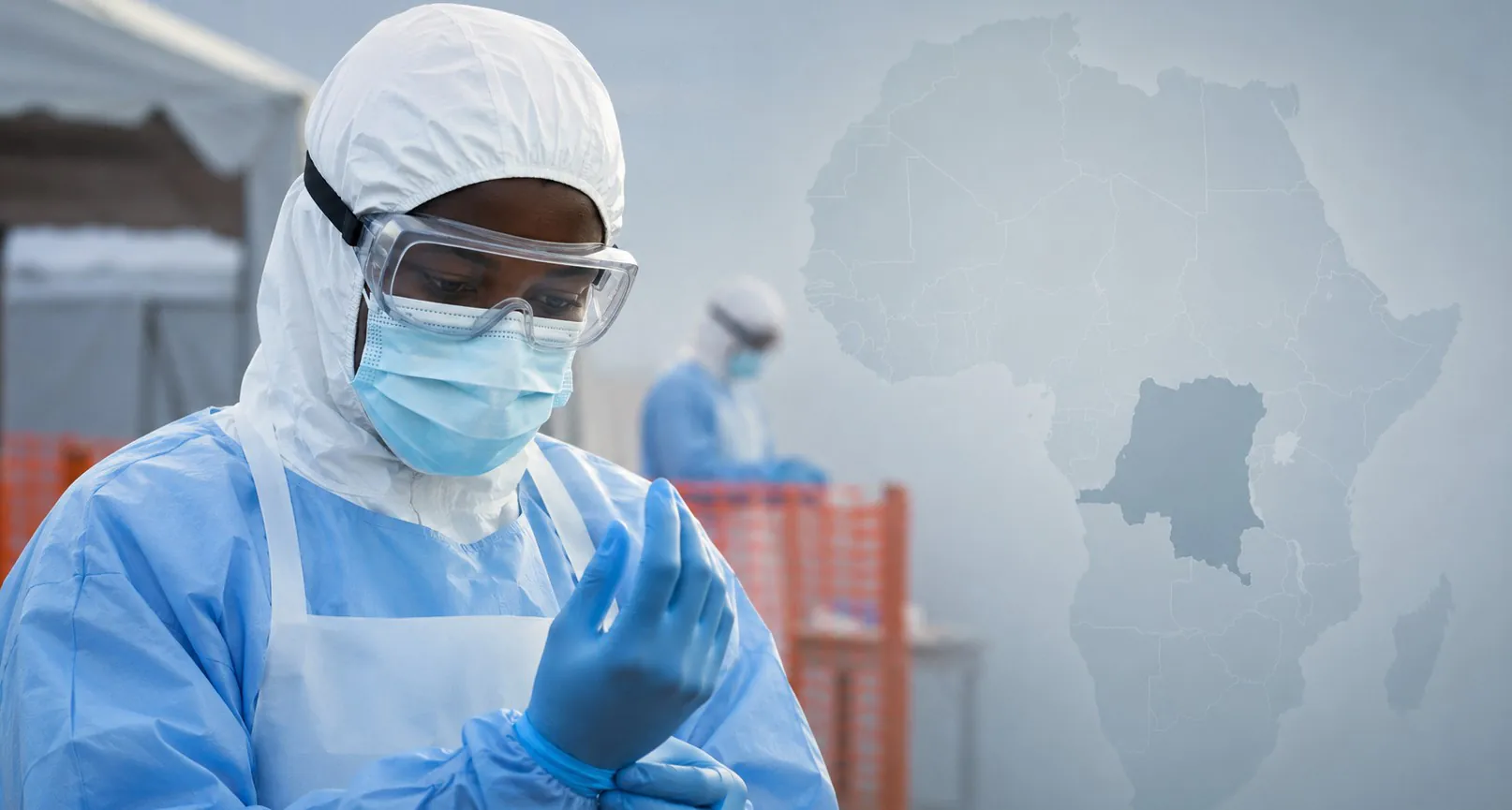
A second known US citizen has tested positive for Ebola after working with a humanitarian organization in the Democratic Republic of the Congo, federal health officials said.
The patient contracted the Bundibugyo strain during the rapidly growing outbreak in eastern Congo. Medical teams transferred the person to a specialist isolation unit at Frankfurt University Hospital in Germany early Monday, July 13.Hospital officials said the patient arrived at about 3 a.m. local time.
Authorities have not released the name, age, employer or details about the suspected exposure. The US Centers for Disease Control and Prevention confirmed the infection on July 10.
CDC officials are working with the humanitarian organization, US government agencies, public health authorities and Congolese partners. The response includes identifying close contacts and preventing further transmission.
Patient Was Moved to an Isolation Unit in Germany
The medical evacuation moved the patient directly into a unit designed for highly infectious diseases. German officials said the transfer and treatment arrangements did not create a danger to the public.
A Reuters report published Monday confirmed that the American patient had arrived at Frankfurt University Hospital.
CNN reported that the infected person had been working for a humanitarian organization in Congo.
The patient is the second publicly known American infected during the current outbreak. An American doctor working in Congo tested positive in May. Medical teams evacuated him to Germany for treatment, and he later recovered.
No case connected to the outbreak has been diagnosed inside the United States. Both known American patients contracted the virus in Congo.
Congo Has Reported 1,830 Confirmed Cases
The new American case comes as the outbreak continues to spread at a record pace. Congo has reported 1,830 confirmed infections and 648 deaths, according to figures cited by the Africa Centres for Disease Control and Prevention.
Cases have also been confirmed in Uganda. France detected a separate imported infection in June after a doctor returned from Congo.
Congo declared the outbreak on May 15. Transmission had already been occurring for several weeks before the official announcement. Health authorities are now responding across several eastern provinces.
Our earlier coverage followed the rapid increase in confirmed Ebola cases in Congo. The outbreak passed 1,000 confirmed cases in about 40 days. By comparison, the 2018 outbreak in North Kivu took about 235 days to reach the same level.
Ituri province remains the center of the epidemic. Infections have also been confirmed in North Kivu and South Kivu. Conflict, displacement and limited access to medical care have slowed testing and contact tracing.
Bundibugyo Ebola Has No Approved Vaccine
The outbreak is caused by Bundibugyo virus, a less common Ebola strain. No approved vaccine or specific approved treatment is currently available for it.
Vaccines used against the Zaire strain do not provide an established option for Bundibugyo Ebola. Researchers have started trials involving experimental medicines. Vaccine developers are also testing possible candidates.
We previously examined the race to develop a Bundibugyo Ebola vaccine as infections began rising in Congo and Uganda.
The World Health Organization said the outbreak was evolving rapidly. Its July report documented sustained transmission, rising deaths and gaps in contact monitoring.
Armed conflict has created another major obstacle. Health facilities have faced attacks, and some response teams cannot safely reach affected communities.
We reported how an attack on a hospital disrupted Ebola treatment and isolation efforts in eastern Congo.
CDC Says Risk to the US Public Remains Low
Ebola spreads through direct contact with the blood or bodily fluids of an infected person. Contaminated objects can also transmit the virus. Ordinary casual contact does not spread Ebola.
Patients are not considered infectious before symptoms begin. The incubation period can range from two to 21 days.
The CDC continues to describe the risk to the American public as low. Federal authorities are screening some travelers who recently visited Congo, Uganda or neighboring South Sudan.
Public health teams are now tracing anyone who may have had close contact with the latest patient. No additional infections connected to the American case had been announced by Monday.
Related Posts:
- American Passenger Tests Positive For Hantavirus…
- Latest On Ebola Cases In Congo - Over 1,000 Cases,…
- Ebola Vaccine Race Speeds up As Congo Reports Almost…
- Ebola Crisis Deepens After Armed Attack on Congo Hospital
- WHO Warns On Congo Ebola Outbreak - Why The…
- South Florida Has Passed New York in Cost of Living…