
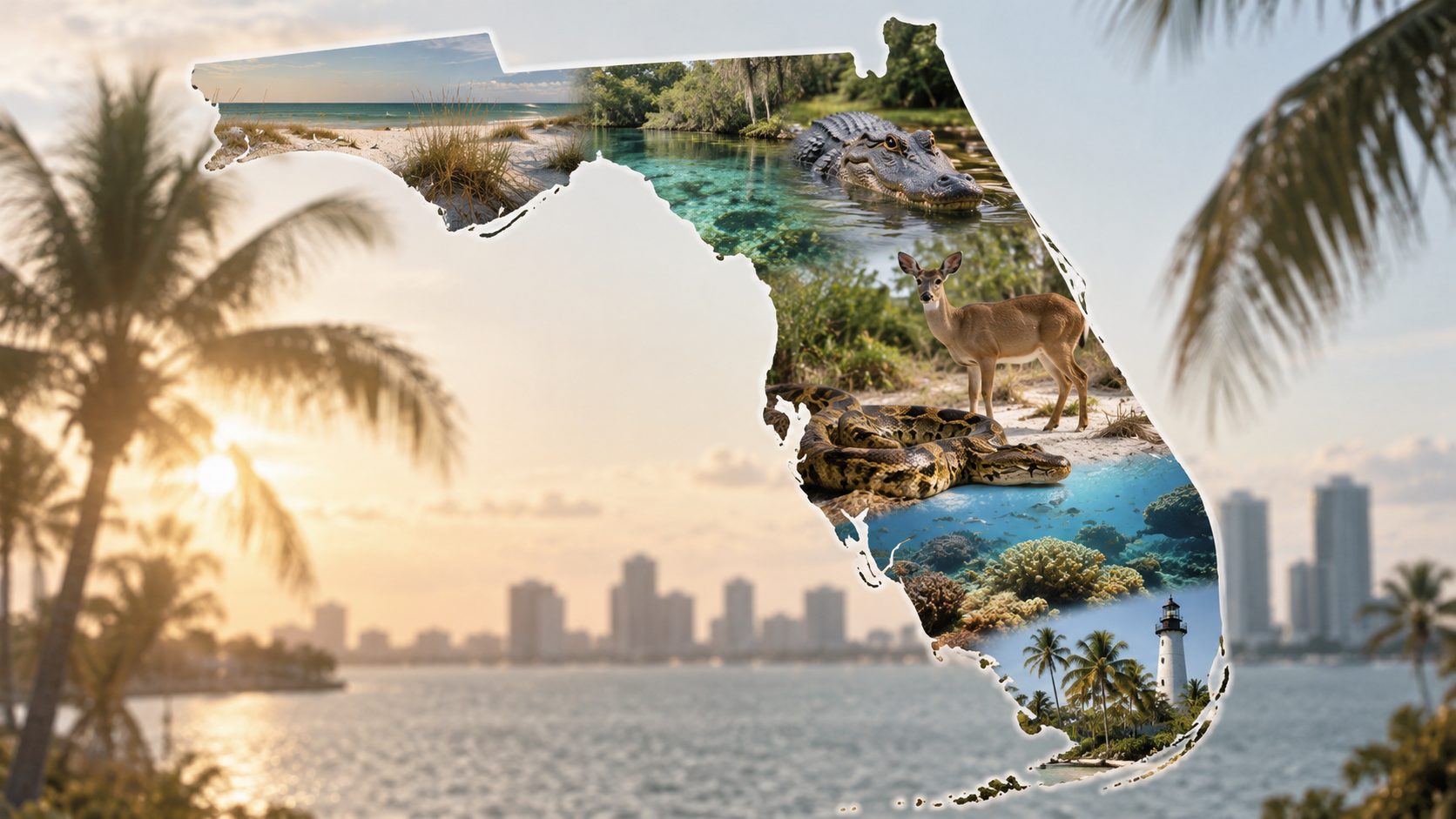
Florida has a strange talent for making certain facts from the state sound like somebody made them up. Around 1.3 million alligators live here. Rivers disappear underground. People compete for cash by pulling giant pythons out of the Everglades. And we only scratched the surface with these.
Some of the numbers are even stranger than the stories.
Here are 40 amazing facts about Florida backed by government records, scientific agencies, universities and current population data.
1. Around 1.3 Million Alligators Live Here, From Remote Swamps to Golf Course Ponds
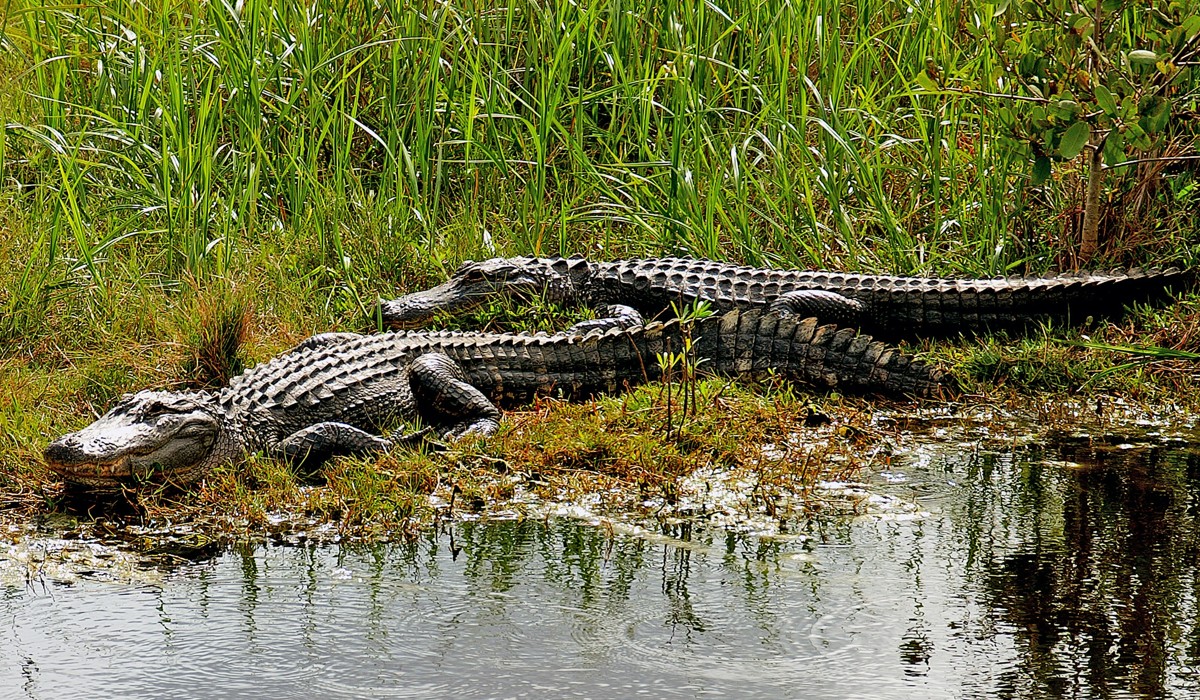
There are an estimated 1.3 million alligators in Florida, according to the Florida Fish and Wildlife Conservation Commission.
Alligators live in lakes, rivers, marshes, canals and smaller bodies of water throughout the state. A retention pond beside a subdivision or golf course can provide exactly the kind of freshwater habitat they use.
South Florida adds another twist. The Everglades is the only place in the world where American alligators and American crocodiles live in same waters.
Alligators prefer freshwater, while crocodiles are better adapted to salty and brackish coastal areas, and the Everglades gives the ranges of both animals room to meet.
2. More Than 1,000 Freshwater Springs Rise From the Ground, Possibly the Largest Concentration on Earth
The beaches get most of the attention, but some of the clearest water in Florida comes straight out of the ground.
Geologists recognize more than 1,000 springs across the state. The Florida Department of Environmental Protection says Florida may have the largest concentration of freshwater springs on Earth.
Some are enormous. Wakulla Springs reaches about 185 feet deep at its vent and provides an entrance to the longest mapped underwater cave system in the United States. Florida also has 33 first-magnitude springs, the largest class based on water discharge.
3. The Highest Natural Point Is Only 345 Feet Above Sea Level
Florida has a highest point. Calling it a mountain would be generous as it is barely a hill.
Britton Hill in Walton County reaches just 345 feet above sea level while being the highest natural point anywhere in the state at the same time.
For perspective, many buildings in Miami are several times taller than the highest piece of natural ground in Florida. Few facts describe the flatness of the peninsula better than that.
4. You Can Drive 792 Miles From Pensacola to Key West Without Ever Leaving the State
Florida looks long on a map, but the road distance makes the scale easier to appreciate. Pensacola to Key West is 792 miles by road.
The trip starts near Alabama in the western Panhandle and finishes at the end of the Overseas Highway in the Keys. Anyone looking at map of Florida can see why. The peninsula accounts for only part of the journey.
The Panhandle stretches hundreds of miles west, and the Keys continue far beyond the southern mainland.
A person can spend an entire day driving through one state and still have road left ahead.
5. Florida Has No Dinosaur Fossils Because the Peninsula Was Underwater During the Dinosaur Age
Florida is packed with fossils. Shark teeth turn up on beaches. Fossil remains of mammoths, mastodons, horses, turtles and marine animals have been recovered across the state.
Dinosaurs are the missing piece.
According to the Florida Department of State, the peninsula was underwater during the age of dinosaurs and did not exist as the landmass we know today. No dinosaur remains were deposited here.
So a state famous for giant reptiles has no native dinosaur fossil record at all.
6. A 350 Mile Coral Reef Runs Along the Coast and Supports More Than 600 Fish Species
There is another Florida running underwater.
Florida Coral Reef stretches more than 350 miles from the St. Lucie Inlet toward the Dry Tortugas. It is the only near-shore stony coral reef tract in the continental United States.
NOAA lists more than 40 reef-building coral species, 600 fish species and 600 invertebrate species associated with the reef.
The system also has a very human value. Federal estimates put its contribution to South Florida tourism at billions of dollars and tens of thousands of jobs.
7. The Smallest Deer in North America Lives Only in the Keys and Can Swim Between Islands
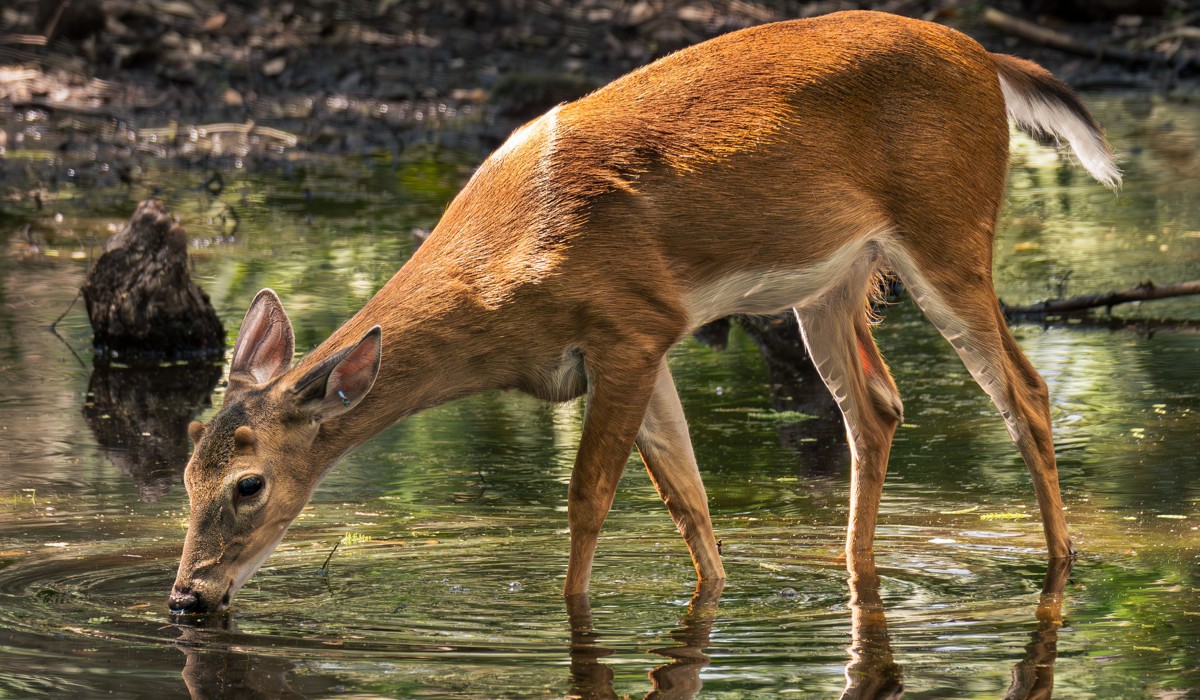
Key deer look almost like somebody shrank a regular white-tailed deer.
They are the smallest subspecies of white-tailed deer in North America, and their natural home is limited to the Lower Florida Keys. The U.S. Fish and Wildlife Service says they walk, wade and swim from island to island.
The species came frighteningly close to disappearing. Poaching and habitat loss had reduced the population to only a few dozen animals by the 1950s.
Today, most live around Big Pine Key and No Name Key, where seeing a tiny deer near houses and roads is an ordinary part of local life.
8. The Everglades Has a Python Problem So Big That Florida Pays People to Catch Them
Burmese pythons are not native to Florida. Enough escaped or were released into the wild that South Florida now has an established breeding population of giant invasive snakes.
The response includes the Florida Python Challenge, a public competition with cash prizes. During the 2026 challenge, 907 participants removed 280 pythons from South Florida in only 10 days.
One man, Tom Rahill, caught 96 pythons and won $10,000. The longest snake captured during the competition measured 16 feet 5 inches.
The event sounds like something written for television, but the ecological problem is serious. Burmese pythons prey on native mammals, birds and reptiles, and removing them has become a year-round conservation effort.
9. Only Around 120 to 230 Adult Florida Panthers Remain in the Wild
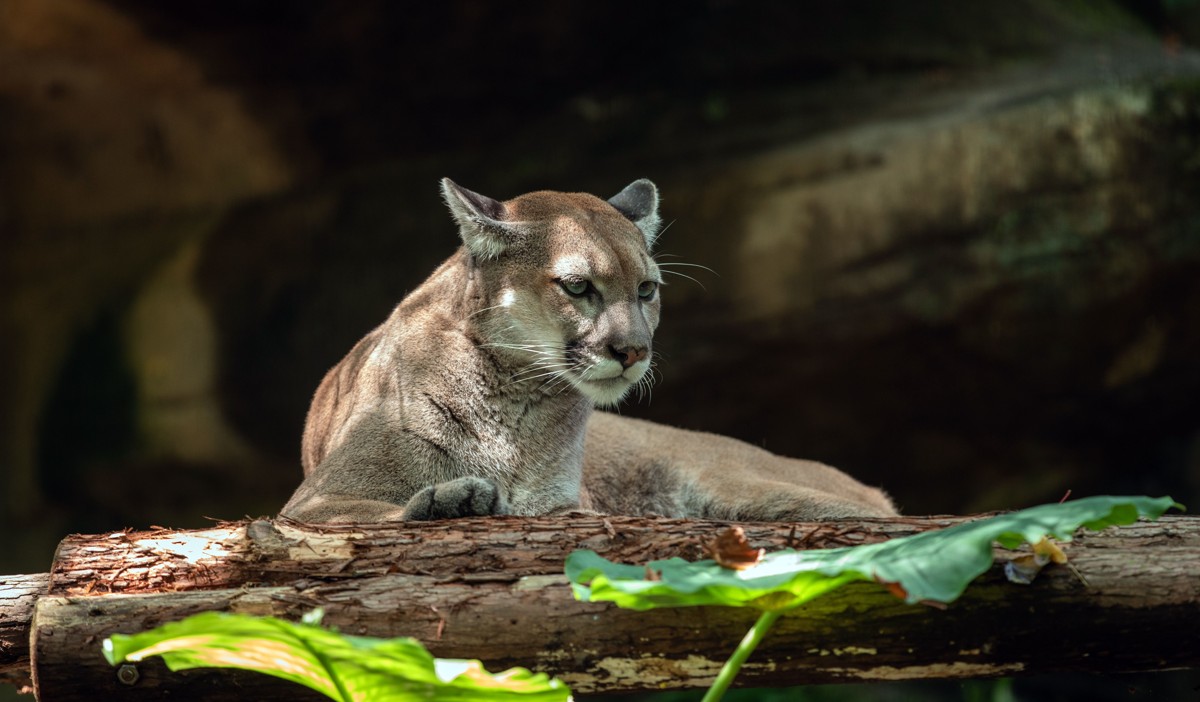
A wild panther still walks through Florida forests, swamps and ranch country, but very few are left.
The FWC estimate puts the adult population at around 120 to 230 animals. Most breeding still occurs in South Florida below the Caloosahatchee River.
The historical range was enormous. Panthers once occurred across Florida and through parts of the southeastern United States as far west as Arkansas and north into South Carolina.
A modern sighting far north of the main breeding area is therefore newsworthy because every surviving adult belongs to an exceptionally small population.
10. Volusia County Recorded More Than Half of All Florida Shark Bites in 2025
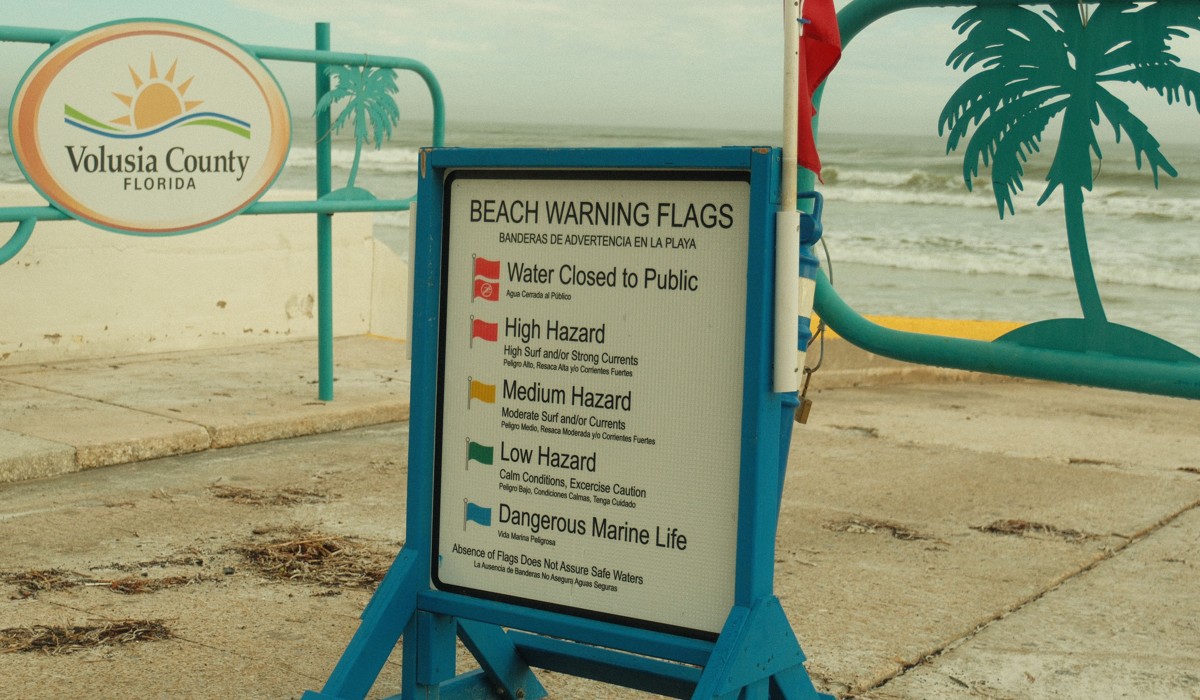
Florida recorded 11 confirmed unprovoked shark bites in 2025, more than any other U.S. state.
Six happened in Volusia County alone. According to the International Shark Attack File at the Florida Museum, that represented 54% of all Florida cases that year.
Florida accounted for 44% of the U.S. total, yet none of its 11 cases was fatal.
The numbers are another reminder that a dramatic headline and actual risk are not the same thing. Millions of people enter Florida waters every year, while confirmed unprovoked bites remain counted in the dozens rather than thousands.
11. More Than 8,000 Manatees Live Here Today After the Population Fell Below 2,000 in the Early 1990s
Florida manatees have made a remarkable numerical recovery.
When aerial surveys began in 1991, the minimum count was 1,267. Fewer than 2,000 were believed to inhabit Florida during the early 1990s.
The U.S. Fish and Wildlife Service now estimates at least 8,350.
Winter explains some of the most spectacular manatee scenes. As water temperatures fall, the animals move toward warm springs and warm-water sites around the peninsula. Hundreds can gather in the same area during cold periods.
12. The Everglades Is the Largest Subtropical Wilderness in North America
View this post on Instagram
The Everglades is much larger and stranger than the word swamp suggests.
Everglades National Park contains the largest subtropical wilderness in North America and the largest legislated wilderness area east of the Rocky Mountains.
About 1.3 million acres of the park carry wilderness designation. Inside are sawgrass prairies, pine rocklands, hardwood hammocks, mangrove estuaries, freshwater channels and Florida Bay.
More than one-third of the national park consists of marine and estuarine ecosystems, so even calling the Everglades a wetland leaves out a large part of the story.
13. One National Park Sits Nearly 70 Miles From Key West and Is Mostly Open Water
There are no roads to Dry Tortugas National Park. There are no bridges either.
The park lies almost 70 miles west of Key West and covers about 100 square miles, most of it open water surrounding seven small islands.
Getting there requires a ferry, private boat or seaplane. Once the Key West shoreline disappears behind you, the isolation becomes part of the place.
For a national park in one of the most visited states in America, Dry Tortugas feels remarkably detached from the mainland.
14. A 16 Million Brick Fort Was Built on Remote Islands Far Out at Sea
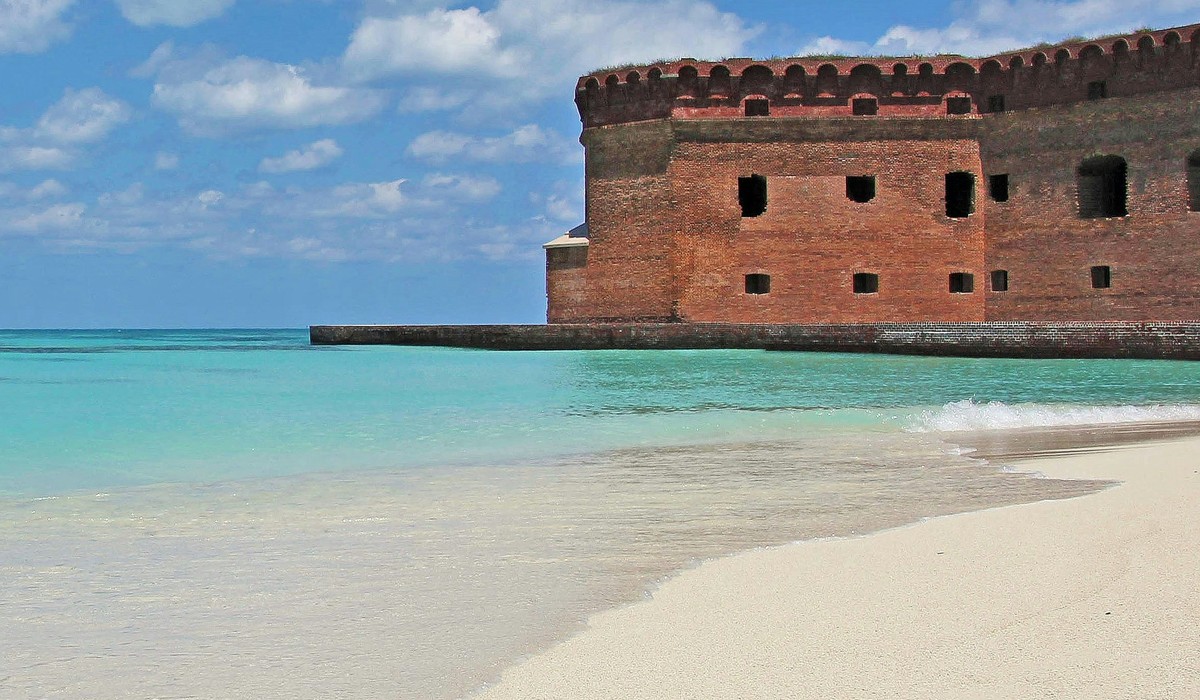
At the center of Dry Tortugas stands Fort Jefferson, an enormous coastal fortress that looks wildly oversized for the tiny island beneath it.
The fort contains more than 16 million bricks. It is the largest masonry structure in the Americas.
Construction began in 1846 and continued for decades, yet the fort was never fully finished. Engineers had to contend with remote supply lines, settling ground, hurricanes and the sheer weight of the building itself.
Putting millions of bricks on a speck of land almost 70 miles from Key West remains one of the more ambitious construction stories in Florida history.
15. Lake Okeechobee Covers Over 700 Square Miles
Florida is not short on enormous bodies of water even after you leave the ocean behind.
Lake Okeechobee covers about 700 square miles, making it the largest lake in the state. Its name comes from Hitchiti words commonly translated as “big water,” which is unusually literal.
The lake sits near the center of South Florida and plays a major role in the regional water system. Water management around Okeechobee is closely tied to agriculture, flood control, estuaries and Everglades restoration.
16. Around 7,700 Lakes Larger Than 10 Acres Cover the Interior
View this post on Instagram
The Florida beach image can make the interior look almost empty on a mental map. It is not.
The state counts about 7,700 lakes larger than 10 acres. Central Florida alone is filled with chains of lakes around Orlando, Kissimmee, Winter Haven and dozens of smaller communities.
Many originated through the same limestone geology responsible for sinkholes. Depressions formed in the ground, filled with water and became permanent parts of the terrain.
17. There Are 1,350 Miles of Coastline but Only 663 Miles of Beaches
Coastline and beach are not the same measurement, and Florida makes the difference obvious.
Official state figures list 1,350 statute miles of coastline but 663 miles of beaches. Bays, mangrove shores, rocky edges, tidal areas and other coastal formations account for much of the rest.
The state also reports 2,276 miles of general tidal shoreline. Florida has water on so many sides, inlets and curves that the answer changes depending on exactly what somebody is measuring.
18. St. Augustine Was Founded 42 Years Before Jamestown
Jamestown occupies a huge place in early U.S. history, but St. Augustine was already decades old when Jamestown was founded in 1607.
Spanish settlers established St. Augustine in 1565. The National Park Service identifies it as the oldest continuously occupied European settlement in the continental United States.
That puts its founding 42 years before Jamestown and 55 years before the Mayflower reached New England.
Florida history therefore reaches much farther back into the European colonial period than the usual story of English settlement suggests.
19. People Were Living Here at Least 12,000 Years Ago
St. Augustine is ancient by U.S. city standards. Human history in Florida is far older.
Archaeological evidence documents human activity at least 12,000 years ago(some of them claim even 14,000 years), when Florida looked very different from the peninsula people know today.
Sea levels were lower, the coastline extended farther outward and the climate was drier. Paleoindian communities lived alongside animals that later disappeared from North America.
Recorded European history covers only a small fraction of the time people have occupied the region.
20. The Territory Was Once Split Into East Florida and West Florida
For part of the 18th century, there was no single Florida colony.
Britain gained control in 1763 and divided the territory into East Florida and West Florida. St. Augustine served as the eastern capital, while Pensacola governed the west.
The arrangement survived the return of Spanish control and continued into the early American period. Florida did not settle on Tallahassee as the meeting point for a territorial government until the 1820s.
The modern state still carries some of that geography. Pensacola and Miami can feel like parts of entirely different regions because, historically, they once were.
21. The First Scheduled Passenger Airline in the World Flew Across Tampa Bay
The first scheduled airline did not begin in New York, London or Paris. It crossed Tampa Bay.
The St. Petersburg-Tampa Airboat Line began service on January 1, 1914. Pilot Tony Jannus carried former St. Petersburg mayor Abram Pheil on the first flight.
The trip covered about 18 miles in 23 minutes. Traveling between the two cities by rail could take around 11 hours.
The airline lasted only three months, but scheduled passenger aviation had already begun.
22. Gatorade Was Invented After Football Players Started Ending Up in the Infirmary
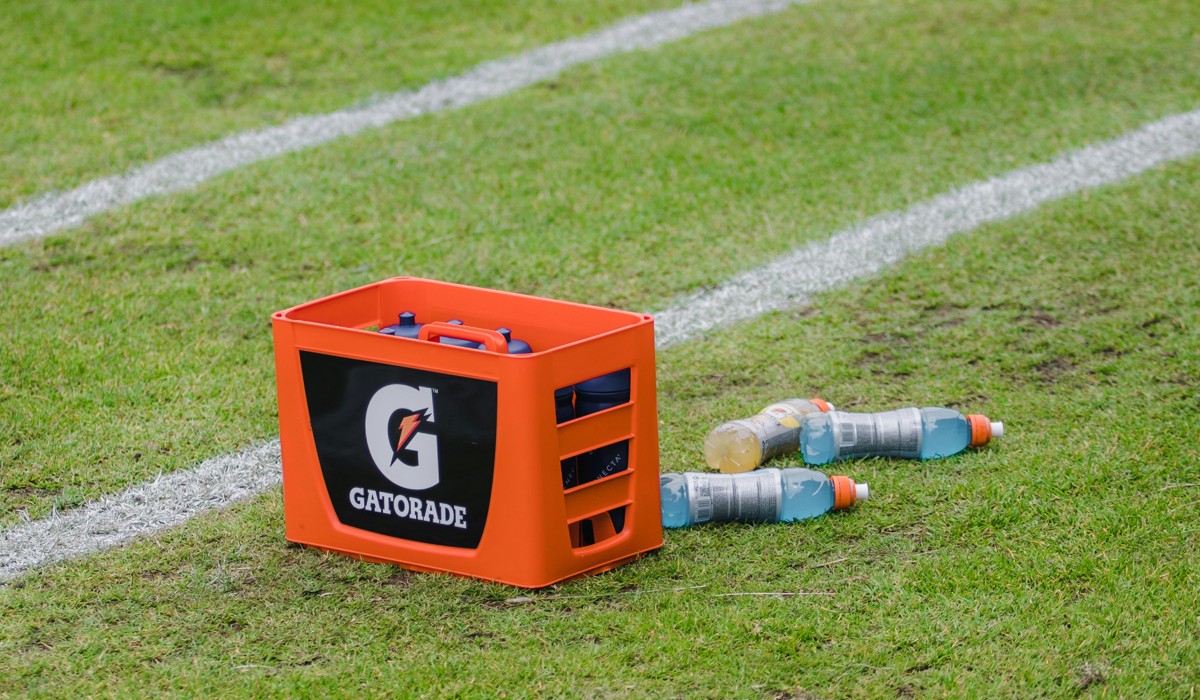
Gatorade started with a very Florida problem. Football players were struggling in brutal heat and humidity.
In August 1965, after several University of Florida players had been admitted to the infirmary with heat exhaustion and dehydration, assistant coach Dwayne Douglas asked doctors why players were losing so much fluid.
Robert Cade and a team of UF researchers studied the players and found major losses of fluid and electrolytes. They began mixing water, salts and sugar to replace what the athletes were losing through sweat.
The original drink tasted terrible. Lemon juice was eventually added to make it easier to swallow.
One of the biggest sports drink brands in the world began because football practice in Gainesville was making players sick.
23. Gatorade Has Sent More Than $500 Million Back to the University That Helped Invent It
The invention did more than create a drink company.
By 2025, more than $500 million in Gatorade royalties had flowed back to the University of Florida.
UF has used that money to support research far removed from sports drinks, including work involving cancer, foodborne pathogens, sea turtles and athlete safety.
A dehydration experiment conducted for a college football team ended up financing generations of scientific work.
24. Apollo Astronauts Left for the Moon From Kennedy Space Center
Every crewed Apollo mission that reached the Moon began its journey from Florida.
The enormous Saturn V rockets rose from Launch Complex 39 at Kennedy Space Center, carrying astronauts away from the Atlantic coast and toward lunar orbit.
Launch Pad 39A handled Apollo 11, the mission that carried Neil Armstrong, Buzz Aldrin and Michael Collins toward the first human Moon landing in July 1969.
The same strip of Florida coast became one of the few places on Earth directly connected with another world.
25. A Launch Pad From the Apollo Era Is Now Being Used for Artemis
Launch Pad 39B has already lived several lives.
Apollo 10 became the first mission to launch from Pad 39B in May 1969. Skylab crews later used it, followed by decades of Space Shuttle operations.
NASA then stripped away much of the old infrastructure and rebuilt the site around the Space Launch System. Artemis I launched from 39B in November 2022 on an uncrewed flight around the Moon.
A site created for the first age of lunar exploration is now part of the attempt to send people there again.
26. NASA Dumps Around 400,000 Gallons of Water Onto the Launch Pad in Less Than 30 Seconds
A rocket launch needs an extraordinary amount of water, and not because NASA is trying to put out the fire.
The water tower at Pad 39B holds roughly 400,000 gallons. During launch, the system dumps that water across the mobile launcher and flame trench in less than 30 seconds.
The water helps suppress the immense acoustic energy and pressure generated at ignition. Peak flow can reach 1.1 million gallons per minute.
NASA compares the stored volume with roughly 27 average swimming pools. All of it can disappear from the tower before half a minute has passed.
27. More Than 23 Million People Now Live in Florida
The Census Bureau estimated 23,462,518 residents. The total was 8.9% above the April 2020 estimates base.
Florida is now the third most populous state, behind California and Texas.
Our population data also shows how uneven that growth has been, with some Central Florida counties adding residents far faster than older coastal areas.
The scale is easy to miss. Florida now has more residents than many entire countries.
28. Florida Recorded 143.3 Million Visitor Trips in One Year
Permanent residents are only part of the crowd.
VISIT FLORIDA estimated 143.3 million visitor trips in 2025. With a resident population of about 23.46 million, that works out to more than six visitor trips for every person who actually lives in the state.
Domestic travelers accounted for most of the total. Millions more arrived from Canada, Latin America, Europe and other overseas markets.
Orlando theme parks explain part of that traffic, but Florida tourism also spans Miami, the Keys, Gulf Coast beaches, cruise ports, state parks, sports and major events.
29. Residents Do Not File a Florida Personal Income Tax Return
Florida collects plenty of taxes, but personal state income tax is not one of them.
The Florida Department of Revenue confirms that the state imposes no personal income tax, so residents have no Florida personal income tax return to file.
Federal income tax still applies, and Floridians still pay sales tax, property taxes and other state and local charges. The absence of personal income tax nevertheless separates Florida from most states, as our comparison of state income taxes across the U.S. shows.
30. The St. Johns River Flows North for 273 Miles
Look at Florida on a map and north does not feel like the obvious direction for its longest river.
The St. Johns runs for 273 miles, generally moving north until it reaches the Atlantic Ocean near Jacksonville.
There is nothing physically strange about a north-flowing river. Water follows elevation, not compass directions. Florida is so flat, however, that the St. Johns drops only gradually across its long route.
The result is a slow-moving river that crosses marshes, lakes, cities and forests on its way toward the sea.
31. Some Rivers Vanish Underground and Reappear Miles Away
At O’Leno State Park, the Santa Fe River simply disappears.
Water pours into a sink known as River Sink and travels underground through limestone. About three miles away, the river comes back to the surface at River Rise Preserve State Park.
The Santa Fe is not alone. Florida geologists identify the St. Marks, Aucilla and other streams that disappear underground and later return.
For part of their journey, the rivers on the map are literally underneath Florida.
32. The Same Limestone That Creates Clear Springs Also Creates Sinkholes
Florida springs and Florida sinkholes look like opposite things. Geologically, they are relatives.
Much of the state sits on limestone that slowly dissolves as slightly acidic water passes through it. Over long periods, that creates cavities, tunnels and underground drainage systems.
When groundwater flows out of one of those openings, people see a spring. When material above an underground cavity collapses, people can get a sinkhole.
The Florida Geological Survey lists springs, caves, sinkholes and disappearing streams as features of the same limestone-based terrain.
33. Some Animals in the Florida Keys Live Nowhere Else on Earth
Isolation turned the Florida Keys into small evolutionary islands as well as literal ones.
The Key deer is the most famous example, but it is not alone. The island chain is also home to highly restricted animals such as the Key Largo woodrat, Key Largo cotton mouse and Lower Keys marsh rabbit.
The National Key Deer Refuge alone protects more than 20 endangered and threatened plant and animal species.
For some of them, losing a few islands would mean losing a large part of their entire habitat.
34. Nearly 6,000 Marine Species Live Around the Florida Keys Sanctuary
The Keys are crowded below the water too.
Nearly 6,000 marine species inhabit Florida Keys National Marine Sanctuary, according to NOAA. They live among coral reefs, mangrove forests, seagrass meadows and other connected habitats.
The sanctuary surrounds most of the Keys and protects far more than coral. Fish, sea turtles, crustaceans, marine mammals and thousands of smaller organisms share the system.
Shipwrecks are protected there too, so biology and maritime history occupy the same underwater space.
35. Oranges Were Growing in St. Augustine in 1579
Florida oranges are not a modern agricultural invention.
Spanish settlers were cultivating oranges in St. Augustine by 1579. Citrus had arrived centuries before Florida joined the United States in 1845.
The crop eventually became so closely associated with the state that oranges appeared on license plates, tourism advertising and the official state flower designation.
Florida citrus has faced freezes, hurricanes and citrus greening disease over the centuries, but the relationship between the state and the fruit began more than 400 years ago.
36. The Everglades Has the Largest Protected Mangrove Forest in the Western Hemisphere
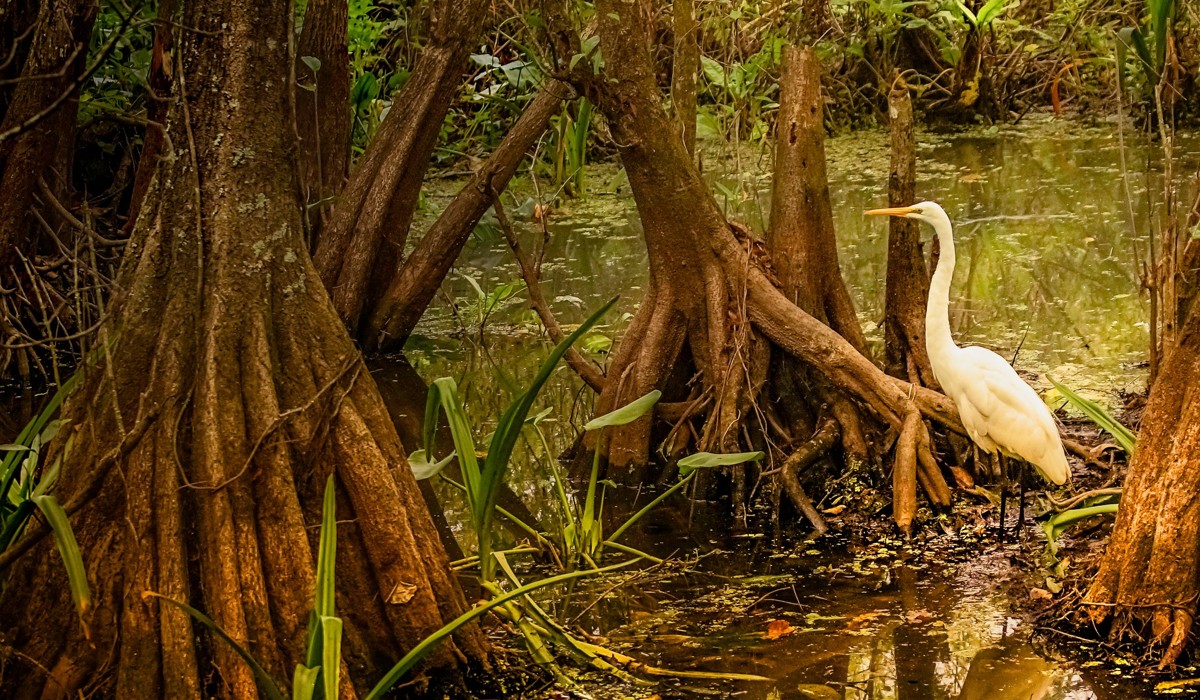
Along the southern edge of the Everglades, freshwater meets the sea inside a maze of mangrove roots and tidal channels.
The National Park Service describes the area as the largest contiguous protected mangrove forest in the Western Hemisphere.
Red, black and white mangroves tolerate conditions that would kill many trees. Their roots provide nursery habitat for marine life and help absorb wave energy along the coast.
They also create some of the hardest terrain in Florida to cross. A mangrove forest can look like solid land from a distance and become a tangled wall of roots once somebody gets close.
37. Hundreds of Shipwrecks Lie Beneath the Waters Around Dry Tortugas
The same shallow reefs that make Dry Tortugas spectacular for snorkeling made the area dangerous for sailors.
Ships moving between the Atlantic, Caribbean and Gulf passed through nearby routes for centuries. Low islands, reefs, storms and shallow water turned the area into a natural ship trap.
The National Park Service says the islands, shoals and reefs have been the scene of nearly 300 shipwrecks.
One of the first documented wrecks dates to 1622. Four centuries of shipping history now sit below the surface.
38. You Can Drive From Winter Freeze Country to a Tropical Climate Without Leaving the State
A Florida winter depends heavily on where in Florida you happen to be.
North and Central Florida have a humid subtropical climate, while South Florida has a tropical climate, according to the University of Florida IFAS Extension.
Freezing temperatures are a normal winter possibility across northern and inland parts of the state. South Florida can still experience damaging cold snaps, but hard freezes are far rarer near the southern coasts.
A person driving south can therefore pass from forests where winter frost is expected into a region where palms, mangroves and tropical fruit grow year-round.
39. Key West Sits Only About 60 Miles North of the Tropics
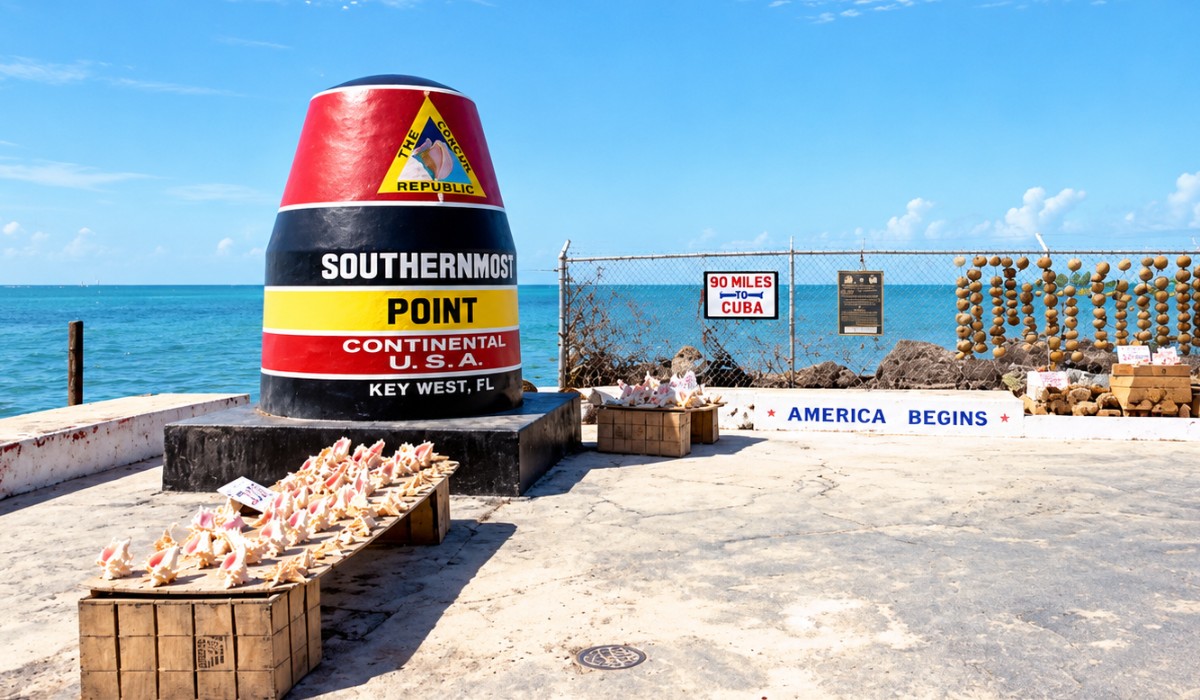
Florida reaches farther south than many people realize.
Key West sits at about 24.5 degrees north latitude. The Tropic of Cancer is near 23.5 degrees north, putting the city only about 60 miles north of the tropics.
That geography helps explain why South Florida supports coral reefs, tropical hardwood hammocks, mangroves and animals that have little or no natural range elsewhere in the continental United States.
The biological change is noticeable even during a road trip. University of Florida extension material notes how plants and animals change as the trip moves from the Panhandle toward the Keys. Pensacola and Key West belong to the same state, but nature does not treat them as the same place.
40. And of Course – The Mighty Florida Man
No list like this gets to the end without him.
Florida Man is not one person. The name became shorthand for an endless stream of strange headlines beginning with some version of “Florida man…” and describing arrests, accidents, animals, arguments and decisions that seemed uniquely suited to the state.
The meme took off nationally around 2013. It became so recognizable that people later started doing the “Florida Man Challenge,” searching their birthday alongside the words Florida Man to see which headline appeared.
There is even serious academic work on why it happened. In Explaining Florida Man, law professor Ira Robbins examined the popular explanation that Florida public-records laws make arrest reports, incident records and mugshots unusually accessible to journalists.
Open records are only part of the answer. Robbins also points to social media, news culture and the reputation Florida had already developed for strange stories.
Final Thoughts
Florida sometimes feels like an open-world game. Alligators show up beside homes, you can catch giant pythons for cash prizes, and you can drive from winter frost into tropical heat without leaving the state.
And it comes with a final boss, the Florida Man.