
Researchers in South Florida have been trying to solve one frustrating problem for years. Burmese pythons are huge, destructive and firmly established in the Everglades, yet finding them can be surprisingly difficult.
So a team from the University of Florida and the South Florida Water Management District tried something unusual. They built robotic rabbits and placed them in python habitat.
The decoys were designed to imitate real marsh rabbits through movement, heat and scent. Cameras watched the sites, and when a python approached, wildlife crews could be alerted and sent to remove it.
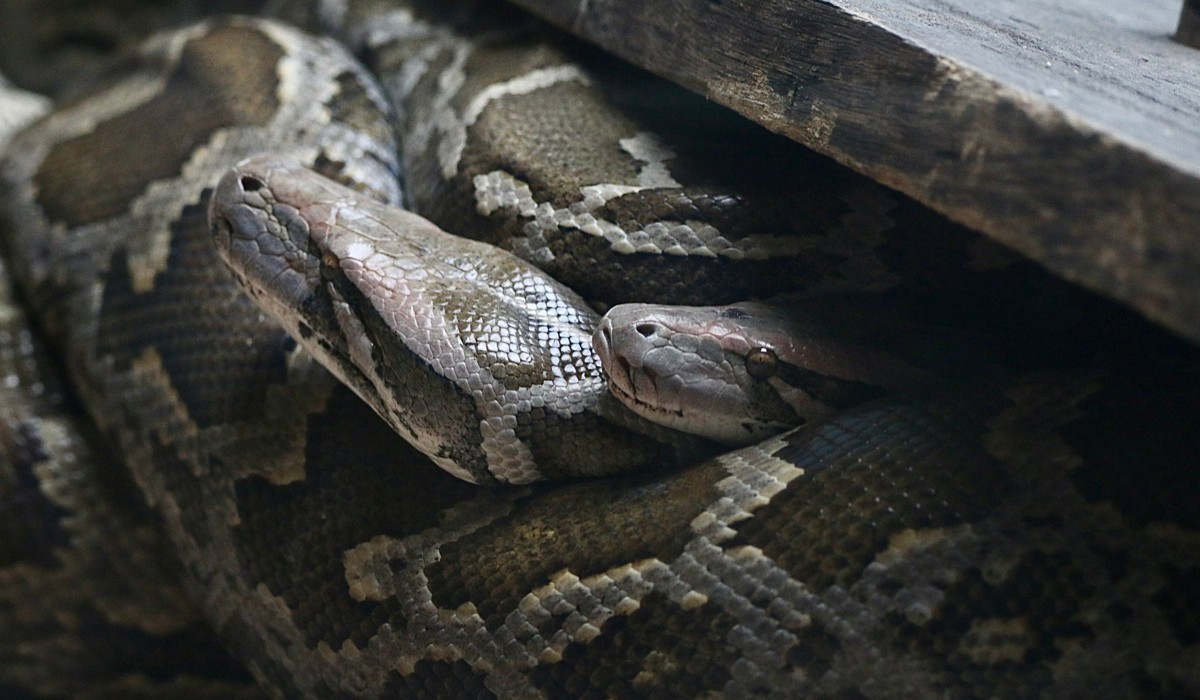
The project sounds almost like a joke until you look at the problem researchers are dealing with. Burmese pythons blend into the Everglades so well that even experienced hunters can walk past one without seeing it. Getting the snake to come to a monitored location could save hours of searching.
Also read: Facts About Florida That Sound Too Wild to Be True
Researchers Put 120 Robot Rabbits Into South Florida Python Habitat
The project was developed by researchers from the University of Florida and the South Florida Water Management District.
University of Florida researcher Chris Dutton helped turn ordinary toy rabbits into working decoys. The stuffing was removed and replaced with motors, heaters and electronics. Solar panels supplied power in the field.
Researchers eventually deployed 120 of the robotic rabbits in South Florida, according to reporting by the Associated Press.
Each setup cost around $4,000 once the rabbit, electronics, cameras and supporting equipment were included.
The rabbits did not roam freely around the Everglades. Researchers placed them at selected monitoring locations where pythons were expected to pass through or hunt.
The idea was to create a fixed point that looked attractive enough to bring a hidden python into view.
The Rabbits Were Made to Look Like Real Prey to a Python
Making a furry object look like a rabbit to a person was not enough.
The team needed to imitate the signals a python actually uses when hunting.
The robotic rabbits could produce heat and movement, and researchers also developed scent intended to resemble a marsh rabbit. The South Florida Water Management District said cameras were used to watch for snakes and notify officials when one was detected.
A python removal agent could then travel to the location and deal with the snake.
That reverses the usual search process. Instead of a hunter covering miles of roads, levees and vegetation hoping to spot a python, the decoy gives the snake a reason to approach a known location.
Marsh rabbits were a logical animal to copy because they are natural prey for Burmese pythons in South Florida.
The University of Florida has described the decoys as part of a wider effort to trigger the hunting behavior of the snakes and bring them into range for removal.
The Hard Part Is Finding a Python Before It Disappears Again
A Burmese python does not need to be small to stay hidden.
Adult snakes can reach well over 10 feet, but their coloration works extremely well in the grass, water and vegetation of the Everglades.
University of Florida researchers have estimated that detection rates can be extremely low even when snakes are present. The university’s Thompson Earth Systems Institute noted that only a small percentage of pythons may be detected during conventional searches.
That helps explain why Florida has tested so many different methods.
Researchers have used radio-tagged “scout snakes” during breeding season, environmental DNA, trained removal contractors, public competitions and other detection techniques.
The robot rabbit experiment adds another approach. It does not require researchers to know exactly where a python is resting. It only needs the animal to respond to what appears to be prey.
Why Not Just Use Real Rabbits?
Researchers had already tested live animals as lures, but keeping real rabbits in remote areas creates obvious problems.
They require food, water, shelter and regular care. Researchers also have to protect the animal while trying to attract a predator toward it.
A robotic rabbit can remain outside for much longer. Solar power reduces the need to service the electronics, and researchers can control parts of the system remotely.
The machine also allows the team to change individual signals. Heat, movement and scent can be adjusted independently to learn which combination attracts the strongest response.
That makes the project useful for research even before it becomes a large-scale removal tool.
The Experiment Comes as Florida Keeps Removing Thousands of Pythons
The robotic rabbits have not replaced human hunters.
Florida continues to run year-round removal programs, and the latest Florida Python Challenge showed how much experienced hunters can still accomplish.
During the July 2026 competition, 907 participants removed 280 Burmese pythons from South Florida in 10 days, according to the Florida Fish and Wildlife Conservation Commission.
Tom Rahill removed 96 snakes by himself and won the $10,000 grand prize. All 96 came from Everglades National Park.
The longest python caught during the competition measured 16 feet, 5 inches.
Florida officials reported in August that nearly 28,000 wild Burmese pythons had been removed from the state’s environment since 2000. More than 19,000 had been removed by contractors working for the Florida Fish and Wildlife Conservation Commission and the South Florida Water Management District since 2017.
Those totals are large, but they do not mean the invasion is close to ending.
Florida Is Paying Hunters to Search for Pythons Year-Round
The South Florida Water Management District also operates a permanent Python Elimination Program.
Contracted removal agents are paid an hourly rate to search designated land, plus additional money for each python they remove. The payment rises with the length of the snake, and agents receive another payment for verified active nests.
The system gives Florida a steady group of experienced hunters in the field rather than relying entirely on the annual competition.
The robot rabbit project could eventually make their work more targeted. A camera alert from a known decoy location gives an agent somewhere specific to go instead of another large area to search.
Burmese Pythons Have Changed Parts of the Everglades Food Web
The reason researchers are willing to experiment with robotic prey becomes clearer when looking at what the snakes eat.
Burmese pythons prey on birds, mammals and reptiles. The South Florida Water Management District says their presence also reduces food available to native predators including bobcats, panthers and raptors.
Female Burmese pythons can lay 50 to 100 eggs at a time, allowing the population to expand quickly once breeding animals become established.
Scientists have linked the python invasion with severe declines in several mammal populations in parts of the Everglades. Rabbits are among the species that have been heavily affected.
Removing a single large female can therefore have a larger effect than simply subtracting one snake from the population, particularly if she is carrying eggs or leading researchers toward a breeding area.
The Robot Rabbits Are Still an Experiment
The robotic rabbit project should not be read as evidence that Florida has suddenly found a simple answer to the python invasion.
The system still depends on a python finding the lure, responding to it and remaining nearby long enough for a removal agent to arrive.
It also comes with equipment costs and the challenge of maintaining electronics in hot, wet Everglades conditions.
Researchers are testing whether the additional detections justify those costs.
The interesting part is how the strategy approaches the problem. Florida already has people capable of catching and removing pythons. The 2026 Python Challenge proved that again when one hunter removed 96 snakes in 10 days.
The bigger obstacle is knowing where the snakes are.
A fake rabbit that heats up, moves, smells like prey and quietly waits beside a camera is an attempt to make one of the Everglades’ hardest animals to find give away its own location.
Bottom Line
The robotic rabbits are not hunting pythons themselves. They are bait, sensors and surveillance equipment wrapped inside something designed to look like dinner.
That distinction is what makes the project interesting. Researchers are using the python’s own hunting behavior against it.
Florida still relies heavily on trained removal agents, public hunts and conventional field work. If the robotic decoys prove reliable, they could give those hunters something they rarely get in the Everglades: a message telling them exactly where to start looking.