


The US labor market is expected to add about 5.9 million jobs between 2025 and 2035. More than 1.1 million of them could come from healthcare support occupations alone.
The latest Bureau of Labor Statistics projections put healthcare support employment at 8.42 million in 2025 and 9.54 million in 2035. That is an increase of 1,122,700 jobs, or 13.3%.
No other major occupational group is projected to grow as quickly over the decade. Healthcare practitioners and technical occupations are also expected to expand by 819,500 jobs, which means healthcare will account for a large share of overall US employment growth.
The 1.1 Million Increase Comes From Healthcare Support Jobs
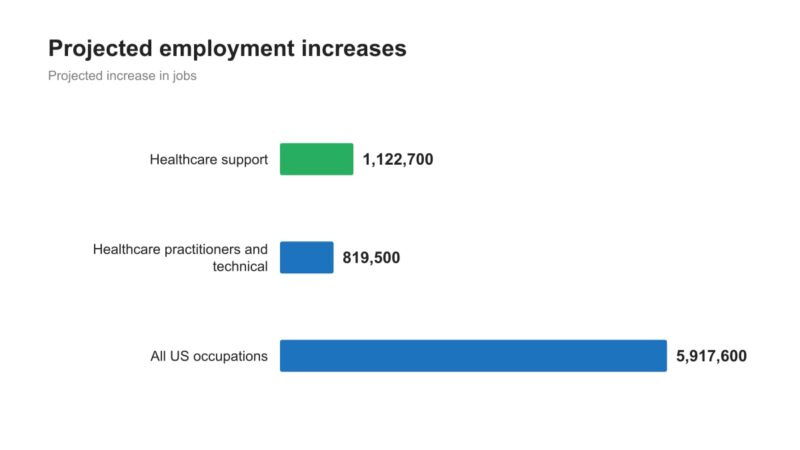
The headline figure covers healthcare support occupations, a BLS group that includes home health and personal care aides, medical assistants, nursing assistants, therapy assistants and several other jobs that help deliver patient care.
| Occupational Group | 2025 Employment | 2035 Employment | Projected Increase | Growth |
| Healthcare support | 8.42 million | 9.54 million | 1,122,700 | 13.3% |
| Healthcare practitioners and technical | 10.23 million | 11.05 million | 819,500 | 8.0% |
| All US occupations | 170.28 million | 176.20 million | 5,917,600 | 3.5% |
Total employment across the US is projected to rise 3.5% between 2025 and 2035.
Healthcare support grows much faster at 13.3%, but the wider healthcare workforce also includes another large group of licensed clinical workers.
The separate healthcare practitioners and technical category is projected to add about 819,500 jobs over the same period.
That group includes registered nurses, nurse practitioners, physicians, therapists, technologists and other clinical roles.
BLS projects registered nurse employment to rise from about 3.47 million in 2025 to 3.66 million in 2035, adding roughly 194,700 jobs. The agency also expects around 180,800 RN openings per year once retirements, career changes and other replacement needs are included.
For working RNs, continuing education is one way to prepare for a healthcare system that is expected to employ more nurses over the next decade. An online RN to BSN program allows licensed nurses with an associate degree or nursing diploma to complete a bachelor degree while continuing to work.
Home Health And Personal Care Aides Drive Most Of The Growth
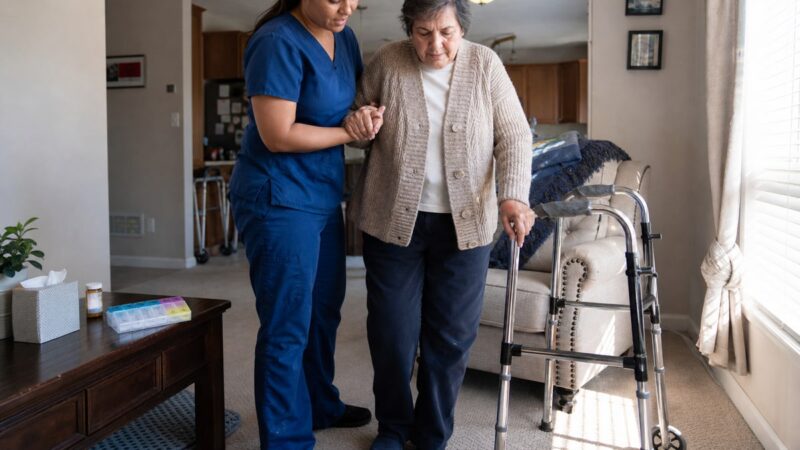
One occupation accounts for most of the projected increase.
BLS expects employment of home health and personal care aides to rise from 4.68 million in 2025 to 5.52 million in 2035. That adds 847,300 jobs.
Put another way, home health and personal care aides account for roughly three quarters of the entire 1.12 million increase in healthcare support employment.
The BLS home care outlook projects 18% employment growth for the occupation. Demand is tied to the growing number of older Americans who need help with daily activities, chronic conditions and personal care.
Where care takes place is changing as well. BLS expects more long-term care to move from institutional settings into homes and community programs. That shift directly supports demand for aides who work outside hospitals and nursing facilities.
More Than 5.5 Million Aide Jobs Could Exist by 2035
The size of the occupation deserves attention. If the projection holds, home health and personal care aides alone will represent more than 5.5 million jobs by 2035.
The occupation is already larger than many entire industries. Its projected expansion also shows why future healthcare employment cannot be measured only by hospital hiring.
Medical Assistants Are Expected To Add Another 107,600 Jobs
Medical assistants represent another large source of support job growth.
Employment is projected to rise from 833,900 in 2025 to 941,500 in 2035, according to the latest medical assistant outlook. That equals 107,600 additional jobs and growth of 12.9%.
Medical assistants work in physicians offices, hospitals, outpatient centers and other healthcare settings. Their work can include measuring vital signs, recording patient information, preparing patients for examinations and handling administrative tasks.
The occupation is expanding partly because an older population is expected to use more medical services. More visits create additional work for clinicians, but they also create more demand for staff who handle routine clinical and administrative duties around those visits.
Some Smaller Healthcare Jobs Are Growing Even Faster
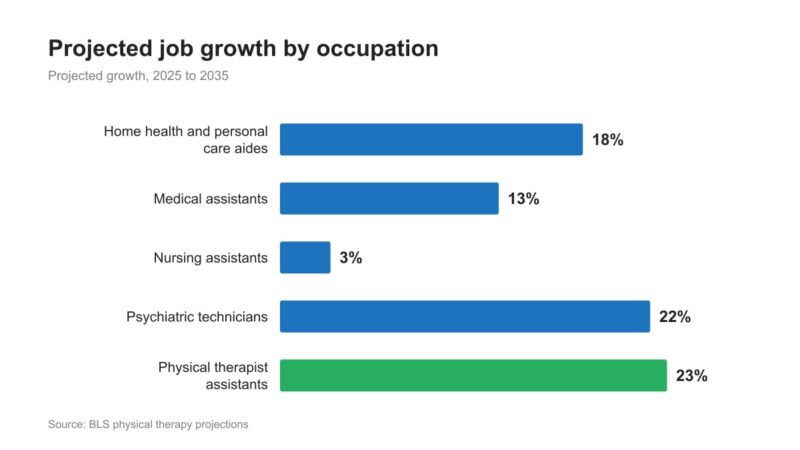
The largest numerical increases are concentrated in home care and medical assisting, but several smaller occupations have higher percentage growth.
Physical therapist assistants are projected to grow from 114,100 jobs in 2025 to 140,400 by 2035. That is an increase of 26,200 positions, or 23%, according to the BLS physical therapy projections.
Psychiatric technicians are projected to grow even faster at 22%. Their employment could rise from 161,500 to 197,500, adding 36,000 jobs.
BLS links that increase to demand for treatment of mental illness and substance use disorders. Psychiatric aides, however, are projected to grow only 2%, showing how two jobs in the same care setting can follow very different employment paths.
| Occupation | 2025 Jobs | 2035 Jobs | New Jobs | Growth |
| Home health and personal care aides | 4,677,100 | 5,524,400 | 847,300 | 18% |
| Medical assistants | 833,900 | 941,500 | 107,600 | 13% |
| Nursing assistants | 1,505,900 | 1,544,900 | 39,000 | 3% |
| Psychiatric technicians | 161,500 | 197,500 | 36,000 | 22% |
| Physical therapist assistants | 114,100 | 140,400 | 26,200 | 23% |
Nursing Assistants Is Already High in Demand
Nursing assistants remain one of the largest healthcare support occupations, with about 1.51 million jobs in 2025. Their employment is projected to reach 1.54 million by 2035, adding about 39,000 jobs.
Growth of roughly 3% is much slower than the rates projected for home care aides or physical therapist assistants.
BLS still expects strong replacement demand. Its nursing assistant projections point to an aging population and greater need for care among people with chronic and progressive conditions, but financial pressure on nursing homes could limit employment growth in some facilities.
That is another reason the overall healthcare support number should not be read as though every occupation is expanding at the same pace.
Registered Nurses Could Add Nearly 195,000 Jobs
Support jobs are only one part of the healthcare employment story.
BLS projects registered nurse employment to increase by 194,700 jobs between 2025 and 2035, reaching about 3.66 million. The growth rate is 6%, which is slower than healthcare support overall but still faster than the 3.5% projected for all US employment.
The registered nurse outlook also projects about 180,800 RN openings each year over the decade.
Demand is expected across hospitals, outpatient centers and home healthcare. BLS specifically points to the aging population and chronic conditions such as diabetes and obesity as factors supporting future RN employment.
Hiring alone does not tell us how individual hospital units are staffed. We have previously examined that problem in our report on hospital hiring and nurse workload, where higher payroll employment did not automatically answer questions about patient assignments, experience levels or turnover.
Nurse Practitioners Have The Fastest Projected Growth Rate
Nurse practitioners sit at the other end of the growth table.
BLS projects their employment to rise from 336,300 jobs in 2025 to 474,100 in 2035. That is an increase of 137,800 positions and a 41% growth rate.
No other detailed occupation in the current BLS projections has a higher percentage growth rate.
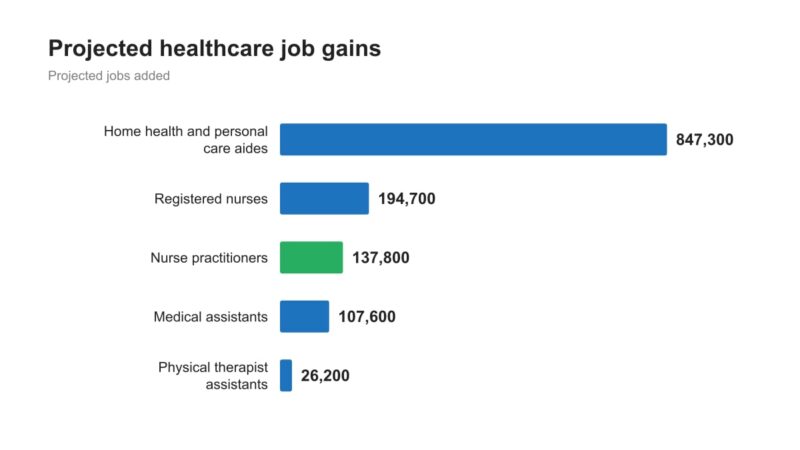
The number also shows why percentage growth and numerical job growth tell different stories. Nurse practitioners are expanding much faster in percentage terms, but home health and personal care aides are expected to add more than six times as many jobs.
- Home health and personal care aides could add 847,300 jobs.
- Registered nurses could add 194,700 jobs.
- Nurse practitioners could add 137,800 jobs.
- Medical assistants could add 107,600 jobs.
- Physical therapist assistants could add 26,200 jobs.
We have covered several of these occupations before in our healthcare careers in demand report. The 2025 to 2035 projections now provide a newer ten-year window and update both growth rates and job counts.
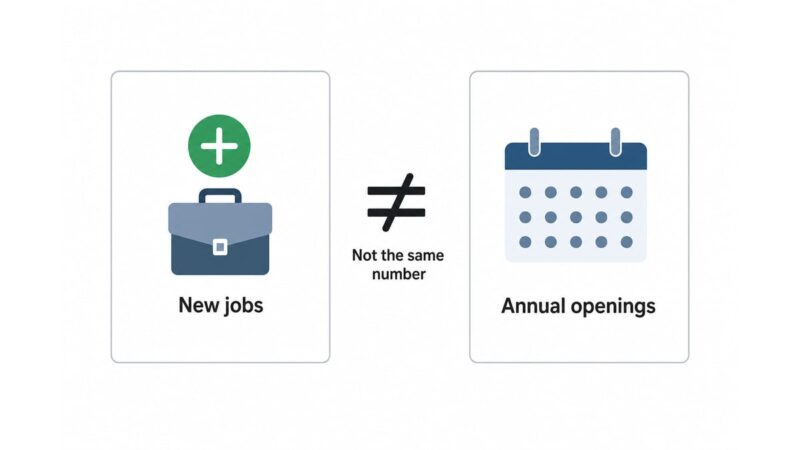
New Jobs And Annual Openings Are Not The Same Number
Projected employment growth is easy to confuse with projected job openings, but the two numbers answer different questions.
The 847,300 figure for home health and personal care aides is the net increase in employment between 2025 and 2035. BLS also projects about 760,500 openings every year for the occupation.
Those annual openings include jobs created by growth, but they also include positions that become available because workers retire, leave the labor force or move into another occupation.
The same pattern appears in nursing. Registered nurse employment is projected to grow by 194,700 jobs over ten years, yet BLS expects about 180,800 RN openings in an average year.
A labor market can therefore generate a large number of hiring opportunities even when its total number of jobs rises at a much slower pace.
Aging Is Shifting More Care Into Homes And Communities
The aging US population is one of the clearest forces behind the healthcare projections.
BLS expects older adults to need more medical treatment, help with chronic conditions, rehabilitation and assistance with daily activities. That affects almost every part of the care system.
Hospitals will remain major employers, but the largest projected increase is not happening there. Home care, outpatient treatment and community services are taking a larger role.
The shift is especially visible in the home health aide numbers. BLS says policy changes and patient preferences are moving some long-term care away from nursing homes and other institutions and into home and community settings.
For employment, that means healthcare growth is spreading across more locations. A future care team may include workers in hospitals, clinics, rehabilitation centers and private homes rather than one central facility.
Healthcare Support Could Account For About One In Five New US Jobs
View this post on Instagram
Total US employment is projected to increase by 5.92 million jobs between 2025 and 2035.
Healthcare support alone accounts for 1.12 million of those projected additions. That works out to roughly 19% of all net new jobs.
Add the 819,500 jobs projected for healthcare practitioners and technical occupations, and the two healthcare groups reach about 1.94 million new positions.
BLS says the two groups combined are expected to account for almost one-third of all jobs created through 2035.
The numbers are especially notable because several large occupational groups are expected to grow slowly or shrink. Office and administrative support employment, for example, is projected to decline over the decade as automation and productivity gains reduce demand for some routine tasks.
Healthcare is moving in the opposite direction because many of its fastest-growing jobs involve direct care, physical assistance, clinical work or face-to-face interaction with patients.
The 1.1 Million Projection Does Not Mean 1.1 Million New Hospital Jobs
Healthcare support is an occupational category, not a count of hospital employees.
People in these occupations work for home healthcare agencies, nursing facilities, physicians offices, outpatient centers, hospitals, residential services and other employers.
Industry statistics measure something else. A hospital, for example, employs nurses and medical assistants, but it also employs accountants, food service workers, software staff, cleaners, managers and maintenance workers.
That is why occupational employment and healthcare industry employment should not be added together as separate pools of workers. Some of the same employees appear in both types of data, just classified in different ways.
The Bottom Line
Healthcare support is projected to add more than 1.1 million jobs, and about 847,000 of them come from home health and personal care aides. Medical assistants add another 107,600, while several therapy and behavioral health occupations post growth rates above 20%.
Registered nurses, nurse practitioners and other clinical professionals are expanding at the same time, but under a separate BLS occupational group.
If the projections hold, the US healthcare workforce of 2035 will be larger and more spread across homes, outpatient centers and community settings than the workforce of 2025. The numbers point to a care system that will need more workers at nearly every level, but especially in jobs tied directly to an older population and long-term daily support.