
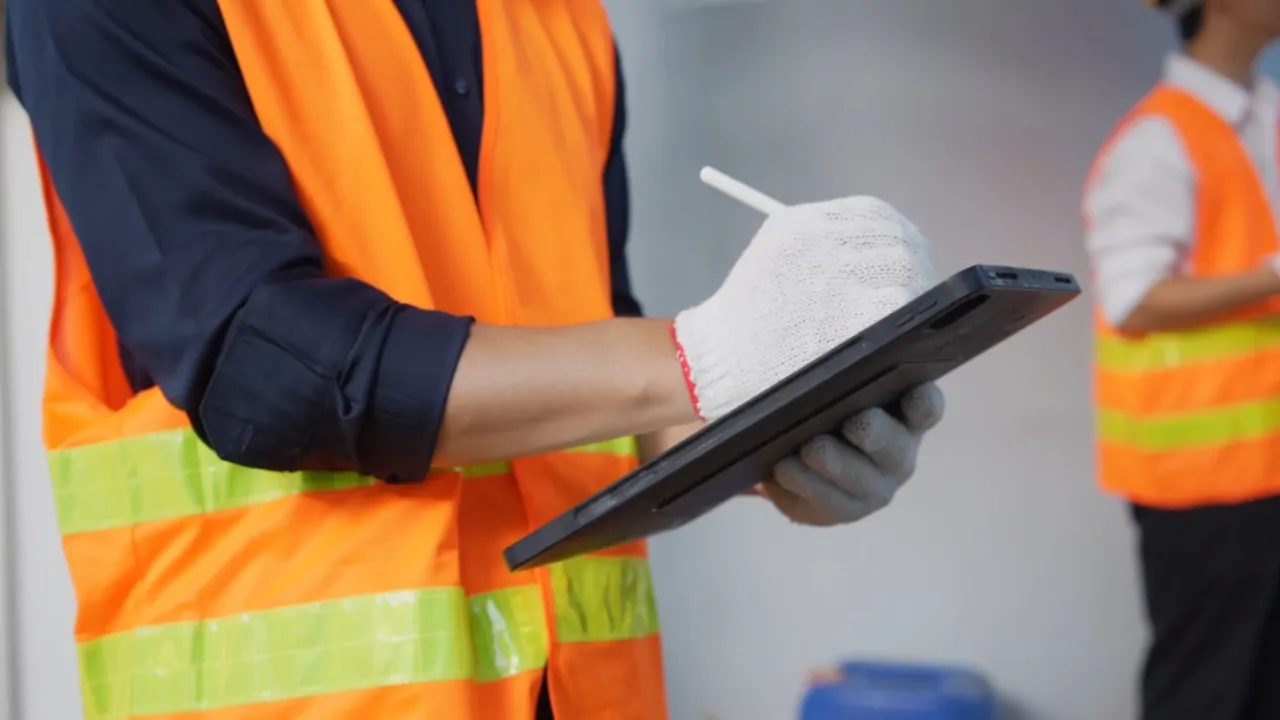
Workplace safety standards in the United States are not the same across all industries, but they follow a common federal framework enforced by Occupational Safety and Health Administration (OSHA).
The actual safety requirements that matter in practice depend on the industry’s core risks. Healthcare and transportation face high injury rates driven by human handling and exposure.
Construction is dominated by fall and equipment hazards. Manufacturing centers on machine control and hazardous energy. Retail and food service deals primarily with slips, cuts, and material handling.
In other words, OSHA standards are universal in structure but industry-specific in impact. Employers who treat safety as a generic checklist almost always miss the hazards that actually cause injuries, fines, and lost productivity.
How OSHA Safety Standards Work Across Industries
OSHA regulates workplace safety through Title 29 of the Code of Federal Regulations (CFR). Most private-sector employers fall under General Industry standards (29 CFR 1910). Construction is regulated separately under 29 CFR 1926, while recordkeeping rules apply across sectors.
The framework is intentionally broad. OSHA does not write a separate rulebook for each industry. Instead, it sets performance-based standards that must be applied in ways that fit real working conditions. This is why two companies can both be “OSHA compliant” on paper while having dramatically different injury outcomes.
Another layer comes from the state OSHA Education Center, which may expand enforcement to public sector workers or add stricter rules. This is especially relevant for state and local government employers, where coverage depends on the state.
The 10 Largest U.S. Industries And Their Safety Realities
The table below combines employment scale, injury risk, and the OSHA standards that actually drive safety programs in each sector.
Major Industries, Injury Rates, and Governing Standards
Industry
Approx. Employment
Injury Rate (TRIR)
Primary OSHA Framework
Dominant Safety Focus
Healthcare & Social Assistance
22.5 million
High
General Industry
Exposure control, patient handling,and and sharps
State & Local Government
20.3 million
Very High
State OSHA Plans
Fleet, public works, and sanitation
Retail Trade
15.5 million
Moderate
General Industry
Slips, lifting, ladders
Accommodation & Food Services
14.2 million
Moderate
General Industry
Burns, cuts, wet floors
Manufacturing
12.8 million
Moderate
General Industry
Machine control, lockout
Professional & Technical Services
10.8 million
Low
General Industry
Ergonomics, labs, and field work
Construction
8.2 million
High
Construction Standards
Falls, struck-by hazards
Transportation & Warehousing
6.6 million
Very High
General Industry
Forklifts, docks, traffic
1. Healthcare and Social Assistance

Healthcare employs more people than any other U.S. industry and also ranks among the highest for nonfatal workplace injuries. The total recordable injury rate in hospitals and nursing facilities consistently sits around 4.0–4.5 cases per 100 full-time workers, well above the national private-industry average of roughly 2.7.
What makes healthcare unique is that most injuries are not equipment-related, but human-related. Over 35 percent of reported injuries stem from patient handling, including lifting, repositioning, and preventing falls.
Another major contributor is exposure to bloodborne pathogens. The CDC estimates that nearly 385,000 sharps injuries occur annually among hospital-based healthcare workers in the U.S.
OSHA enforcement in healthcare revolves around Bloodborne Pathogens, Respiratory Protection, and Walking-Working Surfaces. Facilities with strong engineering controls, such as mechanical lifts and needleless systems, consistently report lower injury severity, even when staffing ratios are tight.
Healthcare Safety Snapshot
Metric
Value
Workforce size
~22.5 million
Injury rate
~4.2 per 100 workers
Most common injury
Musculoskeletal strain
High-cost exposure
Sharps and bodily fluids
2. State and Local Government

State and local government workers experience some of the highest injury rates of any employment group, with public administration reporting rates near 5.9 injuries per 100 workers according to the BLS.
This figure is misleading at first glance, because “government” includes vastly different jobs ranging from office clerks to sanitation workers and emergency responders.
Sanitation, utilities, road maintenance, and corrections account for a disproportionate share of injuries. Vehicle incidents alone represent over 20 percent of serious injuries in public-sector roles.
Many public workers also face confined spaces, wastewater exposure, and unpredictable public interactions.
OSHA coverage here depends on state-run OSHA plans, which cover public workers in about half the states. Where state plans are strong, injury rates have declined faster than in non-covered states, indicating that enforcement matters even outside private industry.
Public Sector Safety Snapshot
Metric
Value
Workforce size
~20.3 million
Injury rate
~5.9 per 100 workers
Top hazard
Vehicle and equipment incidents
Coverage
State OSHA plans only
3. Retail Trade

Retail employs over 15 million workers, and while individual injury risk is moderate, the total injury volume is massive due to scale. Retail injury rates average around 3.1 per 100 workers, with slips, trips, and falls accounting for roughly 40 percent of reported cases.
Back-room material handling injuries are especially costly. Improper lifting and pallet movement generate long-term musculoskeletal claims, which represent some of the highest workers’ compensation payouts in the sector. Ladder-related injuries during stocking are another common OSHA citation area.
Retail safety failures rarely come from a lack of rules. They come from high turnover, inconsistent training, and understaffed shifts that encourage shortcuts.
Retail Safety Snapshot
Metric
Value
Workforce size
~15.5 million
Injury rate
~3.1 per 100 workers
Top injury
Slips and strains
Key risk factor
Turnover
4. Accommodation and Food Services

Food service injury rates hover around 2.7 per 100 workers, but burn injuries and lacerations occur at twice the national average frequency. Commercial kitchens expose workers to heat, sharp tools, wet floors, and chemical cleaners simultaneously.
OSHA data shows that nearly 60 percent of injuries in this sector involve hands, wrists, or forearms. Chemical exposure incidents, especially involving sanitizers and degreasers, remain underreported but are frequently cited during inspections.
The biggest safety weakness in food service is the normalization of risk. Minor burns and cuts are often treated as “part of the job,” leading to underreporting and delayed medical intervention.
Food Service Safety Snapshot
Metric
Value
Workforce size
~14.2 million
Injury rate
~2.7 per 100 workers
Most injured body part
Hands and wrists
Common violation
Wet floors
5. Manufacturing
View this post on Instagram
Manufacturing injury rates average around 2.8 per 100 workers, but severity is higher than in many other industries, according to HR Grapvine. Amputations, crush injuries, and chemical burns remain persistent risks.
Lockout/Tagout violations are among OSHA’s Top 10 citations every year, and manufacturing accounts for a large share of them. BLS data shows that unexpected equipment energization is a leading cause of fatal manufacturing incidents.
Manufacturers with structured energy control programs report up to 50 percent lower serious injury rates than facilities relying on informal procedures.
Manufacturing Safety Snapshot
Metric
Value
Workforce size
~12.8 million
Injury rate
~2.8 per 100 workers
High-severity risk
Amputation
Most cited standard
Lockout/Tagout
6. Professional, Scientific, and Technical Services

This sector reports one of the lowest overall injury rates, typically below 1.5 per 100 workers, but averages hide important subcategories. Laboratory technicians, surveyors, and field engineers face chemical, biological, and environmental hazards absent in office roles.
Lab-related incidents often involve chemical splashes and inhalation exposures. Field-based professionals face vehicle accidents, falls, and weather-related risks, especially in environmental and geotechnical work.
Safety programs here succeed when they differentiate office risk from field and lab risk, rather than applying a single generic policy.
7. Construction
Construction injury rates average 2.3 per 100 workers, but fatality rates are four times the private-industry average. Falls account for approximately 38 percent of construction deaths, followed by struck-by incidents and electrocution according to BLS.
OSHA enforcement here is heavily site-based. Companies with strong safety records on paper can still face citations if job-site controls fail. Temporary work environments amplify risk.
Construction safety outcomes correlate more strongly with supervision quality than company size.
8. Transportation and Warehousing
#Warehouse workers experience injury rates of 4.1 per 100 full-time workers, significantly higher than the national average of 2.7. AI and robotic systems can help reduce #safety risks and injuries. https://t.co/kAXxOgMVve
— Supply House Times (@supplyht) March 21, 2025
Transportation and warehousing report injury rates near 4.5 per 100 workers, among the highest of all large industries. Forklifts, dock operations, and manual handling drive most injuries.
Over 70 percent of serious injuries occur during loading, unloading, or vehicle movement. Fatigue and extended shifts further elevate risk, especially in e-commerce fulfillment environments.
Facilities that redesign traffic flow and pedestrian separation see rapid declines in injury frequency.
Final Perspective
Workplace safety in the United States is not about memorizing OSHA regulations. It is about understanding how federal standards intersect with industry-specific risk.
Healthcare needs exposure control. Construction needs fall prevention. Manufacturing needs energy isolation. Transportation needs traffic control. Retail needs disciplined housekeeping.
When safety programs align with those realities, compliance follows naturally.