

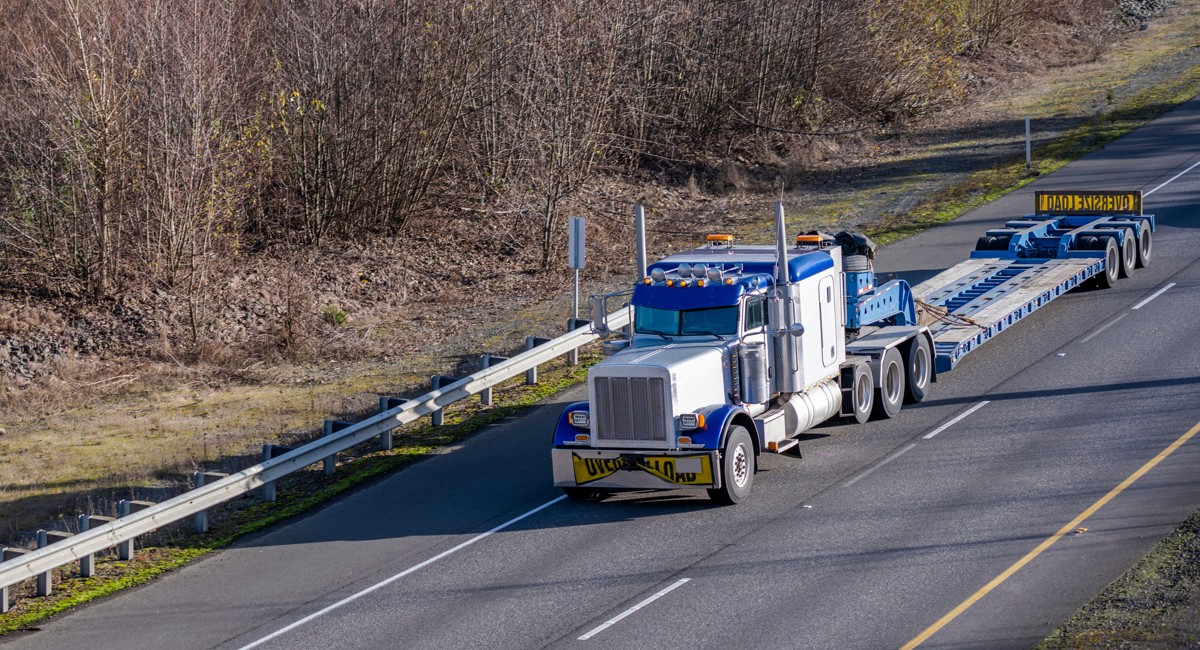
More than two million Americans work as heavy and tractor-trailer truck drivers. The Bureau of Labor Statistics counted 2,062,040 of them in May 2025, making truck driving one of the country’s largest occupations.
The workforce is even bigger when other commercial driving jobs are included. Nearly one million people work as light truck drivers, and more than 400,000 work as driver-sales workers. Together, those groups bring total truck-driving employment to more than 3.4 million.
BLS figures can vary depending on the dataset. The Occupational Employment and Wage Statistics program counts wage and salary workers, while a separate BLS employment measure puts heavy truck driver employment at about 2.22 million in 2025. The broader figure captures parts of the workforce that the OEWS count does not, including some self-employed owner-operators.
Number of Truck Drivers in the United States
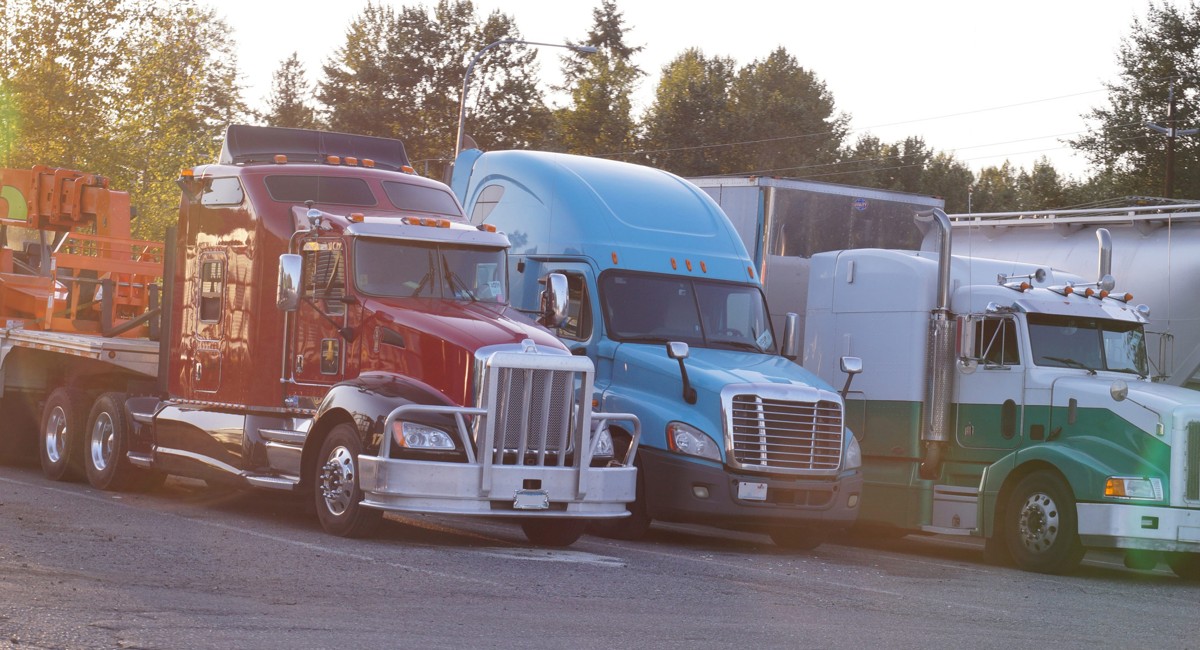
The latest national BLS employment estimates break truck-driving jobs into several occupations.
| Occupation | U.S. employment |
|---|---|
| Heavy and tractor-trailer truck drivers | 2,062,040 |
| Light truck drivers | 983,300 |
| Driver-sales workers | 409,180 |
| Combined total | 3,454,520 |
The figures come from the Bureau of Labor Statistics May 2025 occupational employment data.
Heavy truck drivers are the group most closely associated with commercial freight. They operate tractor-trailers and other vehicles with a gross vehicle weight above 26,000 pounds and generally need a commercial driver’s license.
Light truck drivers handle smaller vehicles, particularly in local delivery. Driver-sales workers combine transportation with delivery or sales responsibilities.
Heavy Truck Driving Alone Accounts for More Than 2 Million Jobs
The BLS Occupational Outlook Handbook estimates that heavy and tractor-trailer truck drivers held about 2.22 million jobs in 2025.
That figure is broader than the 2.06 million jobs counted by the OEWS survey because the two BLS programs measure employment differently.
The scale is easier to understand with a comparison. The heavy truck driver workforce alone is larger than the population of several U.S. states. Our U.S. population data show how that total compares with states such as Nebraska, Idaho, West Virginia and Hawaii.
Truck Drivers Work in Far More Than Trucking Companies
Freight carriers employ the largest share of heavy truck drivers, but most drivers are not confined to companies whose main business is trucking.
The BLS reports the following industry breakdown for heavy and tractor-trailer truck drivers:
| Industry | Share of jobs |
|---|---|
| Truck transportation | 40% |
| Wholesale trade | 12% |
| Self-employed workers | 7% |
| Manufacturing | 7% |
| Construction | 6% |
That leaves a large number of drivers working in retail, warehousing, waste collection, government, agriculture, mining and other industries.
A manufacturer may operate its own fleet. A construction company may employ drivers to move equipment and materials. A wholesaler may use company drivers to supply stores and business customers. Truck driving is therefore spread across much more of the economy than the industry name suggests.
How Much Do Truck Drivers Earn?
The median annual wage for heavy and tractor-trailer truck drivers was $58,640 in May 2025, according to the BLS Occupational Outlook Handbook.
The median for all U.S. occupations was $50,980, putting heavy truck drivers above the national occupational median.
Pay varies considerably across the occupation:
- the lowest 10% earned less than $40,140
- the median worker earned $58,640
- the highest 10% earned more than $79,380
The OEWS survey reported an average annual wage of $59,710, or $28.71 per hour. The average and median differ because they are calculated differently.
Route type, cargo, experience and employer all matter. Long-haul drivers can also be paid by the mile, with additional compensation for specific loads, waiting time or other duties.
Pay Also Differs by Industry
Drivers working in the same occupation can earn different amounts depending on the industry employing them.
| Industry | Median annual pay |
|---|---|
| Truck transportation | $60,320 |
| Wholesale trade | $58,550 |
| Manufacturing | $56,570 |
| Construction | $56,080 |
Truck transportation had the highest median among these major employing industries at just over $60,000 a year.
Which States Have the Most Truck Drivers?
The largest truck-driving workforces are concentrated in states with large populations, major freight corridors, ports, manufacturing centers and extensive warehouse networks.
The most recent detailed BLS geographic profile with a published state ranking showed these five states at the top for heavy and tractor-trailer truck driver employment:
| State | Heavy truck drivers |
|---|---|
| Texas | 212,770 |
| California | 204,190 |
| Florida | 101,920 |
| Pennsylvania | 89,920 |
| Ohio | 89,560 |
Those state counts come from the BLS May 2023 geographic profile. Newer May 2025 state-level OEWS data are available through the BLS state database, but the agency no longer presents the same simple national top-five table on the occupation page.
Texas has long ranked first or near the top because of its size and freight activity. The state combines major highways, ports, oil and gas operations, manufacturing, distribution centers and a large volume of trade with Mexico. Our Texas population data provide additional context on the size of the state’s labor market.
Some Smaller States Depend More on Trucking
The state with the most drivers is not necessarily the state where trucking matters most to the local job market.
BLS also measures how concentrated an occupation is compared with the national average. By that measure, several smaller states stand out.
| State | Heavy truck drivers | Drivers per 1,000 jobs |
|---|---|---|
| Arkansas | 34,460 | 27.11 |
| North Dakota | 11,170 | 26.76 |
| Nebraska | 24,720 | 24.69 |
| Iowa | 37,530 | 24.29 |
| Wyoming | 6,250 | 22.83 |
Arkansas had far fewer drivers than Texas, yet heavy truck driving made up a much larger share of total employment in the state.
That fits the state’s economy. Arkansas is home to major freight and retail operations, including Walmart and several large transportation companies.
The US Will Still Need More Truck Drivers
BLS expects heavy and tractor-trailer truck driver employment to grow from about 2.221 million jobs in 2025 to 2.305 million in 2035.
| 2025 | 2,221,200 |
| 2035 projected | 2,305,000 |
| Net increase | 83,800 |
That works out to growth of about 4% over ten years.
The number of openings is much larger. BLS projects about 214,500 openings per year for heavy and tractor-trailer truck drivers between 2025 and 2035.
Most of those openings come from replacing workers rather than creating entirely new positions.
Drivers retire, switch careers or leave the labor force. Their jobs still exist, so employers need someone else to fill them.
That is why an occupation can grow by fewer than 100,000 jobs over a decade and still generate more than 200,000 openings in a single average year.
The age of the workforce and the demands of long-haul driving make replacement hiring particularly important in trucking.
Online Shopping Has Changed Where Drivers Are Needed
E-commerce has increased demand for local delivery, but a package does not travel from a warehouse to a customer’s door in one step.
Heavy trucks move large volumes between ports, fulfillment centers and regional warehouses. Light trucks then handle much of the final delivery.
That helps explain why the United States has nearly one million light truck drivers in addition to the heavy truck workforce.
BLS expects online shopping and continued freight movement to support demand for both groups over the next decade.
Truck Driving Is Closely Tied to the Rest of the Economy
Freight demand changes when Americans buy more goods, factories increase production or construction activity picks up.
The opposite also happens. A slowdown in manufacturing, construction or retail can reduce the amount of freight moving through some regions.
Labor conditions vary considerably by state as well. Our U.S. unemployment rate data show how different the job market can look from one state to another.
A trucking company hiring in a state with a tight labor market may face a very different situation from one hiring in an area with higher unemployment.
Automation Has Not Removed the Need for Drivers
Autonomous trucks are already used in some controlled environments, particularly mining and industrial sites. Highway freight is a harder problem.
A long-haul driver’s job involves more than keeping a vehicle between lane markings. Drivers inspect equipment, handle paperwork, work with loading facilities, respond to road problems and take responsibility for cargo away from the highway.
BLS still projects more heavy truck driver jobs in 2035 than in 2025. Automation may change parts of the occupation, but the federal employment forecast does not point to a broad disappearance of truck-driving jobs over the next decade.
Truck Driving Comes With Serious Safety Risks
Heavy truck driving also ranks among occupations with a high number of work-related injuries and fatalities.
Drivers spend long periods on the road, work around heavy equipment and sometimes help load or unload freight.
Federal rules limit how long many commercial drivers can stay behind the wheel.
Under current Federal Motor Carrier Safety Administration hours-of-service rules, property-carrying drivers can drive for up to 11 hours after 10 consecutive hours off duty, within a 14-hour driving window.
Weekly limits and required rest periods also apply.
Methodology
The national employment and wage figures in this article come from the Bureau of Labor Statistics Occupational Employment and Wage Statistics program and the BLS Occupational Outlook Handbook.
OEWS counted 2,062,040 wage and salary workers employed as heavy and tractor-trailer truck drivers in May 2025. The BLS employment projections program uses a broader employment measure and lists 2,221,200 jobs for the occupation in its 2025 base year.
State rankings use the detailed BLS geographic profile for heavy and tractor-trailer truck drivers. The published top-state table cited here is based on May 2023 data. More recent May 2025 state estimates are available through the BLS state database.
References
-
- U.S. Bureau of Labor Statistics – National Occupational Employment and Wage Data, May 2025
- U.S. Bureau of Labor Statistics – Heavy and Tractor-Trailer Truck Drivers
- U.S. Bureau of Labor Statistics – State Occupational Employment and Wage Estimates
- U.S. Bureau of Labor Statistics – Heavy and Tractor-Trailer Truck Drivers Geographic Profile
- Federal Motor Carrier Safety Administration – Hours of Service Regulations