
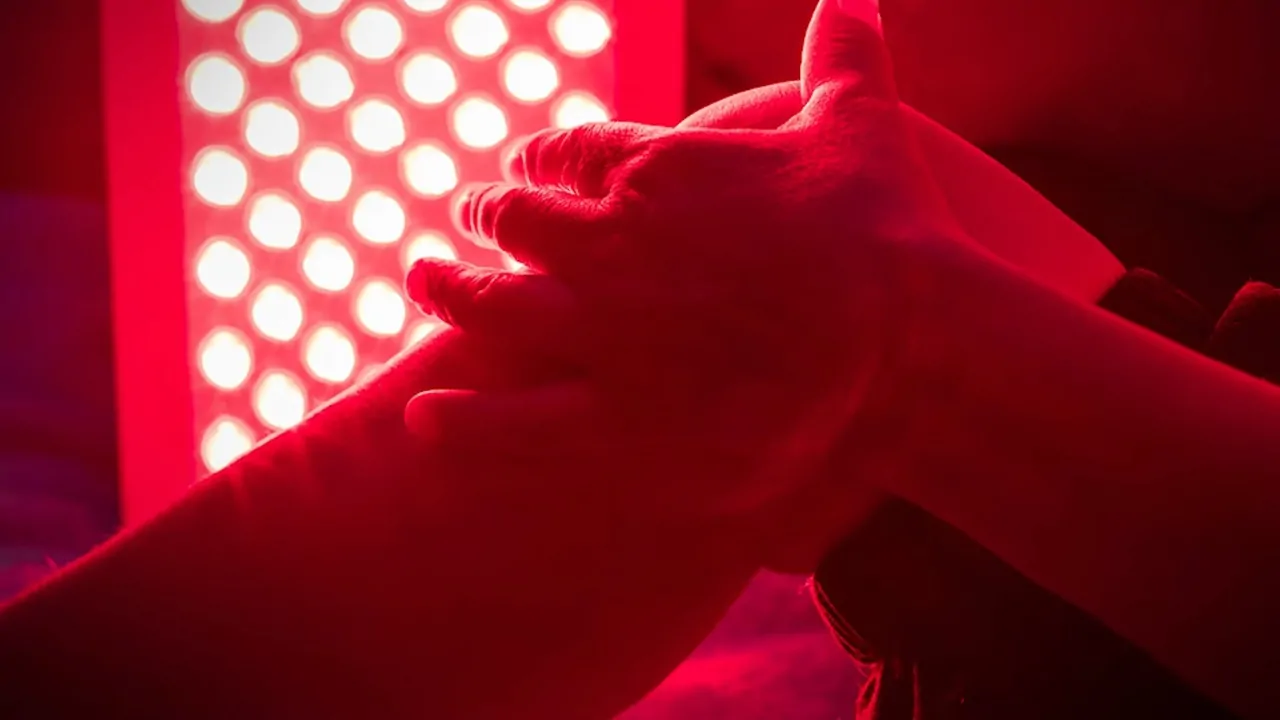
Near infrared light therapy works when the dose is precise.
For most healthy adults using an LED panel in the 800–900 nm range, a practical and evidence-consistent protocol is this: deliver 4 to 10 joules per square centimeter per treatment area, repeat 3 to 5 times per week, run the program for 4 to 6 weeks, then take a 7 to 14 day break or shift to maintenance at 1 to 3 sessions weekly.
Sessions usually last several minutes per area, not 30 or 40 minutes in one spot. More time does not equal more benefit. Near infrared therapy follows a biphasic dose response, meaning too little has no effect and too much reduces results.
What Near Infrared Light Therapy Actually Does
Near infrared light therapy, often called photobiomodulation or PBM, uses light in the approximate range of 800 to 900 nanometers to influence mitochondrial activity. The primary cellular target is believed to be cytochrome c oxidase, an enzyme in the mitochondrial respiratory chain.
When photons in this wavelength range are absorbed, several measurable effects occur:
Research literature over the past two decades has examined PBM in muscle recovery, joint pain, wound healing, neuropathy, and cognitive performance. The results vary depending on dosing parameters, but one finding is consistent: dose matters more than brand or marketing claims.
The therapeutic window is defined by two core measurements:
Fluence is the total energy delivered and is calculated as:
Fluence (J/cm²) = Irradiance (W/cm²) × Time (seconds)
This equation determines your session length.
As communities like Biohackers World highlight, near infrared and red light therapy are used in structured cycles to enhance mitochondrial output, recovery, and long-term performance rather than as random daily exposure.
How Long Should You Use Near-Infrared Light Per Session?
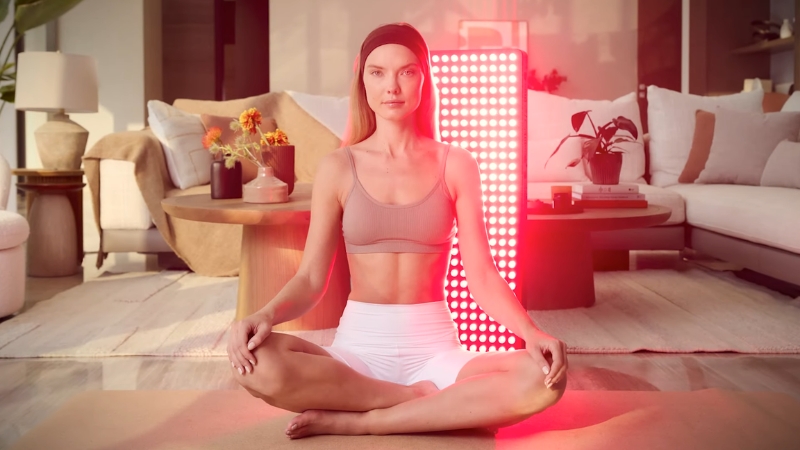
The correct session length depends entirely on irradiance at your skin surface. Consumer LED panels typically deliver between 20 and 150 mW/cm², depending on distance.
Most beneficial tissue responses occur between 4 and 10 J/cm² per treatment area for surface tissues. Deeper tissues may require 10 to 20 J/cm², but heat becomes a limiting factor.
Time Required to Reach Target Energy Dose
Irradiance at Skin
Time for 4 J/cm²
Time for 10 J/cm²
Time for 20 J/cm²
20 mW/cm²
3 minutes 20 seconds
8 minutes 20 seconds
16 minutes 40 seconds
50 mW/cm²
1 minute 20 seconds
3 minutes 20 seconds
6 minutes 40 seconds
100 mW/cm²
40 seconds
1 minute 40 seconds
3 minutes 20 seconds
150 mW/cm²
27 seconds
1 minute 7 seconds
2 minutes 13 seconds
Many home devices overstate irradiance. Real-world output at 6 to 12 inches distance is often closer to 30 to 60 mW/cm². That translates to sessions of 5 to 10 minutes per body area in most realistic setups.
Staying under 20 minutes per area is usually sufficient. Beyond that, diminishing returns become likely.
How Often Should You Repeat Near-Infrared Therapy?
View this post on Instagram
Clinical PBM protocols most commonly use 2 to 4 sessions per week, sometimes up to 5 in acute situations. Daily use is not automatically better.
Studies examining musculoskeletal recovery and inflammation commonly apply PBM 3 times per week for 4 to 6 weeks, with measurable improvements within that timeframe.
The reasoning is biological adaptation. Mitochondrial signaling pathways need recovery time. Overexposure can blunt response through the biphasic dose effect.
Recommended Frequency Structure
Goal
Sessions per Week
Dose per Session
Duration of Program
Beginner Adaptation
3
4 to 6 J/cm²
2 weeks
Active Improvement
3 to 5
6 to 10 J/cm²
4 to 6 weeks
Maintenance
1 to 3
4 to 8 J/cm²
Ongoing
If measurable improvement occurs before week 6, reduce frequency rather than increasing dose.
When Should You Take a Break?
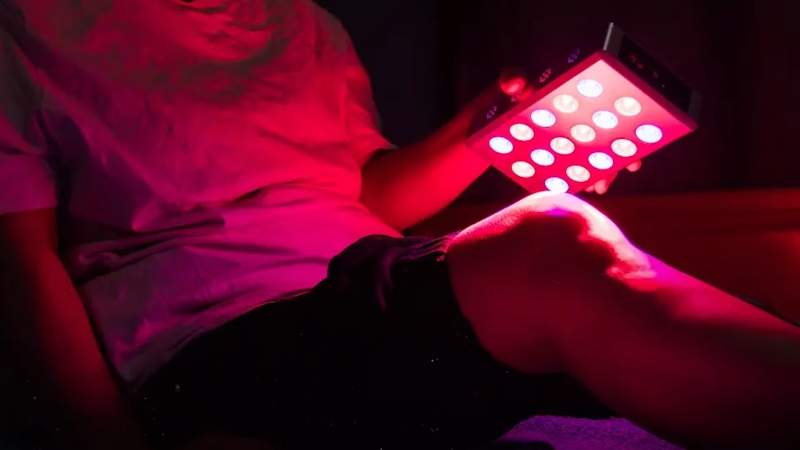
Near infrared therapy is best structured in blocks.
A practical evidence-based rhythm is:
Breaks allow:
- Evaluation of sustained benefits
- Prevention of overstimulation
- Reset of cellular response
If improvement plateaus, a 2-week pause often restores sensitivity when therapy resumes.
Long-term users frequently transition into maintenance mode rather than full cessation.
What the Research Says About Dose Ranges
Scientific reviews show effective fluence ranges commonly fall between 1 and 20 J/cm², depending on target depth and condition. For superficial tissues, 4 to 8 J/cm² often produces an optimal response. For deeper targets, higher fluence may be required, but surface heating increases with higher irradiance.
PBM safety profiles are strong when used within these limits. Adverse effects are rare and typically limited to temporary redness or warmth.
Large systematic reviews show:
However, studies using extremely high doses often show no additional benefit, reinforcing the biphasic model.
A Practical 6-Week Protocol Example
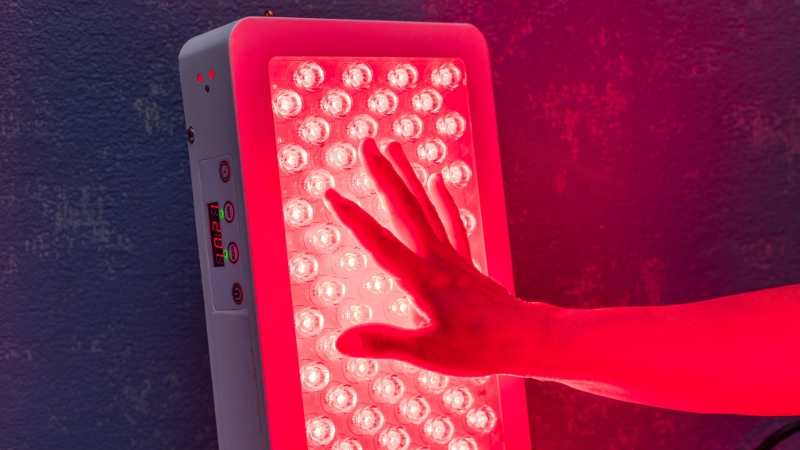
Week 1–2
- Three sessions per week
- 4 to 6 J/cm² per area
- Distance is consistent every session
Week 3–5
- Increase to 6 to 10 J/cm² if well tolerated
- Three to five sessions weekly
After Week 6
- Take 7 to 14 days off
- Restart at 4 to 6 J/cm² if continuing
Each body area is treated separately. If using a large panel for full body exposure, divide the time per region rather than treating one spot excessively.
Common Mistakes That Reduce Results
One mistake is chasing longer sessions. Many people assume 20 to 40 minutes per spot increases effectiveness. In reality, once the optimal fluence window is reached, extra exposure may reduce benefit.
Another mistake is sitting too close to high-output panels. Higher irradiance increases thermal load. Heat is not the therapeutic mechanism.
A third issue is inconsistent distance. Moving from 6 inches one day to 18 inches the next can change the delivered dose by more than half.
Safety Considerations
Near infrared devices are generally low risk when used properly, but several factors matter:
Thermal injury risk increases with high irradiance and long exposure.
How to Adjust for Specific Goals
@dr_lewisclarke Here is #how #NearInfraredLight #affects your #brain www.DrLewisClarke.com FaceBook.com/DrLewisClarke instagram.com/drlewisclarke linkedin.com/in/lewis-clarke-m-d-ph-d-11a93a35/ TikTok@dr_lewisclarke ♬ original sound – Doctor Clarke
For muscle recovery after exercise, 6 to 10 J/cm² applied within hours post-training, 3 to 4 times weekly, is commonly studied.
For joint discomfort, similar dosing repeated for 4 to 6 weeks is typical.
For cognitive or transcranial applications, professional supervision is strongly recommended because skull penetration, wavelength selection, and device calibration are more complex.