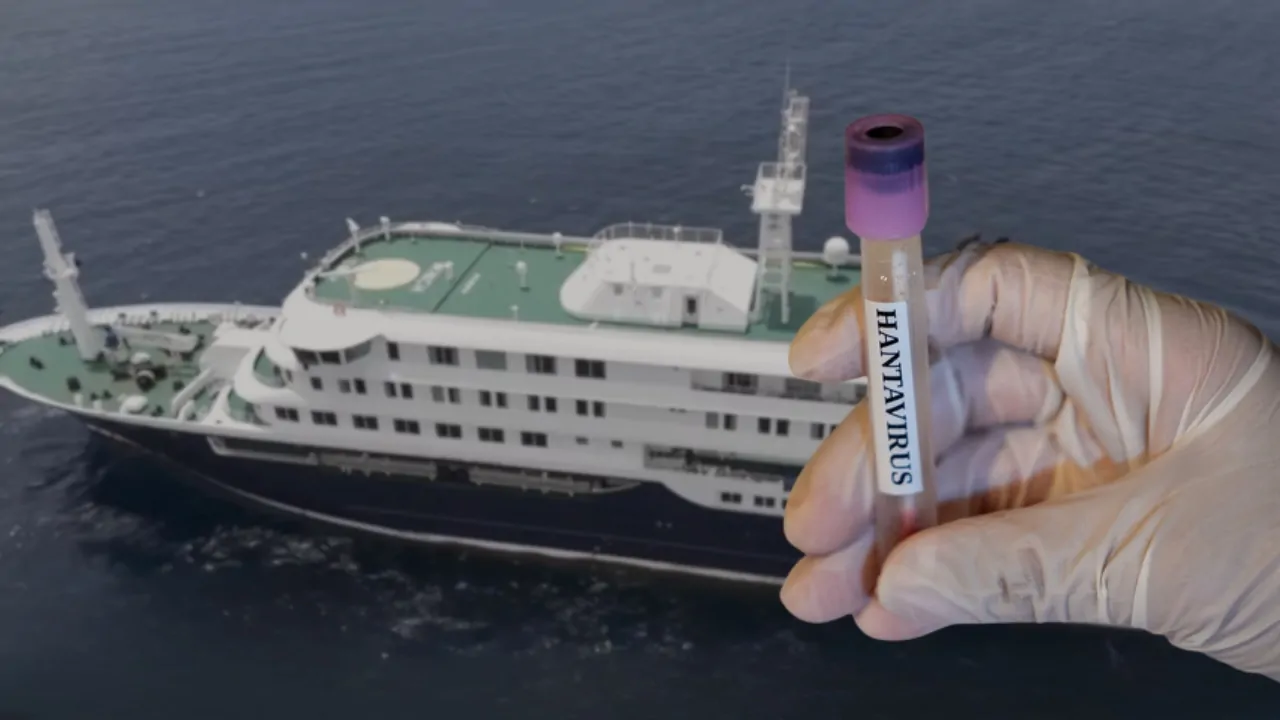
An American passenger evacuated from the MV Hondius has tested positive for Andes hantavirus, marking the first confirmed U.S. infection publicly linked to the expedition cruise ship outbreak that has drawn an international public health response.
Seventeen American passengers arrived in Omaha, Nebraska, early Monday after being flown from Tenerife, Spain, where the Dutch-flagged vessel docked over the weekend. Health officials said one passenger tested positive for the Andes strain of hantavirus, while another passenger had mild symptoms.
Both were transported under heightened medical precautions, according to federal and local health updates reported by The Washington Post.
The passengers are being assessed at specialized facilities connected to the University of Nebraska Medical Center, including the ASPR Regional Emerging Special Pathogen Treatment Center. Federal officials said the aim is to evaluate exposure risk, provide care where needed, and coordinate follow-up with state and local health departments once passengers return home.
The new U.S. case changes the focus of the American response. NCH Stats recently reported that two Georgia residents were being monitored after returning from the MV Hondius, with state health officials saying both were in good health and showed no signs of infection. No confirmed Georgia case has been publicly announced in connection with the ship.
The latest federal update shows the response has moved from state-level monitoring of exposed travelers to medical repatriation and specialized assessment for American passengers who remained aboard the vessel.
Table of Contents
ToggleWhat Officials Know So Far
European health officials said Monday that nine cases have now been reported in connection with the MV Hondius outbreak, including seven confirmed cases and two probable cases. Three deaths have been reported.
The World Health Organization said the outbreak was first reported on May 2, after a cluster of passengers developed severe respiratory illness aboard the ship. At that stage, 147 passengers and crew were still onboard, while 34 others had already disembarked.
The ship arrived at the port of Granadilla in Tenerife on May 10. Disembarkation and repatriation flights began afterward, with passengers being moved by nationality and transferred through controlled transport arrangements.
In our previous coverage, we reported that two Georgia residents were being monitored after returning from the MV Hondius, the expedition cruise ship now linked to a deadly Andes hantavirus outbreak. At that stage, Georgia health officials said both residents were in good health and showed no symptoms. The latest update moves the story beyond precautionary monitoring in Georgia. U.S. health officials are now dealing with a confirmed American infection, another passenger with mild symptoms, and a wider group of U.S. passengers who were flown to Nebraska for medical assessment after the ship reached Tenerife, Spain. Washington Post reporting now indicates that officials in at least six states, including Georgia, Arizona, California, New Jersey, Texas, and Virginia, are monitoring passengers or people with possible exposure. The monitoring includes seven returning passengers and two additional people who may have had contact with the virus. For Georgia, the public health message has remained limited and cautious. State officials have announced monitoring, but no confirmed infection or community spread tied to the MV Hondius has been reported. Hantaviruses are usually linked to exposure to infected rodents, including contact with urine, saliva, or feces. The Andes virus, the strain identified in the MV Hondius outbreak, carries added concern because health agencies recognize it as the only hantavirus known to allow limited person-to-person transmission, usually after close and prolonged contact. WHO said confirmed cases from the ship were identified as the Andes virus through PCR testing or sequencing. The agency said reported illness included fever and gastrointestinal symptoms, with some patients progressing to pneumonia, acute respiratory distress syndrome, and shock. Health officials have not publicly identified the original source of exposure. Investigators are examining whether the earliest patients were exposed before boarding in Argentina, during the voyage, or through close contact after illness developed. In addition to working with its international partners, the CDC since the start of the #Hantavirus cruise ship outbreak has: — CDC (@CDCgov) May 10, 2026 CDC said the U.S. government is monitoring and responding to the outbreak, while describing the risk to the American public as extremely low. The agency said it developed guidance for impacted U.S. passengers and deployed teams to support risk assessment in the Canary Islands and Nebraska. ECDC also assessed the risk to the general population as very low, while noting that measures were already in place aboard the ship to reduce further transmission among passengers and crew. The monitoring period could last up to 42 days, according to reporting on federal briefings and WHO guidance. Officials said that period may involve daily symptom checks at home or in a facility, depending on exposure level and local health authority decisions. Health officials are expected to continue assessing the American passengers in Nebraska before determining where and how each person will complete monitoring. People considered lower risk may be allowed to return home under local health department supervision, while higher-risk contacts may face stricter limits on public activity. The MV Hondius outbreak remains unusual because cruise ship disease investigations usually involve infections that spread easily in shared indoor settings. In the case of Andes hantavirus, officials are dealing with a rare and severe infection normally associated with rodents, now complicated by travel through multiple countries and limited potential for human-to-human transmission. At the same time, there are signs of an ebola outbreak in Congo.
Why Andes Hantavirus Raises Concern
Public Risk Still Described As Low
• Activated its Emergency Operations Center to support response activities.
• Deployed a medical team to the Canary Islands to assess the American cruise… pic.twitter.com/y3Z0YK63FKWhat Happens Next
Related Posts: